Your body weight is already the load
Walking at 300 lb is already weighted walking. In a study of adults with and without obesity, the energy cost of walking rose roughly in line with total mass, and the heavier group chose the same comfortable speed as everyone else. A pack adds to a load you're already carrying every step.
That load lands on the knees. In older adults with knee arthritis, each kilogram of body weight lost took about four kilograms of force off the knee per step. Read the other way, every pound in a pack adds knee load too. That's the main reason none of the health guidance we found starts heavier walkers with a pack. NIDDK and the Obesity Medicine Association both start with plain walking, or with water walking and cycling when standing or walking hurts.
The upside is real. At the same pace, a heavier walker burns more per mile than a lighter one, before any pack goes on. Our calorie calculator, run at 3 mph on flat pavement for an hour:
| Body weight | No pack | 10 lb pack | 20 lb pack |
|---|---|---|---|
| 180 lb | 295 kcal | 306 kcal | 318 kcal |
| 250 lb | 409 kcal | 420 kcal | 432 kcal |
| 300 lb | 491 kcal | 502 kcal | 513 kcal |
| 350 lb | 573 kcal | 584 kcal | 595 kcal |
At 300 lb, a 10 lb pack adds about 2% to the estimate. Time on your feet and how many weeks you keep it up matter far more than the first pack. See the calorie guide for how these estimates are made and where they run high.
Stage 1: walk without a pack
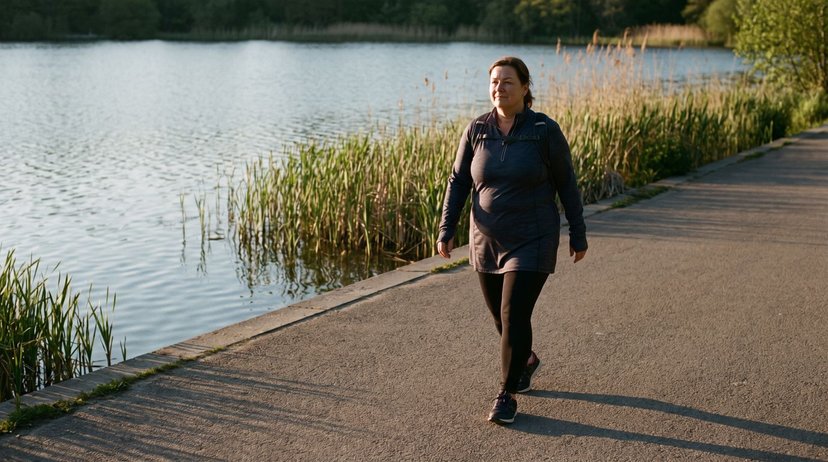
Start with walks you can repeat. NIDDK suggests 5 to 10 minutes, five days a week, or several 5-minute walks a day, building toward 10 minutes three times a day. The Obesity Medicine Association suggests starting at 10 minutes a day and adding five minutes a month, at a pace where you can talk but not sing. Short bouts count: US guidelines dropped the old 10-minute minimum in 2018.
Pick flat, familiar ground with places to stop. Walk at whatever pace feels easy. In a gait study, slower walking lowered the forces and joint loads at the knee for adults with obesity, and the authors called it a possible risk-lowering strategy. Speed can come later.
You're ready for a pack when a 30-minute walk feels repeatable, your stride feels normal the whole way, and your feet and knees feel normal the next morning. For some people that takes a few weeks. Readers on r/Rucking who started above 300 lb describe walking unloaded for a year or more first, and that's a perfectly good plan.
Stage 2: a fixed 5 to 10 lb
When you add a pack, add a small fixed weight. Our Couch to Ruck plan starts at 5 lb or less after two unloaded weeks, and the first 30 days uses 5 to 10 lb for people who already walk 30 minutes comfortably. Either works. Hold the same weight for about four weeks.
Skip percent-of-body-weight charts at this stage. They were written with average-sized adults in mind, and at 300 lb a 10% rule hands you 30 lb on day one. No clinical source we found sets a starting pack weight for heavier walkers, so 5 to 10 lb is our editorial starting point, consistent with how much weight a beginner should ruck.
Research on weighted vests points the same way:
- Two Swedish trials in adults with obesity had people wear a vest at 11% or 1% of body weight for eight hours a day. In the first, 20% of the heavy-vest group reported musculoskeletal complaints such as foot swelling, leg pain and joint pain, against 2.7% with the light vest. The second also logged far more treatment-related complaints with the heavier vest, though few were serious and nobody quit over them.
- The INVEST trial started older adults with obesity in a 1 lb vest and added weight in small steps only to replace what they had lost.
None of these trials tested rucking, and none enrolled people over 300 lb as a group. They do show that complaints climb with load, which supports starting light.
You don't need a special rucksack for this. A regular backpack with a few water bottles or a wrapped weight packed high against your back is enough at 5 to 10 lb. A hip belt isn't needed at this weight, so a belt that won't close is no reason to wait. When you do want one, most hip belts fit hips from the mid-20s to the mid-40s in inches, per REI, and some brands sell extended belts.
Stage 3: build slowly
Change one thing at a time:
- Add time before weight. Grow the walk from 30 to 45 to 60 minutes at the same load.
- When you add weight, add 2 to 5 lb, shorten the route that week, and change nothing else.
- Keep most walks unloaded. One or two loaded walks a week is plenty while you build.
- Add hills and pace last.
Our progression rules cover this in more detail. Plenty of people find a light pack plus more walking does more for them than a heavy pack ever would.
Feet, skin and heat
- Shoes. Fit matters more than brand: room to wiggle your toes, a heel that doesn't slip, and enough width. Shop later in the day when feet are larger. Heavier bodies wear through cushioning faster, so replace shoes at the low end of the usual mileage range. Our pavement shoe guide lists wide options.
- Socks and blisters. Wear synthetic or wool socks, never cotton, and tape known hot spots before you go. See blister prevention.
- Chafing. The American Academy of Dermatology recommends moisture-wicking, loose clothing and an anti-chafe balm or powder on the thighs and anywhere a strap rubs. A pack that's too small for your frame rubs at the shoulders, so loosen the straps until they sit flat.
- Heat. The CDC lists obesity as a risk factor for heat illness because larger bodies hold more heat. Walk early or late in summer and read heat safety for rucking.
When to check with a clinician first
Obesity alone doesn't require medical clearance under the American College of Sports Medicine screening rules. The Obesity Medicine Association takes a stricter view and recommends an evaluation for everyone with obesity before a new exercise program. Check with a clinician first if any of these apply:
- You have diabetes, heart disease, kidney disease or high blood pressure.
- You get chest pain, pressure or unusual breathlessness with activity, or you feel dizzy.
- You have a back, hip, knee or foot problem, or trouble staying steady on your feet.
- You have diabetic neuropathy or a foot ulcer. The American Diabetes Association says moderate walking is fine for most people with neuropathy, with good footwear and daily foot checks, but weight-bearing exercise should wait while an ulcer heals.
Stop and get help for chest, neck or arm pain or pressure, extreme breathlessness, dizziness, or joint pain that gets worse as you go. For pain that builds over weeks, see knee pain, plantar fasciitis and shin splints.
What to expect from the scale
Walking and rucking burn real calories, but in r/Rucking threads, people who lost a lot of weight mostly credit how they ate, with walking keeping them moving and consistent. The vest trials above found small or no changes in body weight on their own. See what results to expect from rucking, and if you're on a GLP-1 medication, rucking on GLP-1s covers keeping muscle while you lose weight.