What is rucking?
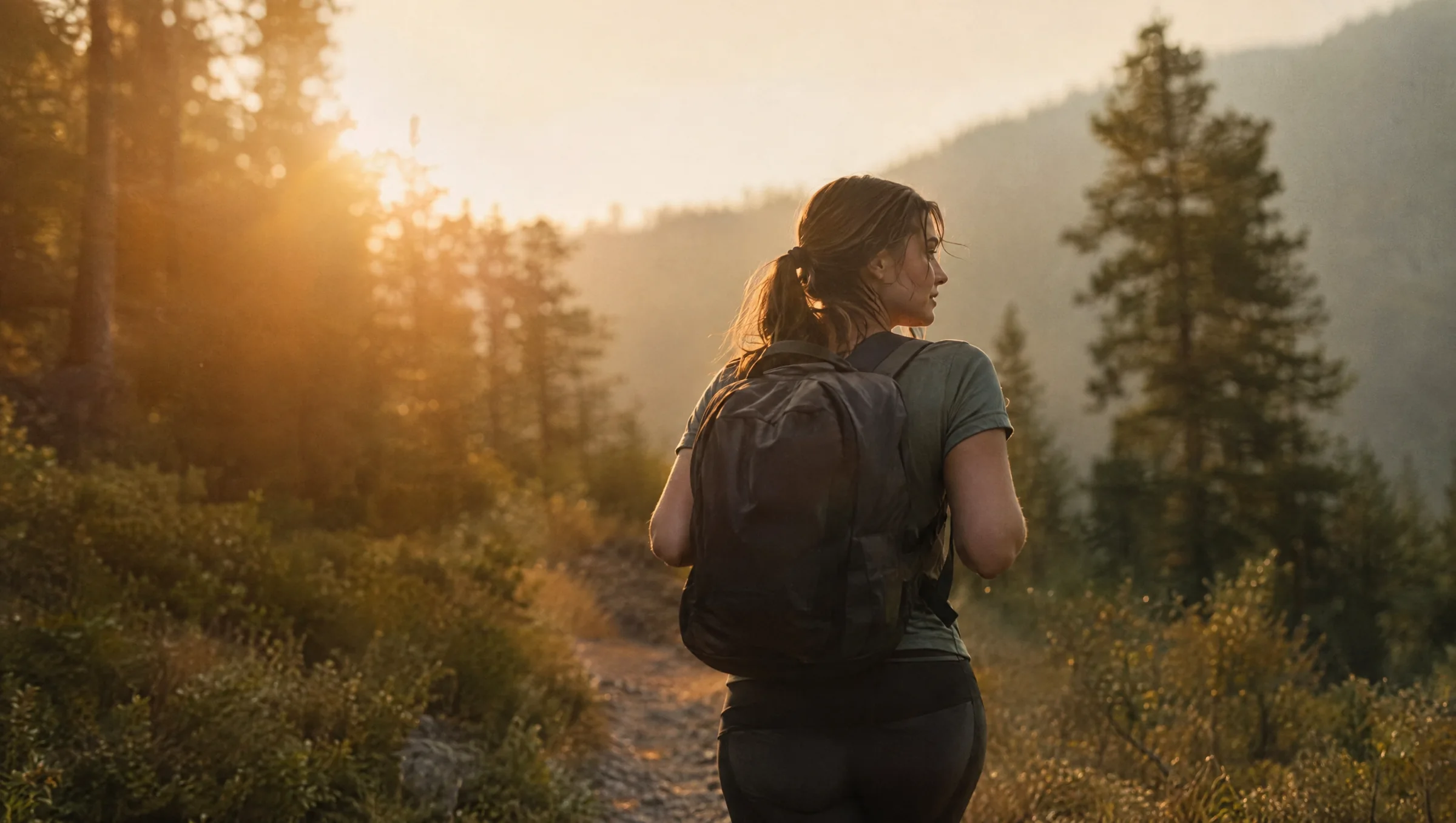
Rucking is walking with weight on your back. You put a load in a backpack, put the backpack on, and walk. There's no technique to learn before you start, no class to book and no special gear to buy.
The word comes from "rucksack," and the practice comes from the military, where loaded marches have been part of training for as long as armies have walked anywhere. GORUCK brought it to civilians through events and purpose-built packs, but none of that is required. A school backpack with a few wrapped books in it counts. So does a hiking daypack with water bottles. For the plain-English version and the common myths, see what is rucking.
What makes it work for beginners is that it builds on something you already do. If you can walk for half an hour, you can start rucking this week with the bag in your closet.
Why people ruck
The reasons are practical: a walk that works harder in the same time, strength for the carrying daily life already asks of you, almost no setup, and a reason to get outside.
It raises the cost of a walk, especially uphill
A pack makes walking harder, and hills make it much harder. Using the Pandolf equation, the load-carriage model from the U.S. Army Research Institute that our calorie calculator runs on, a 180 lb person walking at 3.5 mph burns about 365 calories an hour. Add a 30 lb pack and that rises to about 410, roughly 13 percent more. Take the same pack up a 5 percent grade and the estimate climbs to about 635.
Calories an hour: walking, rucking, running
A 180 lb person. Walking and rucking at 3.5 mph on pavement unless noted
- Walking, no pack365
- Ruck, 20 lb395
- Ruck, 35 lb420
- Ruck, 30 lb, 5% grade635
- Jog, 5 mph710
- Run, 6 mph840
Walking and rucking from the Pandolf load-carriage equation (the model in our calculator), which tends to under-predict heavy loads; running from the Compendium of Physical Activities METs, as in the calculator's comparison table. On flat ground load adds modestly; grade adds a lot.
Pandolf tends to under-predict heavier loads, so treat those numbers as conservative. Running still burns more per minute. Rucking keeps the impact of walking while making the walk count for more, which is a useful trade if running has never agreed with you. The full comparison is in rucking vs running for weight loss.
It trains carrying, which daily life asks for
Groceries, luggage, a toddler who has decided to stop walking: most real lifting is carrying. A pack loads your hips, legs, upper back and trunk in the position you use for all of that, and your body adapts to the positions it spends time in. It doesn't replace a strength program, and the training pillar covers how the two fit together.
Almost nothing stands between you and the first session
Running asks you to manage cadence and impact. Gym training asks for equipment and instruction. Rucking asks you to walk with good posture, which most people can do on day one and refine over the first few weeks.
It gets you outside with a reason to go
A short loaded walk is easy to fit into a morning or a lunch break, and it's easy to share. People ruck with a partner, a dog or a club, and many find the routine easier to keep than a gym habit. The Physical Activity Guidelines for Americans count brisk walking toward the weekly aerobic target, and a ruck at the same effort counts the same way.
The gear you actually need
Start with what you own
You need four things, and you probably have all of them:
- A backpack with two shoulder straps. A school pack or hiking daypack works. Skip messenger bags and slings, which load one side.
- Weight that can't move. Books, water bottles, a bag of rice or sand. Wrap hard edges in a towel and pack the weight high and tight so it doesn't bounce.
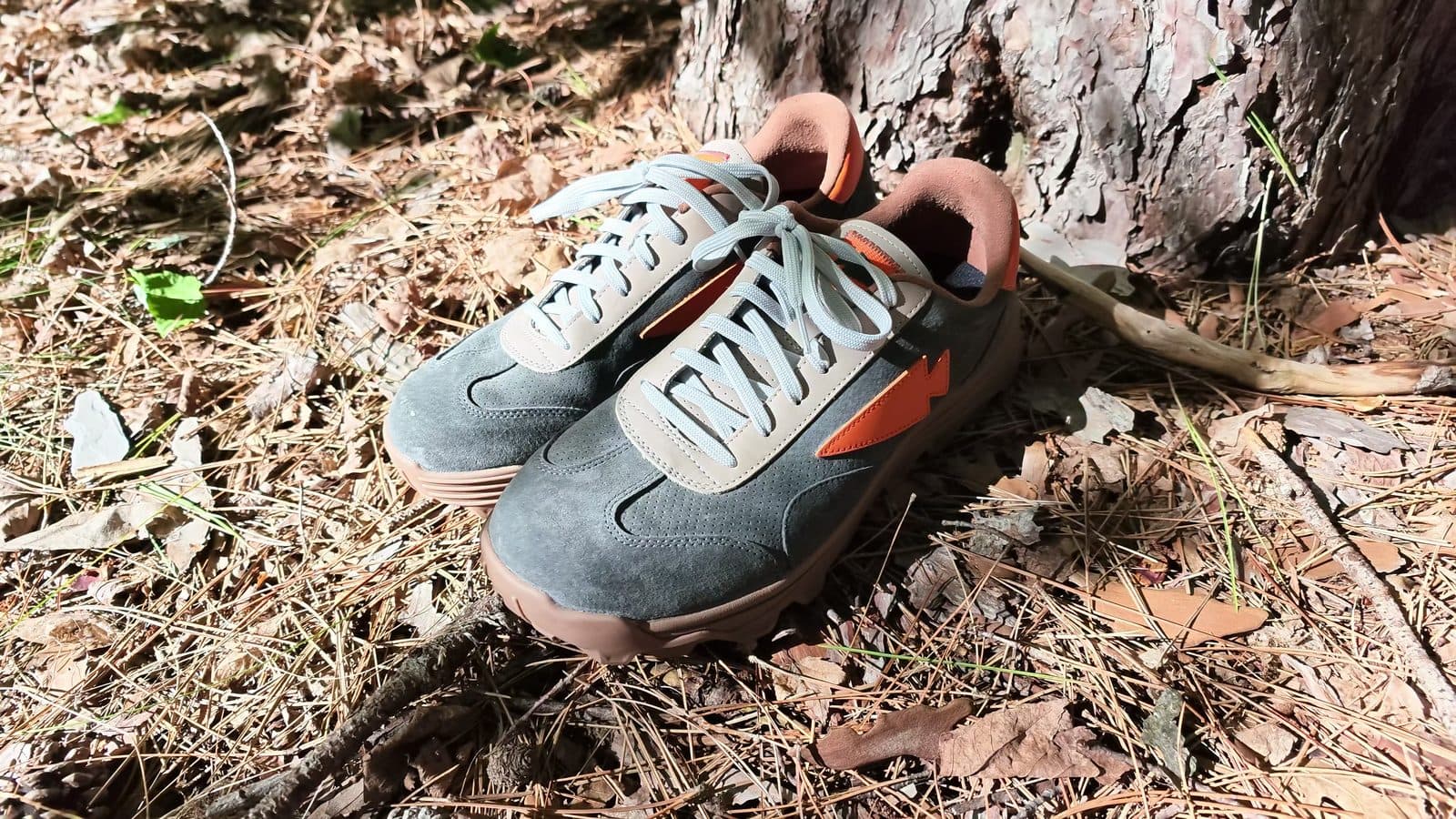
- Shoes you already walk in comfortably. Walking shoes, running shoes or trail shoes with a sole that doesn't collapse.
- Water for anything longer than a short loop.
Water is a handy first load because it's measurable and you can pour it out if the pack feels like too much. Our guide to rucking with a regular backpack shows how to set one up.
Upgrade when the setup gets in the way
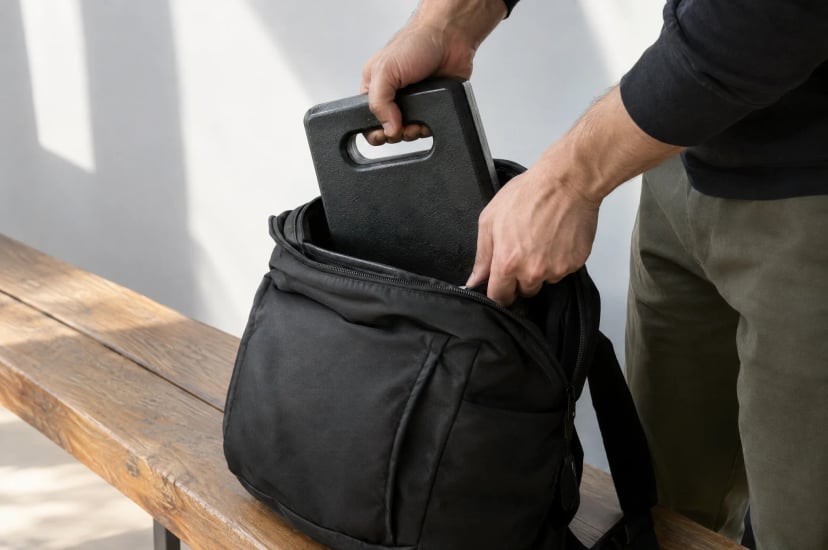
Buy something when a specific problem shows up: the load keeps shifting, a strap rubs, or your pack can't hold the weight you now use. A flexible 10 lb sand plate is the easiest fix for shifting weight, because it fits in an ordinary backpack. Only consider it once 10 lb already sits inside your comfortable range.
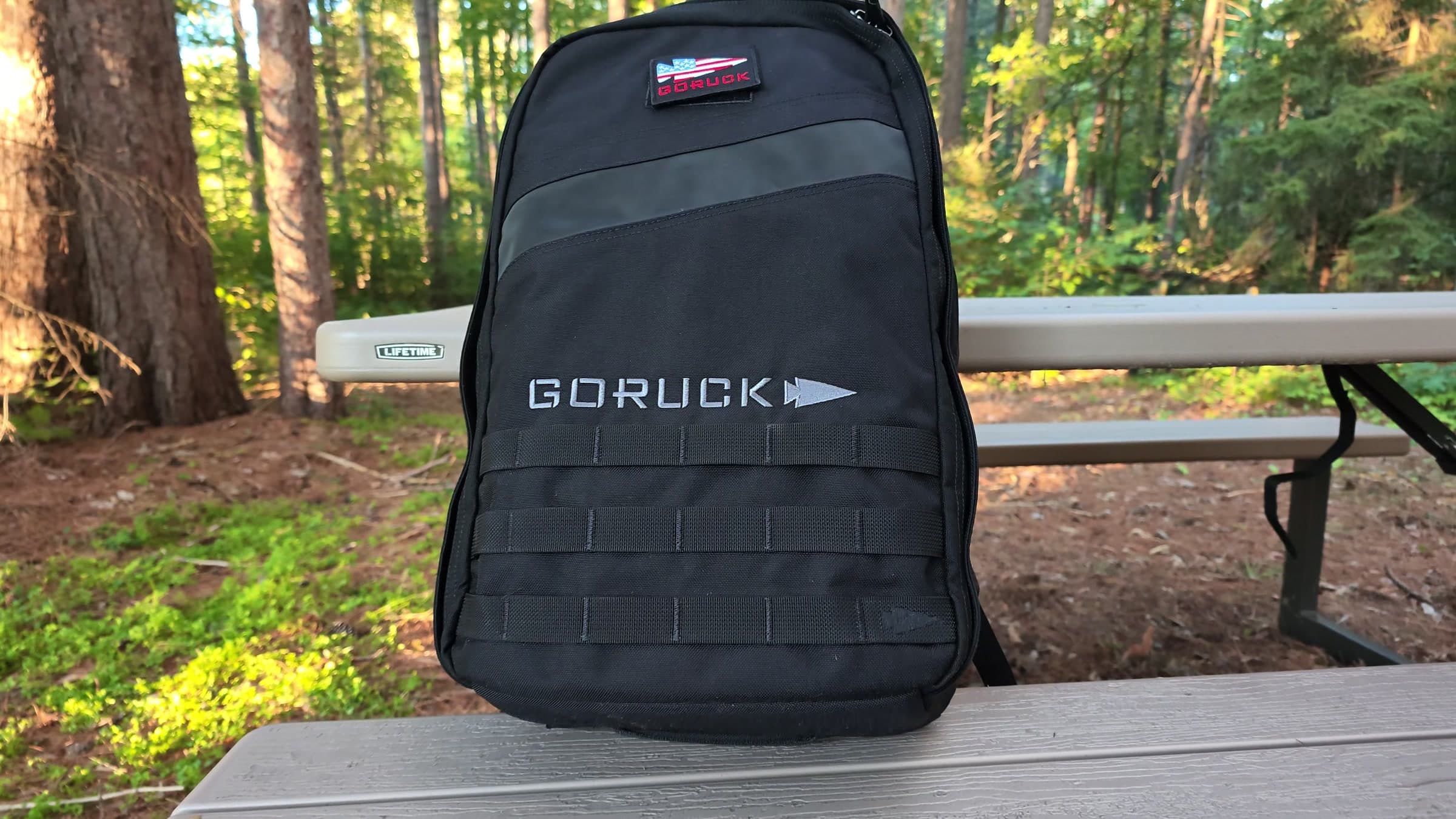
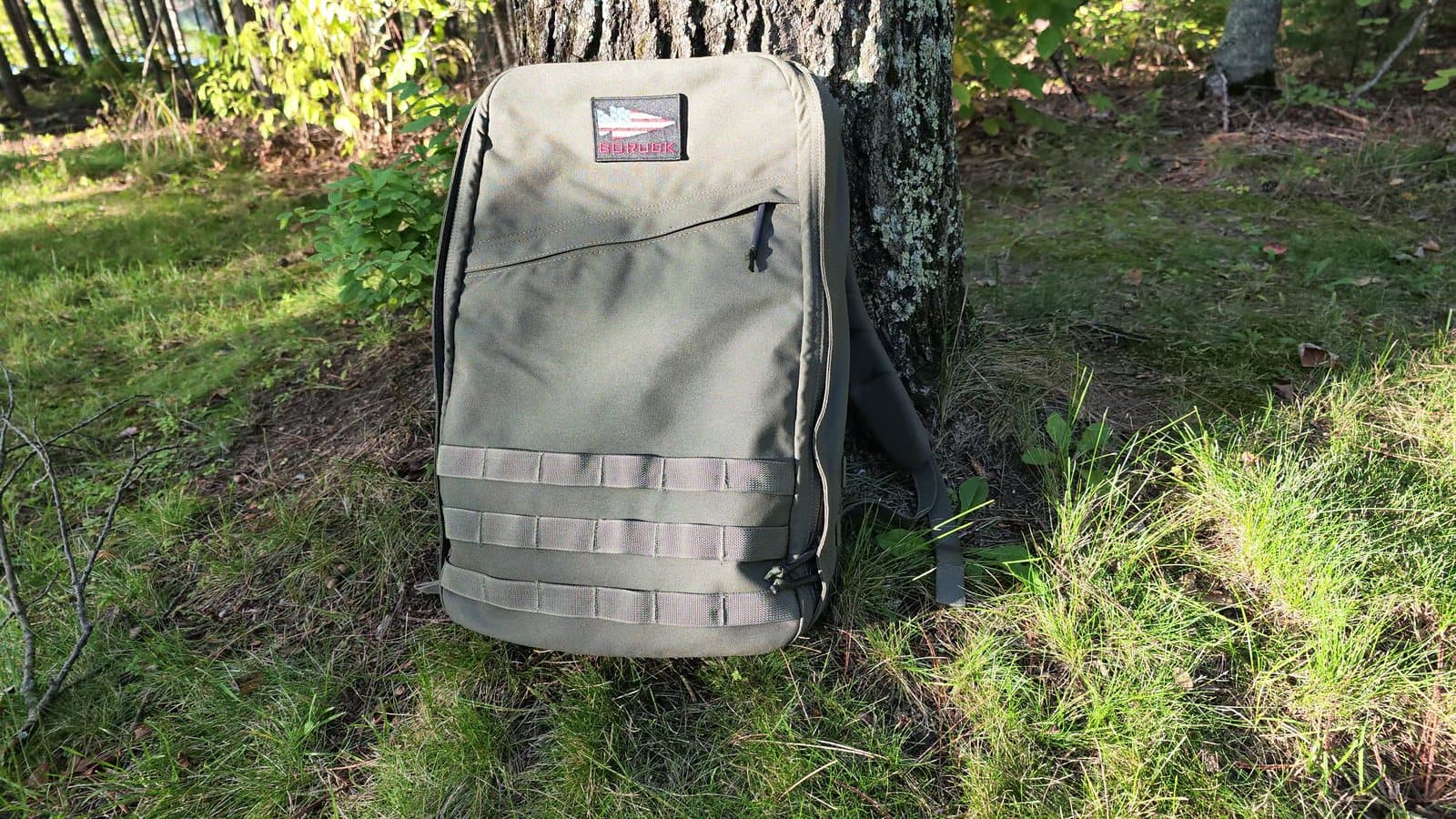
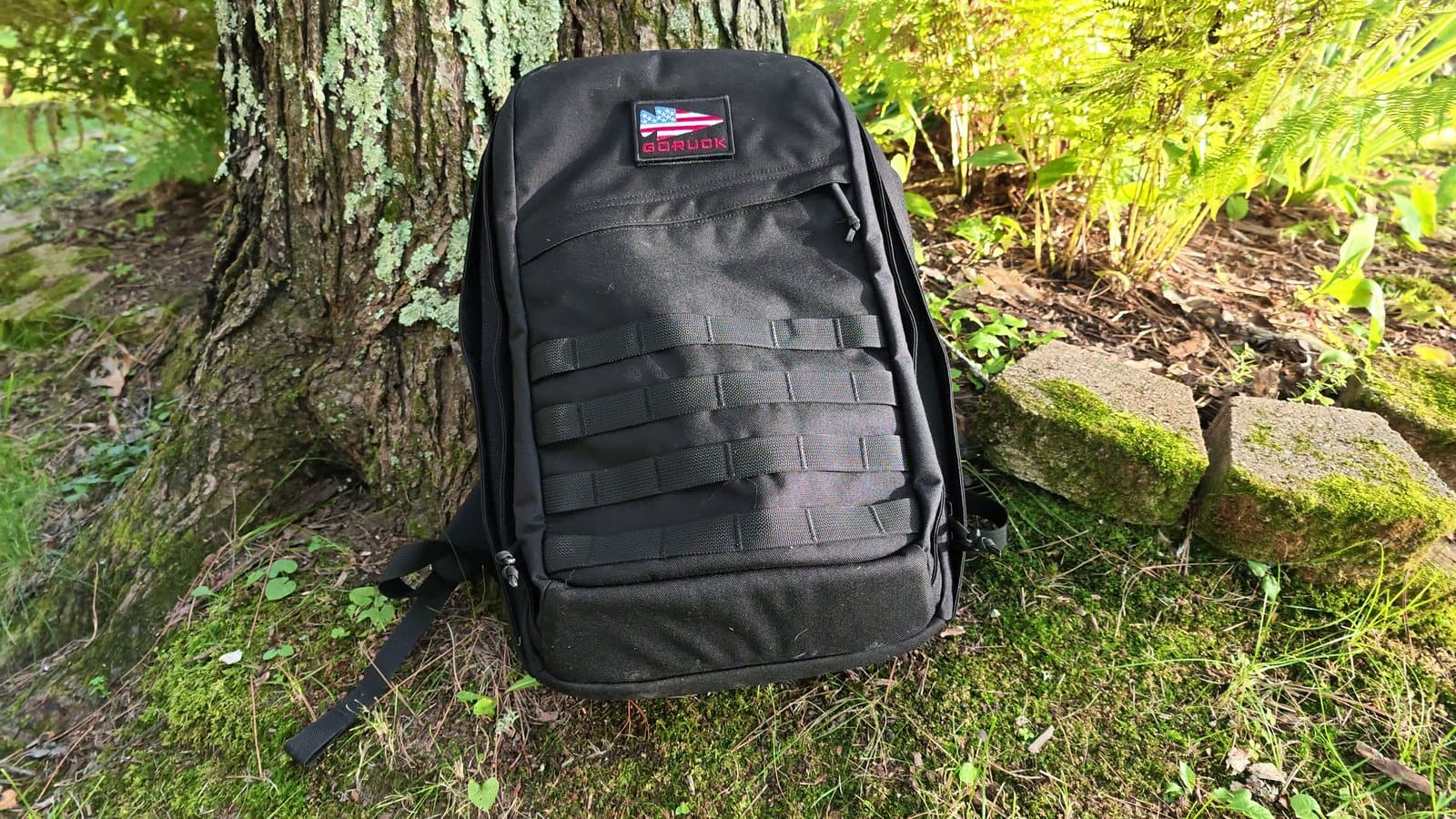
A purpose-built ruck makes sense once you know you'll keep going. The GORUCK Basic Rucker is the lower-cost training pack, with an elevated plate pocket and a 30 lb limit that suits beginner loads.
If dedicated plate training beyond 30 lb is already the plan, the Rucker 5.0 is built for it: a frame sheet, lumbar padding and an elevated pocket that keeps the plate high on your back, where it carries best.
The gear finder gives a quick recommendation from five questions, and the complete gear guide covers packs, plates, shoes and accessories by budget.
How heavy, how far, how fast
How heavy
Start light and hold that load for the first month. For someone who already walks 30 minutes comfortably, that means 5 to 10 lb or less. The table matches a starting point to where you are now.
| Your current baseline | Where to start |
|---|---|
| Unloaded walking isn't comfortable yet | Build unloaded walking first with Couch to Ruck |
| You walk 30 minutes comfortably but are new to load | 5 to 10 lb or less for 20 minutes |
| You already ruck regularly | A recent load and duration you could repeat with a normal stride and stable recovery |
| You're preparing for an event | The event's requirements and a plan built from your recent baseline |
Body-weight percentages can't account for pack fit, terrain, symptoms or what you've done lately, so treat any calculated number as a ceiling to stay under. The calculator below gives that planning ceiling and a four-week block that holds the load steady. A higher result doesn't replace the lighter first month.
The weight guide explains how to choose and adjust a load. Army injury-prevention guidance supports combining loaded walking with strength work and unloaded aerobic training; it doesn't set one starting load for everyone.
How far
Plan in minutes rather than miles. Twenty minutes is the first session, whatever distance that turns out to be, on a flat route you know and can cut short. Time is easier to hold steady than distance while your pace settles.
How fast
Walk at conversational effort: you should be able to speak in full sentences. There's no minutes-per-mile target in the first month. Pace charts are useful later, once you have a baseline and a reason to go faster.
Rucking form: the basics
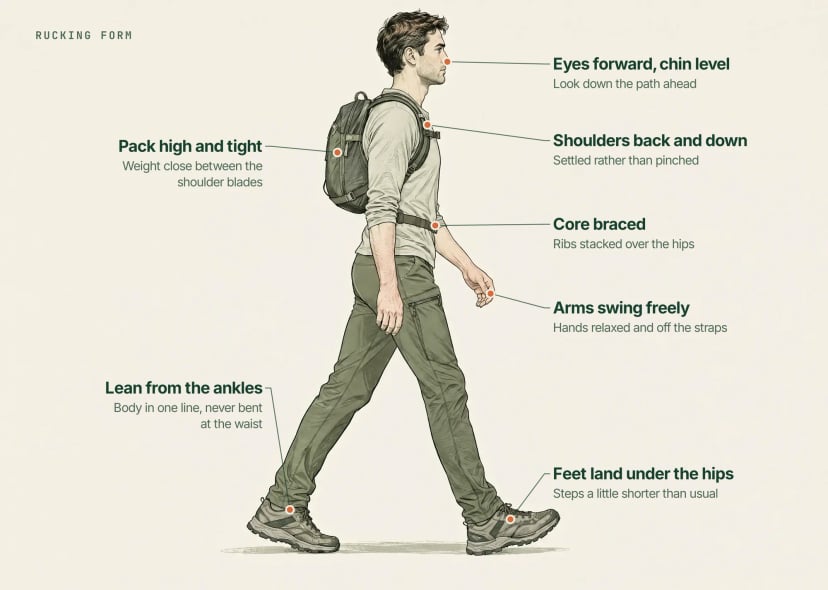
Good form under load is simple, and it's worth getting right while the weight is light. Four cues cover almost everything: one each for your spine, feet, hands and breathing.
Posture
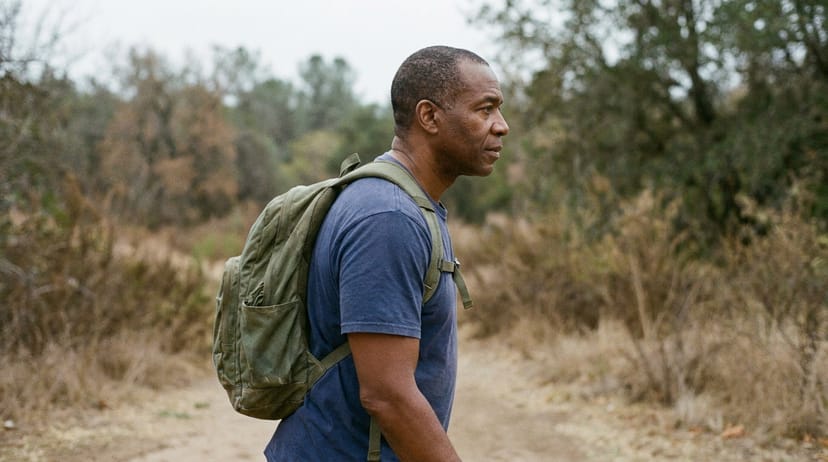
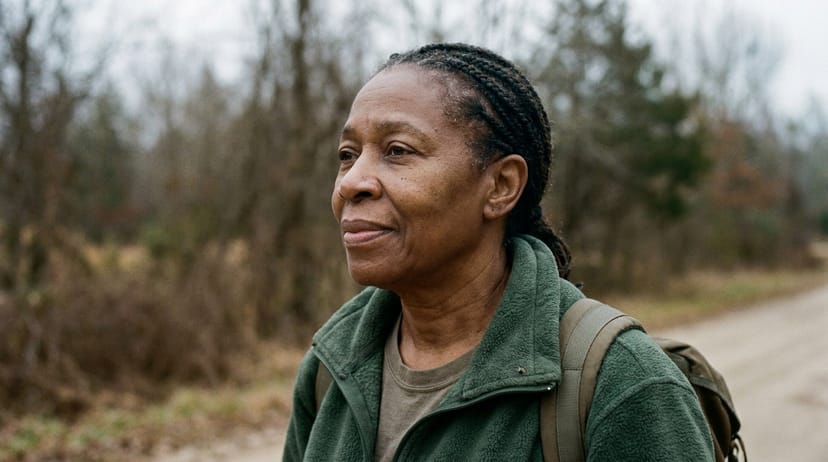
Stand tall with your shoulders back and down, settled rather than pinched. A slight forward lean from the ankles lets the pack's weight travel through your frame instead of pulling you backward. Bending at the waist does the opposite and hands the load to your lower back.
Foot strike
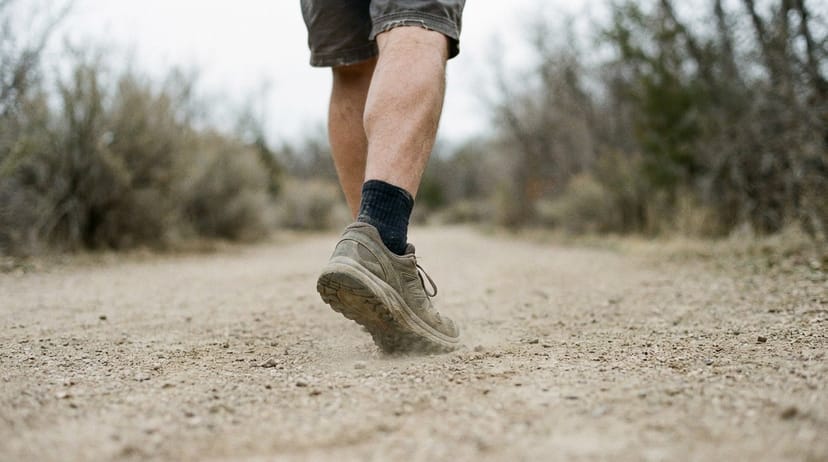
Land with your foot under your body and roll through to your toes. Keep your steps a little shorter than your normal stride. Overstriding under load increases impact and tires your hips quickly, and it's the most common beginner habit to fix.
Arm swing
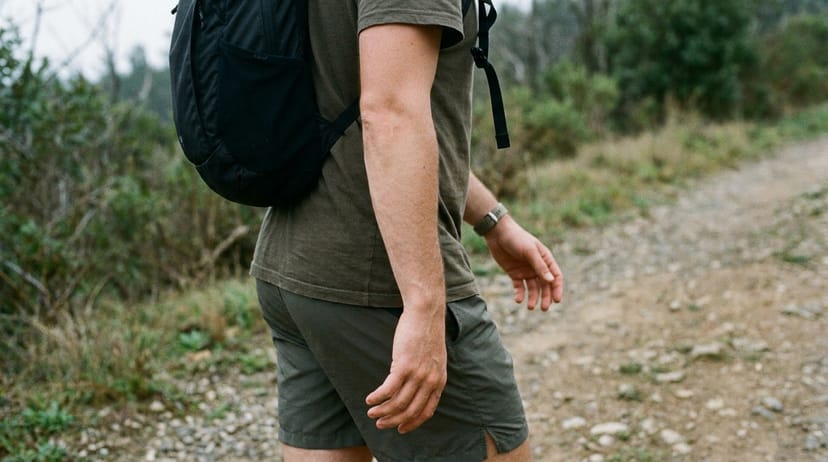
Let your arms swing naturally. Gripping the shoulder straps rounds your shoulders and tightens your chest. If you feel the urge to hold the straps, the pack is too loose: tighten it. If your hands tingle or go numb, loosen the shoulder straps and stop if it continues; rucksack palsy explains why.
Breathing
Use conversational effort as your check. Slow down or stop when full sentences get difficult. You don't need to force nasal breathing or hold a heart-rate zone in your first sessions.
Five common form mistakes
| Mistake | What it does | Fix |
|---|---|---|
| Leaning forward from the waist | Moves the load onto your lower back | Lean slightly from the ankles, body in one line |
| Overstriding | Raises impact and tires your hip flexors | Shorter steps that land under your hips |
| Locked knees | Each step lands abruptly | Keep a soft bend as your foot lands |
| Rounded shoulders | Strains your upper back and restricts breathing | Reset shoulders back and down every few minutes |
| Gripping the straps | Hunches your back and can numb your hands | Tighten the pack so it holds itself |
Illustrated cues and demonstrations are in the full rucking form guide.
Your first ruck: a step-by-step walkthrough
Before you go
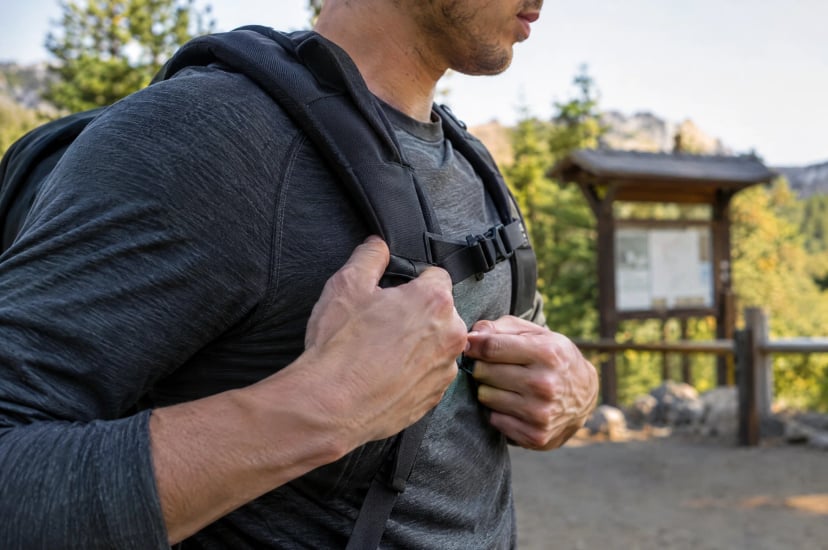
- Pack the weight high and close to your spine, wrapped so it can't slide
- Walk around the house for two minutes and adjust the straps until the pack stops moving
- Pick a flat, familiar route with an easy way home inside 20 minutes
- Drink some water beforehand and bring some if the day is warm
During the ruck
Start at an easy, conversational effort. Every five minutes, check three things: the pack is stable, your stride feels normal, and you can still talk in full sentences.
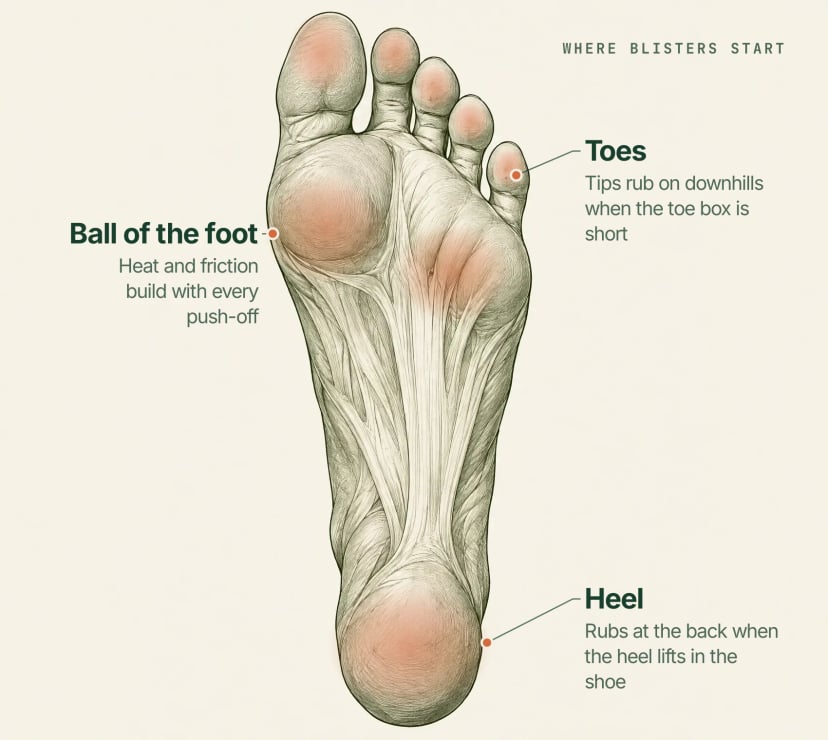
Pay attention to your feet. If you feel rubbing, stop and fix your socks or laces straight away. A hot spot caught early is a two-minute stop; ignored, it becomes a blister that costs you a week. Merino socks such as Darn Tough light hikers and an anti-chafe balm like Body Glide on high-friction areas both help.
What it should feel like: mildly challenging and very manageable. Your shoulders may notice the pack after 10 to 15 minutes. Your legs shouldn't burn. If anything feels sharp or wrong, stop and check the weight, the pack and your shoes.
Your first ruck isn't a test. There's no time to beat, distance to hit or weight to prove. Walk out, turn around and come back. You're building a habit.
After the ruck
Stretch your calves, hip flexors and shoulders, drink some water, and note how you feel. Mild soreness in your glutes, upper back and shoulders the next day is normal. Sharp pain in your knees, shins or feet isn't; it usually means too much weight, too fast a pace or the wrong shoes. Stop loaded sessions when sharp pain appears, and get guidance if it persists.
Staying injury-free
Most beginner problems come from doing too much too soon, not from rucking itself. Keep the load light, add one thing at a time, and treat these signals as information.
Normal: muscle soreness in your glutes, traps and upper back for a day or two, tired legs, and pressure where the straps sit.
Stop and reassess: sharp pain in a joint or shin, pain that builds during the walk, a blister forming, or tingling and numbness in your hands.
Stop and get help: chest pressure, dizziness, fainting, unusual shortness of breath, or weakness. These aren't training problems.
Get individual advice first. Start unloaded, or talk to a clinician before loading a pack, when pain, a recent injury, balance concerns, a heart or lung condition, or pregnancy makes exercise uncertain. The loads and times in this guide are conservative editorial starting points, not medical thresholds.
Specific problems have their own guides: knee pain, is rucking bad for your back, foot care and blisters, and numb hands. Hot days need less load and more water; the summer heat guide covers the warning signs. The injury prevention pillar brings them together.
How to progress after the first month
Change one variable at a time and hold the rest steady. The order matters, because some changes raise the demand much more than others.
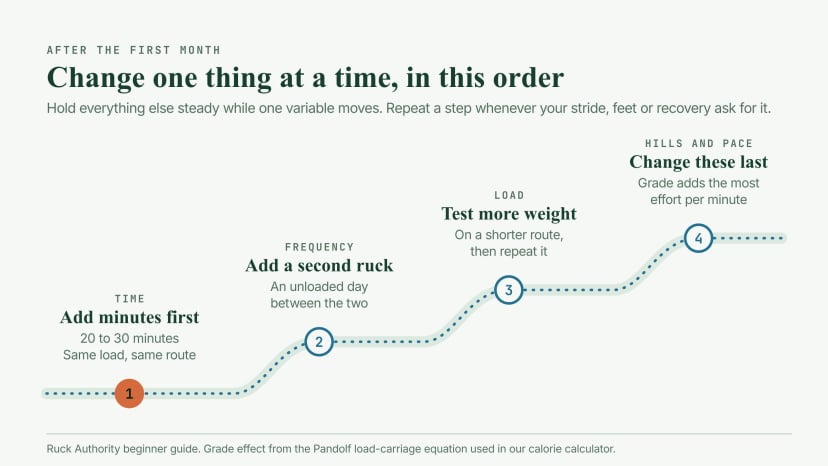
- Time. Build from 20 to 30 minutes with the same load and the same kind of route.
- Frequency. Add a second weekly ruck, with at least one unloaded day between the two.
- Load. Test a heavier pack on a shorter route, and repeat that session before adding time back.
- Hills and pace. Change these last. On the Pandolf numbers above, a 5 percent grade raises the cost of the same 30 lb walk by about half.
There's no automatic weekly weight increase. If a change makes your stride shorter, your feet sore or your recovery slower, go back to the last session that felt repeatable and stay there a little longer.
When you want structure, the program builder makes a four-week plan from your recent loaded baseline and schedule. Follow one plan at a time rather than mixing sessions from two. Once you have that baseline, the pace chart gives a reference for your load:
| Beginner | Intermediate | Advanced | |
|---|---|---|---|
| Light (10-15 lb) | 16:00 - 18:00 | 14:00 - 16:00 | 12:00 - 14:00 |
| Moderate (20-25 lb) | 17:00 - 20:00 | 15:00 - 17:00 | 13:00 - 15:00 |
| Heavy (30-40 lb) | 19:00 - 22:00 | 16:00 - 18:00 | 14:00 - 16:00 |
Pace in minutes per mile. Flat to gently rolling terrain, conversational effort.
The full rucking pace chart explains the ranges, and how often should you ruck covers frequency beyond two sessions a week.
Where to ruck
Each surface has its own trade-offs, and most people use a mix.
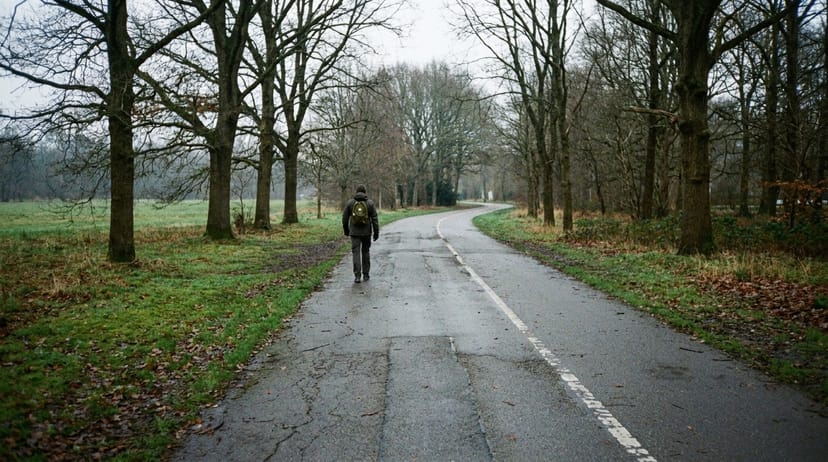
Pavement is the easiest place to start: consistent, measurable and close to home. It's firm underfoot, so long pavement rucks can feel harder on your feet and joints than the same time on a trail.
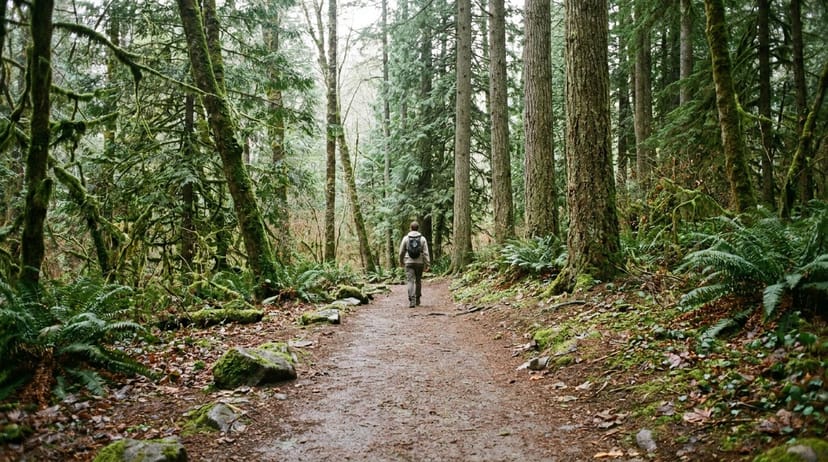
Trails make your ankles, hips and trunk work more because every step is slightly different. That also means more chance of a rolled ankle, so start on well-kept paths before taking a pack onto rough ground.
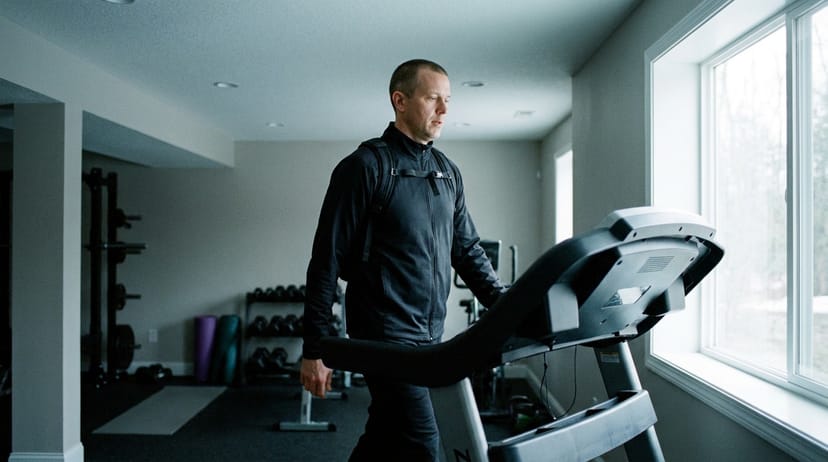
A treadmill is a good backup for bad weather and makes pace and grade easy to control. A small incline makes it feel closer to walking outside.
The pavement vs trail vs treadmill guide compares them in detail, and rucking shoes by terrain matches footwear to each.
Find people to ruck with
You don't need a group to ruck, but a regular meetup is one of the simplest ways to make it a habit. A club gives you a fixed time, a route someone else has already scouted and people who notice when you're missing.
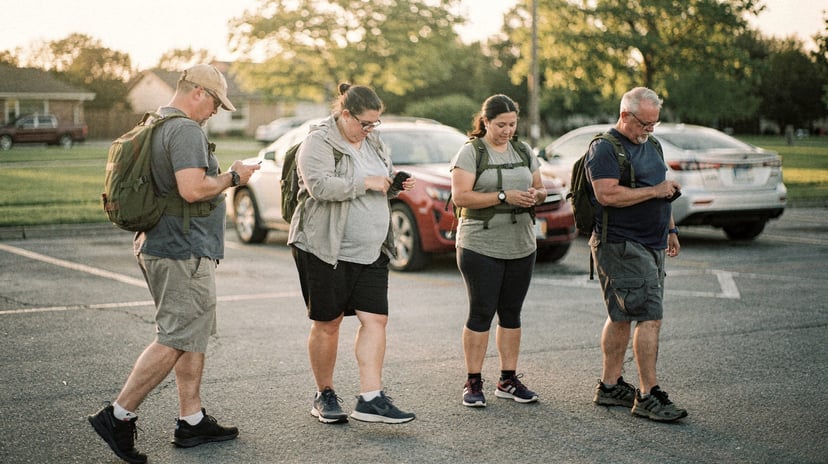
The Ruck Club Finder lists community-verified clubs across 35+ countries. If there's nothing nearby, how to start a ruck club covers routes, timing and getting the first few people to show up. Rucking with a dog is another good way to keep a routine; rucking with your dog covers what to check first.
Common beginner questions
Usually not, if the weight and progression are appropriate. Too much load too soon can aggravate your back, especially once your posture breaks down. Start light, stand tall, pack the weight high and close, and progress one variable at a time. The research is in is rucking bad for your back?
For general fitness and weight management, it can be a strong substitute, especially if running bothers your joints. Running burns more calories per minute and remains the specific training for running races. On flat ground, a pack adds a modest amount of work to a walk; hills add much more. See rucking vs running for the numbers.
Start with one loaded session a week. Add a second easy session once recovery is stable, with at least one unloaded day between them. Other days can include unloaded walking, strength work or rest. See the rucking frequency guide.
Not to start. Any sturdy backpack with two shoulder straps that can hold a secured 5 to 10 lb load will work. A purpose-built ruck becomes worthwhile when your load keeps shifting, you're rucking regularly at heavier loads, or you want a plate pocket that holds the weight high. The regular backpack guide shows how to set up a bag you already own.
Books, water bottles and a bag of rice or sand all work. Water is the easiest to measure and to adjust, because you can pour some out. Wrap anything hard in a towel and pack it so it can't move.
Not with a pack while you're starting. Keep at least one unloaded day between rucks. Daily walking without the pack is fine and helps recovery.
Start with comfortable unloaded walking and get individual advice when knee pain makes exercise uncertain. Stop loaded walking for sharp pain rather than waiting for the next session. The rucking knee pain guide explains symptoms and when to get help.
Stop and check the pack first: the weight should sit high and close to your spine, and the straps should be snug without cutting in. Loosen the straps if your hands tingle. Stop if pain persists, or if you have numbness or weakness, and get guidance before the next loaded session.
Easy movement before, such as arm circles and leg swings, and gentle stretching afterwards for your calves, hip flexors and shoulders, which take the most load. The mobility guide has a short routine.
Both work. A club adds a fixed time, a scouted route and company; training alone gives you full control of pace and schedule. The Ruck Club Finder is the place to look.