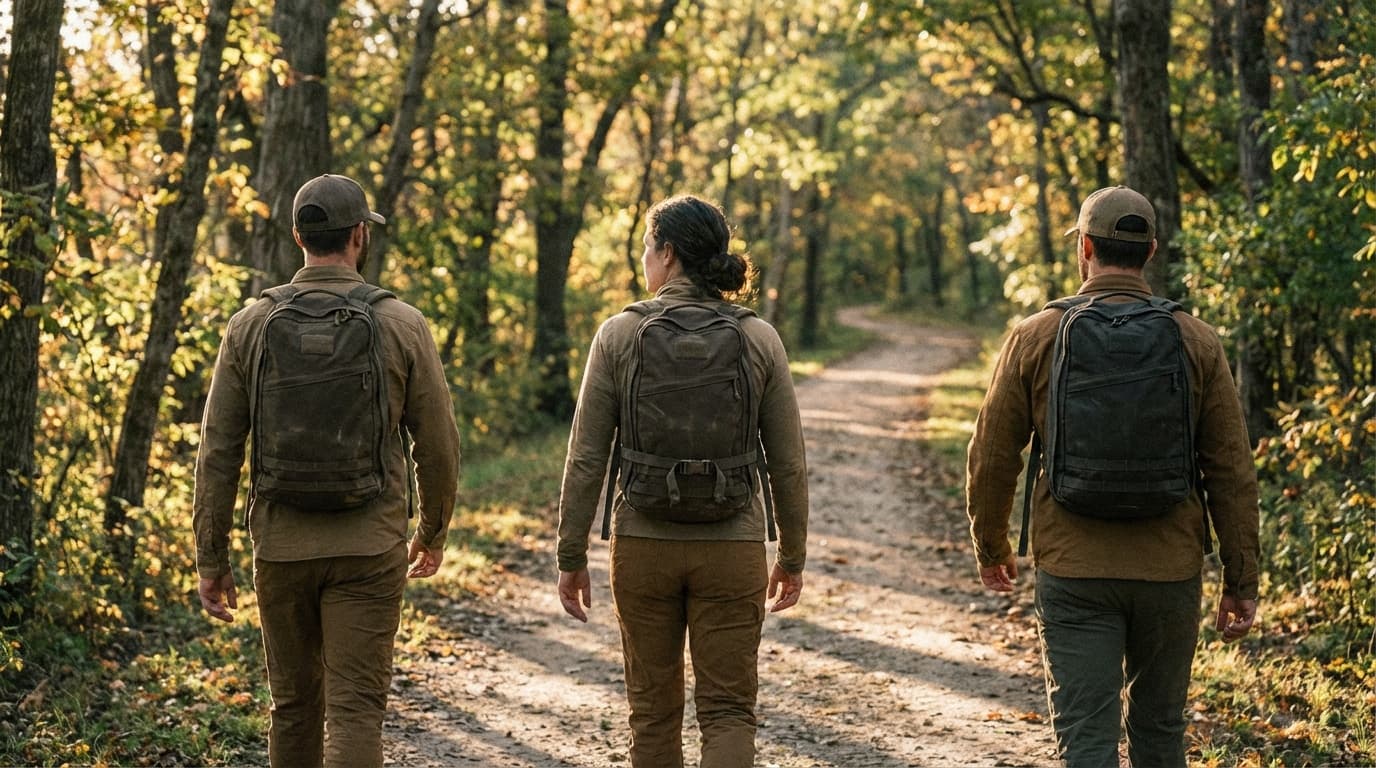
Shin splints usually refers to medial tibial stress syndrome (MTSS): activity-related pain spread along the inner rear edge of the shinbone. It can follow an increase in training demand. Stop the activity that brings on pain; a lighter pack isn't a reason to keep walking through it. Tenderness in one small spot on the bone, pain at rest, or pain at night needs an assessment for a possible bone stress injury.
Pain at the front of the shin can have other causes too, so "shin splints" isn't a diagnosis for every lower-leg symptom. Sudden, severe pain needs emergency care; persistent or recurring pain deserves an exam even when it feels manageable.
Understanding shin splints in rucking
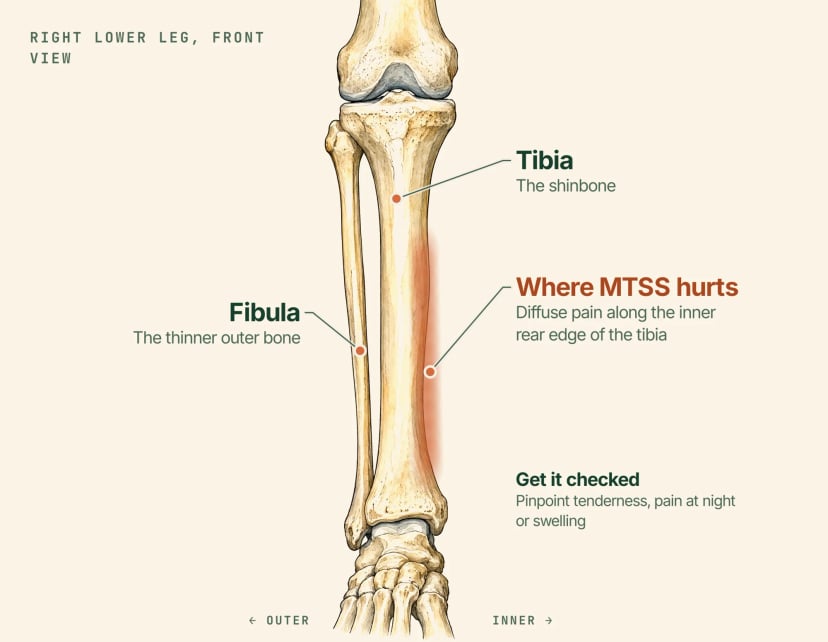
MTSS is defined by diffuse pain and tenderness along the posteromedial tibia that is related to activity. It is considered a load-related condition, but its biology is not explained by inflammation alone. Bone loading, remodeling, muscle and fascial forces, training history, and individual risk factors may all contribute.
A pack increases the work of walking and can change gait. That added demand may matter when load, distance, speed, hills, or training frequency rises faster than the person can tolerate. It does not establish that every case of shin pain during rucking is MTSS.
In a 2007 gait study, military load added in 8 kg (about 18 lb) increments produced a roughly proportional rise in vertical and front-to-back ground-reaction forces (Birrell et al., 2007). That explains why the pack matters. The study measured forces, not the rate of MTSS in recreational ruckers.
MTSS and tibial bone stress injuries can cause overlapping symptoms and probably sit on the same continuum. One clinical reference describes MTSS tenderness as running along more than about 5 cm (2 inches) of the inner shin edge, while point tenderness over a shorter stretch of bone points toward a stress fracture (Larson et al., StatPearls, 2025). Tenderness in one spot, pain at rest or at night, swelling, or pain with ordinary walking should prompt medical evaluation rather than a home diagnosis of either condition.
Primary causes in loaded walking
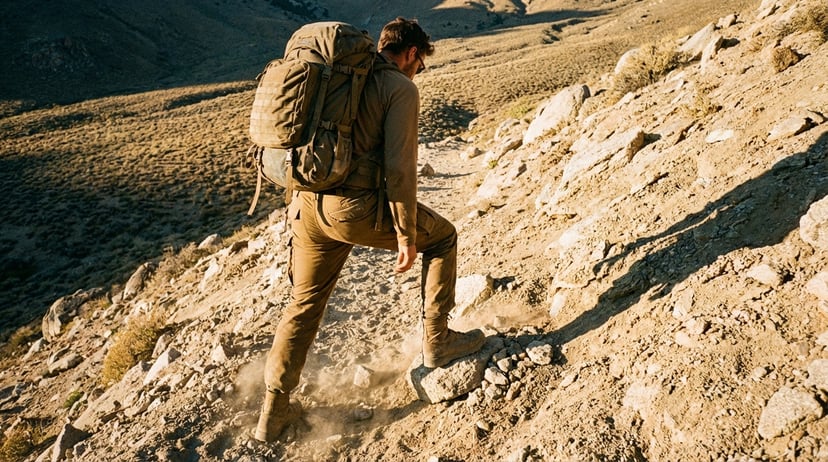
MTSS is multifactorial. A 2017 meta-analysis of risk factors in active people found five with consistent evidence: female sex, higher body weight, greater navicular drop (the arch flattening more under load), a previous running injury, and greater hip external rotation measured with the hip flexed (Reinking et al., 2017). These are associations, not a diagnosis or a reason to try to change your natural hip motion. Training decisions are the part you control.
Training load changes can matter. A large jump in distance, pack weight, speed, hills, or frequency may exceed current capacity. The popular 10% rule is not a validated injury-prevention threshold and should not be treated as a target or ceiling.
Surface and terrain change gait and loading. Pavement, trails, hills, and uneven ground each create different demands. Softer ground does not always reduce tibial stress, and mixed surfaces have not been proved to prevent MTSS in ruckers.
Footwear changes may affect comfort and gait. Replace shoes when fit, tread, or structure no longer works for you, and reduce training while adapting to a very different shoe. There is no universal replacement mileage or shoe type that prevents MTSS.
Pack load and movement can change stride and foot strike. A bouncing or shifting pack may be uncomfortable, but pack position has not been established as a direct cause of MTSS.
Describe the pain before deciding what it is
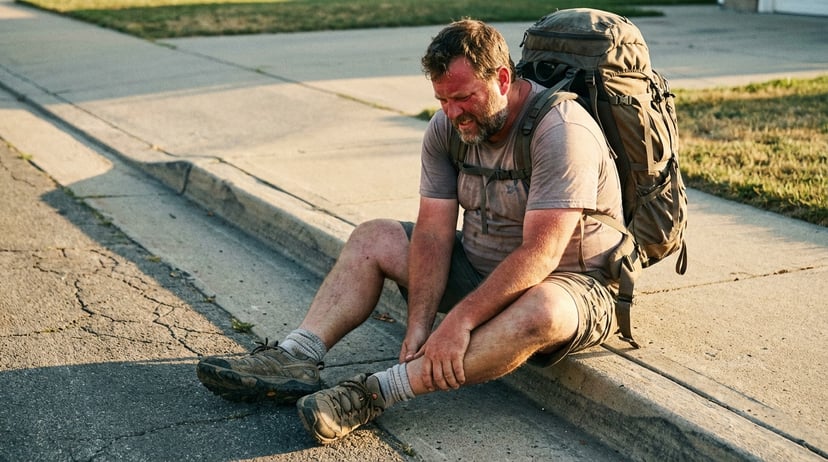
MTSS does not follow a reliable three-stage sequence. Note where the pain is, whether it is spread out or focal, when it starts, what happens after the session, and whether ordinary walking is affected.
The pattern used in MTSS research is diffuse, activity-related pain along the posteromedial tibial border, and it's the definition the 2017 risk-factor meta-analysis used (Reinking et al., 2017). No home test rules other conditions in or out.
Stop loaded walking and arrange assessment for focal pain, pain at rest or at night, or recurring symptoms. Get urgent care for difficulty bearing weight, marked swelling, or worsening pain. Sudden, severe pain needs emergency care, as does an injured leg or foot that is numb, tingling, cold, or discolored. See the care guidance below.
Pain distribution and response to rest are useful history, but they don't settle the question at home. A clinician may use an exam and, when needed, imaging to evaluate tibial bone stress injury, exertional compartment syndrome, nerve symptoms, or another source of lower-leg pain. Clinicians can diagnose MTSS reliably from a history and exam, and in one Dutch study about a third of athletes with MTSS also had a second lower-leg injury at the same time (Winters et al., 2018), which is one more reason to get persistent pain examined.
What prevention evidence supports
A 2025 systematic review included 12 randomized prevention trials with 8,197 participants; 10 trials were eligible for meta-analysis. It reported high-certainty support for neuromuscular training and moderate-certainty support for overpronation insoles. Shock-absorbing insoles had no statistically significant preventive effect, and static stretching and special socks lacked supporting evidence. These findings do not establish a rucking-specific prevention program.
Manage training load. Change one variable at a time, then judge symptoms and recovery before changing another. There is no evidence-based weekly percentage that guarantees prevention.
Use terrain you can control. Changing surfaces can vary the demand, but surface rotation is not a proven MTSS-prevention protocol. Uneven or sloped ground may increase symptoms for some people.
Choose comfortable footwear. Transition gradually when heel-to-toe drop, cushioning, stiffness, or fit changes substantially. A max-cushion option such as the Hoka Bondi 9 may feel comfortable on pavement, but cushioning does not guarantee MTSS prevention.
Track distance, pack weight, pace, terrain, and symptoms. The log can help you identify which change preceded pain, though it cannot diagnose the injury.
Neuromuscular training targets movement control. Calf raises, controlled toe raises, and single-leg balance are possible conditioning exercises when pain-free, but this simple menu is not a trial-tested MTSS-prevention program for ruckers.
Stretching can be a comfort choice. Use gentle mobility if it feels helpful; don't rely on it to prevent MTSS.
Overpronation insoles may help selected people. The prevention review found moderate-certainty support in the studied populations. That does not mean everyone needs an insole; consider an assessment when overpronation, foot pain, or recurrent MTSS is a concern.
Pack fit and loading considerations

Pack fit affects comfort and gait, but no setup is proven to prevent or treat MTSS. Keep the load stable enough that it does not swing with each step.
Weight distribution: Keep dense items close to the back panel. If a placement makes you lean, shorten your stride, or changes symptoms, reduce or reposition the load.
Hip belt use: A belt may transfer some load to the pelvis when the pack is designed for it. It does not reduce the total load carried by the legs and is not an MTSS treatment.
The Osprey Tempest Velocity 20 Women's Pack is an adjustable-torso option. Fit the pack with the intended load; a particular model does not make a painful progression safe.
Building training load
There is no universal starting load or distance that prevents MTSS. A 2026 scoping review found tibial-load measurements too inconsistent to derive load-management prescriptions from those studies. That is a limit of the measurement evidence, not a reason to ignore clinical advice. Start conservatively after time away; if you're recovering from shin pain, use the return criteria below before adding a pack.
Weekly progression: The 10% rule is a coaching heuristic, not a safety threshold. Change one variable at a time and hold or reduce the plan when pain, gait, or recovery worsens.
Load progression: Use the smallest practical increase and keep distance, pace, and hills steady while you assess it. Cardiovascular comfort does not prove that the tibia is ready for more load.
Recovery: Allow recovery between demanding sessions. Do not keep repeating a session that causes shin pain just because symptoms fade between outings. Rest-day needs vary, and recurrent pain calls for assessment.
What to do when shin pain starts

Do not assume new shin pain is harmless MTSS. NHS guidance advises stopping the exercise that caused it, then rebuilding gradually after recovery.
Activity modification: Stop the provoking session and remove the pack. If ordinary walking also hurts, don't test a longer unloaded walk; seek assessment. A fixed load reduction or a softer surface does not establish that continuing is safe.
Ice: Cold may provide short-term comfort, but it has not been shown to heal MTSS or prevent recurrence. Protect the skin and use it only if it feels helpful; do not use numbness to continue painful training.
Cross-training: Swimming, cycling, or upper-body strength work may preserve fitness when they do not reproduce symptoms. Stop any alternative that increases pain.
Recovery can take weeks to months. In a Dutch study of 42 athletes with MTSS, those on a graded running program took an average of about 92 days to run 18 minutes pain-free at a fixed intensity; a group at a second hospital that also had shockwave therapy took about 60 days (Moen et al., 2012). The groups were not randomized. This was a specific running endpoint, not a forecast for every case of shin pain or proof that shockwave treatment caused the difference.
Return to activity: Daily walking should be pain-free before you consider loaded walking. AAOS advises at least two pain-free weeks before returning to exercise, then less frequent, shorter, easier sessions. That is a recovery criterion, not a promise of recovery two weeks after pain starts or clearance for a suspected stress fracture.
When to seek medical attention
Arrange medical evaluation for pain that is focal, worsening, present at rest or at night, or not settling after you stop the aggravating training. Those features can occur with conditions other than MTSS and should not be diagnosed from an article.
Get urgent same-day advice for trouble bearing weight, marked swelling, worsening pain, or new numbness or weakness. Don't try another ruck while waiting for assessment.
Seek emergency care for sudden, severe lower-leg pain, which can occur with acute compartment syndrome. An injured leg or foot that is numb, tingling, cold, or discolored also needs emergency assessment. You don't need to have all these signs.
Redness and warmth with fever or rapidly increasing swelling needs urgent care. New one-sided calf pain and swelling can also be a sign of DVT and needs urgent assessment; accompanying breathlessness or chest pain is an emergency.
Recovery and return-to-training protocols
Recovery depends on the diagnosis, symptom severity, and training demand. Complete rest, continued pain-free activity, and return timing should be chosen for the individual rather than prescribed by a fixed calendar.
Step 1: Settle the aggravating load. Avoid activities that reproduce or increase pain. Gentle movement or cross-training can continue only when comfortable. Static stretching is not a proven MTSS treatment.
Step 2: Recheck ordinary walking. Once daily activity is pain-free, use a short unloaded walk on predictable terrain. Check symptoms during the walk, later that day, and the next morning. This is a progress check, not clearance for a suspected bone stress injury.
Step 3: Reintroduce loaded walking. Follow the pain-free recovery period described above or your clinician's plan. Begin with both a lighter pack and a shorter route than before the injury. Keep pace and terrain easy to control, and stop if shin pain returns.
Step 4: Build toward the required training. Repeat a comfortable session before increasing one variable at a time. Daily walking and the previous session should remain pain-free, including the following morning. A clinician should guide the return when symptoms were focal, recurrent, severe, or diagnosed as a bone stress injury.
Long-term prevention maintenance
These practices may help manage training, but none guarantees that MTSS will not recur:
Surface choice: Use terrain that lets you keep a comfortable gait. There is no evidence-based rule limiting pavement to 50% of weekly volume.
Neuromuscular work: Keep a pain-free strength and balance program if it fits your training. The evidence does not establish that two 15-minute sessions are enough for every person.
Equipment monitoring: Replace footwear when fit, tread, or structure is no longer suitable. Rotating shoes and buying more cushioning have not been proved to prevent MTSS.
Load management: Return from a break below your former training level and change one variable at a time. The 10% rule is not a universal requirement or guarantee.
Frequently asked questions
You cannot reliably make that distinction from one symptom or a home test. MTSS usually involves diffuse, activity-related pain and tenderness along a longer stretch of the inner shin edge. Tenderness in one spot on the bone, pain at rest or at night, swelling, or trouble bearing weight don't prove a stress fracture, but they are reasons to get the leg examined before you ruck on it again.
Stop the activity that brings on shin pain and remove the pack. Keep only activities that are pain-free during and afterward. If ordinary walking hurts, or pain is focal, present at rest or night, persistent, or recurring, get assessed before returning to loaded walking. Sudden, severe pain needs emergency care.
Recovery can take weeks to months. AAOS advises at least two pain-free weeks before returning to exercise, followed by a gradual build; that does not mean full rucking two weeks after symptoms begin. Start with less weight and distance, then change one variable at a time only while daily walking and each session remain pain-free, including the next morning. Focal, severe, recurrent pain or a bone stress injury needs a clinician's return plan.
No surface has been shown to prevent MTSS for every rucker. Choose predictable terrain that supports a comfortable gait. Soft or uneven ground can change loading and may aggravate symptoms for some people; pavement does not require a universal 50% cap.
No. Ice has not been shown to prevent MTSS. Cold may offer short-term comfort after symptoms begin, but it does not diagnose or heal the cause. Protect the skin, stop if it hurts, and do not use numbness to continue a painful ruck.
There is no evidence-based percentage. Stop the aggravating session, remove load, and use only activity that does not increase pain or change gait. If pain affects ordinary walking, is focal, occurs at rest or night, or keeps returning, get medical guidance before rebuilding the plan.


