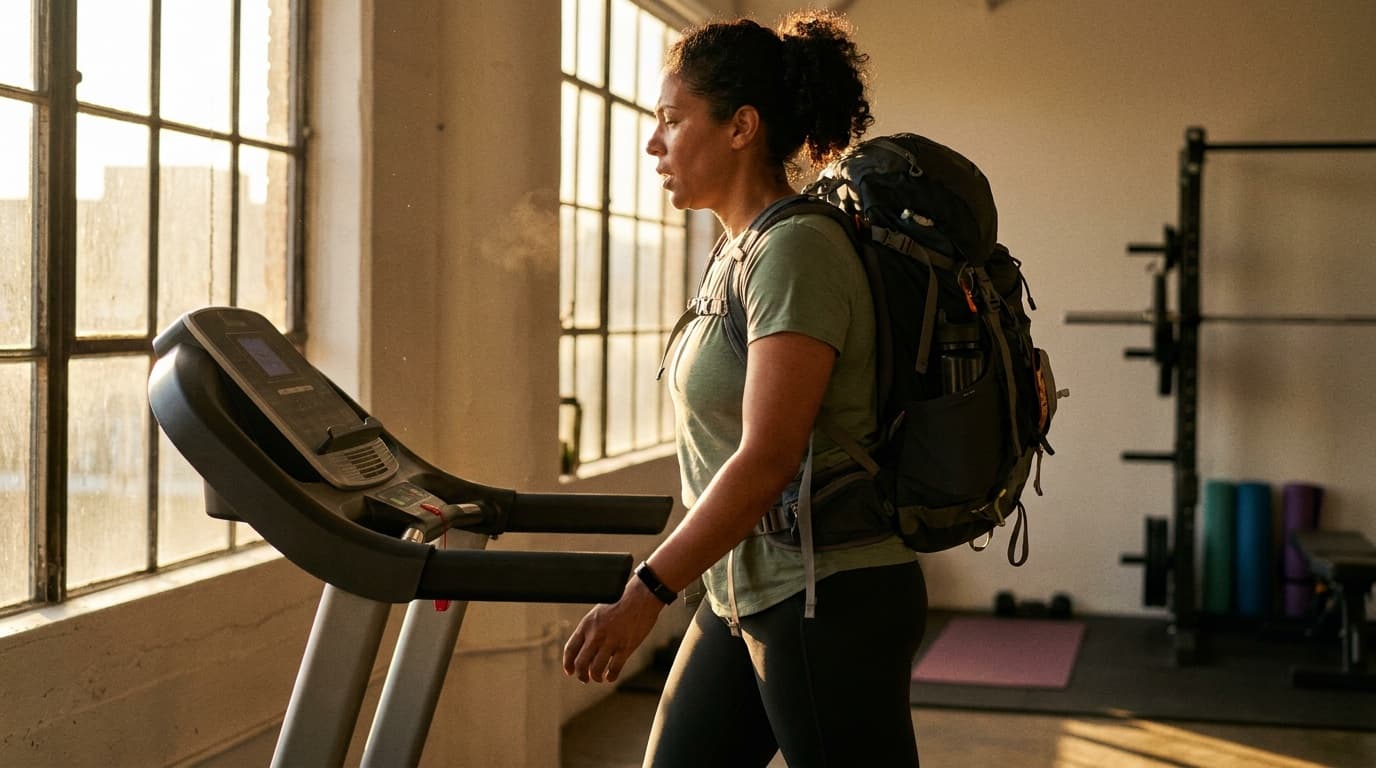
The Short Answer
You can ruck safely in hot weather. Military personnel, Special Forces, and ultralight hikers do it every day. The difference between a great summer ruck and a dangerous one comes down to five factors: heat acclimatization, hydration math, load management, timing, and knowing when to stop.
If you have not trained in heat before, expect 10 to 14 days to adapt. Your body will sweat more efficiently, your heart rate will stabilize, and your thermal tolerance will improve measurably. Skip this adaptation window and you are asking for heat exhaustion.
The hot-weather rucking kit
Five items that determine whether you finish a hot ruck strong or limp home with heat exhaustion. Two of them (shoes, electrolytes) are non-obvious; ruckers consistently under-spec them and pay the price by mile four.
| Priority | Item | Why this one |
|---|---|---|
| 1 | LMNT Variety Pack electrolytes ($25-50) | 1000mg sodium per packet, no sugar. Long, hot efforts can require electrolytes as well as water; match intake to conditions and your own needs. |
| 2 | Salomon XA Pro 3D V9 GTX trail shoes ($150-300) | Aggressive Contagrip handles dust, dry creek beds, and sun-baked road shoulders. GORE-TEX matters less in summer but the stable platform matters more. |
| 3 | 5.11 Tactical RUSH 24 2.0 pack ($50-150) | Open mesh back panel allows airflow; the dark colors common in tactical packs absorb heat, so choose a lighter color when available. |
| 4 | Nalgene Wide-Mouth 32 oz bottle (under $25) | Fits ice cubes; the wide mouth lets you mix electrolyte powder without a funnel mid-ruck. |
| 5 | Mystery Ranch 2 Day Assault pack ($150-300) | Bigger volume option when you need to carry 3L of water, electrolytes, and a spare shirt for a 90+ minute hot ruck. |
How Heat Acclimatization Works
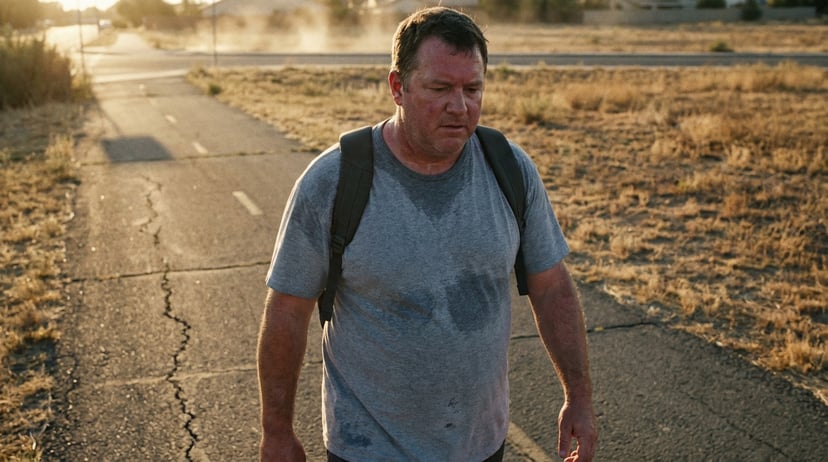
Heat acclimatization is a real physiological adaptation, not mental toughness. When you expose yourself to elevated temperatures over days, your body makes permanent changes: improved blood plasma volume, earlier onset of sweating, and lower core temperature at rest.
These adaptations take time. Evidence suggests that meaningful acclimatization requires daily heat exposure for 10 to 14 consecutive days. You cannot skip this.
Here is how to acclimatize safely:
- Days one to three: Ruck in heat for 30 to 40 minutes at an easy pace. Keep pack weight at 50 percent of normal.
- Days four to seven: Increase duration to 45 to 60 minutes. Bump pack weight to 75 percent of normal.
- Days eight to 14: Return to normal rucking protocol. Your body will now tolerate higher temperatures without the same cardiovascular strain.
Track your resting heart rate each morning. When it stabilizes or drops despite heat exposure, acclimatization is progressing.
Hydration Math for Hot Weather
Sweat rates vary far more than most hydration advice admits. During exercise they commonly run from about 0.5 to 2 liters per hour, and some people go higher. Temperature, humidity, sun, pack weight, pace, body size, and heat acclimatization all move the number, so no single ounces-per-hour rule fits everyone.
The goal isn't to replace every ounce as you go. The American College of Sports Medicine's position stand on fluid replacement (Sawka et al., 2007) sets it as preventing a loss of more than about 2 percent of body weight from water deficit. For a 180-lb rucker, that's roughly 3.6 lbs, or about 1.6 liters of sweat your drinking doesn't cover.
Treat these as starting ranges, then adjust them with the weigh-in check below:
| Temperature Range | Pack Weight | Starting Fluid Intake | Recommended Duration |
|---|---|---|---|
| 55-75F | 20-40 lbs | 8-16 oz/hour | 60-90 minutes |
| 75-85F | 20-40 lbs | 16-24 oz/hour | 45-75 minutes |
| Above 85F | 15-25 lbs | 24-32 oz/hour | 30-45 minutes |
Why not just drink what you sweat? A 180-lb rucker carrying 40 lbs at 3.5 mph in 90-degree heat can sweat a liter (34 oz) an hour or more, and heavy sweaters can pass 2 liters. Your gut can't keep up with the high end. Most stomachs empty fluid at roughly a liter an hour, and people who try to drink faster than that often report stomach discomfort (ACSM, 1996). U.S. Army heat guidance tells soldiers not to exceed 1 quart (32 oz) an hour under most conditions, with 1.5 quarts (48 oz) as the ceiling for the hardest work, including walking with a load. On a 30- to 45-minute ruck above 85F, the table's intake plus the short duration keeps most people well under the 2 percent line. Longer rucks need your own numbers.
Find your sweat rate. Weigh yourself before and after a ruck, without the pack and in as little clothing as practical. Your sweat loss is the weight you lost plus whatever you drank, minus any urine. Divide by the hours you rucked. Each pound lost is about 16 oz (0.45 L) of fluid you didn't replace. If you finished more than 2 percent lighter, drink more next time (staying under that gut limit) or shorten the ruck. If you finished heavier than you started, you drank too much.
Don't overshoot. Drinking well past thirst and past your sweat losses dilutes blood sodium and can cause exercise-associated hyponatremia. The ACSM stand notes that dehydration is the more common problem, but symptomatic overdrinking is the more dangerous one. The National Athletic Trainers' Association (McDermott et al., 2017) puts it plainly: don't drink more than you lose, and don't gain weight during exercise.
Electrolytes Matter More Than You Think
Sweat carries sodium, on average about 35 mEq per liter (roughly 800 mg), though individuals range from about 10 to 70 mEq per liter (ACSM, 2007). Plain water is fine for most rucks under an hour. On longer or sweatier rucks, some sodium helps replace what you lose, keeps thirst working, and after the ruck helps you hold on to the fluid you drink. It won't protect you from hyponatremia if you drink far more than you sweat; volume is the main driver.
For sports drinks, the ACSM stand cites an Institute of Medicine guideline of about 20 to 30 mEq of sodium per liter, which works out to roughly 460 to 690 mg per liter. LMNT Electrolyte Variety Pack is a no-nonsense option: one 1,000 mg packet in 1.5 liters of water lands near 670 mg per liter. Salty food does the same job, and Army heat guidance prefers table salt on meals over salt tablets. Small, regular drinks beat chugging; NATA notes that about 200 ml (7 oz) every 15 to 20 minutes may be ideal for absorption. A dedicated hydration setup, whether a 5.11 RUSH 24 hydration pack or bottles you can reach without stopping, makes that rhythm easy to keep.
When to Reduce Pack Weight
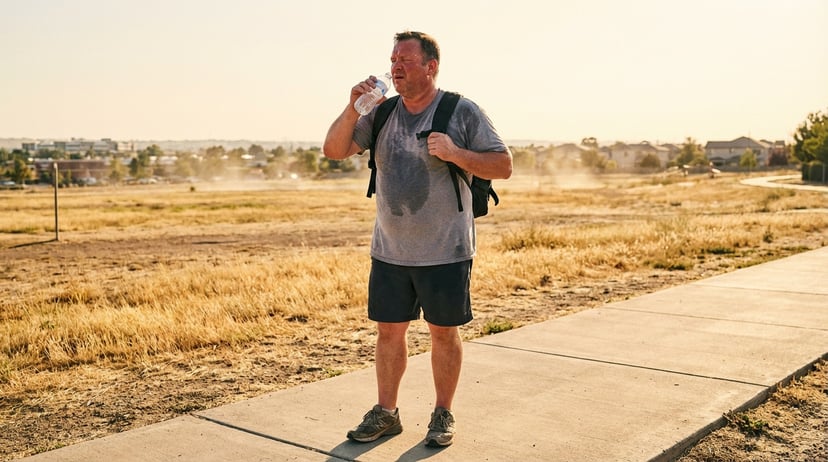
Above 85 degrees Fahrenheit (29 degrees Celsius), reduce your pack weight by 20 to 30 percent. This is not weakness - it is physics.
A lighter pack reduces the total metabolic demand and heat production from your body. The equation is simple: less load equals less heat generation equals lower core temperature. Army heat guidance doesn't prescribe a percentage cut, but it treats load as part of the heat problem. Its work/rest table rates walking on a hard surface at 2.5 mph with under 30 lbs as easy work and walking in sand with a load as hard work, then limits hard work sharply as heat climbs: 40 minutes of work per hour at a WBGT of 78 to 81.9F, down to 10 minutes per hour above 90F. It also adds 5F to the WBGT reading for soldiers in body armor in humid climates. Those are WBGT readings, not air temperatures (see the WBGT section below). The 20 to 30 percent cut here is a practical rule of thumb built on the same logic, not a military standard.
If your normal ruck weight is 40 lbs, carry 30 lbs in heat. If your normal ruck is 25 lbs, drop to 18 lbs. You will still get a training stimulus. You will also get home without heat illness.
If you are not yet accustomed to carrying your normal pack weight, reduce it even further for heat training. Acclimatization is the priority. You can build load capacity once your body adapts to the temperature.
Timing: Early Morning and Evening Win
Schedule summer rucks for early morning (before 9 AM) or evening (after 6 PM). This avoids peak solar radiation and typically captures lower ambient temperatures.
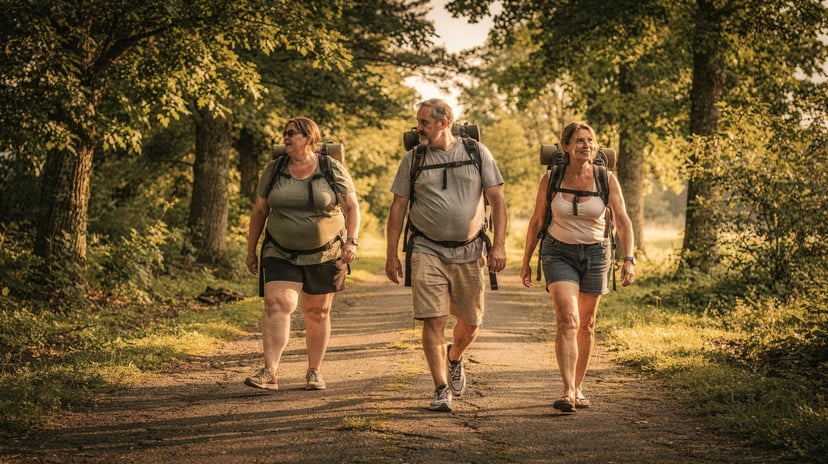
If you must ruck during the day, choose shaded routes: tree-lined paths, urban areas with tall buildings, or trails through forests in proper footwear like Salomon XA Pro 3D shoes. Shade can reduce the effective temperature by 10 to 15 degrees.
Avoid midday (11 AM to 4 PM) entirely during heat acclimatization or in extreme heat conditions (above 95F).
Clothing: Sweat Management Beats Cotton Every Time
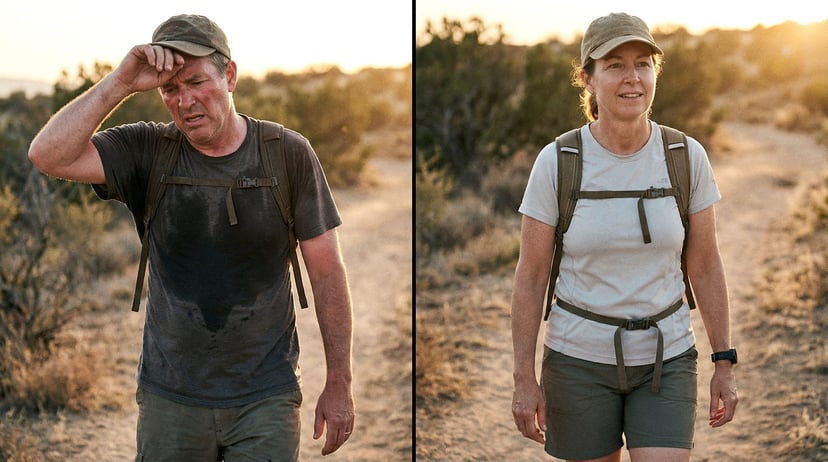
Wear moisture-wicking fabrics (polyester, nylon, merino wool) that pull sweat away from your skin. Cotton absorbs sweat, traps heat, and increases chafing. This is not optional in hot weather.
Light colors (white, light gray, tan) reflect more solar radiation than dark colors. You will be noticeably cooler in a light-colored shirt versus a dark one, even in the same conditions. Light colors also make it easier to spot ticks - our tick prevention guide for rucking covers the layered defense for trail seasons.
Consider removing your pack periodically to allow air circulation underneath - a 30-second break every 10 to 15 minutes can significantly reduce back temperature and discomfort.
Heat Illness Warning Signs: Know Them Cold
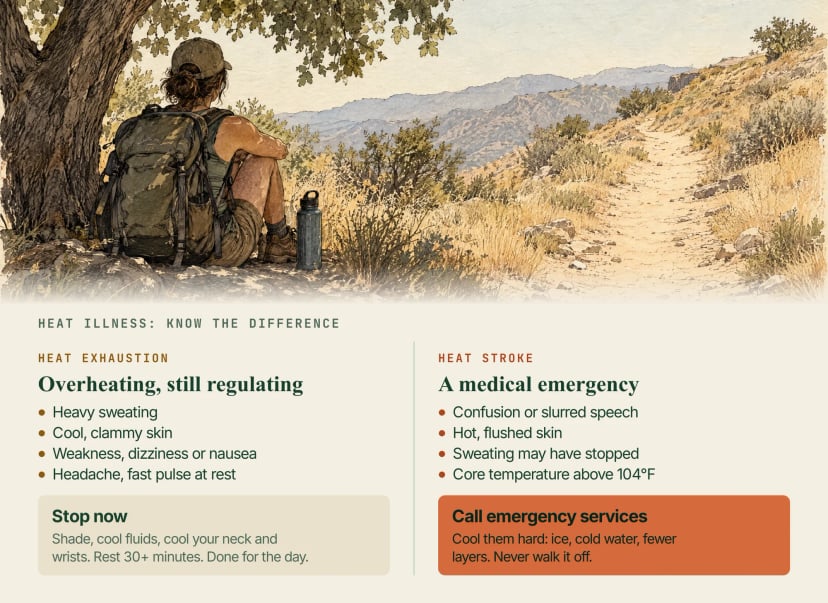
Heat exhaustion and heat stroke are different conditions requiring different responses.
Heat Exhaustion
Heat exhaustion is your body overheating but still regulating:
- Heavy sweating (your cooling system is working hard)
- Weakness, dizziness, or lightheadedness
- Nausea or headache
- Cool, clammy skin
- Heart rate elevated even at rest
- Normal or slightly elevated core temperature (below 104F)
Response: Stop immediately. Move to shade. Drink cool fluids. Cool your neck, wrists, and inner elbows with cool water or ice if available. Rest for at least 30 minutes. Do not resume exercise that day.
Heat Stroke
Heat stroke is a medical emergency. Your body has stopped sweating and core temperature is rising uncontrolled:
- Confusion, irritability, or slurred speech
- Little to no sweating (this is the danger sign)
- Flushed, hot skin (not cool and clammy)
- Core temperature above 104F (if you can measure it)
- Loss of consciousness or seizures in severe cases
Response: Call emergency services immediately. Cool the person aggressively - ice bath, spray with cool water, remove excess clothing. This is not a "walk it off" situation.
The ACSM position stand on exertional heat illness (Armstrong et al., 2007) recommends that in high-risk heat, people exercise with a partner, each responsible for watching the other, because a partner can spot small changes in performance and behavior. It also calls for monitoring athletes for signs of heat illness and accumulating dehydration during multi-day training in hot, humid conditions. The buddy recommendation rests on the stand's lowest evidence grade (category C: consensus, usual practice, and case series), not on a study that measured how much it cuts heat illness.
The Buddy System: Never Ruck Alone in Heat
Train with a partner in hot conditions. A buddy notices if your pace drops, your gait changes, or your speech becomes slurred. These are early heat illness warning signs you might not notice about yourself.
Before your ruck, establish a "check-in" plan:
- Call or text every 15 to 20 minutes.
- Agree on a specific turnaround time (no "just one more mile" decisions).
- Share your route and estimated return time.
- If either person feels off, the ruck stops immediately - no negotiation.
Army heat guidance tells leaders to enforce battle buddy checks for the same reason: a partner sees what you miss.
Route Planning: Shade and Water Access
Scout your route before you ruck in heat:
- Identify shade stops: Parks, underpasses, or tree-lined sections where you can sit for two to five minutes.
- Locate water sources: Public fountains, convenience stores, or cached Nalgene Wide Mouth 32oz bottles at known points.
- Know your escape route: Plan how you would get home if you needed to bail early (rideshare, parked car, familiar neighborhoods).
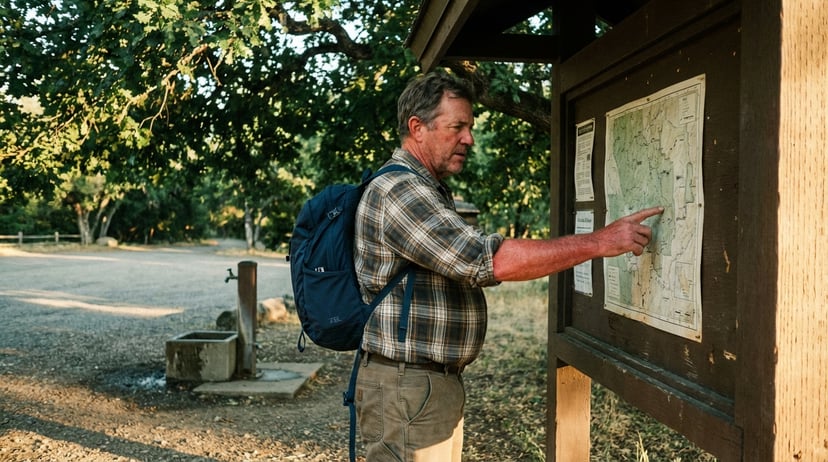
Avoid out-and-back routes in extreme heat. A loop route gives you options to cut distance if needed without doubling back. For longer sessions (60+ minutes), a Mystery Ranch pack built for rucking is worth the investment - it keeps water easily accessible and distributes the weight better than a traditional pack with a bladder.
Wet Bulb Globe Temperature (WBGT): A Tool to Know
You may have heard of "wet bulb temperature" in news stories about extreme heat. This is the wet bulb globe temperature (WBGT), a combined measurement of temperature, humidity, wind, and solar radiation.
You do not need a special device. Here is the simplified version:
- Below 28C (82F) WBGT: Safe for unlimited outdoor exercise with standard precautions (hydration, breaks).
- 28-32C (82-90F): Limit intense exercise. Use all precautions: hydration, electrolytes, shade, reduced load.
- Above 32C (90F) WBGT: Avoid strenuous outdoor exercise entirely. Ruck at reduced intensity or postpone.
On a hot day, if it is 90F with high humidity and full sun, the WBGT is likely above 32C. This is not a day for your long ruck. This is a day for an air-conditioned strength session or a short shaded walk.
Military guidelines recommend suspending hard training when WBGT exceeds 32C. Follow their lead.
Your Next Step
Heat acclimatization and hydration are the foundation, but nutrition matters too. After your hot weather rucks, your body needs electrolytes, carbohydrates, and protein to recover properly. Our rucking nutrition guide covers hydration recovery, electrolyte timing, and post-ruck fueling - all critical when training in heat.
Frequently asked questions
How long does heat acclimatization last?
Heat acclimatization improvements persist for about two to three weeks after your last heat exposure. If you have acclimatized and then spend three weeks indoors or in cool weather, you will have lost maybe 25 to 30 percent of your adaptations. The good news: re-acclimatization happens faster the second time - roughly 50 to 75 percent of the original adaptation period. So if you took 14 days the first time, expect 7 to 10 days to regain it.
Can I ruck in 95+ degree heat?
Technically yes, but should you? No. At 95F with high humidity (above 80 percent), the wet bulb temperature climbs above 32C, which military guidelines classify as unsafe for strenuous exertion. Even elite ruckers respect this limit. On days above 95F, either wait for cooler hours (very early morning or late evening) or substitute an indoor ruck on a treadmill at reduced speed. This is not giving up. This is respecting the limits of human thermoregulation.
What should I drink - water or sports drinks?
For rucks under 60 minutes, water is fine. For rucks lasting 60 to 90 minutes in heat, a sports drink with four to eight percent carbohydrates and roughly 460 to 690 mg sodium per liter works well. This provides both fluid replacement and a carbohydrate boost to maintain energy. If you prefer plain water, pair it with an electrolyte tablet or salty snack. The sodium is the critical part, not the sugar.
Should I do heat training every day?
No. Heat acclimatization requires daily exposure for 10 to 14 days, but once adapted, you do not need daily heat training. Two to three rucks per week in warm conditions maintains acclimatization. The rest of your week can be indoors, at cooler times of day, or with reduced intensity. Overtraining in heat increases injury and heat illness risk.
Can I ruck in heat with a running watch or heart rate monitor?
Yes, and it is helpful to track your heart rate response to heat. Your resting heart rate should drop over the acclimatization period, and your maximum heart rate at a given pace should decrease once adapted. One note: in very high heat, your heart rate can plateau even as intensity increases - this is a sign to slow down and cool your core. Do not chase pace targets in hot conditions.
Related reading
- Rucking injury prevention - a complete guide to avoiding common rucking injuries, including heat-related strain
- How heavy should your ruck be? - weight recommendations by fitness level and goal, with load reduction strategies for special conditions
- Rucking nutrition guide - hydration, electrolytes, and fueling strategies for training sessions of all lengths
- Training programs for rucking - the pillar guide with progressive programming, including heat-adapted workouts
- First 30 days of rucking - how to get started safely, even in warm weather
- Summer rucking gear kit - the hot-weather loadout: hydration vest, mesh-upper shoes, and the electrolytes most ruckers underdose