The key difference
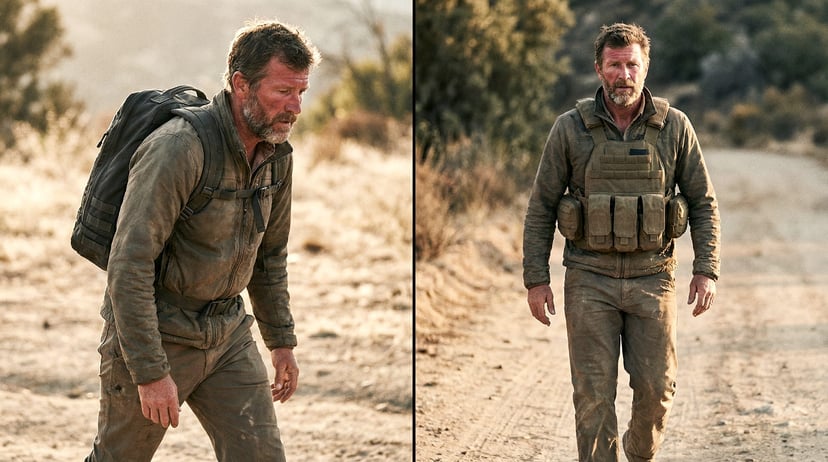
For fitness walking, a weighted vest and a rucksack produce similar calorie burn at the same load. A 20-lb vest and a 20-lb rucksack both make your body move 20 extra pounds. The difference isn't the calorie math: the rucking calorie calculator gives you nearly identical numbers whether you call the load a vest or a pack. The difference is where the weight sits and how that changes comfort, posture, muscle emphasis, and practical use.
Use this quick rule:
| If your main goal is... | Choose | Reason |
|---|---|---|
| Long rucks or hikes | Rucksack | Carries water, layers, and heavier loads better |
| Bodyweight workouts | Weighted vest | Stays tight during push-ups, pull-ups, squats, and stairs |
| GORUCK/event prep | Rucksack | Matches the tool used in the event |
| General fat loss walks | Either | Same load means similar energy cost |
| 30+ lb training | Rucksack | Hip belt and pack structure matter more |
| Desk-worker posture reset | Rucksack | Posterior-chain loading is the point |
| Low-profile neighborhood walks | Rucksack | Looks like a normal backpack |
Both weighted vests and rucksacks add load to your body while walking, creating the training stimulus of loaded carry work. But they're fundamentally different tools because they distribute weight differently.
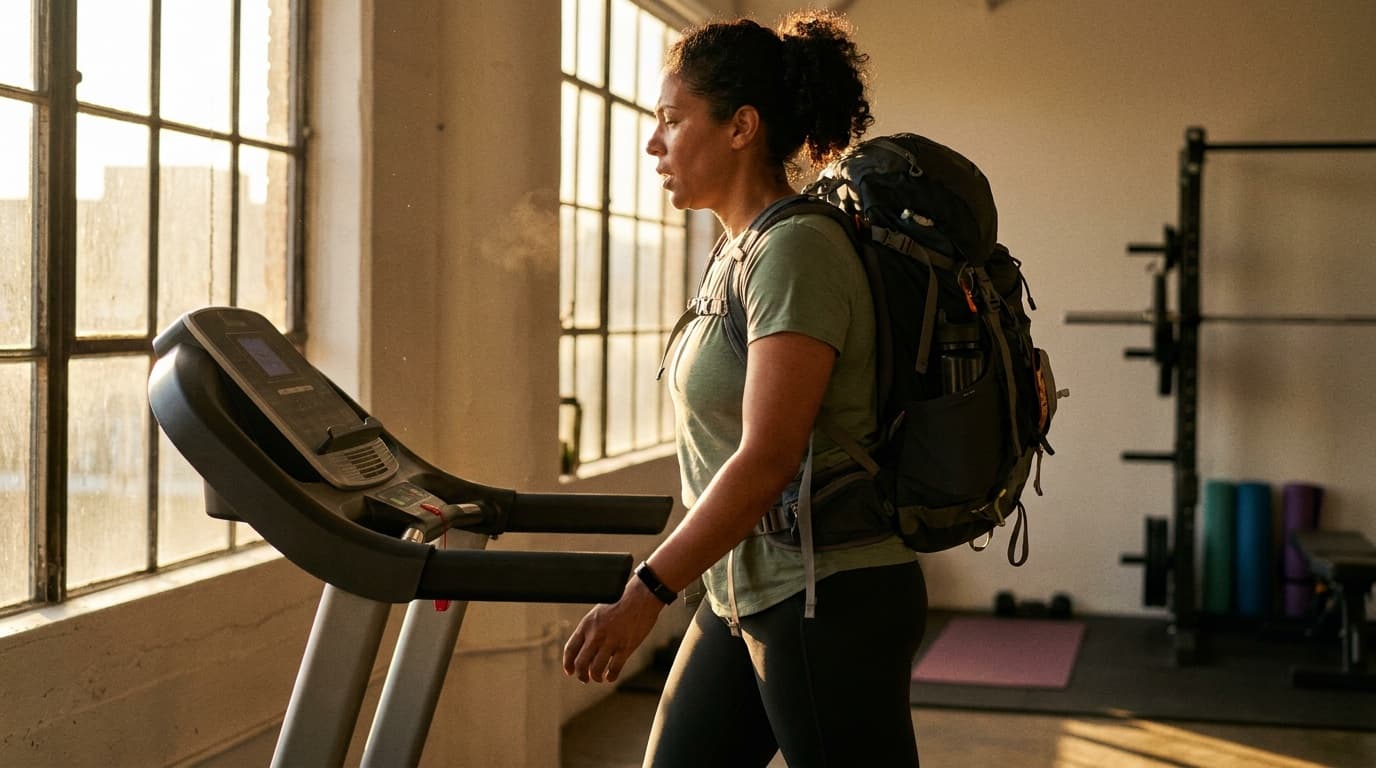
A rucksack concentrates weight on your posterior chain (back and rear muscles). The pack sits on your upper back and sometimes extends to your lower back, creating a postural adjustment where you lean slightly forward to balance the load.
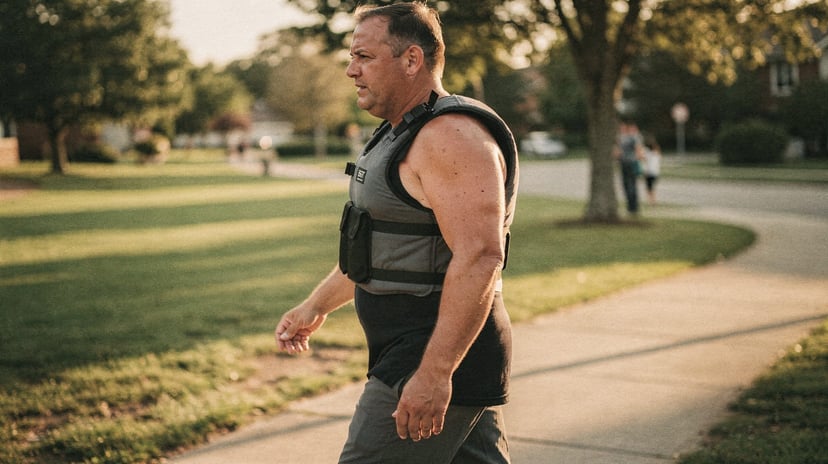
A weighted vest distributes weight around your entire torso (front, sides, back), creating more symmetrical loading. Your posture remains more upright because the weight is distributed rather than concentrated.
This architectural difference changes which muscles work hardest, how your spine loads, what your posture looks like, and ultimately what the training stimulus is. Neither is universally better, but they aren't interchangeable.
What the 2026 research adds
Two questions sit under this comparison: does walking with extra weight actually do anything, and does it matter whether that weight is on your chest or your back? This year produced the best evidence yet on the first and some useful lab data on the second. We cover all fifteen 2026 papers in our rucking research review; these are the three that bear on vests versus packs.
Fat and bone outcomes across nine vest trials
Nine randomized trials, 368 middle-aged and older adults
Body fat, change in kilograms
- Vest + exercise vs usual activity-2.67 kg
- Vest added to existing exercise-0.73 kg
Bone density, standardized effect
- Femoral neck (hip)+0.59
- Lumbar spine+0.73
- Added to existing exerciseNo confirmed benefit (1 trial)
Fat-mass evidence graded high certainty; bone outcomes low to moderate. Trials used vests, not packs, in middle-aged and older adults.
Study 01. Vest plus exercise: denser bone and less fat than doing nothing
The first meta-analysis of randomized weighted-vest trials: nine trials, 368 middle-aged and older adults. Vest plus exercise improved hip and lumbar spine bone density compared with usual activity and cut about 2.67 kg of body fat. Adding a vest for people who were already exercising removed a further 0.73 kg of fat but showed no confirmed extra bone benefit, and that comparison rests on a single trial.
What it means here. These were vests, so this is the strongest case yet for the vest side of the argument. It doesn't make vests better than packs: the trials compared a vest with no load, not with a pack. What they tested is carrying weight while you move, and a pack carries weight too.
Study 02. A front load arches the low back and straightens the trunk
Forty-seven adults walked with and without a light load on the front of the chest while cameras tracked the spine. The front load increased the arch of the lower back during parts of the stride and pulled the trunk more upright.
What it means here. A vest puts part of its weight in front of you and a pack puts all of it behind you, and the spine responds differently to each. That's the placement difference this page is about, now measured: a vest keeps you more upright, a pack tips you slightly forward. Neither is wrong. They load different tissues.
Study 03. Three packs, same weight, same cost to the body
Twelve soldiers marched 5 km carrying 30 kg in three different military packs. Heart rate, oxygen use, and strength and balance afterward didn't differ between the packs.
What it means here. At the same weight, the body couldn't tell three packs apart. It's a small study with military gear, but it supports the rule at the top of this page: the calorie cost follows the load, so choose between a vest and a pack on comfort, fit and what else you'll do in it.
Head-to-head comparison
| Factor | Rucksack | Weighted vest |
|---|---|---|
| Weight distribution | Posterior (back) | Circumferential (360°) |
| Posture effect | Slight forward lean | More upright |
| Max practical load | 40-60 lbs | 20-40 lbs |
| Comfort at 20 lbs | Good | Good |
| Comfort at 40+ lbs | Better (hip belt) | Worse (all on shoulders) |
| Versatility | Can carry gear + weight | Weight only |
| Upper body activation | Moderate | Higher (more core engagement) |
| Price range | $60-300 | $40-200 |
| Adjustability | Fixed plate weights | Small increments (1-2 lb) |
| Social context | Looks normal | Looks like training gear |
Fitness decision matrix
| Training style | Better tool | Starting load | Working range | Notes |
|---|---|---|---|---|
| Beginner loaded walking | Rucksack | 10-15 lbs | 15-25 lbs | More useful outside training because it carries gear |
| Fat-loss walking | Either | 10-20 lbs | 20-35 lbs | Pick the tool you will use 3-5 days per week |
| Calisthenics circuit | Weighted vest | 5-10 lbs | 10-30 lbs | Vest stays closer to the torso during reps |
| Long-distance rucking | Rucksack | 15-20 lbs | 25-45 lbs | Pack fit and hip support become decisive |
| Stair or hill repeats | Weighted vest | 10-15 lbs | 15-30 lbs | Symmetrical loading feels better for vertical work |
| Event preparation | Rucksack | 20-30 lbs | 30-45 lbs | Sport specificity beats convenience |
When to choose a rucksack

A rucksack is the better choice if:
You want to carry gear simultaneously. A rucksack functions as both a training tool and a practical backpack. You can throw in water, phone, keys, a snack, or extra layers. A weighted vest is dead weight only-it has no utility beyond training. If you want a single piece of gear that serves double duty, a rucksack wins.
You plan to exceed 30 pounds regularly. Beyond 25-30 pounds, weighted vests become uncomfortable because all the load is distributed around your shoulders and torso. Weight starts pulling down on shoulder straps in ways that create neck and shoulder strain. Rucksacks with proper hip belts stay comfortable at 40-60 pounds because the hip belt transfers weight to your pelvis. If you're planning heavy rucking (GORUCK events, loaded marching), a rucksack is purpose-built for the job.
You want posterior chain emphasis. Rucksacks load your posterior chain (spinal erectors, glutes, hamstrings, calf muscles) more heavily than vests. If you're using rucking primarily for posterior chain strengthening, a rucksack provides more direct stimulus to those muscles. This is relevant for people doing strength training or athletic prep where posterior chain dominance is desired.
You're training for a specific event. GORUCK events, Tough Mudder, military fitness tests, and ruck races all use rucksacks. Training with a rucksack means you're practicing with the exact tool you'll use in competition. Sport specificity matters for event prep.
You want one tool for fitness and daily carry. Many ruckers use their training pack as their daily backpack for commuting, hiking, or travel. A good rucking pack is genuinely practical. A weighted vest has no non-training applications.
When to choose a weighted vest
A weighted vest is the better choice if:
You want symmetrical, balanced loading. The circumferential weight distribution means your posture stays more upright and balanced. There's no forward lean, no posterior chain emphasis, just evenly distributed loading across all stabilizer muscles. This is genuinely different stimulus than a rucksack provides.
You prefer more upright posture during walks. Some people find the slight forward lean of a rucksack uncomfortable or undesirable. A vest keeps you upright, which some find more natural or comfortable for extended walking.
You plan to use it for exercises beyond walking. A weighted vest is excellent for bodyweight exercises: push-ups, pull-ups, dips, squats, lunges. If you want a training tool that works for both rucking and strength training, a vest adds versatility. You can build a full workout around weighted vest exercises, whereas a rucksack is really only for walking and carrying.
You ruck lighter loads (under 25 lbs). At light loads, a vest is perfectly comfortable and appropriate. You don't need hip belt functionality for 15 pounds. The vest stays put, doesn't dig into your back, and distributes weight evenly.
You have shoulder or upper back issues. Rucksack straps sometimes aggravate shoulder problems in people with existing shoulder dysfunction. A vest distributes pressure more widely and often feels better. If rucksack straps cause you discomfort, a vest is worth trying.
You're a woman shopping in the broader market. Many mainstream weighted vests are designed and marketed toward women with better fit, smaller shoulder spacing, and more adjustability. Many rucksacks are designed with a men's-default fit (broader shoulders, longer torso), which can be uncomfortable for women. If finding a well-fitting rucksack is difficult, a quality weighted vest made for women often feels better.
A 2024 study by Looney et al. (2024) in Medicine & Science in Sports & Exercise measured cardiometabolic responses to weighted-vest training specifically and confirmed it produces meaningful aerobic + load-bearing stimulus across a range of body sizes - useful evidence if you're choosing a vest as a primary training tool rather than a rucksack alternative.
If the list above describes you, the next decision is fit and adjustability. Look for a vest that sits snug without bouncing at a walking pace and loads in small steps, so you can start light. The weighted walking kit pairs an adjustable vest with socks and water for daily walks, adds a walking shoe in the higher tiers, and includes a shorter-cut vest for smaller torsos.
Decided the vest is your lane? Our sister site Kit Authority's vest quiz matches you to the right one for walking and general fitness, and their walking-vest guide covers the picks. We keep the rucksack side covered below.
Can you use both?

Absolutely. Some advanced ruckers alternate between vest and rucksack across the week. Here's how:
Light/short rucks + vest. Use a weighted vest for your easy sessions or shorter rucks (1-2 miles, 15 lbs). The vest is more convenient (grab it, go), slightly more comfortable for light loads, and useful for occasional bodyweight training.
Heavy/long rucks + rucksack. Use a rucksack for longer efforts, heavier loads (30+ lbs), or events. The rucksack is built for these demands and carries gear simultaneously.
This approach gives you training variety (different stimulus from different tools) and flexibility (the right tool for the specific session). It requires owning two pieces of gear, but rucksacks and vests together cost less than many single premium rucksacks, so the budget impact is minimal.
Our recommendation
Starting out: rucksack. A rucksack is the more versatile entry point. You're learning rucking, you don't know if you'll love it yet, and you want a tool that has dual purpose (training plus daily carry). Start with a solid 5.11 RUSH 24 pack, or compare purpose-built weighted backpacks for rucking if you want a dedicated plate pocket. The adjustability and hip belt support will feel better as you add weight. If budget is tight, check out the budget rucking starter kit for reliable gear that won't break the bank.
Want a second tool: add a weighted vest. Once rucking is a consistent habit and you understand your preferences, consider adding a weighted vest for cross-training days or shorter sessions. Many vests cost less than a dedicated rucking pack and provide a different stimulus. This combination gives you maximum flexibility. For budget options, the CAP Barbell Adjustable Weighted Vest offers solid value, while the Hyperwear Hyper Vest PRO is worth considering if comfort is your priority.
Women choosing a primary tool: consider a vest. If fit is an issue with available rucksacks (and it often is), don't force it. A quality weighted vest designed for women might be your better primary tool. You can add a rucksack later if you want to try heavier loads or events. For women starting out, explore our guide to best rucking gear for women - better fit and comfort often matter more than which tool you choose.
Budget pick: whatever is cheaper. Both tools produce nearly identical training outcomes at the same weight. The calorie burn is virtually identical. The bone density stimulus is virtually identical. The cardiovascular benefit is virtually identical. If one is significantly cheaper than the other, pick the cheaper one. Consistency matters infinitely more than which tool you use.
This debate matters less than people think. Both tools add weight to your body while walking. The calorie burn is nearly identical at the same weight. Pick whichever one you'll actually use consistently, and ignore anyone who tells you one is "wrong."
Frequently Asked Questions
For a choice between two back-loaded GORUCK designs, see Ruck Plate Carrier 3.0 versus Rucker 5.0. That comparison covers plate fit and the space needed for water, layers, and event equipment.
For general fitness, a rucksack is usually the better first purchase because it works for walking, rucking, commuting, hiking, and event training. A weighted vest is better if your fitness plan includes push-ups, pull-ups, stairs, squats, or short loaded circuits where the weight needs to stay tight to your torso.
Yes, many advanced ruckers use both tools strategically throughout their week. Use a vest for lighter loads (15-20 lbs) and shorter sessions where convenience matters, and switch to a rucksack for heavier loads (30+ lbs) or longer distances where you need hip belt support and gear storage.
Weighted vests distribute all their load through shoulder straps around your torso, creating downward pressure that increases strain on your neck and shoulders at heavier weights. Rucksacks with hip belts transfer most of the load to your pelvis, keeping the weight off your shoulders even at 40-60 pounds.
The calorie burn and cardiovascular benefits are virtually identical at the same weight. The main difference is muscle emphasis: rucksacks load your posterior chain more heavily due to the slight forward lean, while vests engage core stabilizers more evenly due to circumferential weight distribution.
Most weighted vests come with fixed small weights (1-2 lb increments) that are sewn into pockets, not removable plates. This makes fine-tuning easier but limits your maximum weight compared to rucksacks that use 10, 20, or 30-pound plates.
Yes, weighted vests clearly signal "training gear" while rucksacks look like normal backpacks. If social context matters for your routes, a rucksack blends in everywhere while a vest announces you're exercising.
Buy whichever tool you'll actually use consistently. Both produce nearly identical training outcomes at the same weight, so a $50 vest that you use regularly beats a $200 rucksack that sits in your closet.
Rucksacks work for some exercises like squats and lunges, but they're awkward for push-ups, pull-ups, or planks because the weight shifts away from your body. Weighted vests stay put during all movements, making them better for combined strength and cardio training.