You can do this (yes, you)
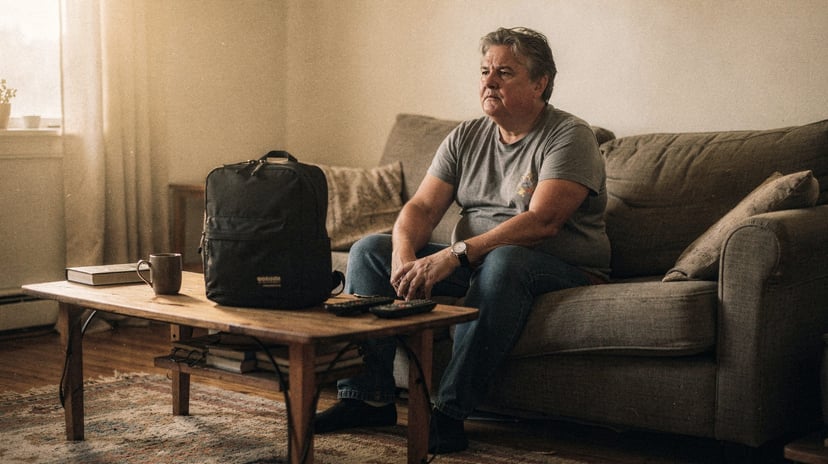
If you're reading this, you've probably spent more time on your couch than you'd like to admit. Maybe you've been sedentary for years. Maybe you've tried programs before and they didn't stick. Maybe you've never worked out consistently in your life.
Here's the thing: rucking works for people who hate typical fitness culture. There's no gym, no intimidating mirrors, no crossfit bros yelling. It's just you, a backpack, and a walking route.
This 8-week program is designed for people who are starting from essentially zero. We're not assuming athletic background. We're not assuming you love exercise. We're just assuming you're ready to walk with weight and gradually build something real.
By week 8, you'll have completed a 3-mile ruck at 25 lbs - roughly the weight of a textbook-stuffed backpack - without stopping. That's legitimately impressive. More importantly, you'll have the momentum to keep going.
Before you start: get your gear right
You don't need fancy equipment. But you do need a decent backpack.
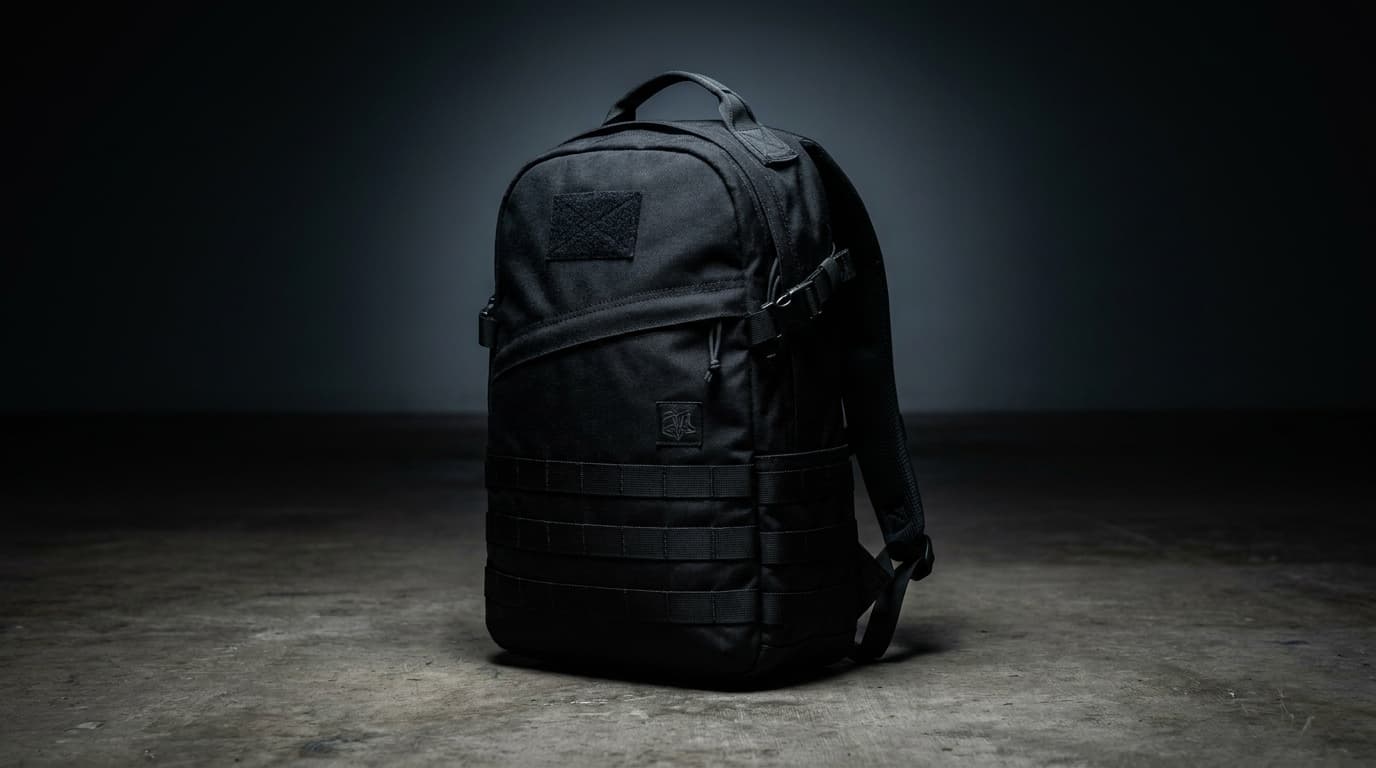
A structured, load-bearing ruck is non-negotiable. Don't use a normal daypack - the straps will dig into your shoulders, and you'll hate the experience. Check out our beginner-friendly gear guide for options under $100.
For weight, you can use water bottles, books, sand-filled bags, or a weight plate. We recommend picking one method and sticking with it - switching around makes it hard to track progress.
If you need to calculate exactly what weight feels right for your body, use our ruck weight calculator to dial in the load.
One more thing: good shoes matter. You'll be walking 3+ miles a week by the end. Invest in shoes like the Salomon XA Pro 3D that won't fall apart under load.
How this program works
The philosophy: Start stupidly easy, add weight gradually, build the habit.
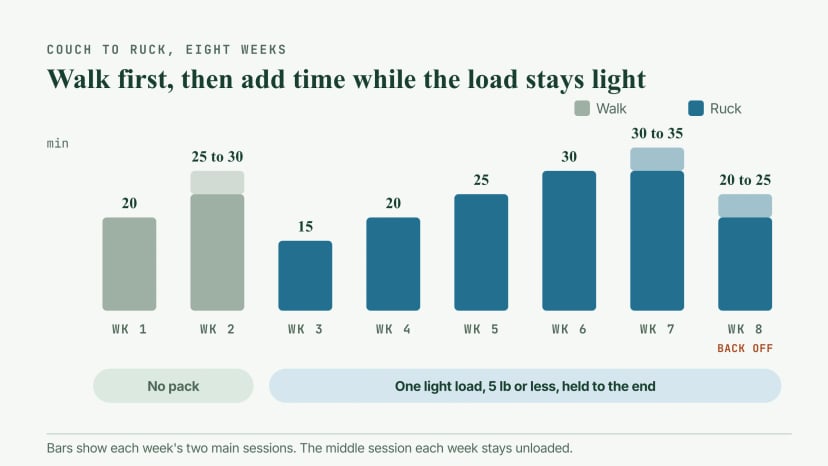
Most people fail at fitness programs because they jump to 5 days a week and hate it by week 3. This program has you rucking just 2-3 times per week for the first 4 weeks. That's sustainable. That builds the mental habit of "I'm a person who rucks."
Weekly structure:
- You'll have 2-3 ruck sessions per week
- At least one rest day between sessions (but two rest days is fine)
- One weekly "long" session (your main distance goal)
- One weekly "short" session (usually lighter or shorter)
- One optional third session for extra volume
Intensity scale: We're not chasing speed. Every session should feel walkable - you could have a conversation, though you might be slightly breathless. If you feel destroyed after a session, you went too hard.
Important: If you need more recovery, take it. If a week feels too easy, repeat it instead of jumping ahead. This isn't a race. Consistency beats intensity at every stage.
Weeks 1-2: No weight, build the habit
Goal: Walk 1 mile, 3 times per week. Get comfortable moving regularly.
Week 1 and 2 schedule
| Session | Type | Distance | Weight | Notes |
|---|---|---|---|---|
| Monday | Ruck | 1 mile | None | Establish your route |
| Wednesday | Ruck | 1 mile | None | Same route or new |
| Friday | Ruck | 1 mile | None | Short and sweet |
What's happening: Your body is learning to move consistently. You're not adding weight yet - the goal is purely behavioral. Can you get out the door? Can you walk 1 mile without stopping?
Most people can walk 1 mile even if they've been sedentary. If you can't, start with 0.5 miles and extend by 0.1 miles per session until you hit 1.
Form check: You're just walking. But walk with proper posture - shoulders back, core engaged, breathing steady. The ruck isn't heavy yet, but good habits now matter.
How to track: Grab a note on your phone and jot down the date, distance, how you felt. You don't need an app. You just need proof you did the work.
Pick a time of day and route you can repeat. Walking at 7 AM on Tuesday from your house makes it a non-negotiable habit. "When I have time" means it never happens. Bring a nalgene-wide-mouth-32 to stay hydrated - the 32oz size is the sweet spot for early rucks.
Weeks 3-4: First weight, keep distances short
Goal: Add 10-15 lbs. Ruck 1-1.5 miles, 3 times per week. Learn what loaded walking feels like.
Week 3 schedule
| Session | Type | Distance | Weight | Notes |
|---|---|---|---|---|
| Monday | Ruck | 1 mile | 10 lbs | Your first loaded session. Go slow. |
| Wednesday | Ruck | 0.75 miles | 10 lbs | Shorter is fine. Test the weight. |
| Friday | Ruck | 1.25 miles | 10 lbs | Slightly longer. Building confidence. |
Week 4 schedule
| Session | Type | Distance | Weight | Notes |
|---|---|---|---|---|
| Monday | Ruck | 1.25 miles | 15 lbs | Bump the weight slightly. |
| Wednesday | Ruck | 1 mile | 15 lbs | Keep it modest. Recovery matters. |
| Friday | Ruck | 1.5 miles | 15 lbs | Your long session for the week. |
What's changing: Your shoulders will notice the weight. Your legs might feel tighter. This is normal. Some people feel sore after their first loaded session - that's okay. It's not damage, it's adaptation.
Pacing: Slow down. You'll probably go too fast at first, especially since you're used to walking unloaded. Your natural pace will feel slower with weight. Trust that feeling.
How much soreness is normal? Mild muscle soreness (DOMS) for 24-48 hours after your first heavy session is fine. Acute pain during the session is not fine. If something hurts sharply, stop and back off. One thing to watch: chafing where the pack straps rub. A small amount of Body Glide Original on your shoulders before the session prevents most strap rub issues before they start.

Weeks 5-6: Extend distance, lock in weight
Goal: Hit 2 miles consistently. Hold 20 lbs steady. Prove you can do sustained work.
Week 5 schedule
| Session | Type | Distance | Weight | Notes |
|---|---|---|---|---|
| Monday | Ruck | 1.5 miles | 20 lbs | Bump weight, keep distance manageable. |
| Wednesday | Ruck | 1 mile | 20 lbs | Lighter session, same weight. Recovery. |
| Friday | Ruck | 2 miles | 20 lbs | Your first 2-miler. This matters. |
Week 6 schedule
| Session | Type | Distance | Weight | Notes |
|---|---|---|---|---|
| Monday | Ruck | 1.5 miles | 20 lbs | Standard mid-week session. |
| Wednesday | Ruck | 1 mile | 20 lbs | Short recovery ruck. Keep moving. |
| Friday | Ruck | 2.2 miles | 20 lbs | Extend just a bit further. |
What's different: By now, your body isn't freaking out about the weight anymore. 20 lbs feels normal. The focus shifts to distance and endurance. You're learning what it feels like to move for 20+ minutes straight with a load.
Mental game: This is where you start to feel like a rucker. You're carrying weight over meaningful distances. Strangers might ask what you're doing. You'll start having an answer: "I'm training for rucking."
Recovery matters more now: Hitting 2 miles is legitimately a milestone. Your legs, back, and shoulders are doing real work. Make sure you're sleeping enough and eating enough protein. You don't need a special diet, but you can't ignore the basics.
Weeks 7-8: The final push to 3 miles
Goal: Complete a 3-mile ruck at 25 lbs. You're officially a rucker.
Week 7 schedule
| Session | Type | Distance | Weight | Notes |
|---|---|---|---|---|
| Monday | Ruck | 1.5 miles | 25 lbs | Go to 25 lbs. Keep the first session short. |
| Wednesday | Ruck | 1 mile | 25 lbs | Let your body adjust. Don't rush. |
| Friday | Ruck | 2.5 miles | 25 lbs | Build toward the 3-miler. |
Week 8 schedule
| Session | Type | Distance | Weight | Notes |
|---|---|---|---|---|
| Monday | Ruck | 2 miles | 25 lbs | Standard maintenance. |
| Wednesday | Ruck | 1 mile | 25 lbs | Short, keep it easy. |
| Friday | Ruck | 3 miles | 25 lbs | YOUR GOAL SESSION. This is the one. |
The 3-mile session: Don't overthink it. You've been rucking at this weight for two weeks. Your body knows how to do this. The 3 miles is just a longer version of what you've already done.
Pick a route you know. Start early so you're not rushed. Bring water. Take your time. You should be able to finish this without stopping, though going slow is completely fine.
After you finish: You did it. You went from couch to completing a 3-mile ruck at 25 lbs in 8 weeks. That's real.

What if you're struggling? Troubleshooting.
"Week 2 felt too easy, can I skip ahead?"
Resist the urge. Skipping the no-weight weeks means you'll hit weeks 3-4 without the habit locked in. You'll quit when the weight shows up. Stick with the program.
"My back/shoulders hurt during sessions."
Sharp pain = stop immediately. Dull soreness = normal for the first 2-3 weeks. Make sure your ruck's straps are adjusted correctly - watch our form guide to check your setup. If pain persists past week 4, you might need a different pack or lighter weight.
"I can't do 3x per week - can I do 2?"
Yes. The program will take longer (maybe 10-12 weeks instead of 8), but it works. Just repeat weeks as needed. Consistency matters more than hitting the schedule.
"I'm way fitter than this suggests - can I go faster?"
You can try, but we'd rather you don't. The program is deliberately conservative because beginners consistently overestimate their current fitness and underestimate recovery needs. Following it as written keeps you healthy long enough to actually build the habit. You can push hard starting in week 9.
"Week X was too hard, can I repeat it?"
Absolutely. If a week feels overwhelming, repeat it the following week. Better to feel bored than injured or burned out.
Track how you feel, not just distance. If you crush week 5 but feel wrecked, don't move to week 6 yet. Repeat week 5 until it feels manageable. Fitness is a long game.
What comes after week 8?
You've built the foundation. Now you can actually start training.
Your options:
- Keep rucking 3x per week at your current level (2-3 miles per session, 25 lbs). This is maintenance fitness - totally fine if rucking is just something you do.
- Add a third longer session one weekend per week. Try 4-5 miles with 25 lbs. Build your endurance.
- Increase weight to 30-35 lbs while holding distance steady. Your legs and back are stronger now.
- Push for speed. Once the distance and weight feel easy, try rucking the same distance faster. This is where fitness actually improves.
The best next step is whatever keeps you excited. Rucking is only useful if you actually do it.
The gear you need to succeed
You'll need three things:
- A structured ruck. 15-25L capacity is perfect for this program. Avoid daypacks - they're not designed for load-bearing. See our budget guide for options.
- Adjustable weight. Water bottles (one gallon ≈ 8.3 lbs) work great. A weight plate (available at any sporting goods store) is even better. Mix and match to hit your target.
- Decent shoes. Your feet will thank you. You don't need expensive trail runners, but you do need shoes that aren't held together by prayers.
Everything else is optional. You don't need special rucking clothes or a fitness app or a hydration pack. Keep it simple.
Common questions
Q: Do I need to be fit to start this program?
No. That's the whole point. This program assumes you're starting from the couch.
Q: What if I'm overweight - should I do this?
Yes. Rucking is excellent for people with extra weight to carry. Start with lighter weight (8-10 lbs in week 3) and give yourself extra time if needed. The progression works.
Q: Can I do this if I have bad knees/back/shoulders?
Maybe. Rucking is low-impact, but it is a load on your joints. If you have a history of injury, talk to a doctor first. You might need to start lighter or progress slower.
Q: How do I know which weight is right for me?
Use our ruck weight calculator as a starting point. But honestly, 10-15 lbs is right for most people in week 3. You'll know pretty quick if it's too heavy.
Q: Do I need to do anything else - strength training, stretching, diet?
Not required. This program is about building the rucking habit. If you're also doing other fitness, great. If not, rucking alone works. Basic stretching after each session helps (especially calves and hips).
Q: What if I miss a week?
Repeat the week you just finished. One missed week isn't a problem. Four missed weeks means starting over.
The real secret
Here's what actually matters: showing up.
Week 1, you're going to feel dumb walking with a backpack. Week 3, your legs will complain. Week 5, you'll question why you're doing this. Week 7, you'll be tired and want to skip it.
Every single time, show up anyway.
The people who finish this program aren't the most athletic. They're not the most disciplined. They're just the ones who decided that walking with weight was their thing and stuck with it long enough to prove it.
You can be that person. Eight weeks is nothing - it'll be over before you know it.
And on week 8, when you finish that 3-mile ruck at 25 lbs, you'll realize something: you're not the same person who started this. You're a rucker now. The couch is still there, but you don't live on it anymore.
Now go pick a route and start walking.
Your next steps
- Read our rucking form guide to lock in good habits from day one
- Check out the beginner gear guide to get your pack sorted
- Learn how heavy your ruck should be for your body and goals
- Explore the first 30 days for lifestyle tips beyond the training