The short answer
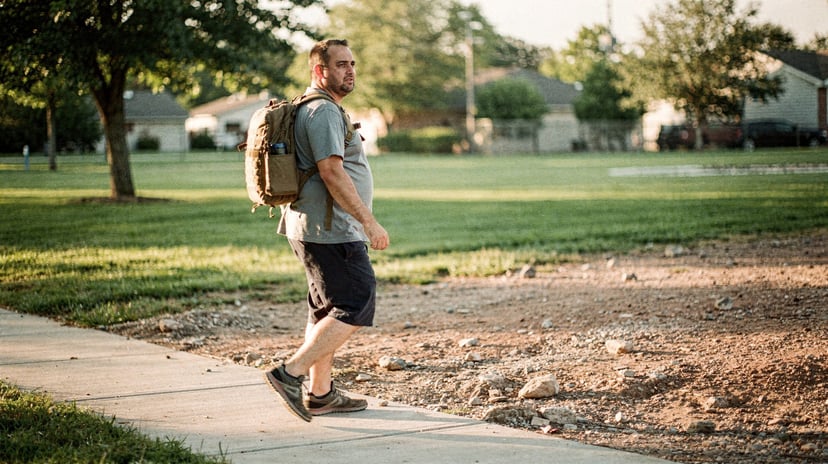
Start on pavement. Graduate to trails when you're comfortable under load. Use the treadmill when weather or logistics demand it. Mix all three for the best overall training stimulus.
The surface you choose matters more than you'd think. A 30-minute ruck on pavement, trail, or a treadmill at the same pace and load won't produce the same results. Your joints, muscles, and nervous system respond differently to each terrain. The good news is that each surface has a specific role in your training - and the best ruckers rotate between all three.
Pick your surface by goal
| Goal | Start here | Add later | Avoid at first |
|---|---|---|---|
| First month of rucking | Pavement | Easy gravel paths | Technical trails under load |
| Weight loss | Pavement for consistency | Trails for higher stimulus | Treadmill-only routines |
| Event prep | The terrain your event uses | Treadmill hill intervals | Random surfaces with no progression |
| Winter or unsafe weather | Treadmill | Cleared pavement | Ice without traction |
| Better balance and foot strength | Easy trails | Hillier trails | Long technical descents before you adapt |
If you are starting from zero, pair this with the first 30 days of rucking plan. If your routes are mostly trails, use the best rucking shoes by terrain guide before increasing distance.
Two pieces of kit decide whether you can rotate across all three surfaces without re-buying gear. A versatile trail-runner that handles pavement-to-trail without complaint, and a watch precise enough to compare treadmill speeds against outdoor pace.
| Role | Pick | Why it handles all three surfaces |
|---|---|---|
| Shoes | Salomon XA Pro 3D | Lugs grip dirt without feeling clunky on pavement. Quicklace makes the swap painless. |
| Watch | Suunto Vertical | Barometric altitude + 100-hr battery. Compares treadmill pace, pavement pace, and trail elevation gain in one log. |
Pavement rucking
Why it works for beginners
Pavement is the starting point for 90% of new ruckers, and for good reason. The consistent, predictable surface lets you focus on the fundamentals: form, breathing, and load management. You're not thinking about where to place your foot; you're thinking about whether your pack is riding correctly or if your shoulders are back and down.
Roads and sidewalks offer another massive advantage: accurate distance and pace tracking. Your phone's GPS is reliable on open pavement. You can measure exactly what you did and track progress week to week. This feedback loop is motivating and essential for structured training plans.
Pavement is also everywhere. You don't need a car, a gym membership, or a special location. Your daily commute becomes a training opportunity. This accessibility is why so many people build the rucking habit on pavement - the barrier to entry is zero.
Finally, ankle safety is significantly better on pavement. Your risk of rolling an ankle is lower on a flat, stable surface, which is important when you're learning how a weighted load changes your movement.
The downsides
The trade-off is impact. Pavement is unforgiving. Every step transmits force through your joints - knees, hips, ankles, lower back. Over months of repeated pavement rucking, some people develop knee pain, shin splints, or plantar fasciitis. Your joints are designed to absorb load, but they have a tolerance curve.
Pavement also doesn't challenge your balance or ankle stabilizers the way uneven terrain does. Your ankles are passive. This means you're missing out on proprioceptive training (your body's sense of where it is in space) and the strengthening that comes from navigating varied terrain.
Long pavement rucks can also become mentally monotonous. You're walking the same route, seeing the same scenery. The repetition is great for building habit, but it's not stimulating. In summer, the heat reflectivity of asphalt can also make long rucks significantly hotter.
Best for
Start here. Pavement is ideal for your first 4-8 weeks of rucking, regardless of your fitness level. It's the best surface for pace-based training programs, speed work, and for urban ruckers who don't have trail access. If you're on a structured plan (like training for a military selection course), pavement lets you dial in exact paces and distances.
Trail rucking
Why it's the gold standard for experienced ruckers
Once you've built a foundation on pavement, trails become the gold standard. Variable terrain forces your ankle stabilizers, hip abductors, and smaller stabilizing muscles to work constantly. Every uneven section requires micro-adjustments. Your nervous system has to process more information. Over time, this builds ankle strength and proprioception that flat-surface rucking simply cannot develop.
Elevation changes significantly increase training stimulus. In the Pandolf load-carriage model, a 3% grade adds about a third to the hourly energy cost of the same pace and load, and a 5% grade adds more than half. Your glutes, quads, and cardiovascular system are all working harder. Downhill walking engages your posterior chain differently, requiring more eccentric muscle control. This variation is exactly what your body needs to continue adapting.
Trails also force you to engage more muscle groups. The lateral stabilizers in your hips, ankles, and core are constantly active. You're not just moving forward; you're managing side-to-side forces and adapting to obstacles. This creates a more comprehensive training effect than pavement can offer.
The mental engagement is significant too. Navigation, scenery changes, and the cognitive demand of watching your footing all combine to make trail rucking more interesting. For many people, the mental health benefit of trail rucking - the nature exposure, the problem-solving of varied terrain - is as valuable as the physical stimulus. Proper footwear matters on technical terrain - grab trail-specific shoes designed for loaded walking.
The downsides
The primary risk is ankle injury. Under load, a twisted ankle is both more likely and potentially more serious. If you're carrying 40 pounds and you step on a rock wrong, the force traveling through your ankle is much higher than it would be unloaded. Acute ankle sprains are the most common acute injury in trail rucking, especially for people who jump into trails too early.
Trail terrain makes pace tracking nearly impossible. Tree cover reduces GPS accuracy. Elevation changes and natural obstacles mean you can't move at a consistent speed. If you're training for a pace-specific event, you'll need some pavement work alongside your trail rucking.
Trail rucking also requires more attention. You can't zone out and think about your day. You have to watch footing, navigate, and adjust to obstacles constantly. For some people, this is a feature; for others, it's a drawback. You can't do guided meditation on a technical trail while rucking under load.
Trail access is also location-dependent. If you live in a flat, urban area, finding quality trails might not be realistic. Driving 45 minutes to ruck trails isn't sustainable for most people.
Best for
Graduate to trail rucking after 4+ weeks on pavement and once you're comfortable moving under load. It's essential for anyone training for outdoor events (military selections, obstacle races, backcountry treks). If your goal is overall fitness variety and mental health benefits, trails are non-negotiable. Trail rucking should make up a significant portion of your training once you've built the foundation. Proper footwear is critical on technical terrain - a do-everything trail-runner like the Salomon XA Pro 3D V9 GTX is the pair most readers settle on for the pavement-to-dirt jump, and our best rucking shoes by terrain guide covers more terrain-specific options.

Research on loaded hiking shows that uneven terrain increases energy expenditure by 20-30% compared to flat surfaces at the same pace and load. The additional stabilization demand is also linked to improved balance and reduced fall risk over time.
Treadmill rucking
When it makes sense
Treadmill rucking sounds like a compromise - and it is. But there are legitimate scenarios where it's the right tool.
Winter in northern climates makes outdoor rucking dangerous. Ice, extreme cold, and darkness create safety and health risks that aren't worth it. A treadmill session at a controlled pace and incline beats missing the workout entirely.
Bad weather (heavy rain, extreme heat) also justifies treadmill training. If you have access to a gym and the weather is unsafe, a treadmill ruck keeps your training consistent.
Controlled hill training is one of the strongest use cases for treadmill rucking. You can set an exact incline - 6%, 8%, 10% - and hold it for a specific duration. This is nearly impossible to replicate on natural trails, where grade varies. If you're training for a specific event with known elevation profiles, a treadmill lets you prepare precisely.
Recovery rucks are another good use case. Rucking at a very low pace (2.0-2.2 mph) with light load is a legitimate recovery tool. On a treadmill, you can hold exact speeds that might be hard to maintain outdoors (you'd go slightly faster without thinking about it).
Finally, safety concerns make treadmill training valid. If you ruck before sunrise and traffic/darkness is a concern, or if you live in an unsafe area, the gym is a reasonable alternative while you work toward better options.
The downsides
Treadmill mechanics are fundamentally different from outdoor walking. The belt moves beneath you, which changes how your muscles generate force. You don't have to propel yourself forward; the belt assists your stride. This means your glutes and lower body don't work as hard. The biomechanical difference is real and measurable.
A treadmill is also a perfectly flat, perfectly predictable surface. There's no proprioceptive demand. Your stabilizer muscles barely activate. Your balance isn't challenged. The training stimulus is simpler and less comprehensive than outdoor rucking.
Mentally, treadmill rucking is boring. Even with a TV or podcast, 45 minutes on a treadmill feels longer than 45 minutes outside. Many people find it tedious enough that it erodes their motivation.
The pack also feels different indoors. Without natural wind, without the ground-to-foot feedback of varied terrain, the pack feels heavier and more awkward. Some people report that indoor rucking with a pack is uncomfortable in ways outdoor rucking isn't.
Finally, check your gym's treadmill weight limits. Some machines have a combined limit of 300 pounds (user plus pack). If you're a larger person or you're carrying 60+ pounds, you might exceed the limit. If you'd rather get unloaded indoor walking steps at home than ruck on a treadmill, our sister site Kit Authority's best walking pads roundup covers the compact options - just note their weight limits run lower than a gym machine's.
Making it work
If you're going to ruck on a treadmill, follow these principles to get closer to outdoor stimulus:
Set the incline to 1-3%. A completely flat treadmill doesn't mimic outdoor walking. A 1-3% grade gets closer to the real thing without making it too easy.
Focus on posture relentlessly. On a treadmill, it's easy to lean back, let your shoulders round, and zone out. Check your posture every minute. Engage your core. Stand tall.
Start at 2.5 mph and dial up gradually to find your sustainable pace. This is slower than most people naturally walk unloaded. That's correct. The load and the treadmill mechanics mean slower speeds feel more realistic.
Use a chest strap on your pack to minimize bouncing. The vertical bobbing that happens indoors is different from outdoor rucking and can be uncomfortable. A snug chest strap keeps the pack stable.
Best for
Treadmill rucking is best for winter training in cold climates, controlled hill-work sessions, injury rehabilitation at precise paces, and hotel gym sessions while traveling. It's also a valid backup when weather makes outdoor rucking unsafe. But treadmill training should never dominate your routine. Aim for no more than 20-30% of your weekly volume on a treadmill, and prioritize outdoor work when possible.
Head-to-head comparison
| Factor | Pavement | Trail | Treadmill |
|---|---|---|---|
| Calorie burn (relative) | Baseline | +15-35% | -5-10% (no wind resistance) |
| Joint impact | Moderate-high | Low-moderate | Low |
| Ankle stability training | Low | High | None |
| Pace tracking accuracy | High | Moderate | Exact |
| Beginner friendly | Yes | After 4+ weeks | Yes |
| Boredom risk | Moderate | Low | High |
| Injury risk profile | Overuse (knees, shins) | Acute (ankle rolls) | Low overall |
| Accessibility | Everywhere | Location dependent | Gym required |
Recommendations by goal
Your goal determines where you should spend most of your rucking time.
Weight loss and calorie burn: Mix pavement and trail rucking. Trails burn roughly 15-35% more calories at the same pace (Pandolf terrain factors for gravel and rough trail), making them more efficient for a caloric deficit. But pavement lets you sustain longer distances without the fatigue factor that terrain adds. A 50/50 mix maximizes calorie burn while keeping you fresh enough to maintain intensity; use the rucking calorie calculator to calculate calories by terrain.
Event preparation: Ruck the terrain your event will use. Training for a military selection course in mountainous terrain? Trails are non-negotiable. Training for an urban ruck event? Pavement is your foundation. If the event is mixed terrain (most backcountry events), do a 60/40 trail-to-pavement split.
General fitness and consistency: Rotate all three surfaces across your week. Pavement keeps your pace consistent and interesting. Trails build strength and proprioception. Treadmill work happens when life gets in the way. This variety prevents adaptation plateau and keeps rucking interesting.
Injury recovery: Start on a treadmill at very low speeds (2.0-2.2 mph) with light load. Once pain-free, graduate to pavement at easy paces. Trail training comes last, once you're confident in your recovery. The controlled environment of a treadmill lets you build confidence before reintroducing variability.
Mental health and sustainability: Trail rucking wins here. Nature exposure, scenery changes, and the mental engagement of varied terrain all contribute to better mental health outcomes than repetitive pavement rucking. If your primary goal is building a sustainable habit that you enjoy, prioritize trails once you're ready for them.
The ideal weekly mix
Here's how to structure your weekly rucking across surfaces, depending on your experience level.
Beginner (2 rucks per week): Both on pavement. Spend your first 4-8 weeks building a foundation on consistent terrain. Your only goal is adapting to load and getting comfortable with the movement pattern.
Intermediate (3 rucks per week): Two pavement rucks and one trail ruck. This gives you the consistency of pavement while introducing the stimulus variability of trails. Your pace work happens on pavement; your strength and proprioception development happens on trails.
Advanced (4+ rucks per week): One to two pavement rucks, one to two trail rucks, and optionally one treadmill hill session. By this point, you're using each surface strategically. Pavement might be a long, easy ruck or a pace-specific workout. Trails are strength and power work. The treadmill is controlled hill training or weather-based backup work.
The key principle: pavement is your foundation, trails are your progression, and treadmill is your insurance policy. As you advance, the ratio shifts toward more trail work, but pavement never disappears completely.
The best surface is the one you'll actually ruck on consistently. If the trail is a 30-minute drive and the sidewalk is outside your door, ruck the sidewalk. Consistency beats optimization every time.
Frequently Asked Questions
Even if you're fit, start with pavement for your first 4-8 weeks. The issue isn't cardiovascular fitness, it's how your ankles and stabilizing muscles adapt to load. Trail terrain under weight creates injury risk that fitness alone doesn't prepare you for.
Set the incline to 1-3% minimum. A flat treadmill doesn't replicate outdoor walking mechanics because there's no wind resistance or natural terrain variation. Anything below 1% makes the workout artificially easier than real-world rucking.
You're ready for trails when you can complete 30+ minutes of pavement rucking with your target load without joint pain or form breakdown. This typically happens after 30+ total rucks, not calendar weeks.
Treadmill mechanics are different because the belt moves beneath you, but occasional treadmill sessions won't ruin your outdoor form. Keep treadmill work to 20-30% of your weekly volume and focus on maintaining proper posture while on the machine.
Indoor rucking lacks natural wind flow and ground feedback that help distribute the pack's feel outdoors. The controlled environment also means you're more aware of every sensation. A tight chest strap helps minimize the bouncing that feels more pronounced indoors.
Once you're trail-ready, you can do long rucks on easy trails with moderate elevation. Avoid technical terrain for your longest sessions since the mental fatigue from watching footing gets dangerous over time. Save technical trails for shorter, strength-focused sessions.