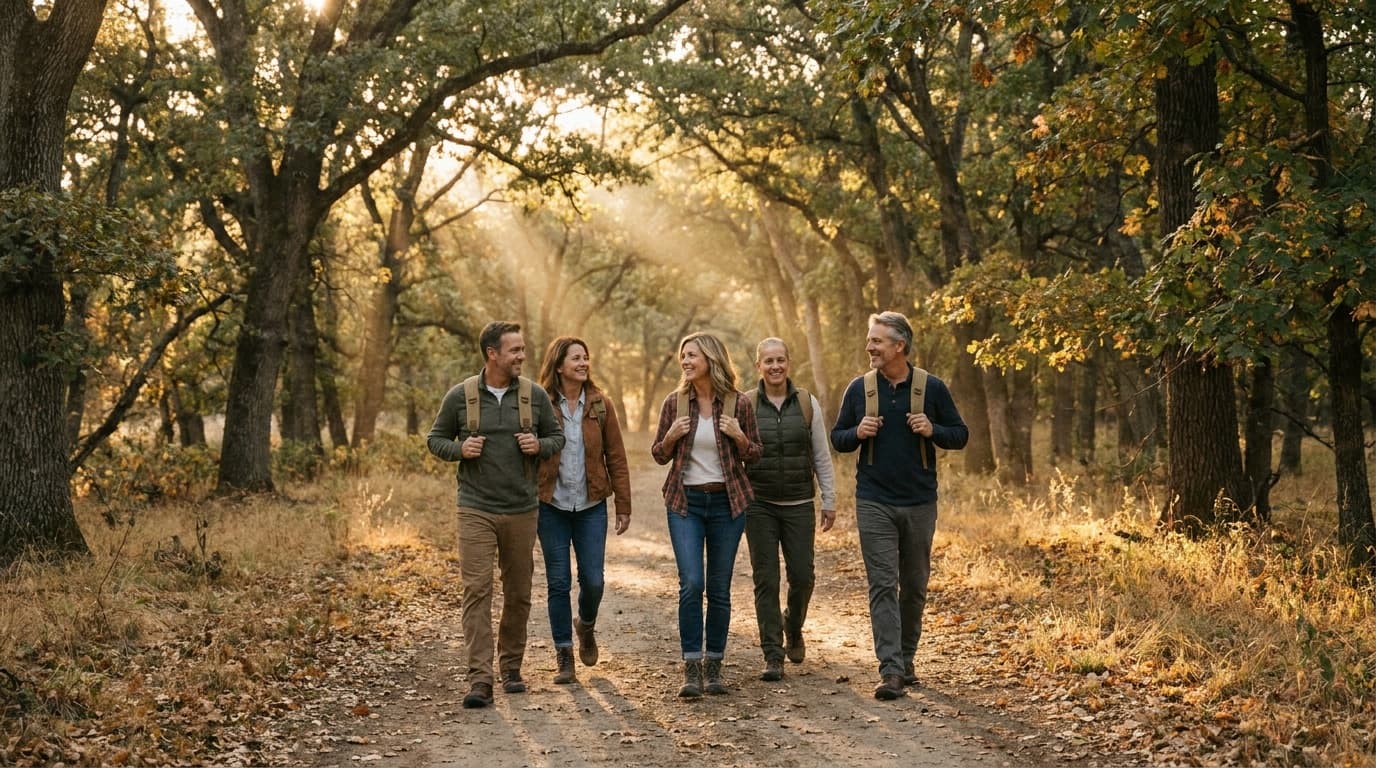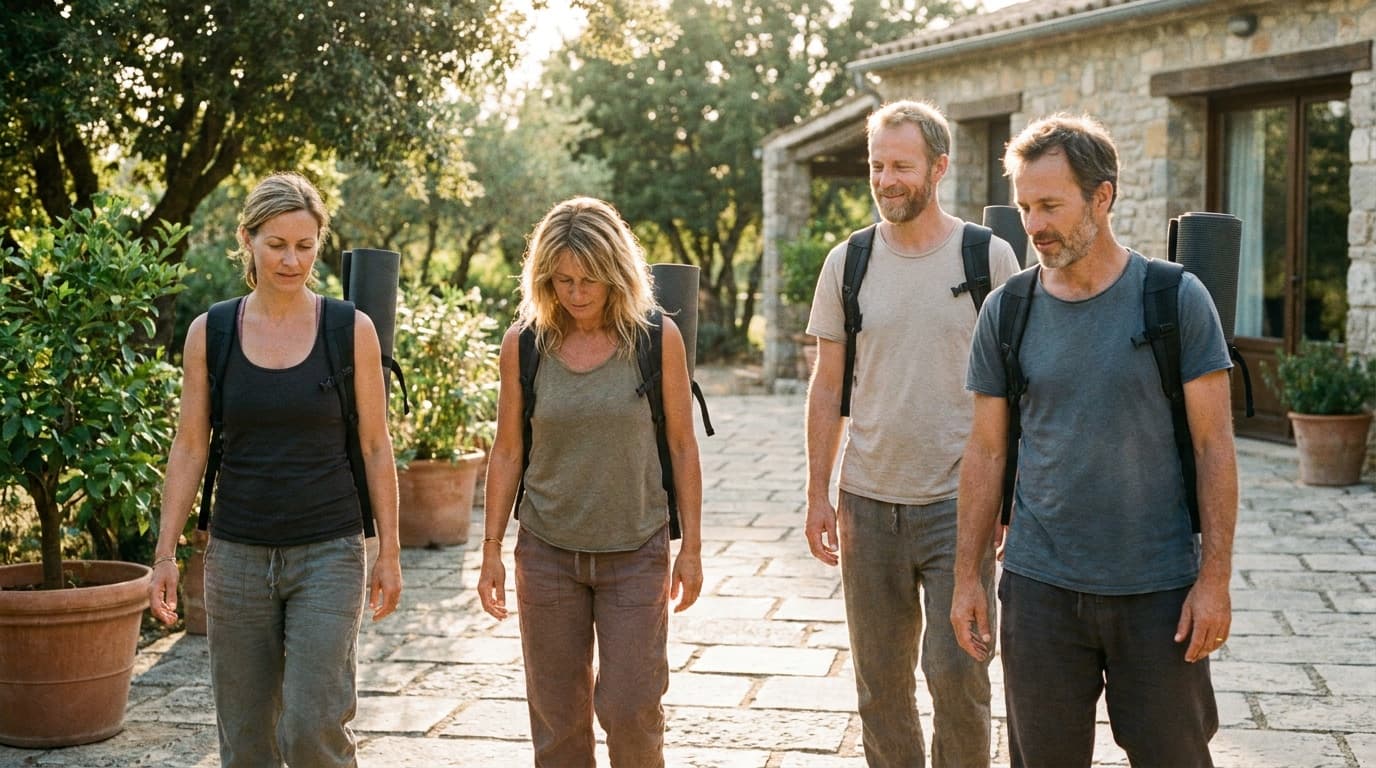
Tulsa yogaQuest has done something unusual and concrete: it added a recurring hiking and rucking group to its community events. The published sessions begin with a short introduction, use a one-to-two-mile loop, make weight optional, and tell first-timers to start below 10 pounds. See the studio's current events listing.
That is evidence of one real yoga studio program, not proof of a nationwide studio trend. It is still worth studying because the format removes several beginner barriers without pretending rucking and yoga are the same practice.
The mindful movement connection
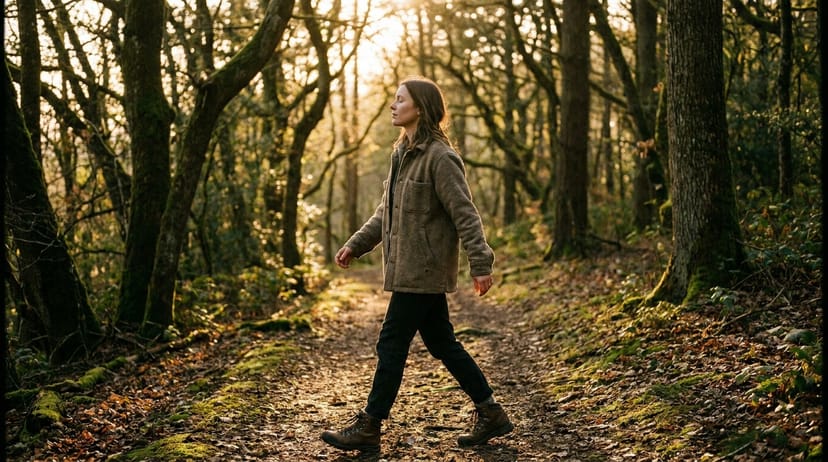
Yoga can give a beginner useful awareness of posture, breathing, and the difference between effort and pain. Those skills can carry into a ruck, even though loaded walking has its own fit, gait, and progression demands.
Walking can be practiced attentively, but the mental effect is individual. A studio does not need to make neurological or spiritual claims to lead a calm, phone-free group walk.
A simple cue works better than a forced breathing count: keep the pace and load easy enough to speak in full sentences. If breath becomes strained, reduce one of them.
Why the format can fit a wellness community
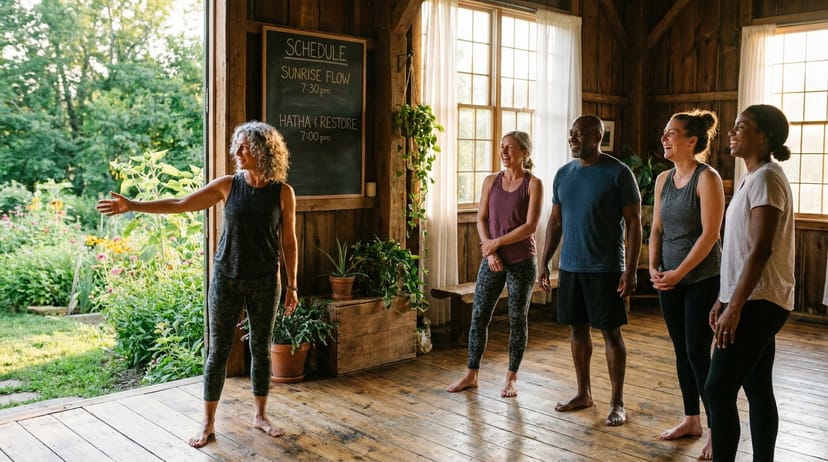
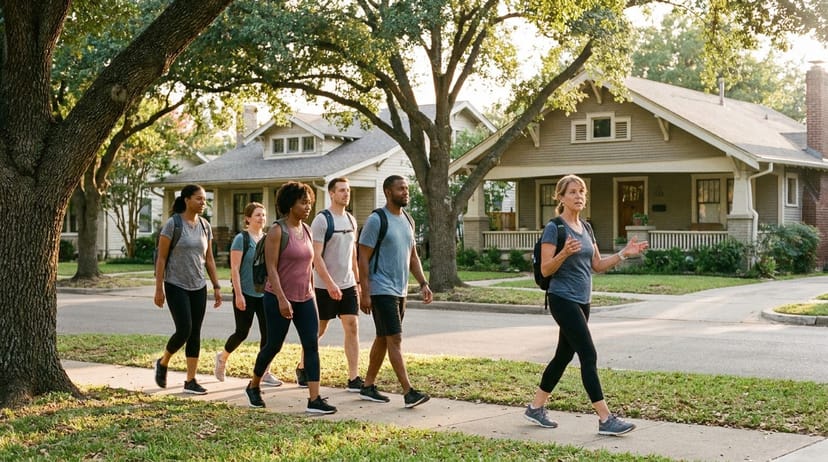
A walking group gives an indoor community an outdoor, social option with a low equipment threshold. Water in a backpack can provide a small removable load, and anyone can walk without added weight.
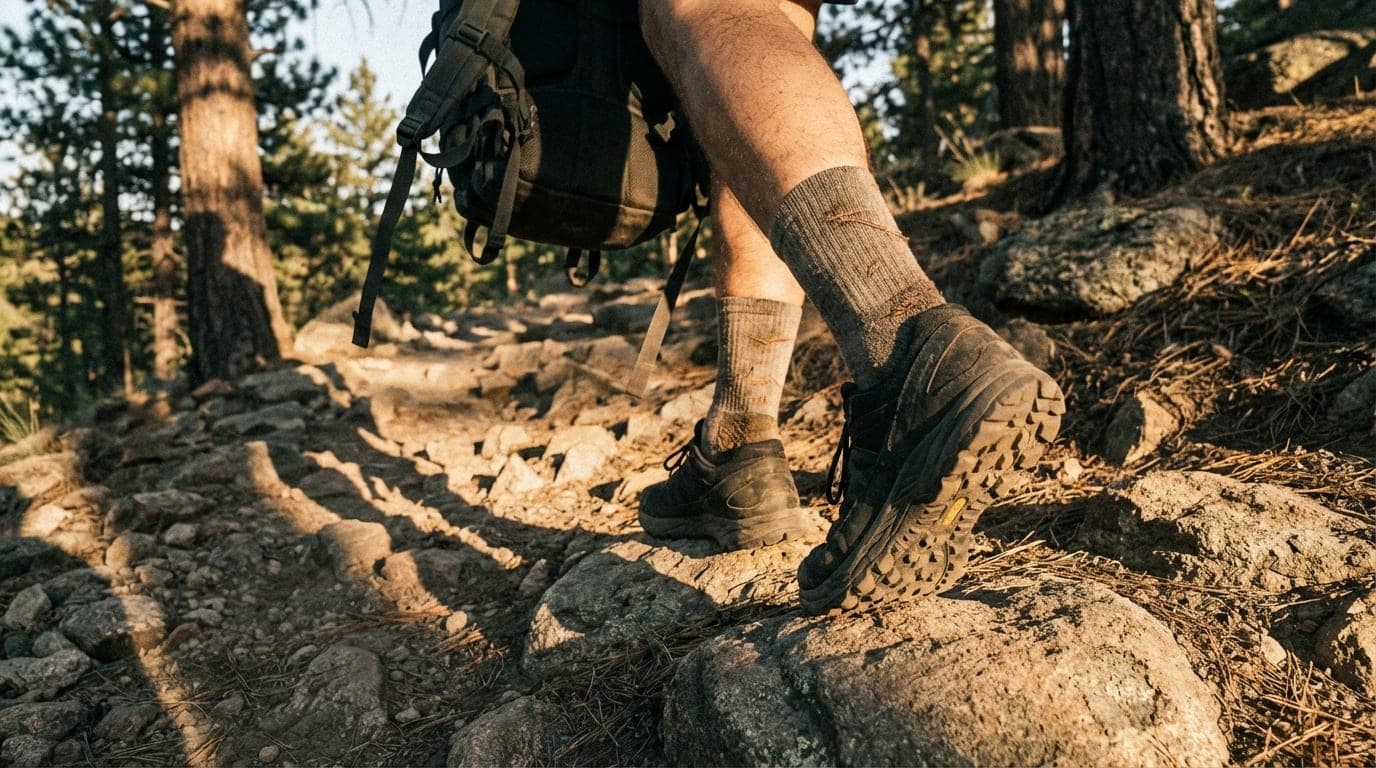
For a first group ruck, follow yogaQuest's conservative example: make load optional and keep a beginner below 10 pounds. Route familiarity and conversation pace matter more than the number in the pack.
The tradeoff is that an outdoor group is not automatically easier to supervise. Route crossings, weather, pace differences, medical events, and participants bringing unsafe loads all require a plan. Smaller groups and a loop that lets people stop after one lap are sensible design choices.
A beginner session format that holds up
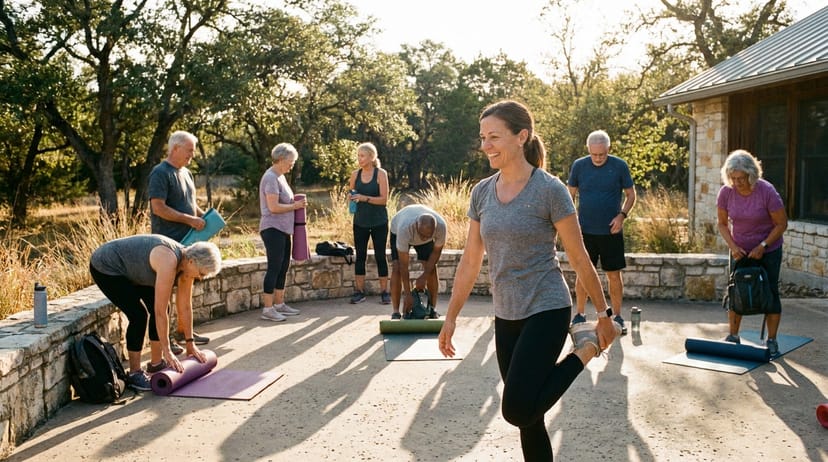
There is no standard yoga-rucking class format. Based on the published yogaQuest event and ordinary group-walk safety, a credible beginner session can be simple:
- Five-minute briefing: Explain pack fit, route, turnaround points, and stop signals.
- Optional load: Let first-timers walk unweighted or carry less than 10 pounds.
- One-to-two-mile loop: Keep the first lap together at conversation pace.
- Clear exit: Let participants finish after one loop without pressure.
- Short check-out: Ask about hot spots, numbness, pain, and pack movement before recommending another session.
A familiar yoga warm-up or cool-down can be included, but it is not what makes the load safe. Load control, route choice, pack fit, and supervision do.
Equipment and safety considerations
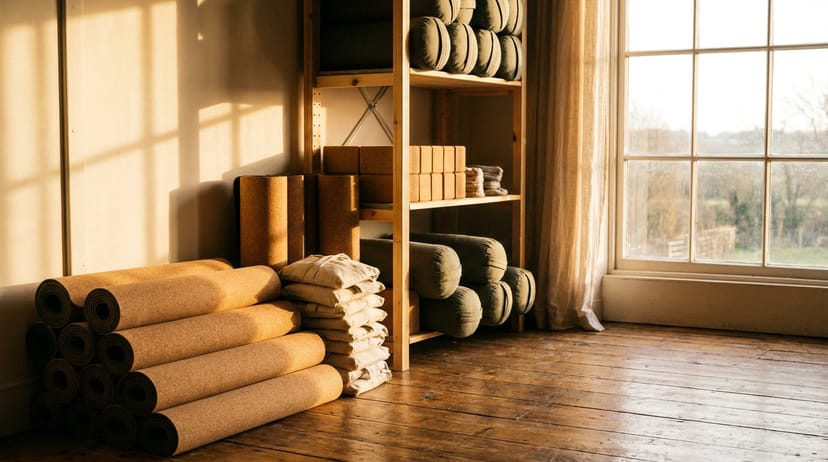
Studios implementing rucking classes face unique equipment and safety challenges. Unlike yoga, which requires minimal gear, rucking demands proper weight distribution and pack selection.
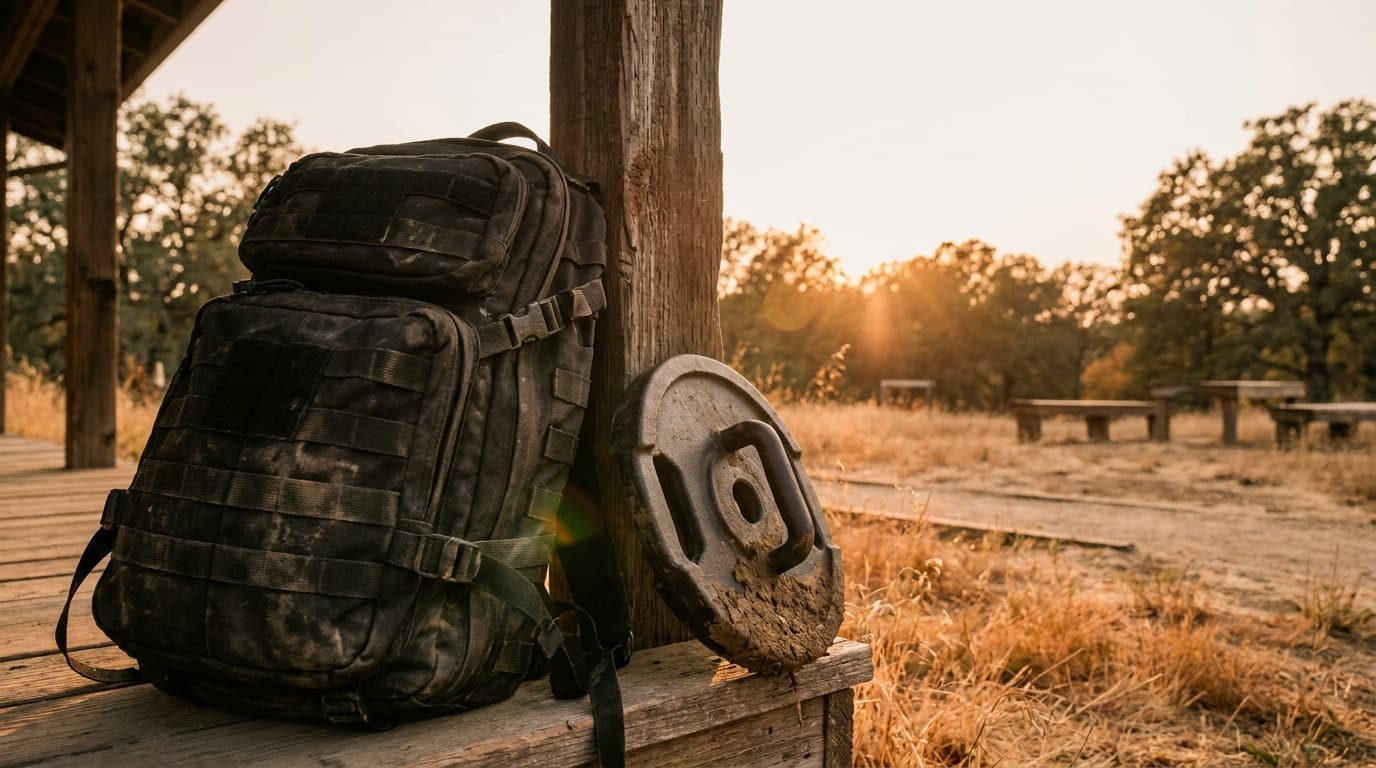
Loaner packs can lower the barrier, but a studio does not need a gear fleet to test demand. A normal backpack with secured water can work for a first light session. Do not hand a new participant a fixed 20-pound plate simply because that is what the studio owns. If someone wants a dedicated pack, the 5.11 Tactical RUSH 12 is one compact option, but fit it before loading it.
Ask participants about pain, balance limitations, pregnancy or postpartum status, and clinician-imposed activity restrictions. A waiver is not a substitute for sensible screening, instruction, and insurance advice.
Choose a flat, well-maintained loop with bathrooms, water access, reliable cell service, and few road crossings. Publish a weather and cancellation policy before taking registrations.
The operational case for studios
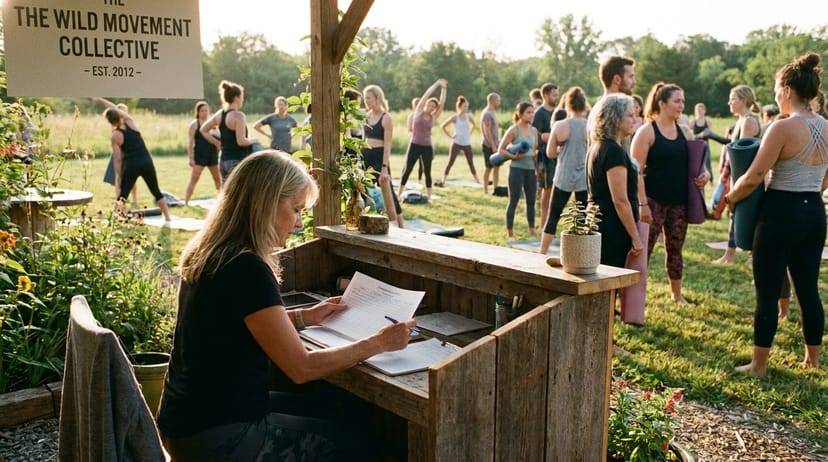
The clearest first test is a free or low-cost community event, not an equipment purchase or a new membership tier. yogaQuest's event is open to everyone, uses participant-supplied water or optional weight, and lets people leave after one loop. That is a low-friction way to learn whether the community wants more.
Before charging for a recurring program, a studio should confirm instructor competence, insurance coverage, route permissions, emergency procedures, equipment inspection, and an honest participant-to-leader ratio. Those details matter more than inventing a yoga-rucking brand name.
What can be measured honestly
There is no published outcome dataset for yoga-studio rucking groups. A studio can still learn from attendance, return rate, completed distance, participant-reported exertion, pain or hot spots, and whether people choose to add load over time.
Avoid promising posture correction, stress treatment, or strength gains from a single group walk. The first success is simpler: people finish safely, understand how to load a pack, and know whether they want to return.
Challenges and limitations
Class sizing is a real consideration. A walking group stretches out, pace differences grow, and road crossings can split participants. Weather dependence adds scheduling complexity.
Teaching safe rucking technique calls for different expertise than teaching yoga. A studio should train the leader for load carriage and group route safety or partner with someone who already has that experience.
Insurance and liability are worth checking before launch. Outdoor classes carrying equipment can create exposures that studio-based yoga does not.
What this example actually shows
One yoga studio has built a recurring rucking group around conservative beginner choices. Other wellness operators, including Big Cedar Lodge, also list dedicated rucking sessions alongside broader wellness programming. That shows the format can live in a wellness setting; it does not establish a national yoga-industry movement. See Big Cedar's three-mile rucking class.
If you want this locally, send the owner the yogaQuest event format: optional sub-10-pound load, a short briefing, and a one-to-two-mile loop. It is a more useful proposal than asking for a vague fusion class.
For yoga practitioners curious about rucking, a familiar community can make the first walk less intimidating. Qualification still matters: a yoga credential alone does not establish load-carriage expertise. And if your fitness interests run broader than loaded walking, our sister site Kit Authority covers gear for everything outside.
Frequently asked questions
No. The documented yogaQuest group is open to everyone. A leader should explain pack fit, route, pace, and stop signals without assuming yoga or rucking experience.
Load should be optional. yogaQuest tells beginners to start below 10 pounds, which is a sensible ceiling for a first group session. Walking unweighted is also valid.
Wear comfortable athletic clothing suitable for walking outdoors, plus supportive walking shoes or trail runners. Avoid loose-fitting tops that might bunch under pack straps.
The yogaQuest example is an outdoor trail loop. There is not enough evidence to claim a typical setting across yoga studios.
The documented yogaQuest first loop is about an hour, including the briefing and one to two miles of walking. Other organizers should set duration from route, group pace, and supervision rather than copy a standard that does not exist.
Ask the organizer. If participant-supplied gear is allowed, the leader should inspect that the load is secured and appropriate before the group starts.