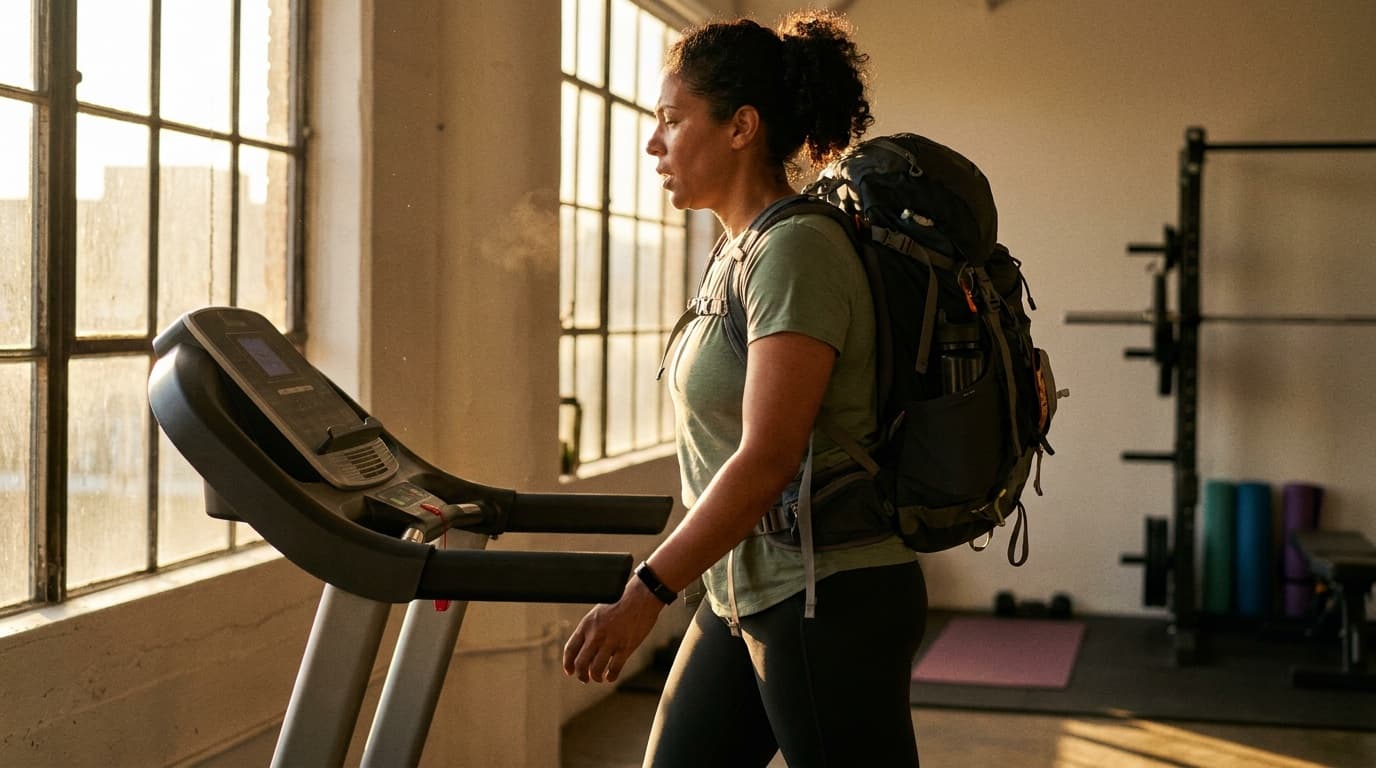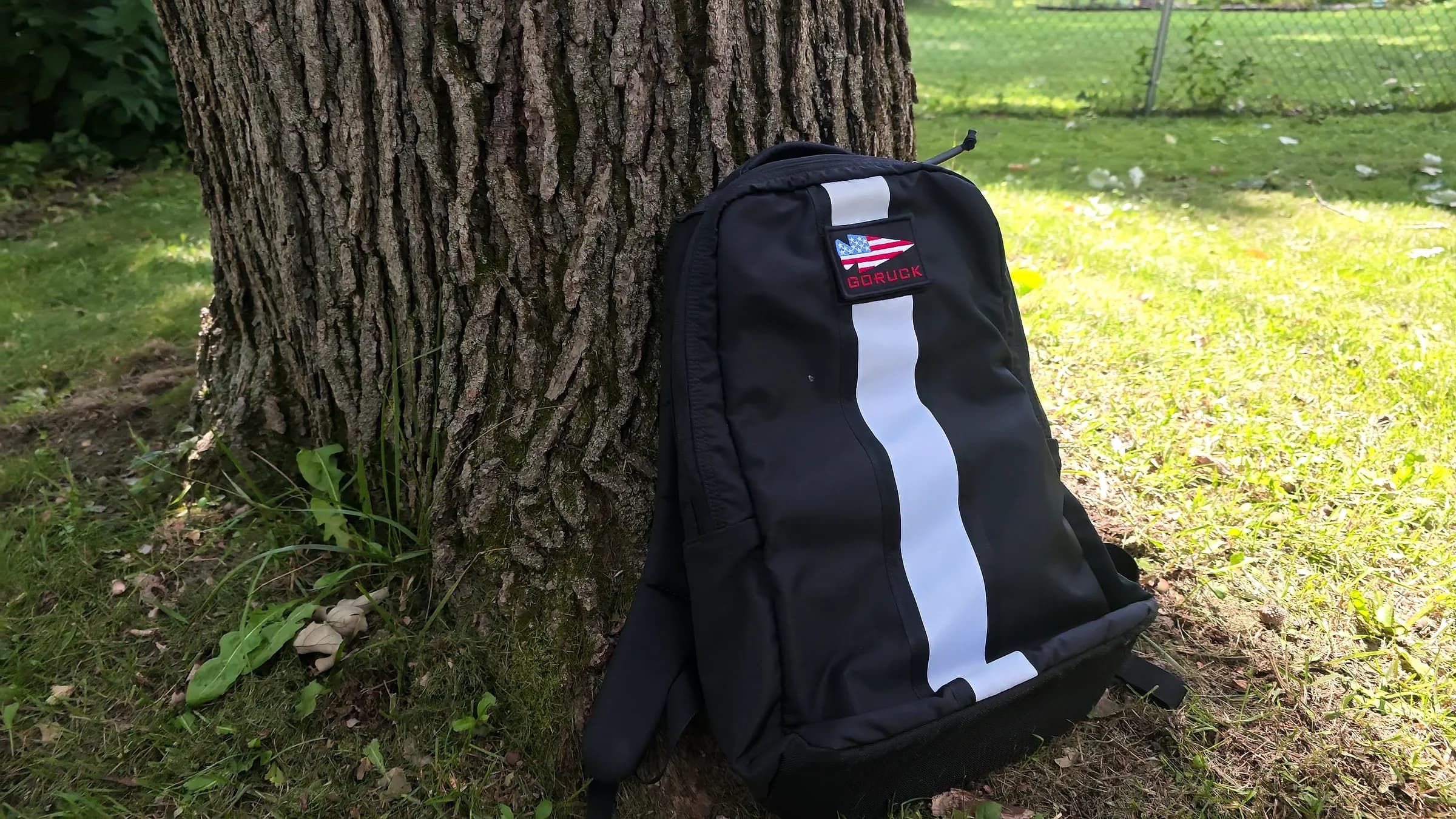
GORUCK has long told people that rucking is walking with weight. Its newest pitch asks them to go faster. In a late-September email headlined "Not Walking. Not Running. Definitely NOT Jogging," co-founder Jason McCarthy made the case for the ruck shuffle: lighter load, higher heart rate, and the Basic Rucker as the pack to do it in.
It is a clear shift in emphasis from the company that defined the sport, so it deserves a proper look. Below is what GORUCK is claiming, what the load-carriage research supports, and where the Basic Rucker fits. I've carried the Basic Rucker for 12 days and the Rucker 5.0 on hilly trail, so the pack section draws on that. The training advice comes from the research.
GORUCK claims are taken from its September email, its Ruck Shuffle Explained video and the Basic Rucker product page, checked October 4, 2026. Ruck Authority earns a commission on GORUCK purchases made through our links.
What GORUCK is claiming
McCarthy describes the shuffle as the gait between walking and running, held at about 75% effort: an aerobic pace you can sustain for hours. He draws a hard line on the other side of it. "Do NOT ruck run," the email says, citing his Special Forces training.
The headline swap is specific. If you jog an 8 to 9 minute mile, McCarthy suggests you put about 30 lb on your back and shuffle instead. He lists four benefits: a higher heart rate, more calories burned, better stamina, and less punishment for your knees. He says he usually rucks 45 lb, goes to 60 on heavy days, and drops to 30 when he wants his heart worked harder than his shoulders.
Three form cues follow, each pointing at the Basic Rucker:
- Pick a weight you can carry indefinitely.
- Leave the hip belt off.
- Keep the pack high and tight.
The product page goes further and calls the Basic Rucker the pack for Ruck or Die, GORUCK's overnight event series, which it describes as a 12-plus-mile ruck shuffle. GORUCK has held four since late July: New York and Washington, D.C. that month, then Jacksonville, then New York again on September 11.
What the research supports
Nobody has studied the ruck shuffle by that name. A search of Europe PMC for the term returned no papers on October 4, 2026. What exists is research on walking, slow jogging and running, with and without load. Taken together, those studies support part of the pitch and leave the headline comparison unproven.
A low, smooth stride matters
This is GORUCK's strongest point. In a 1996 force-plate study, Keller and colleagues found that slow jogging produced peak vertical force and loading rates more than 50% higher than walking or faster running. Impact was greatest when joggers carried their center of mass high and loose. Running with a lower, steadier center of mass reduced it.
A shuffle done the way GORUCK teaches it, with a short stride, no bounce and the feet close to the ground, is an attempt to avoid exactly that bouncy slow jog. That part is supported.
Load adds force to every step
The weight is the problem. Birrell and colleagues found that each added increment of military load raised vertical ground reaction force in proportion while walking. Running is worse. In Silder, Besier and Delp's 2015 study, runners wore vests weighing 10%, 20% and 30% of body weight. Peak vertical force rose, ground contact lengthened, and runners dropped into a more crouched posture with stiffer legs.
Thirty pounds is about 17% of body weight for a 180 lb rucker, squarely inside that range. Once both feet leave the ground, a shuffle is mechanically a run, and a loaded one.
The knee claim compares the wrong things
GORUCK's homepage says rucking is "3x easier on your knees than running." That refers to walking with weight, and the figure isn't sourced. Keller measured peak vertical force at about 1.2 times body weight for walking, rising to about 2.5 times during a fast run at 6 meters per second (about 13 mph). That is closer to double than triple, and vertical force at the foot is not the same as load inside the knee.
The email's swap is a different comparison again: a 30 lb shuffle against an unloaded jog at a similar effort. The shuffle is slower, which lowers impact. It is also heavier, which raises it. No study has measured which effect wins, so the claim that the shuffle spares your knees compared with jogging is plausible at best.
GORUCK and the Army agree on running
U.S. Army injury-prevention guidance warns that ruck running may increase injury risk, and Knapik's review of foot-marching injuries lists blisters, stress fractures and back problems among the common foot-march injuries, with heavier loads among the risk factors. McCarthy's "Do NOT ruck run" lines up with that guidance. The real question is where his shuffle ends and running begins, and that line depends on the person doing it.
Evidence scope: the studies above use force plates and treadmills, mostly with young adults or soldiers, at fixed speeds. They show how load and gait change force. They do not track injuries among recreational ruckers who shuffle, and none of them measures a ruck shuffle as GORUCK teaches it.
Where the Basic Rucker fits
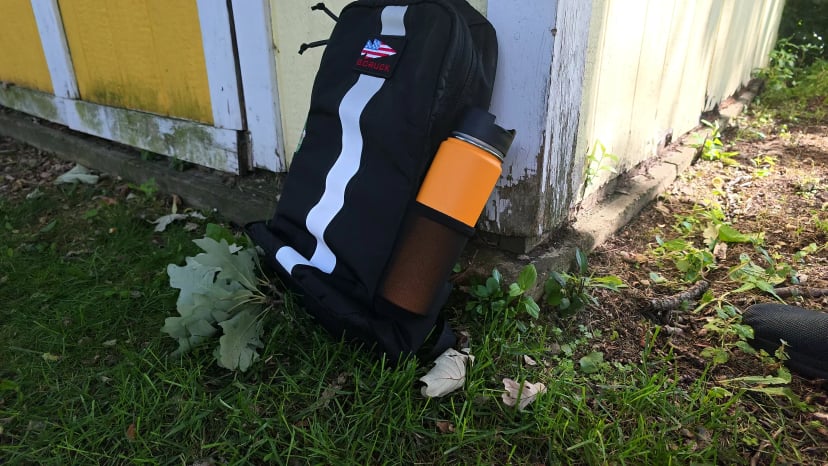
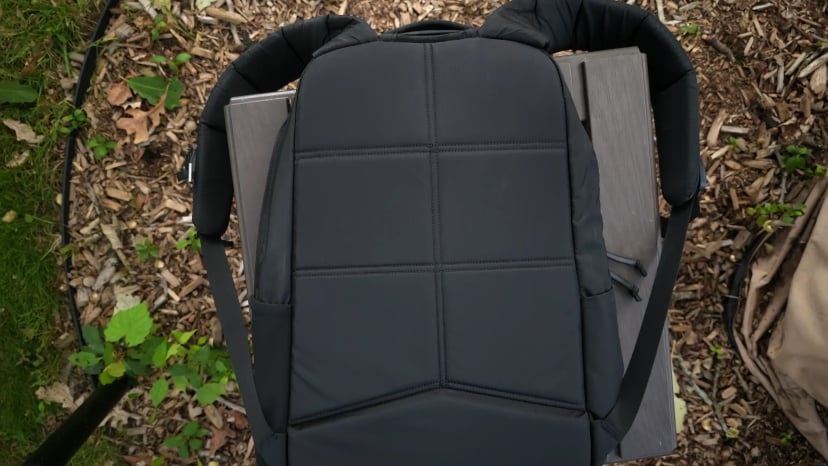
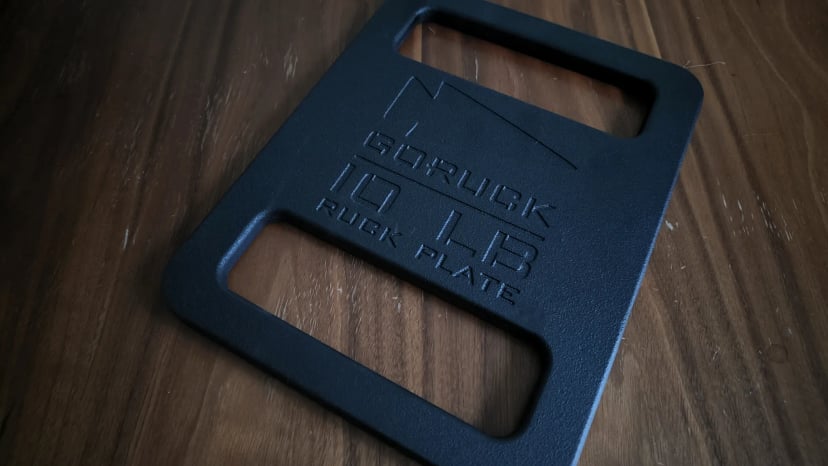
GORUCK's three cues read like a description of this pack, which is no accident. The current Basic Rucker comes in 17L and a 14L version that is 2 inches shorter. GORUCK recommends the 14L for anyone 5'10" or under, so the pack covers less of your back. It weighs 2 lb 2 oz empty and has one elevated pocket for a single Standard plate of up to 30 lb. There is no hip belt.
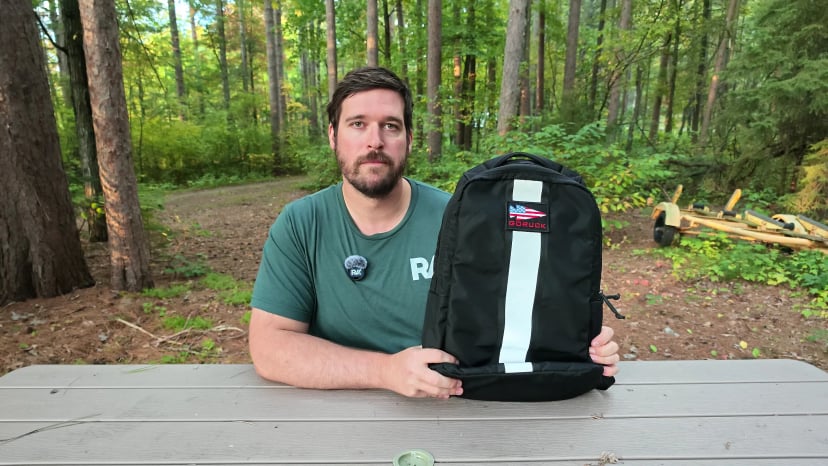
I carried the 17L for 12 days across seven Wisconsin state parks in May with a 10 lb plate. The plate stayed put in the elevated pocket, and the pack never developed a hot spot or needed re-tightening after the first few days. It came on and off quickly, which mattered when I kept putting it down to fly a drone. All of that was walking. I haven't shuffled in it, so I can't speak to how it handles bounce at pace.
What I can confirm is how it's built. The 420D Robic body is lighter and softer than the 1000D Cordura on the Rucker, and the side pocket and sheath pocket hold a bottle and phone outside the main compartment. Those are the "snack pockets" GORUCK's email mentions.
If you already own a Rucker 5.0
You don't need another pack. The Rucker 5.0 also holds its plates high and supports far more weight. It is bigger, heavier and costs more, and its main advantage is capacity you won't use on a light, fast session. I carried the 25L with a 20 lb plate on hilly trail without the optional hip belt, and my traps were sore afterwards. That's a reasonable sign that a larger pack carrying heavier plates isn't the setup for moving fast. If you shuffle in it, drop to a lighter plate and cinch the straps until nothing moves.
Should you try the ruck shuffle?
Our guidance doesn't change: brisk loaded walking is the main way to get faster under a pack, and extra aerobic work is better done without the load. The shuffle is optional. It isn't the next level after walking, and our ruck running guide explains why no single shuffle technique has been shown to be safe for everyone.
If you want to try it after reading the evidence, set it up to keep the force per step down:
- Have a base first. A 45-minute ruck at your current weight should feel routine before you add pace.
- Start lighter than GORUCK suggests. McCarthy's 30 lb is light for someone who normally carries 45 to 60. For most people, 10 to 20 lb is the right place to start. A 10 lb plate is enough to learn the movement.
- Shuffle in short bouts. One to two minutes inside a brisk walk, on flat, even ground. Walk the descents.
- Use effort to set the pace. GORUCK's 75% effort is a sustained aerobic pace you could hold for an hour or more. Our zone 2 heart rate calculator gives you a number to hold.
- Stop when form slips. If the pack starts bouncing, your stride turns into a bouncy jog, or anything aches the next morning, go back to walking.
Skip it for now if you are new to rucking, if you have current knee, foot, shin or back pain, or if your goal is a walking standard. A timed event that requires walking is best trained by walking.
"High and tight" is GORUCK's most useful cue whatever your pace. Shorten the shoulder straps until the top of the plate sits level with your shoulder blades. Then tighten the sternum strap if your pack has one, and check that the plate stays still when you bounce on your toes. A plate that doesn't move adds less force with every step.
Frequently asked questions
A ruck shuffle is a short-stride, low-bounce gait between fast walking and running, done with a weighted pack. GORUCK describes it as about 75% effort that you can hold for a long time. It is an informal technique; no standard definition or published study treats it as a distinct gait.
GORUCK says no and tells people not to ruck run. Mechanically, the difference is whether both feet leave the ground. Once they do, the shuffle is a slow loaded run, and research on running with a weight vest shows higher peak forces and a more crouched posture as load rises.
GORUCK's co-founder uses about 30 lb, which is light compared with his usual 45 to 60 lb. For most people starting out, 10 to 20 lb is a safer place to learn the movement, in short bouts within a brisk walk.
That has not been measured. A loaded shuffle is slower than a typical jog, which lowers impact, but the extra weight raises the force of every step. Research supports a low, smooth stride over a bouncy slow jog. It does not show that a loaded shuffle produces less joint load than an unloaded jog.
No. Any pack that holds the plate high and still against your back will work. The Basic Rucker suits it because it is small, has no hip belt and keeps a single plate of up to 30 lb in an elevated pocket. The Rucker 5.0 works too with a lighter plate and well-adjusted straps.