Change the route before changing the habit
The weather can change the practical part of a ruck before it changes your fitness. The trail closes earlier. The walk home gets dark. A wet base layer that was merely annoying in summer becomes a reason to get indoors.
Keep a useful session on the calendar, but choose its venue and demands around the conditions. This guide connects the indoor and cold-weather plans, fills in the after-dark decisions, and gives you a few verified fall 2026 event options to investigate.
The seasonal framing here follows autumn and winter in the Northern Hemisphere. Use the conditions that apply where you live; an October date doesn't make your local weather cold.
Pick the version that fits today
| Your situation | Start here | Make this decision first |
|---|---|---|
| Rain, ice, smoke or outdoor conditions make the route unsuitable | Four-week indoor plan | Does the exact venue and equipment permit a weighted pack? If not, use unloaded walking. |
| Cooler or snowy conditions with a manageable route | Cold-weather rucking guide | Can you keep dry, walk securely and reach shelter if the plan changes? |
| You can only walk before sunrise or after work | The after-dark checks below | Can you use a familiar route with sidewalks or a permitted, well-lit walking area? |
| You want a group outing | Ruck club finder | Confirm the current meeting time, route, pace and whether beginners are welcome. |
| You're choosing a challenge or charity event | Event readiness tool | Compare the exact requirements with your recent repeatable sessions. |
A shorter outing can keep the habit intact without pretending it is the same training exposure as the longer session it replaced. Record the change and build from what you actually completed.
Rucking after dark: decide on the return first
Work backward from when you need to be home. Leave time for a slower crossing, a clothing adjustment and a shorter route if conditions change. A route that requires perfect pace to get you back on time is a poor evening choice.
For example, if you have 45 minutes available, choose a loop with an earlier exit instead of a destination that takes the full 45 minutes at your best pace. This is a scheduling example, not a prescribed workout duration.
Check five things:
- The route: Walk a familiar surface. Check trail closing hours and avoid introducing technical footing in darkness.
- Crossings: Prefer sidewalks and designated crossings. Inspect driveways and junctions rather than relying on a light to announce you.
- Light: Test the beam, controls and battery before leaving. Carry suitable backup power for a longer route.
- Visibility: Use reflective material where the pack won't hide it. A headlamp lets you see; it doesn't guarantee a driver has noticed you.
- Exit: Know where to turn back, get indoors or stop safely. Tell someone your route and return time when going alone.
NHTSA's walking guidance recommends sidewalks, walking facing traffic when a sidewalk is unavailable, and using intersections or crosswalks. It also warns about turning and backing vehicles. Those choices remain important with a pack on.
Our headlamp comparison helps with road versus trail beams, battery options and controls. Check what you already own before buying another light. Keep the first dark outing short enough to find problems with the setup near home.
Bring the session indoors when the route stops working
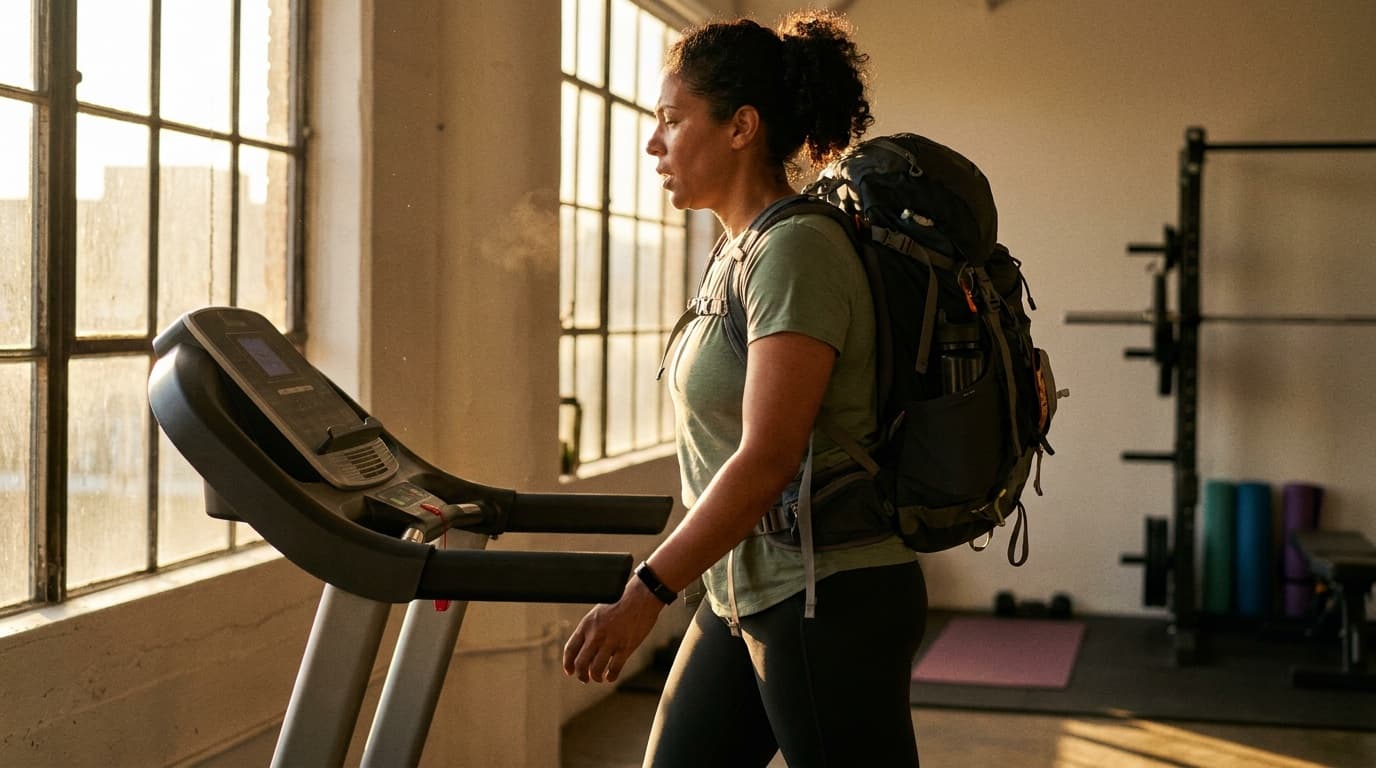
A treadmill is one option. An indoor track, a permitted mall walking route or unloaded indoor walking may fit better. Check venue rules before carrying a pack, and keep corridors, exits and other people clear.
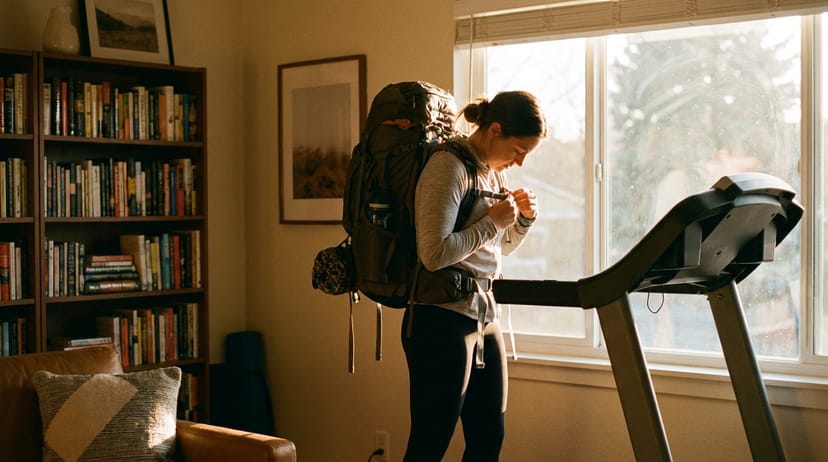
On a treadmill, the exact machine's instructions and manufacturer guidance matter. A stated maximum user weight isn't automatic approval for weighted-pack use. Start with the indoor plan's setup checks before choosing a speed or incline.
Keep a familiar load and change one demand at a time. If you need to hang on to the rails to continue, reduce the demand or stop. When outdoor conditions improve, return on a familiar surface with a shorter session before restoring hills or a longer route. Indoor distance doesn't reproduce the turns, surface changes and descents of your outdoor route.
Cold-weather preparation starts with access
Put the removable layer where you can reach it. Check that your jacket and hood work with the pack and that your gloves let you use your light and phone. Plan for the temperature and wind on the return, not just the conditions at the door.
The National Weather Service recommends layers, protection from wind and changing out of wet clothing. Our cold-weather guide covers how to apply that to route choice, footing, stops and warning signs.
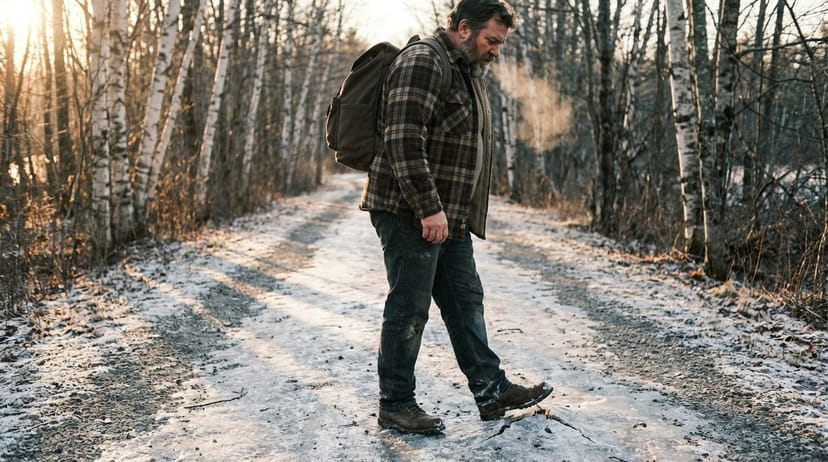
If you need to compare clothing and kit, the existing fall training loadout and winter training loadout organize options by use. A kit should solve a specific problem you found on your route. It doesn't need a seasonal shopping ritual.
Fall 2026 events to investigate
The dates below were checked against organizer pages on October 4, 2026. They are examples for planning, not a complete calendar or a guarantee that a ticket remains available. Check the date, venue, chosen format and current registration details directly before booking. If a date has passed, use the organizer's calendar for the next edition.
Some GORUCK event links below are paid links. We may earn a commission if you purchase through them. How we make money.
| Date in 2026 | Event | What to check |
|---|---|---|
| October 23-24 | GORUCK Halloween Event Weekend, Salem, Massachusetts | Choose the specific challenge or city ruck. Confirm its date, start time, required load and current ticket availability. |
| October 24 | Music City Ruck March, Nashville, Tennessee | The organizer lists free entry with honorary, solo and relay options. Registration is scheduled to close October 22; check current course and division details. |
| November 7 | 12th Annual Ruck 'N' Run, Republic, Missouri | Choose the actual ruck division and distance. Confirm required weight, exercises, check-in and the start time with the organizer. |
| November 19-21 | Ruckapalooza Jax Beach, Jacksonville Beach, Florida | The weekend has several ticket types and ruck distances. General admission and a chosen ruck entry aren't interchangeable. |
For more locations and formats, use the official GORUCK event calendar and the club directory. Local clubs can offer a shorter, more regular outing when travel or a long challenge doesn't fit.
Choose the event from your baseline
Copy the organizer's required load, distance or duration, surface, cutoff and packing list. Then compare those with a recent session you could repeat. Use the event readiness tool and packing guide to make the gap visible.
The eight-week event countdown assumes an existing loaded baseline and eight available weeks. From October 4, the November 7 event is less than five weeks away. That isn't an invitation to compress the plan. Pick a suitable division, use existing fitness or choose a later event.
A holiday or charity theme gives the outing a purpose; the current organizer requirements still determine what you need to carry and prepare for.
Make the next week easy to follow
Choose your usual number of sessions from your existing plan. Give each one an outdoor route and a fallback that you can actually use. Keep the pack weight stable while checking a new venue, colder clothing or a dark route.
In your log, record venue, starting pack weight, time, surface and how the session felt. If the plan changed, record what happened. A week of shorter indoor sessions gives you a more useful starting point than a log that says you completed the original outdoor plan.
If you're just starting, use the beginner guide or Couch to Ruck plan. Seasonal conditions don't change the need for a manageable first session.