Gear Review
GORUCK Basic Rucker Review (2026): 12 Days, 7 Parks, One Pack
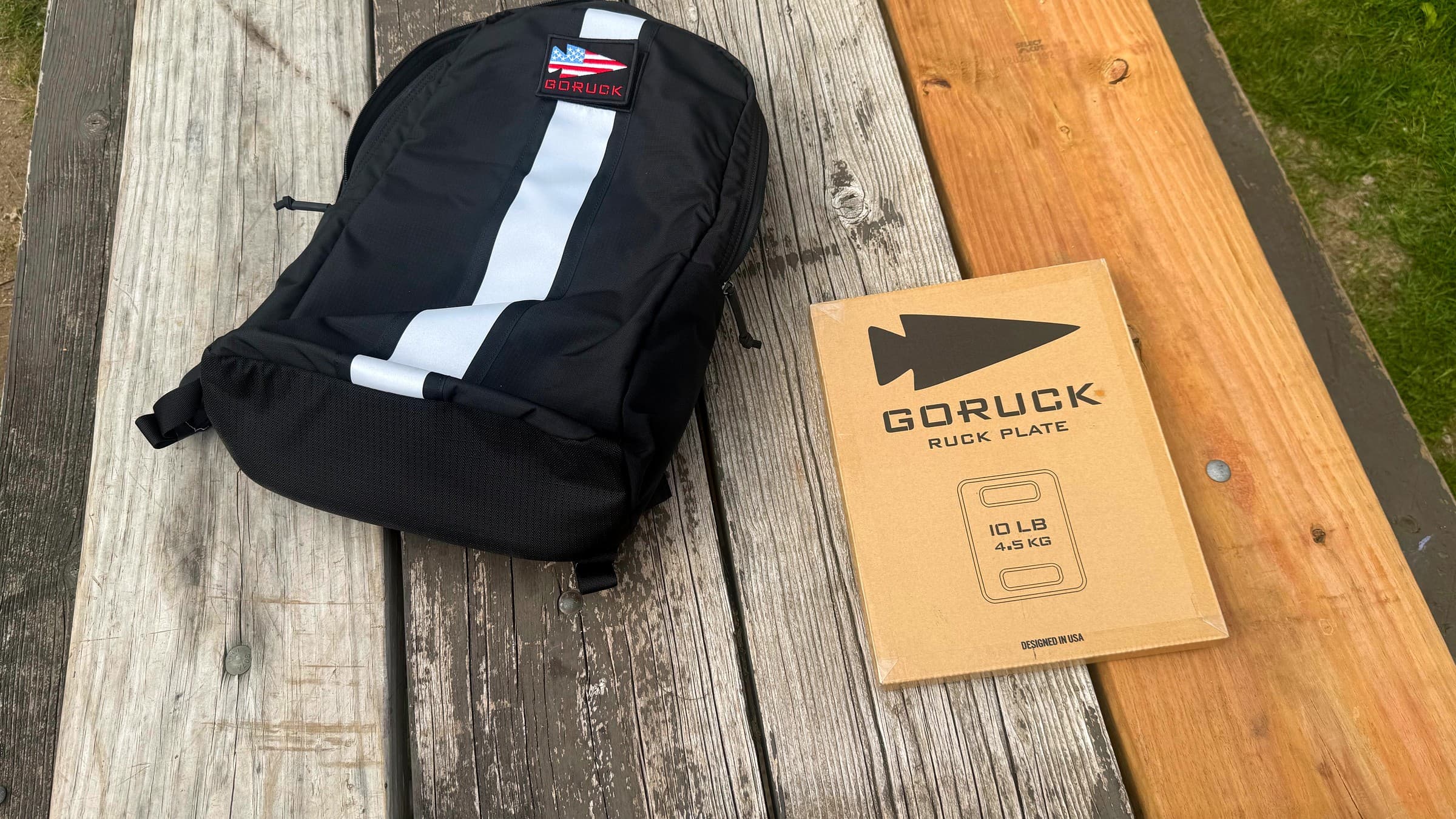
GORUCK Basic Rucker review after 12 days carrying a 10 lb plate across 7 Wisconsin state parks, updated with the current 14L and 17L sizes and elevated plate-pocket specifications.
On this page12 sections
- At-a-glance specs
- The field test: 12 days, 7 parks, one pack
- What held up over 12 days
- Where the Basic Rucker pulls its punches
- What rounded out the kit
- Basic Rucker vs Rucker 5.0 vs GR1
- What other reviewers are saying
- Who should buy the Basic Rucker
- Who should skip it
- The honest take after Wisconsin
- Frequently asked questions
- Related
- After 12 days carrying a 10 lb plate across 7 Wisconsin state parks - Kohler-Andrae on Lake Michigan to Big Bay on Madeline Island - the GORUCK Basic Rucker stayed quiet the entire trip. No hot spots, no failures, no fatigue.
- Our review unit cost $120 in April; the current model usually sits in the $145-170 tier. It remains the least expensive entry in GORUCK's training line.
- The 420D Robic fabric is lighter than the Rucker 4.0's 1000D Cordura - intentional trade for the price. Light rain and lake spray rolled off it. Tossed in dirt and wet soil multiple times to grab the drone - no damage.
- The elevated pocket accepts one Standard plate up to 30 lb. The ceiling comes from the single-pocket design, not a lower plate position.
- Right pack for someone starting rucking with 10-20 lb plates, or for an experienced rucker who wants a SCARS-backed minimalist pack for shorter days. Not the pack to grow into 30+ lb training with.
Hands-on tested
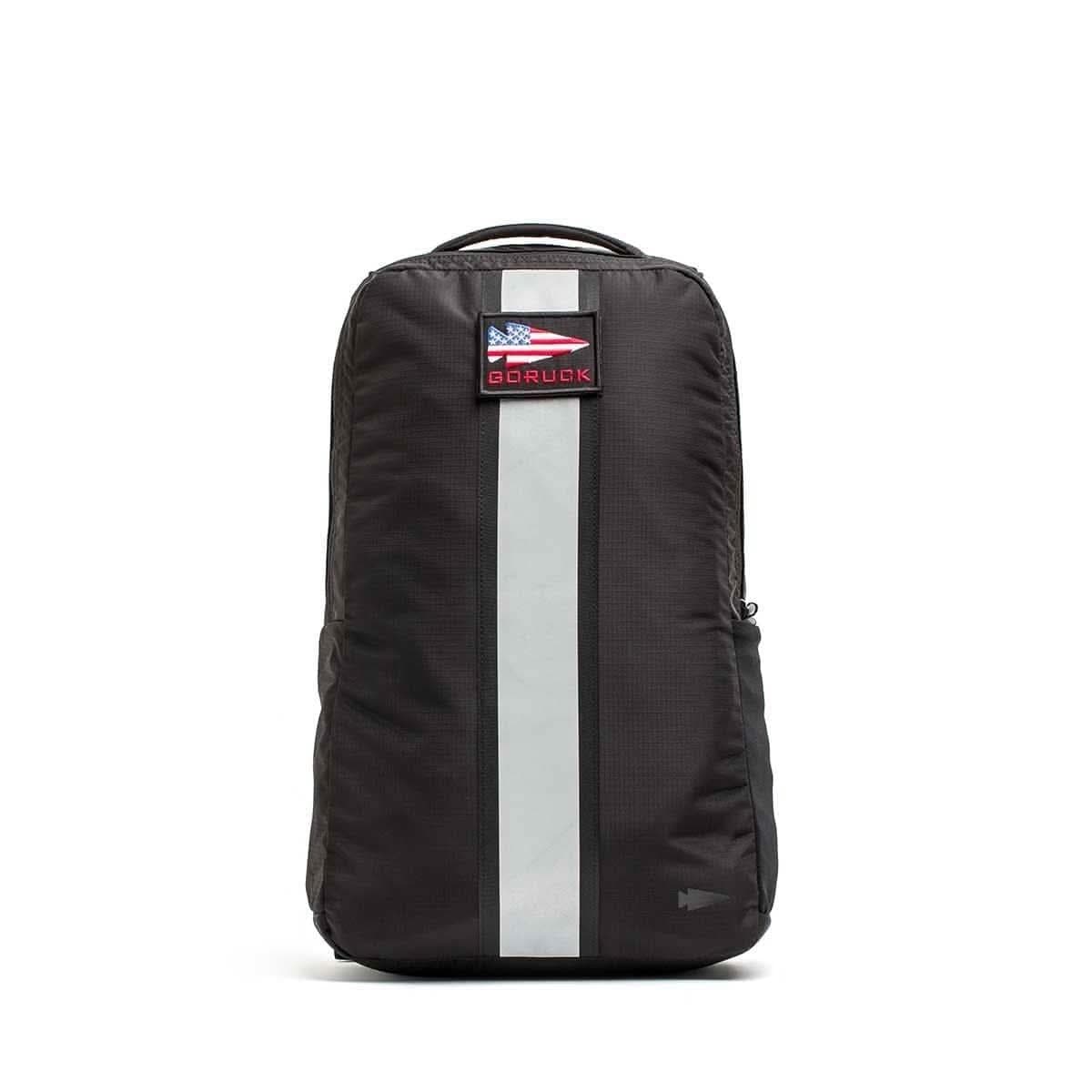
GORUCK Basic Rucker
GORUCK's beginner pack. Available in 14L or 17L, with a 420D Robic body and an elevated GORUCK plate pocket. It is the least expensive current way into the SCARS-warranted GORUCK lineup.
This review combines first-person field observations from a 12-day Wisconsin trip (May 7 - 19, 2026) with aggregated community feedback from Gear Patrol, HiConsumption, Thad Forester, Ruck Gear Reviews, and verified Amazon purchase reviews.
At-a-glance specs
| GORUCK Basic Rucker | |
|---|---|
| Capacity | 14L or 17L |
| Empty weight | 2 lbs 2 oz |
| Body material | 420D Robic nylon |
| Bottom panel | 840D Robic nylon |
| Back panel | 210D Cordura |
| Plate pocket | One elevated pocket for a GORUCK Standard Ruck Plate |
| Max plate | 30 lb |
| Lumbar pad | 20 mm (same as Rucker 4.0) |
| Warranty | SCARS; repair or replacement is handled at GORUCK's discretion |
| Made in | USA |
| Typical current price | $145-170; check GORUCK for the live price |
The field test: 12 days, 7 parks, one pack
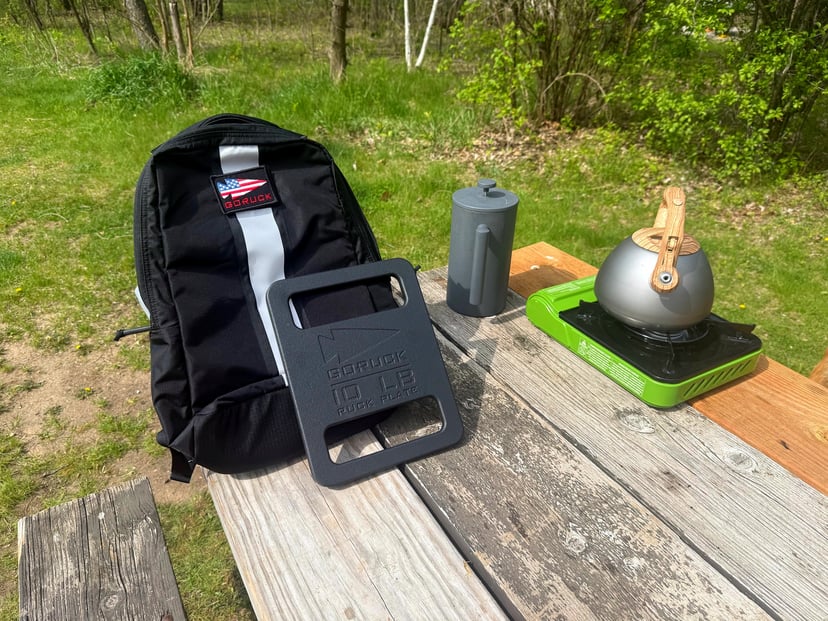
I bought the Basic Rucker on April 9, 2026, threw a 10 lb GORUCK Ruck Plate in it, and a month later took it on a 12-day Wisconsin loop - from Kettle Moraine and Lake Michigan up through the Apostle Islands and back. Seven state parks, a family cabin layover for drone work, and the kind of mixed-use a real travel rucker actually does.
The plate weight stayed at 10 lbs the entire trip. The pack lived through light rain on the Kohler-Andrae boardwalk, Lake Michigan spray, the Madeline Island ferry, and multiple toss-it-in-the-dirt sessions to grab a drone.
This is what I noticed - and what I didn't.
What held up over 12 days
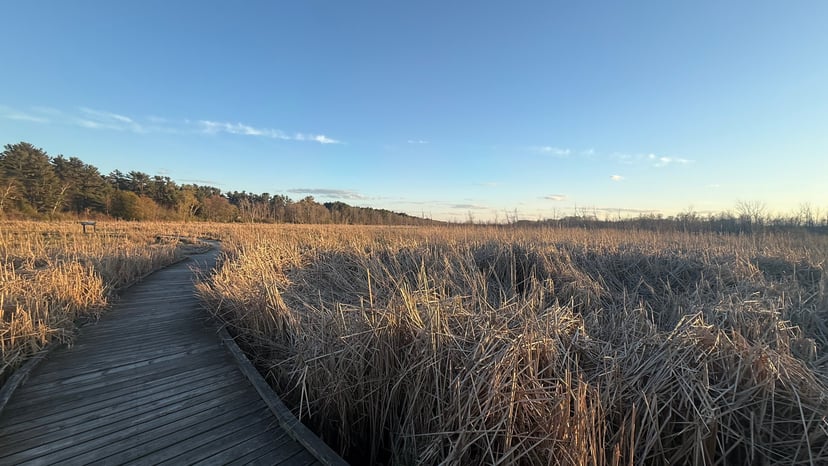
The pack never made me think about it. That sounds like a backhanded compliment, but for an entry-level rucksack on a 12-day, four-leg trip, it's the strongest possible review. No hot spots. No strap re-adjustments after Day 3. No "the lumbar is killing me" moment at the end of a long park day. The 20 mm lumbar pad - the same component GORUCK uses on the Rucker 4.0 - did its job under a 10 lb load without drawing attention to itself.
Quick on and off was a real win. At Clear Lake (Day 6 of the trip) I was tossing the pack down repeatedly to grab the DJI Neo 2 drone for shots. Threw it in dirt, in wet soil, in dewy morning grass. Picked it up and put it back on without fussing with strap adjustments each time. The 420D Robic body shed all of it - no staining, no fraying, no abrasion concerns.
Light rain and lake spray rolled off. The pack is rated water-resistant, not waterproof, and that distinction matters. But across light rain at Kohler-Andrae and Lake Michigan spray on the boardwalk, contents stayed dry. Gear Patrol and HiConsumption both frame the pack as fine for normal conditions and wrong for sustained downpours - the trip confirmed both halves of that read.
The side pockets actually solved something. GORUCK's lineup has historically been criticized for not having external water bottle access - you had to dig into the main compartment. The Basic Rucker fixed that with one elastic side pocket and one sheath pocket. I used the elastic side for a water bottle on travel days and the sheath for phone and keys. It's small but it changes the daily ergonomics noticeably.
The smaller zipper concern didn't materialize. The most common community flag against the Basic Rucker is that its main zipper is smaller than the Rucker 4.0's, which raises long-term durability questions. Over 12 days of opening, closing, packing, unpacking, drone-grabbing, leash-stuffing, and one tight-fit moment where I crammed in the DJI Neo 2 plus a retractable dog leash plus a water bottle - the zipper held without protest. Twelve days cannot predict five-year durability. It does give us a real short-term field data point.
Where the Basic Rucker pulls its punches

These are the limitations baked into the design. Most of them are intentional - GORUCK explicitly built the Basic Rucker to be the minimalist entry pack, not a do-everything bag.
The 30 lb plate ceiling is a real wall. This is not the pack you grow into 40 lb training with. At 10-20 lbs the Standard plate sits securely in the elevated pocket and the lumbar pad handles the load. The limitation is simple: the Basic Rucker has one pocket rated for one Standard plate up to 30 lb. If your training is heading toward heavier loads, start with the Rucker 5.0, which has two plate pockets and supports heavier combinations.
Single main compartment, no admin pockets. No laptop sleeve. No interior dividers. Nothing that makes it a viable daily-carry or travel pack for someone who needs organization. If you want a single GORUCK pack that handles rucking plus commuting plus travel, the GR1 is the design that does that - in a higher price tier.
420D Robic is lighter than 1000D Cordura. This is the deliberate price-point trade. The Robic fabric is soft, quiet, and stays comfortable, but it doesn't have the brick-wall feel of the heavier Cordura on premium GORUCK packs. Twelve days of normal use showed no wear on mine, but the long-term abrasion-resistance ceiling is genuinely lower than the Rucker 4.0's.
The 17L review unit is tight if you carry stuff inside. With the drone (in case), a retractable dog leash, and a water bottle, the pack was full. The current 14L option is smaller still. For a typical sub-30-minute neighborhood ruck that can be enough. For a multi-hour park day with a jacket, snacks, and a small medkit, expect to use the external webbing or choose a larger Rucker.
What rounded out the kit
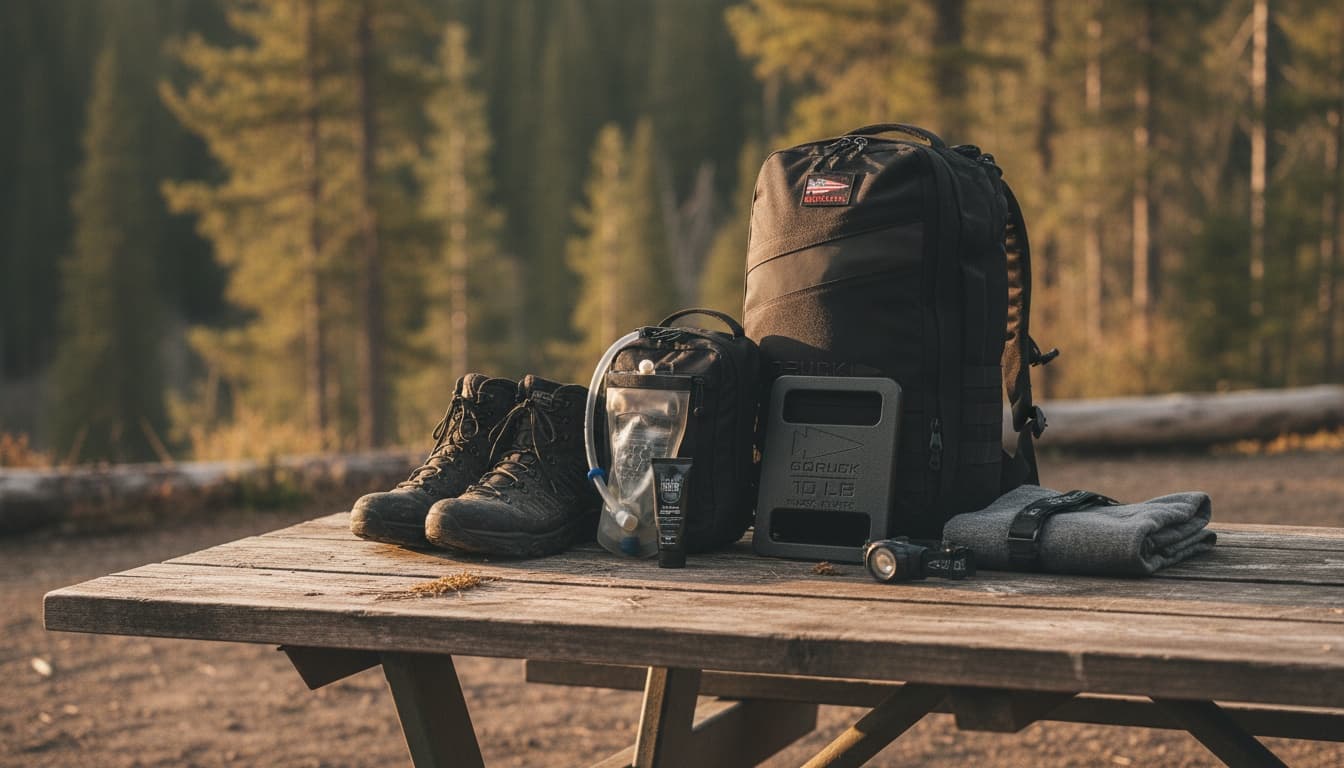
The Basic Rucker carries the load. A few small picks made the 12 days easier - and most of them are the kind of essentials that don't get talked about until you're standing at a trailhead realizing you forgot them.
Tick season was the real Wisconsin variable. May is peak nymph season for blacklegged ticks, and most of the trip ran through tall marsh grass at Kohler-Andrae, oak savanna at High Cliff, and hardwood forest at Castle Mound. The two-layer approach is the standard: permethrin on clothing and gear (it binds to fibers for about six weeks or six washes), picaridin or DEET on exposed skin, and a remover kit ready for the inevitable find. Picked zero ticks off gear or clothing across the trip.
The rest is multi-day comfort. A 32 oz insulated bottle in the side pocket means you stop drinking warm water by noon. A headlamp earns its weight on dusk rucks where the pack's reflective strip helps cars see you but doesn't help you see the trail. And athletic tape is the most useful blister-prevention item to keep in a 17L pack.
The Basic Rucker has enough room for the essentials and not much more - which is the right shape for what the pack is designed to do.
Basic Rucker vs Rucker 5.0 vs GR1
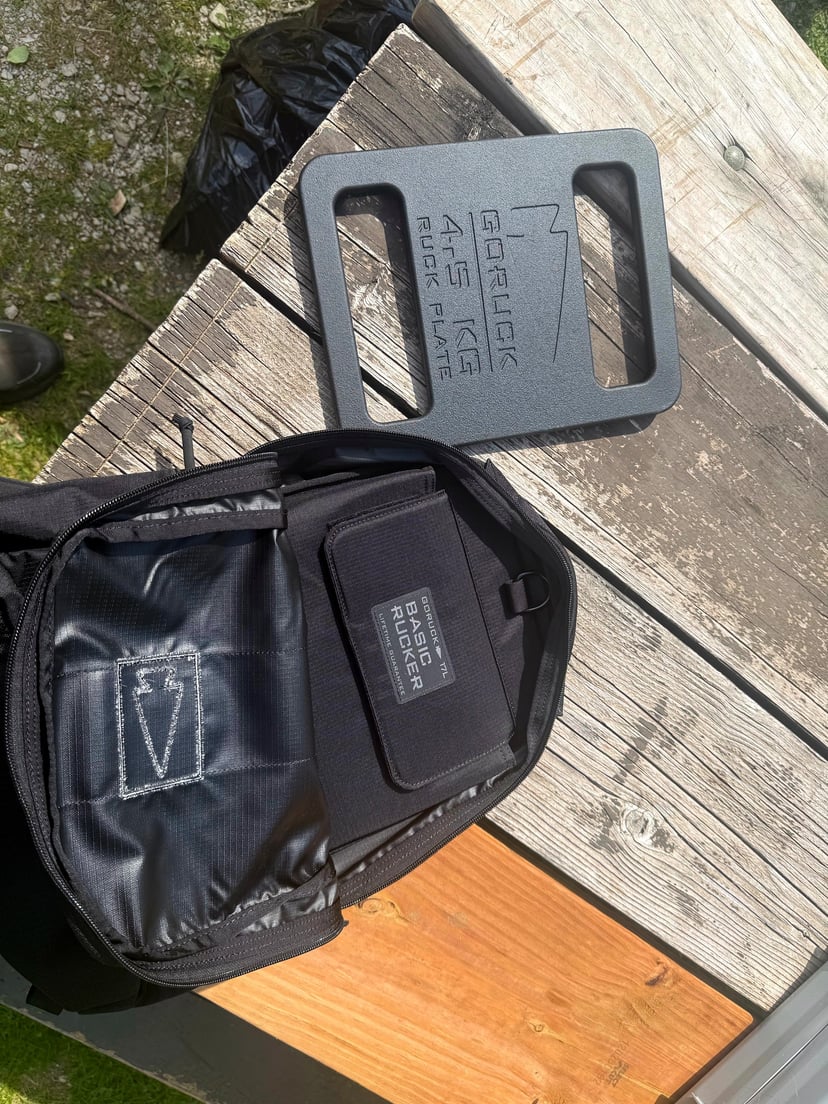
The Basic Rucker is the lower-cost training pack. The current Rucker 5.0 adds a second plate pocket, 20L and 25L capacities, a 1000D Cordura body, and support for heavier Standard and Long plate combinations. The GR1 is the work-and-travel option with a padded laptop compartment.
| Basic Rucker | Rucker 5.0 | GR1 | |
|---|---|---|---|
| Typical price tier | $145-170 | Check current price | Check current price |
| Capacity | 14L / 17L | 20L / 25L | 21L / 26L |
| Body material | 420D Robic; 840D bottom | 1000D Cordura | Check the current material option |
| Plate pocket | One elevated Standard pocket | Two elevated Standard / Long pockets | Laptop compartment; no locked training pocket |
| Supported load | One Standard plate up to 30 lb | Standard and Long combinations up to 75 lb | Not specified as a dedicated plate-training system |
| Lumbar pad | Yes | Yes | None |
| Admin pockets | None | None | Multiple |
| Laptop sleeve | No | No | Yes |
| Best for | First GORUCK pack and loads up to 30 lb | Dedicated training and heavier plate work | Work, travel, and occasional rucking |
| Warranty | SCARS | SCARS | SCARS |
The Basic Rucker uses lighter materials, costs less, and caps the plate at 30 lb. The Rucker 5.0 is the better fit for heavier training or anyone who wants two plate pockets. See the current GORUCK lineup guide for the complete decision path.
What other reviewers are saying
Community feedback across Gear Patrol, HiConsumption, Thad Forester, and verified Amazon reviews splits along consistent lines.
The praise consistently lands on:
- The lifetime SCARS warranty at the lowest price point GORUCK has ever offered it. Multiple reviewers frame this as the real value proposition rather than the spec sheet.
- The side pockets fixing a long-standing GORUCK complaint about water bottle access.
- The 20 mm lumbar pad shared with the Rucker 4.0 - reviewers call out this as a real comfort feature at the price point.
- 2-inch reflective strip for low-light visibility, a small detail that matters more than it sounds for early-morning or dusk ruckers.
The criticism consistently lands on:
- The 30 lb plate ceiling limits long-term training progression.
- The 17L capacity feels tight for anything beyond a focused ruck.
- The 2.5" shoulder straps are narrower than premium GORUCK models and may feel insufficient at the upper weight ceiling.
- Smaller zippers than the Rucker 4.0 raise long-term durability questions, though no reviewers report actual zipper failures yet.
Across the major reviews and forum threads, the Basic Rucker keeps landing in the same two buyer profiles: beginners taking their first serious step into rucking, and experienced ruckers who want a SCARS-backed minimalist pack for shorter sessions where the 1000D Cordura overbuild isn't necessary. The Basic Rucker is uniformly not the recommendation for ruckers planning to progress to 40+ lb plate work.
Who should buy the Basic Rucker
You should buy this pack if any of these match:
- You're starting rucking and want a purpose-built plate pocket backed by GORUCK's current SCARS terms
- You're rucking with 10-20 lb plates and don't have plans to go significantly heavier
- You want a minimalist, purpose-built rucking pack for shorter sessions and don't need admin pockets or laptop storage
- You want the least expensive current GORUCK training pack and understand its limits next to the Rucker 5.0
Who should skip it
Get a different pack if any of these match:
- You're already rucking with 30+ lb plates regularly or expect to be within 6 months - go straight to the Rucker 5.0 for its two-pocket load system
- You want one pack that handles rucking, commuting, and travel - that's the GR1's design brief, not the Basic Rucker's
- Your pack budget is below the $145-170 tier - budget rucking packs under $200 covers lower-cost alternatives
- You ruck in sustained wet conditions where water-resistant isn't enough
Start with one plate rather than buying a large progression on day one. The Basic Rucker accepts one Standard plate up to 30 lb; the Rucker 5.0 is the better long-term choice when you already know heavier combinations are part of the plan.
The honest take after Wisconsin
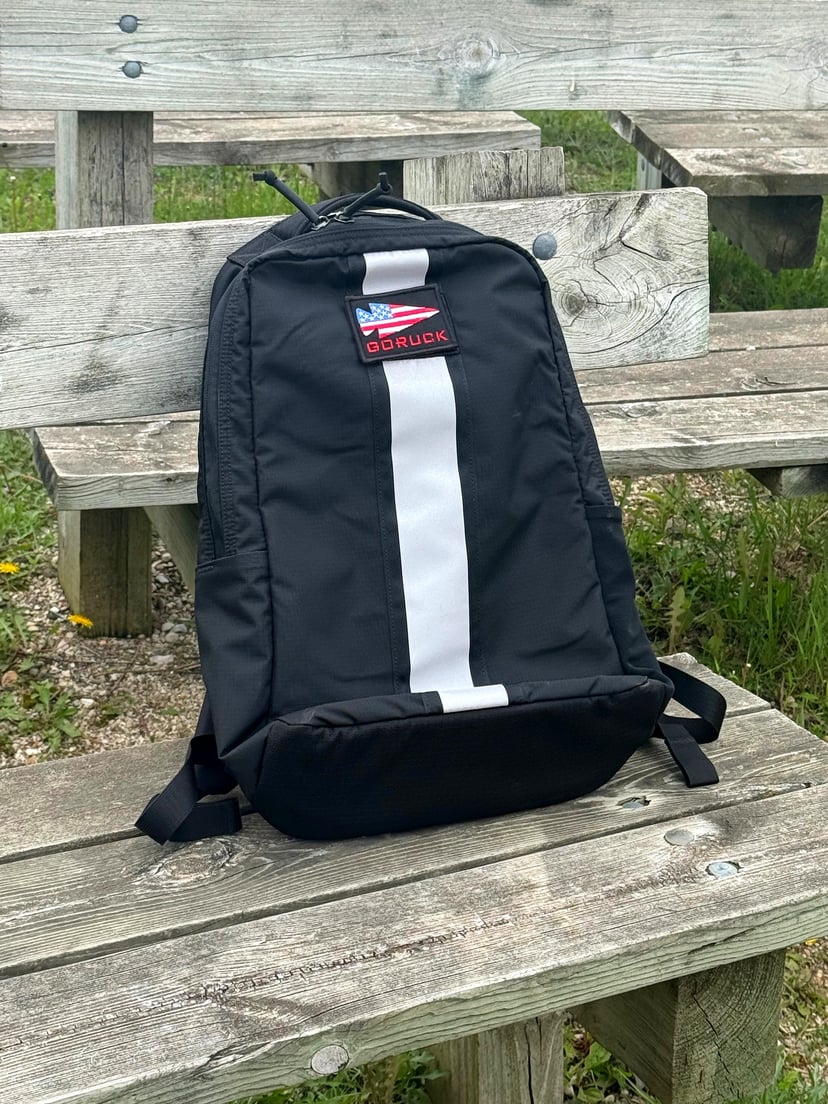
The strongest argument for the Basic Rucker is what didn't happen on the trip. No hot spots after Day 3 at High Cliff. No zipper failures despite cramming the DJI Neo 2 plus a retractable leash plus a water bottle. No fabric damage despite tossing the pack in dirt, wet grass, and morning dew at Clear Lake. No internal water ingress through light rain and Lake Michigan spray. No moment where I thought "I should have brought a different pack."
The review headline is deliberately uneventful. The Basic Rucker did its job for 12 days and disappeared into the trip, which is what good gear is supposed to do.
The price tells the rest of the story. Our April review unit cost $120; the current Basic Rucker usually sits in the $145-170 tier. The 30 lb ceiling and single-compartment design remain real limits. If you understand those limits, the Basic Rucker is a sensible first pack without the cost of a GR1 built for work and travel.
If your training is heading toward heavier loads, choose the Rucker 5.0. If one bag also needs to handle a laptop and travel, choose the GR1. For 10 to 20 lb training and short to medium sessions, the Basic Rucker earns its place.
Frequently asked questions
The Basic Rucker comes in 14L and 17L sizes with one elevated pocket for a Standard plate up to 30 lb. The Rucker 5.0 comes in 20L and 25L sizes with two pockets for Standard and Long plates and supports heavier combinations. Choose the Basic for lower-cost beginner training and the Rucker 5.0 for more capacity or loads beyond 30 lb.
The Basic Rucker gives you an elevated Standard-plate pocket, a lumbar pad, and GORUCK's current SCARS coverage. The 5.11 RUSH 24 offers more organization and frequently costs less. Choose the Basic for a simpler training system; choose the RUSH when cargo organization and budget matter more than exact GORUCK plate fit.
The Basic Rucker accepts one Standard GORUCK plate in 10, 20, or 30 lb. The pocket is elevated against the upper back. Long, Heavy, and curved vest plates use different dimensions and are not the right match. See the plate compatibility guide before ordering.
The 17L volume and lack of admin pockets, laptop sleeve, or interior organization make it a limited daily-carry option. It looks normal enough at a gas station or trailhead - it doesn't read as overtly tactical the way some 5.11 packs do. But if you need a daily-carry pack with laptop storage and organization, the GORUCK GR1 is the design that does that. The Basic Rucker is a rucking pack first, with limited EDC capability second.
No. It's rated water-resistant, which held up across light rain and Lake Michigan spray on a 12-day Wisconsin trip. Contents stayed dry through normal exposure. It's not the pack to choose if you ruck in sustained downpours or wet climates - for those conditions, a packed waterproof liner or a different pack is the right call.
Related
Related Articles
GORUCK Rucker vs GR1: Which Should You Buy?
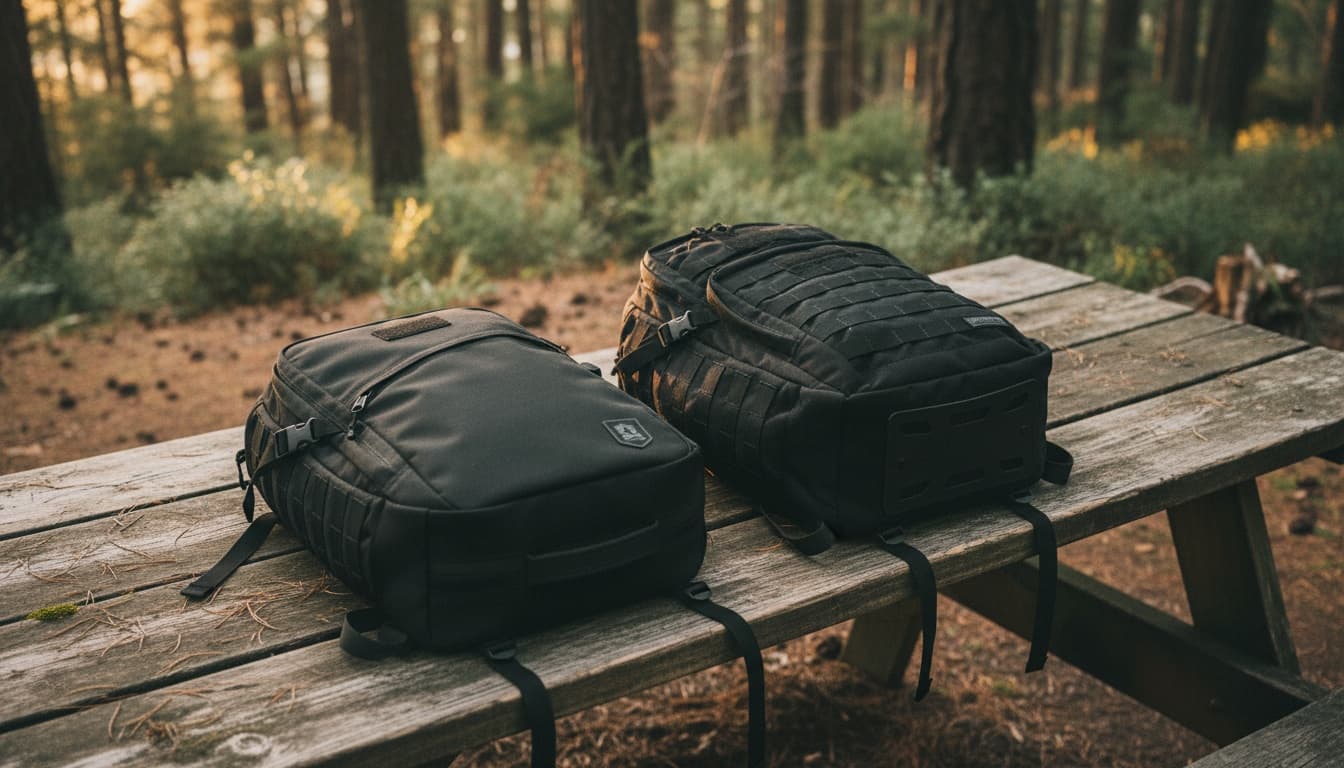
The Rucker 4.0 is built for rucking. The GR1 is built for everything. Side-by-side on plate pocket geometry, capacity, versatility, and the SCARS lifetime warranty math.
What 10 Years of GORUCK Actually Costs Compared to a Budget Pack
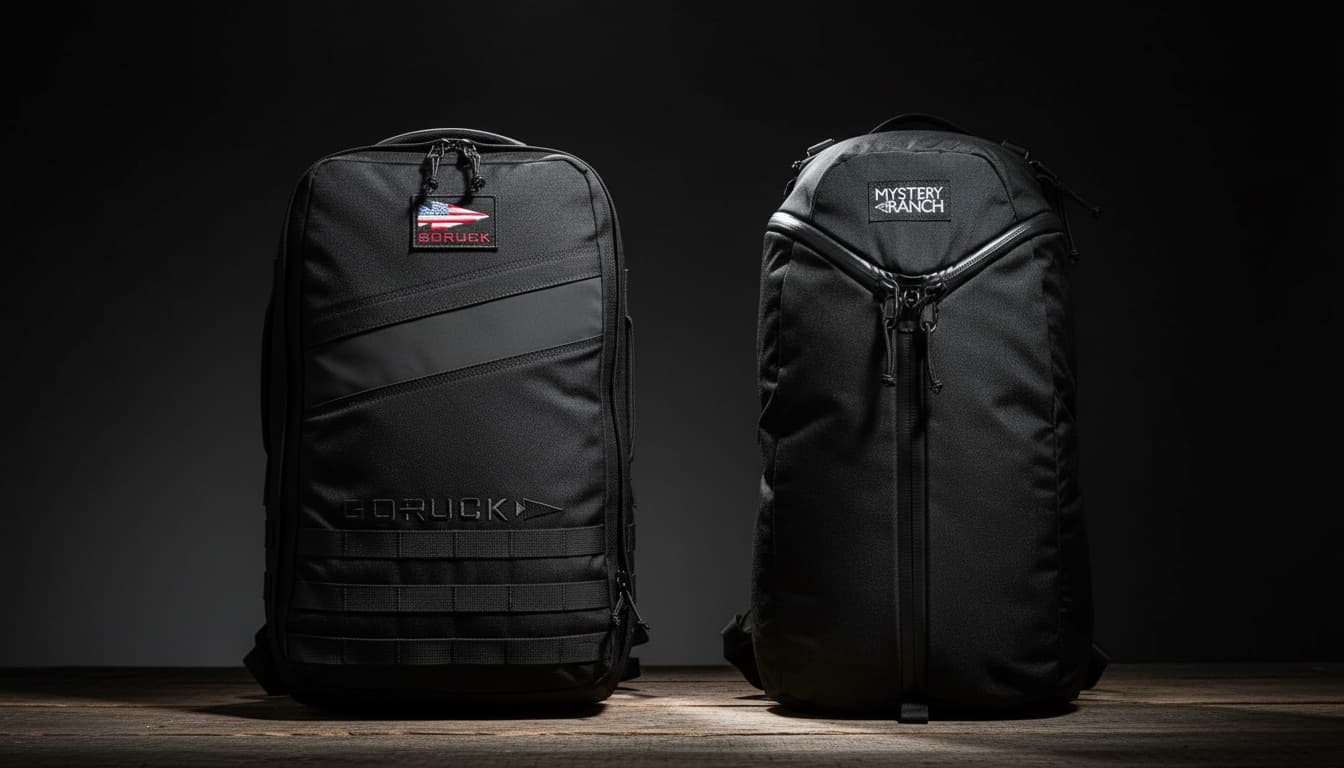
GORUCK packs cost $400. Budget packs cost $150. The 10-year math, factoring SCARS lifetime guarantee, Tribe membership value, and resale, looks completely different than the checkout-page math.

The Best GORUCK Alternatives
Five packs honestly compared against the GORUCK GR1: Mystery Ranch, 5.11, Evergoods, Direct Action. Find the best rucking backpack for your budget.
GORUCK Tough Packing List: Complete Gear Guide (2026)
The full GORUCK Tough packing list with every required item, strongly recommended add-on, and cadre-inspected essential. 12+ hour overnight event gear guide with brand picks and load-out strategy.