On this page7 sections
- What I carried and where I used it
- Fit, stability and shoulder comfort
- The 25L felt right on my back
- The lumbar pad was less intrusive than it looks
- My traps were sore afterward
- Expect contact with your back, and some sweat
- Plate storage, pockets and everyday use
- Features shown in the video
- How it compares with the GR1 and GR2
- Who I would recommend it to
- Frequently asked questions
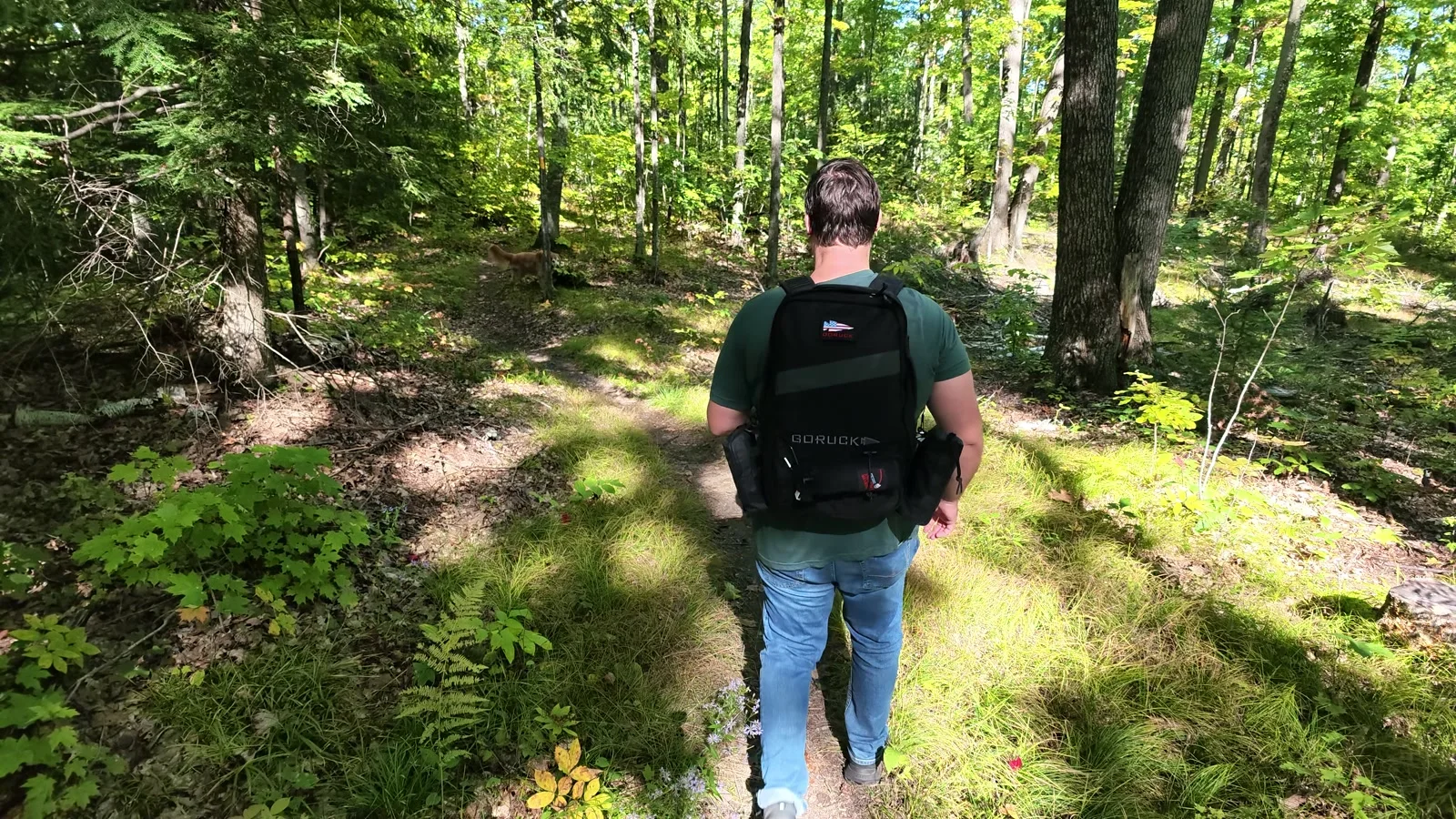
The GORUCK Rucker 5.0 stayed solid against my back on a hilly, uneven trail with a 20 lb plate and extra gear. I was wobbling around on the ground more than the bag was moving on me. That secure feel is the strongest reason I would choose it for dedicated rucking.
The large lumbar pad felt supportive, and I soon stopped noticing it while walking. My traps were sore once I got home, which I put down partly to carrying without the optional hip belt; that's the next thing I'll try.
GORUCK supplied this 25L pack for review. The GR1 and GR2 comparison further down comes from my own time with both bags. If you already own a Rucker 4.0, my Rucker 5.0 vs 4.0 upgrade guide covers what changed and whether it's worth replacing.
The full review film plays at the top of this page. The watch page has chapter jumps and the complete transcript.
What I carried and where I used it
| Review detail | My setup |
|---|---|
| Pack | Rucker 5.0, 25L |
| My height | 6 feet 2 inches |
| Weight plate | 20 lb; additional gear made the total load higher |
| Filmed hike | Uneven ground and hills in Wisconsin's Northwoods |
| Hip belt | None fitted |
| Other gear | Camera equipment inside; water and first-aid pouches attached to the sides |
| Evidence period | Trail footage and review recorded in September 2026 |
The 20 lb figure is the plate weight. I also carried camera equipment, water and other supplies, but did not weigh the complete load.
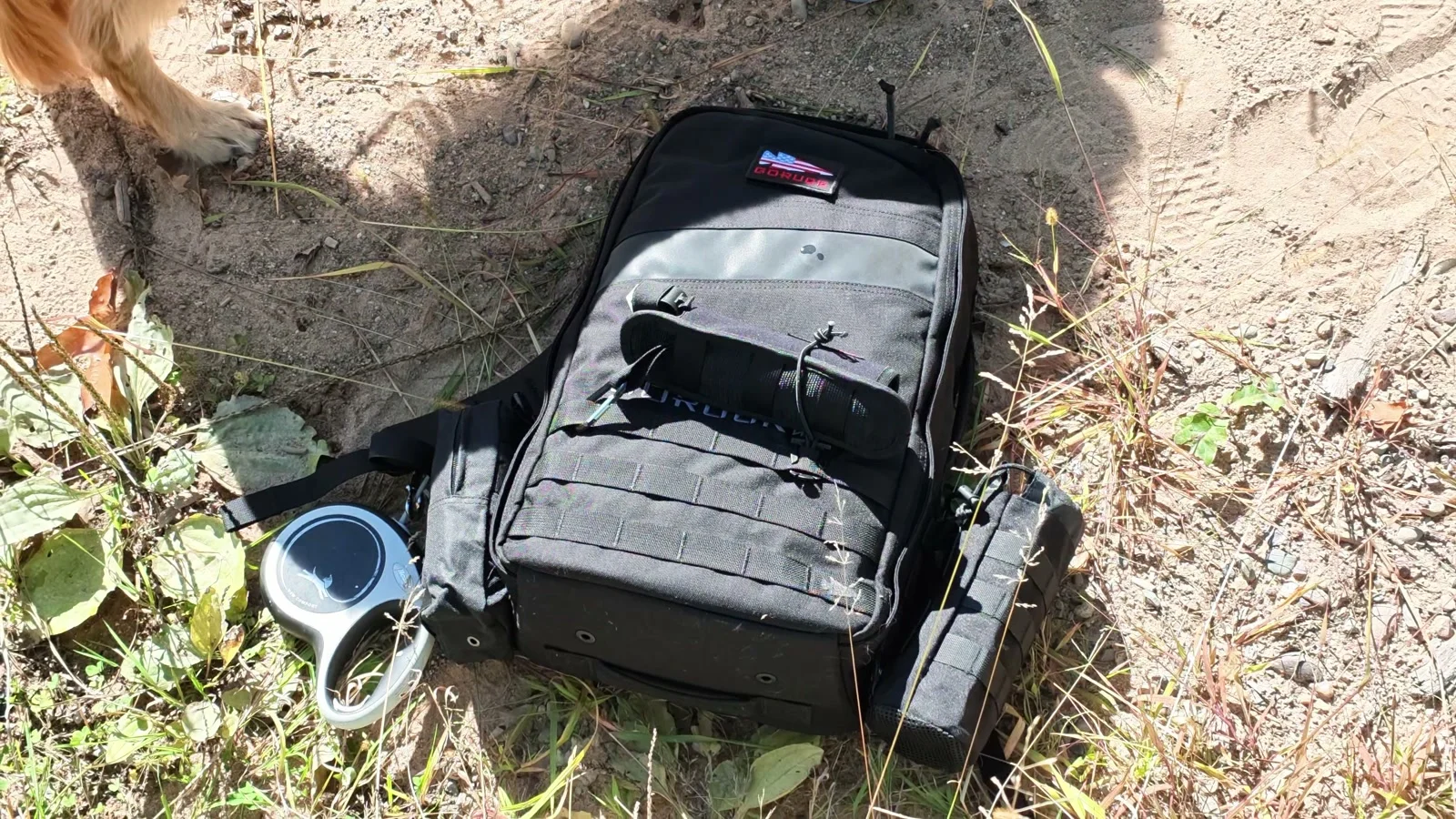
The side pouches visible in some trail footage are third-party accessories. They are not included with the Rucker. The table breakdown also shows the pack with those attachments removed.
Fit, stability and shoulder comfort
The 25L felt right on my back
GORUCK sent the larger size because I'm 6'2". The size felt good, and the pack stayed close and stable even where I had to work to keep my own balance. I didn't notice the plate shifting around inside.
I'd give most of the credit to where the plate sits. A plate held high and tight against your spine keeps the weight close to your own center of mass, so when you step down off a root or catch yourself on a slope, it has very little leverage to swing with. The same 20 lb riding low and a few inches off your back works like a longer lever: it pulls you backward on climbs and keeps moving after you've stopped. If you want the same planted feel, snug the shoulder straps until there's no gap between the pack and your back, and pack anything heavy beyond the plate close to the back panel rather than toward the front.
If you're choosing between the 20L and 25L, pay attention to where the lumbar pad and bottom of the pack sit on your back, as well as how much room you need.
The lumbar pad was less intrusive than it looks
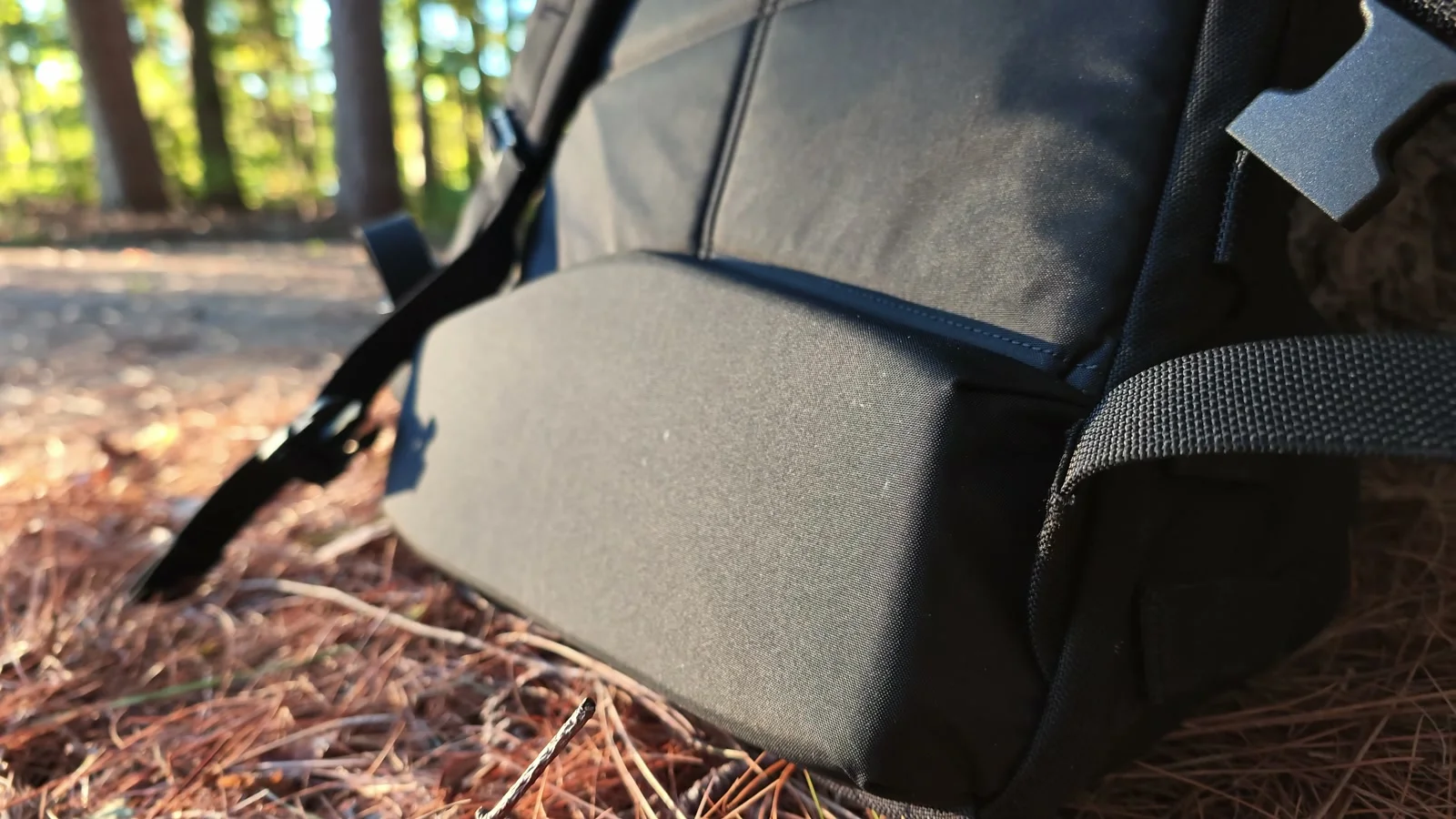
On the table, the lumbar pad looks enormous. On my back, it felt supportive and soon faded into the background. I didn't have any lower-back discomfort during the filmed hike.
My guess is that it works by filling the hollow of the lower back. Without a pad, the bottom of a pack tends to bridge that curve and rock against you with each step. With one, the pack gets a second point of contact below the shoulder blades, which probably helped the stability as much as the comfort. That only works if the pad lands in the curve. If it sits on your belt or lower, the pack is riding too low or it's the wrong size for your torso, and that's the thing to check before anything else.
My traps were sore afterward
I didn't notice a specific shoulder problem while walking. The soreness in my traps showed up after I got home. Without a hip belt, the shoulder straps carried the whole load, and they rest right on the upper traps. Those same muscles spend the walk holding your shoulders up against the pull of the pack, so sore traps afterward aren't much of a mystery. My load was also more than 20 lb, since the camera gear and supplies came along unweighed.
Next, I'd like to try the same load with the optional hip belt. My own conditioning is probably part of the story too.
If you get the same thing, the setup is the first place to look. Snug the straps enough that the pack rides high, but not so tight that you're shrugging; your shoulders should sit down and back. The Rucker's removable sternum strap pulls the shoulder straps in toward your chest, which can take pressure off the outer edge of the shoulders and stop the straps sliding outward. Both the sternum strap and a hip belt matter more as the plate gets heavier. On a pack this size, a belt is likely more about stopping sway and taking some pressure off your shoulders than carrying the load the way a framed hiking pack's belt does. Our rucking form guide covers strap setup, and how heavy your ruck should be covers building up the weight gradually.
Expect contact with your back, and some sweat
The close fit that keeps the Rucker stable also means it sits flat against your back, so like any bag worn this close, it's a warm place to be; my shirt was damp across the back when I took it off. A synthetic or wool shirt and a dry one for the drive home take care of it. In hot weather, plan water and pace too; our summer heat safety guide covers that.
I didn't notice hot spots, chafing or numbness during this outing.
Plate storage, pockets and everyday use
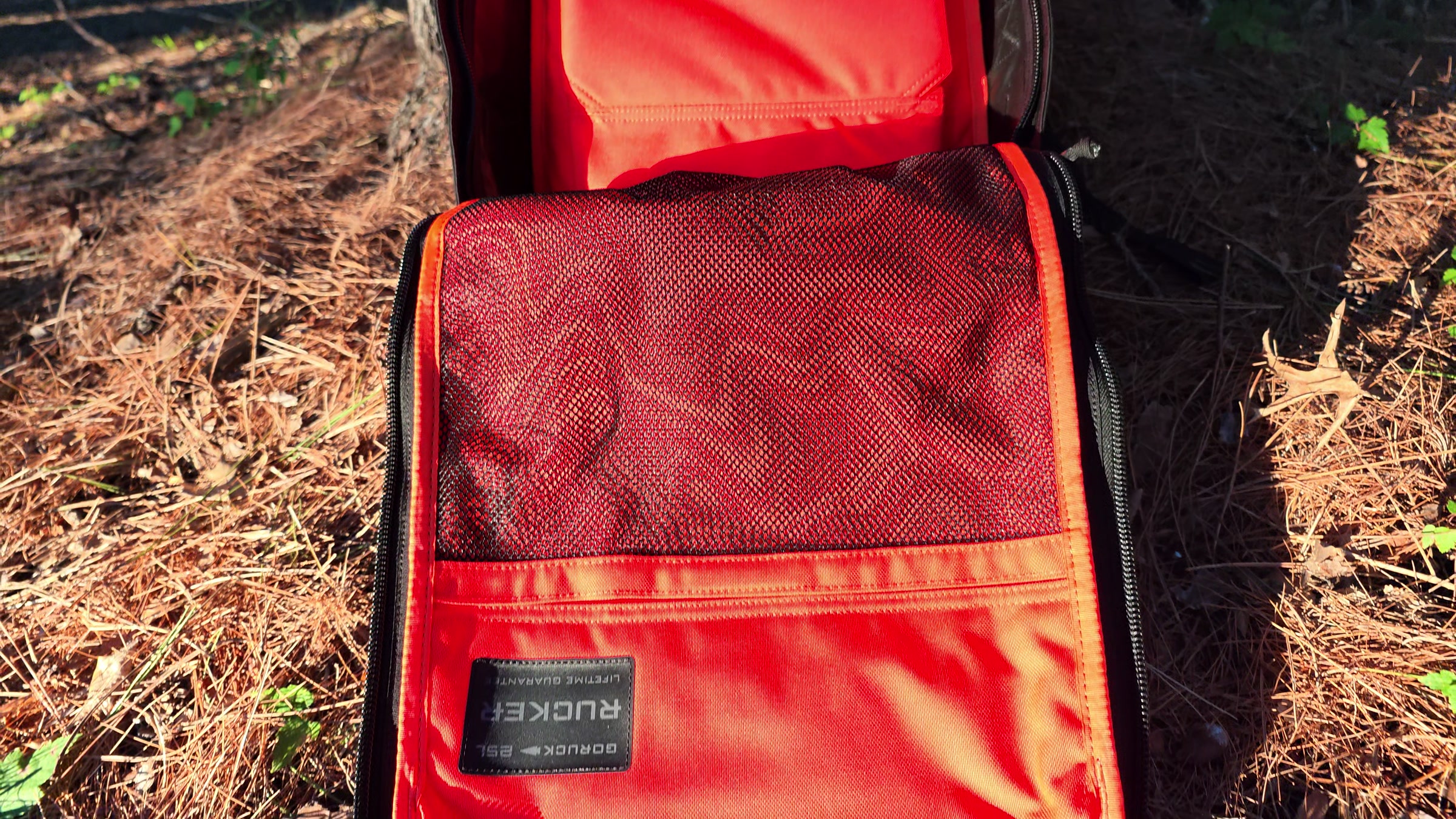
The elevated plate pocket kept my 20 lb plate secure, while the main compartment still had room for camera gear, with space left above it.
There are two dedicated plate pockets: a short one sized for GORUCK's Standard plates and a long one for its Long plates. I'd use the pocket sized for your plate. The point of the design is that the plate stays high on your back rather than settling at the bottom of the bag, and it's the difference I noticed when I carried the GR1 with the same plate. Its open sleeve let the plate ride lower, and I suspect the GR2's sleeve did the same.
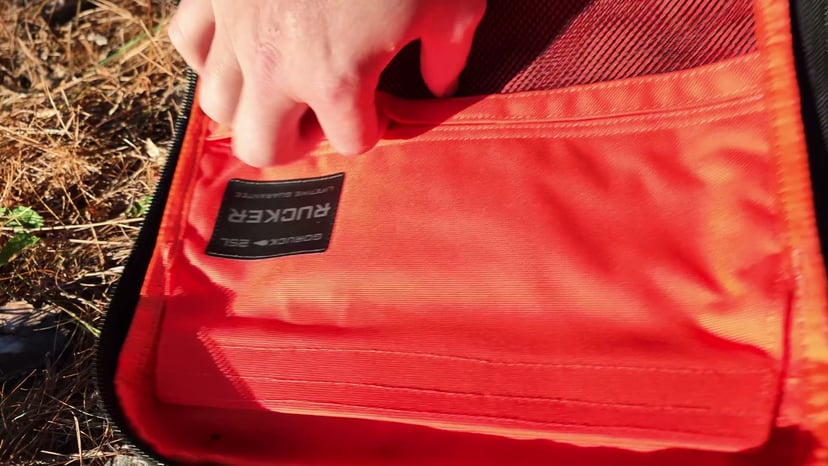
The magnetic internal pocket was a convenient place for my keys. Opening the bag flat also makes it easy to see and reach the compartments.
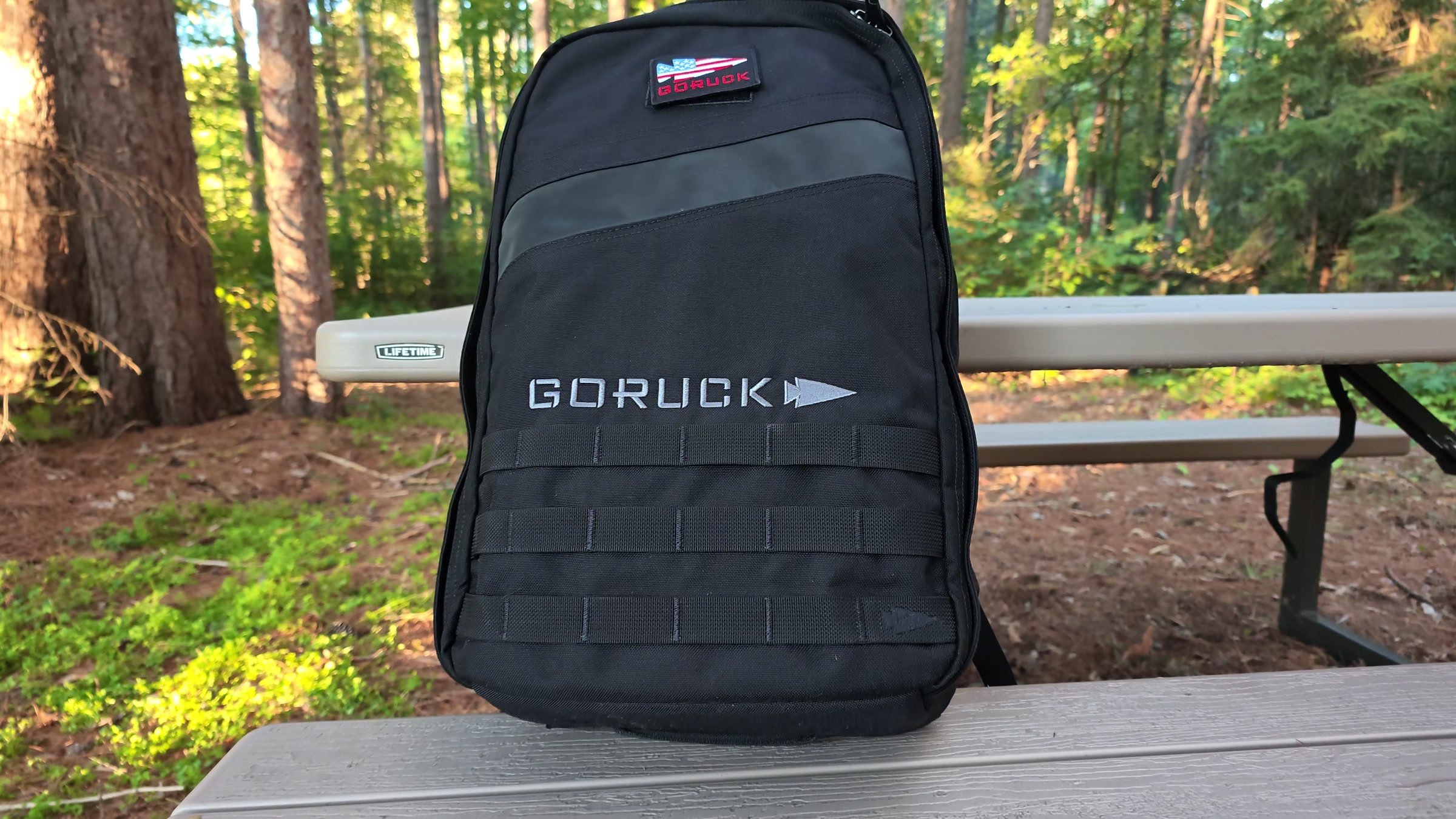
The external webbing let me put a water pouch on one side and a first-aid pouch on the other. That setup stayed sturdy on the hike.
The Rucker is built for rucking first. If you also want a laptop compartment, a built-in bottle pocket and easy access to small items, our Rucker versus GR1 comparison covers that choice.
Features shown in the video
These are the construction details demonstrated in the close-ups. Material grades and capacity limits are manufacturer specifications, not measurements from my hike.
- Shell and contact fabric: 1000D CORDURA on the body; smoother 210D HT CORDURA against the back and beneath the straps.
- Plate pockets: the short pocket accepts GORUCK Standard 10, 20 and 30 lb plates. The long pocket accepts Long 30 and 45 lb plates and can also hold Standard plates. GORUCK rates the pair to 75 lb combined.
- Structure: a built-in frame sheet and a 30mm lumbar pad.
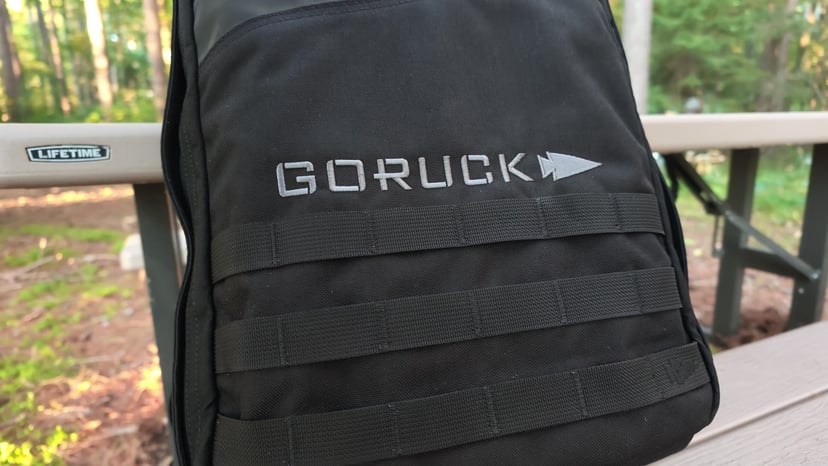
- Hardware: YKK zippers with 550 cord pulls, a removable sternum strap, four padded carry handles and front/side MOLLE webbing.
- Water and hydration: bottom drain holes, an internal bladder attachment point and a hose exit beneath the top handle.
Source: GORUCK's current Rucker specifications, checked September 23, 2026. My actual plate load was 20 lb; the maximum capacity is not a recommended starting weight.
This review covers my first week with the bag, in dry weather, so rain and long-term wear are still ahead of it. The stitching looked substantial in the close-ups, and the SCARS lifetime guarantee backs it.
How it compares with the GR1 and GR2
I've also carried the GR1 and the GR2 with a 20 lb plate. They're GORUCK's everyday and travel bags, and both hold the plate in an open sleeve with no lumbar pad, which is exactly where the Rucker pulls ahead. For pure plate rucking, it's the one built for the job; the other two win when the bag has more to do than carry weight.
| GR1 (26L) | GR2 (34L) | Rucker 5.0 (25L) | |
|---|---|---|---|
| Plate holder | Open elastic sleeve with a couple of straps | Open elastic sleeve with a couple of straps | Two dedicated plate pockets that hold the plate up high |
| Lumbar pad | None; I missed one | None; I missed one | Big lumbar pad that felt supportive |
| Chest strap on my bag | None | None | Yes, removable |
| Organization | One big room plus small top pockets; small things get buried | Two full compartments that open flat; the front one kept my drone kit reachable | Room for camera gear beside the plate; internal pockets handy for keys |
| How 20 lb carried | A solid ruck; the straps felt stiff out of the box, then broke in | Lower back a little numb after about 90 minutes of non-stop use | Stable on rough, hilly ground; my traps were sore afterward |
| Best for | Everything in between: an everyday bag that also rucks | Carrying gear you need to reach, and travel | Pure plate rucking |
Each column is my own use of that bag with a 20 lb plate, not a side-by-side test. My GR1 review and GR2 review cover each bag in full.
Who I would recommend it to
The Rucker 5.0 makes sense if you want a dedicated bag for carrying plates and doing ruck workouts. Its secure feel on rough ground, comfortable lumbar support and room for my extra equipment made a positive first impression.
If you want to compare it with packs from other brands first, our best rucking backpacks guide covers the field.
Buy it if:
- Most of what you carry is a plate, water and keys, and you want the plate held high and still.
- You ruck on rough or hilly ground, where a load that stays put matters most.
- You want lumbar support built into the bag rather than a flat back panel.
- You want room for a few extras, like camera gear, alongside the plate without moving up to a bigger bag.
Skip it if:
- You're starting out with lighter loads and want to spend less. The Basic Rucker is GORUCK's simpler, cheaper option.
- You want one bag for everyday carry and travel that can also ruck. The GR1 handles all three.
- You carry a lot of gear you need to reach on the move. The GR2's front compartment kept my drone kit apart from the plate.
If you only want to carry a plate, our plate carrier versus Rucker comparison looks at when the extra storage earns its place.
I enjoyed carrying the Rucker 5.0 and it's the bag I reach for when the plate is the point. I'll add notes here after longer outings and a run with the hip belt.
Frequently asked questions
For dedicated plate-carrying workouts, yes. My 25L stayed stable over uneven, hilly ground with a 20 lb plate and extra gear, and the lumbar pad felt supportive. If you also want one bag for work and travel, the GR1 covers more jobs.
The main changes are a larger, contoured lumbar pad and magnetic internal pocket closures. If your 4.0 fits well and your lower back is happy, there's no urgent reason to replace it. My Rucker 5.0 vs 4.0 upgrade guide goes through who gains the most.
I am 6'2" and the 25L felt good on my back, with space for camera gear alongside my plate. I have not compared it with the 20L. Choose around torso fit, where the lumbar pad sits and the cargo you need to carry.
Not for stability: mine stayed stable without one. My traps were sore after I got home, though, so for heavier loads I'd try the optional belt along with the sternum strap, which likely takes some pressure off the shoulders.
GORUCK describes it as highly water resistant, and it has drain holes to let water out. It isn't a waterproof case, so on wet days I'd keep electronics in a dry bag.
A 20 lb plate, plus camera gear and other supplies. I didn't weigh the complete load. GORUCK's 75 lb plate-pocket rating is its specification, not a load I carried.
Specs, photos and where to buy
Hands-on tested
Rucker 5.0
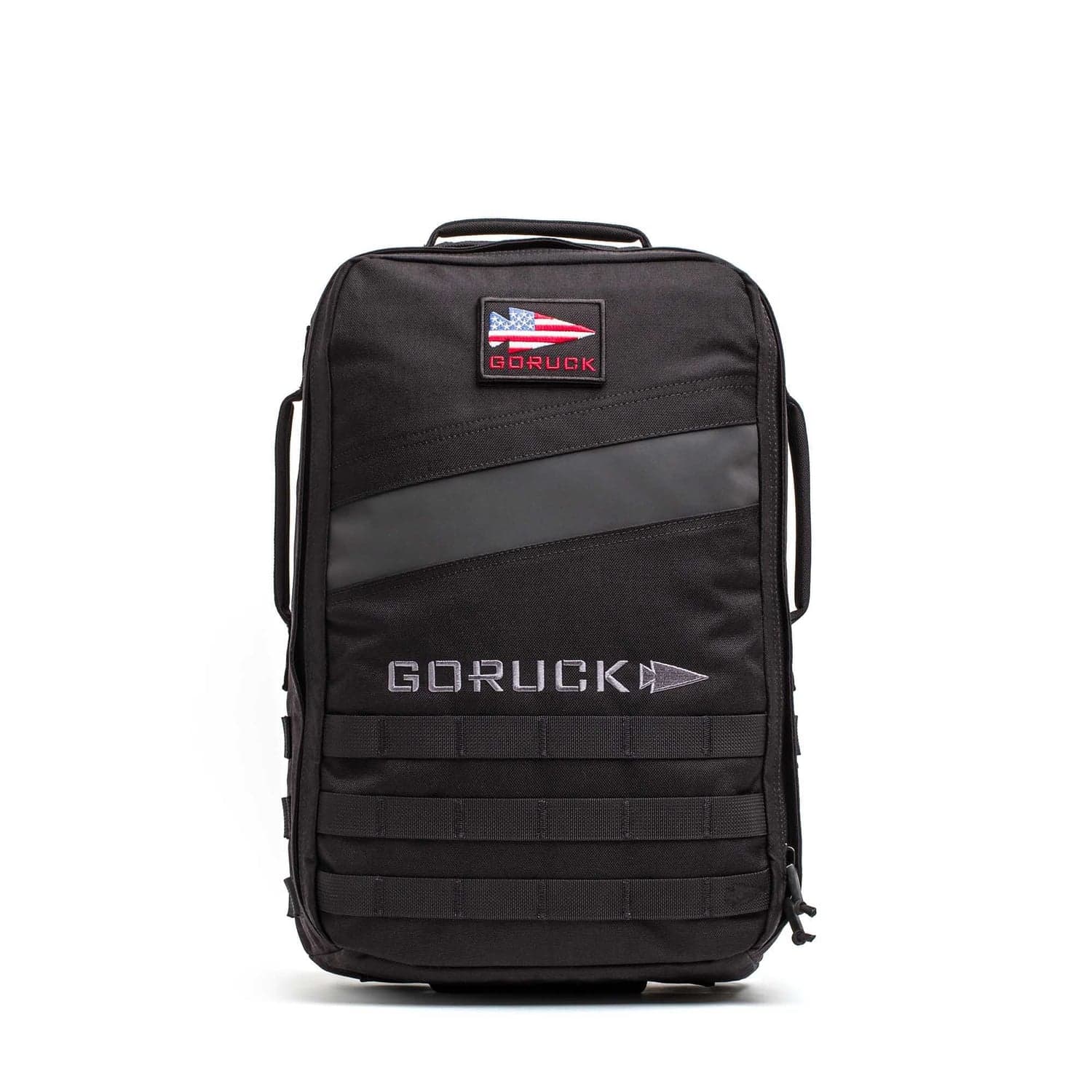
Dedicated rucking pack with dual elevated plate pockets, magnetic internal storage and a 30mm lumbar pad. I carried the 25L with a 20 lb plate plus gear on hilly trails: it stayed stable and the lumbar pad felt supportive. For heavier loads, I'd add the optional hip belt.
Citing this review or using the photos?
You're welcome to quote the findings or use the original photos with credit to Ruck Authority and a link to this page.
Joel Kelly, "GORUCK Rucker 5.0 Review: 25L Tested With a 20 lb Plate," Ruck Authority, September 2026, https://ruckauthority.com/gear/goruck-rucker-5-0-review.<a href="https://ruckauthority.com/gear/goruck-rucker-5-0-review">GORUCK Rucker 5.0 Review: 25L Tested With a 20 lb Plate</a> (Ruck Authority)Related Articles
GORUCK Rucker vs GR1: Which Should You Buy?
The Rucker 4.0 is built for rucking. The GR1 is built for everything. Side-by-side on plate pocket geometry, capacity, versatility, and the SCARS lifetime warranty math.
GORUCK GR1 USA Review: Built to Last or Overpriced Hype?
The GORUCK GR1 USA commands serious money for a rucking pack. We dive into community feedback to see if this American-made workhorse justifies its premium price point.

The Best GORUCK Alternatives
Five packs honestly compared against the GORUCK GR1: Mystery Ranch, 5.11, Evergoods, Direct Action. Find the best rucking backpack for your budget.
What 10 Years of GORUCK Actually Costs Compared to a Budget Pack
GORUCK packs cost $400. Budget packs cost $150. The 10-year math, factoring SCARS lifetime guarantee, Tribe membership value, and resale, looks completely different than the checkout-page math.