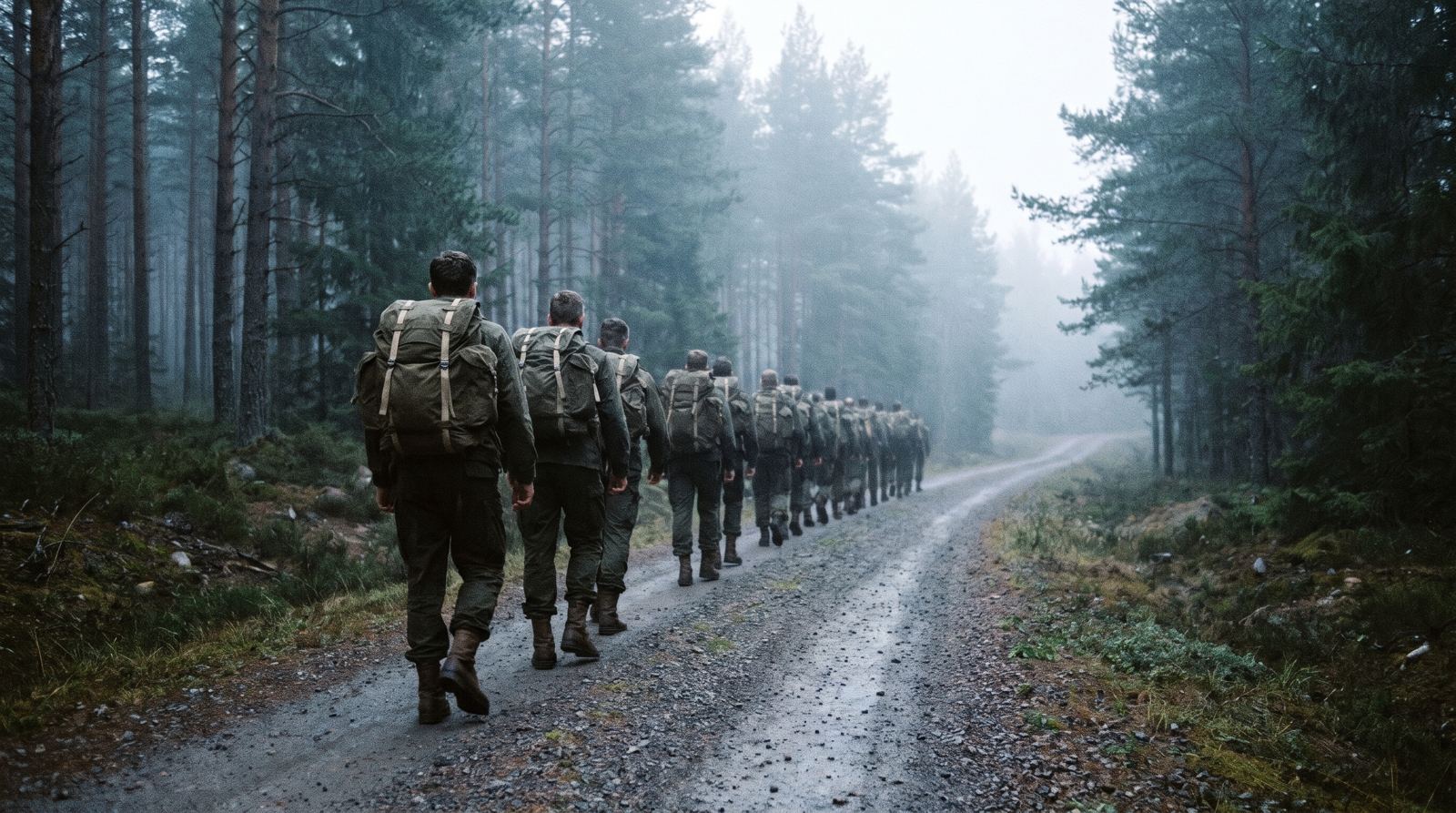
The rules at an endorsed event
The march started in 1915 as an endurance test for the Norwegian Army. Norway's armed forces still set the standard, and outside Norway the Royal Norwegian Embassy's defence attaché office endorses events run by US and allied military units, ROTC programs and similar organisers. The embassy's current procedures set these rules:
- Distance: 30 km, which is 18.64 miles. Walking and running are both allowed.
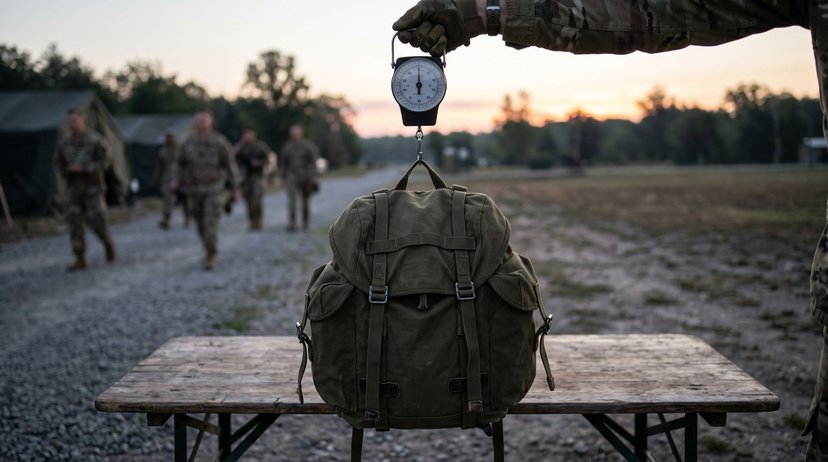
- Load: a rucksack of at least 11 kg (24.25 lb) dry weight, weighed before the start and again after the finish line. Weighted vests, body armour and plate carriers do not count toward the weight.
- Clothing: military participants wear their combat uniform and boots. Civilians wear clothing similar to a uniform, including long pants and boots, totalling about 1.5 kg (3.3 lb). Most event FAQs say trainers are not allowed.
- Weather: the march does not run above 25 C (77 F) in the shade or below minus 15 C (5 F).
- Frequency: one march per calendar year. Your first finish earns bronze, your second to fourth earn silver, and your fifth and later earn gold.
The embassy doesn't define "dry weight" in its text. US event pages read it as weight without water, so check how your event handles food and fluids at the weigh-in. Many US events simply ask for 25 lb, which covers the 24.25 lb minimum with a little room.
Time limits by age and sex
These are the limits in the embassy's version 1.8 procedures (June 2026). They match the Norwegian Armed Forces' own page. The pace column is the average you must hold over the whole 18.64 miles.
| Age | Men | Men's pace per mile | Women | Women's pace per mile |
|---|---|---|---|---|
| 18 to 20 | 4:35 | 14:45 | 5:25 | 17:26 |
| 21 to 34 | 4:30 | 14:29 | 5:15 | 16:54 |
| 35 to 42 | 4:35 | 14:45 | 5:25 | 17:26 |
| 43 to 49 | 4:40 | 15:01 | 5:30 | 17:42 |
| 50 to 54 | 4:50 | 15:33 | 5:40 | 18:14 |
| 55 to 59 | 5:00 | 16:06 | 5:50 | 18:47 |
| 60 and over | 5:15 | 16:54 | 6:00 | 19:19 |
Older lists online still show a 2022 table with a 4:50 limit for young women. The embassy says those outdated versions may not be used. News stories that say the march "must be finished in under 4.5 hours" are quoting only the strictest men's band.
Water stops, the weigh-in queue and any wrong turn all come out of the same clock, so aim for a pace a little faster than the table. On our pace chart, 14:29 per mile with about 25 lb sits at the quick end of what experienced ruckers walk. Many people in the 4:30 and 4:35 bands mix in a ruck shuffle on flat and downhill stretches. Most of the women's and older men's limits can be walked at a steady, purposeful pace. Use the pace calculator to turn your target time into splits for every 5 km marker.
How to earn the official badge
Only an embassy-endorsed event can issue the certificate. The organiser registers the event, runs the start and finish weigh-ins, records times and sends a closeout report, then the embassy sends the certificate. Since 2021 no Norwegian officer has to be present.
Civilians can take part and earn the certificate at many of these events. Fort Leonard Wood's 2024 march registered more than 150 soldiers and civilians, and several ROTC and Guard events are open to the public through ordinary race registration sites. What makes an event official is the embassy endorsement, not the sign-up page.
A solo 30 km with 11 kg, or a ruck club's own "Norwegian," is a fine benchmark and good practice. It doesn't earn the badge. We couldn't find a virtual version that counts.
How hard it is
Reported pass rates at US military events run from about half to 86%, and around 70% is common. At Fort Hood in April 2026, 138 of 192 starters earned the badge. The New Hampshire National Guard's 2024 march lost 36% of its starters to blisters, pain and dehydration.
The finish reports point to the same few causes:
- Feet. Blisters are the most reported reason people stop, and they are the first injury listed in a military review of load-carriage injuries. See blister prevention and rucking socks.
- Cramps around miles 10 to 13, usually after starting too fast in the heat.
- Pacing. Finishers describe going out too hard and paying for it in the last 10 km.
- Navigation. One ROTC lieutenant missed the cutoff by about five minutes after a 1.5 mile wrong turn.
- Heat and dehydration. The 25 C cutoff exists for a reason. See heat safety for rucking.
One rule-based risk deserves a line of its own. Your pack is weighed again at the finish, so if you build it to exactly 11 kg and eat or drink part of it, you can finish light. Put the minimum in weight you won't consume, such as a ruck plate or sandbag, and add half a kilo of margin. We haven't seen a documented disqualification for this, but the rule is clear.
How to train for it
Published plans run from 6 to 18 weeks. Yokota Air Base's two public programs build the long ruck to 10 or 12 miles, with two or three loaded sessions a week, running and strength work. Mountain Tactical Institute recommends a 10 to 18 week runway that ends with a dedicated 6-week block. A review of military load-carriage training found the best results came from combining aerobic work, resistance training and progressive loaded marches, which is what all of these plans do.
None of the plans we found has you rehearse the full 18.6 miles. Ten to 12 miles at event weight and close to event pace is the usual ceiling.
A 12-week outline that follows those plans:
| Weeks | Long ruck | Load | Focus |
|---|---|---|---|
| 1 to 4 | 4 to 6 miles | 15 to 20 lb | Easy pace, break in boots and socks |
| 5 to 8 | 7 to 9 miles | Event weight, about 25 lb | Hold load, add hills |
| 9 to 11 | 10 to 12 miles | Event weight | Practise target pace and fuelling |
| 12 | 4 to 6 easy miles | Event weight | Taper, then march |
Around the long ruck, add one shorter loaded session for pace, one or two unloaded runs or brisk walks, and two strength sessions built on squats, lunges, deadlifts and step-ups. Increase one thing at a time, distance or weight, and hold for a week whenever your feet or shins complain. Our progression rules and the 12-mile military ruck plan give a fuller week-by-week structure.
Train in the boots, socks and pack you'll march in. The event is the wrong place to find out where your boots rub. If you need a pair, start with boots for rucking and give them at least six weeks of training miles.
On the day
- Weigh your pack at home on a luggage scale, then again at the start.
- Start at your planned pace, not the pace of the people around you. The first 5 km should feel easy.
- Check your time at every 5 km marker against your splits. If you're behind by the halfway point, shorten water stops before you speed up.
- Drink and eat to a plan from the first hour. Cramps and gut trouble show up in most finish reports, and they're easier to prevent than fix.
- Tape known hot spots before you start, and stop to fix a new one early.
If you want to rehearse the whole thing first, our ruck event packing lists include a weigh-in worksheet, and the event readiness tool checks your recent training against the distance.


