Size the pack by torso, then check the belt
Pack sizes refer to torso length, not height or waist. Osprey and REI both measure from the bony bump at the base of your neck down to the top of your hip bones. That's true of extended-fit and plus-size packs too: Osprey says its Extended Fit sizes refer to the pack's torso length, not your waist or chest.
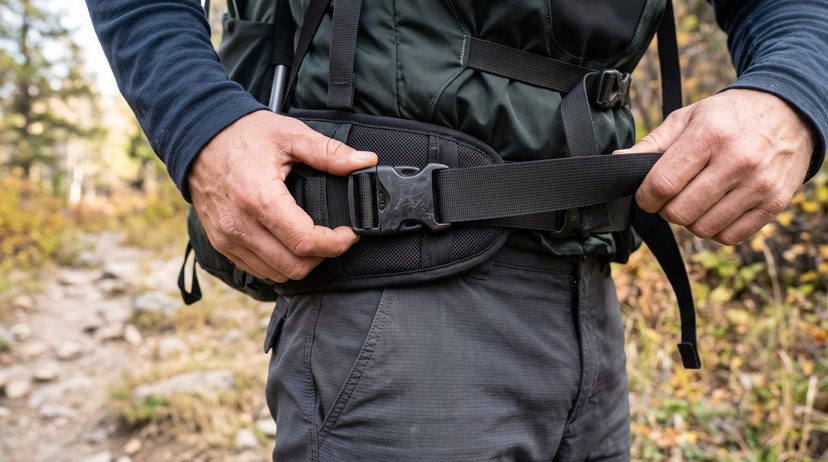
The belt is a separate number. Measure around the top of your hip bones, where the belt will sit, not at your trouser waist. Most standard belts fit hips from the mid-20s to the mid-40s in inches, per REI, which is why so many bigger ruckers end up with a buckle that won't close. Look for a published "hip belt range" or "max waist" in the specs before you buy.
Published hip belt ranges
These are the largest belt ranges we found on brands' own pages, with the load each pack is rated for.
| Pack | Belt range | Rated load |
|---|---|---|
| Osprey Talon 33 Extended Fit | 40 to 70 in hips | 10 to 30 lb |
| Osprey Aether 65 Extended Fit | Up to 70 in hips | 30 to 60 lb |
| Gregory Zulu 28 LT Plus Size | 39 to 60 in | 25 lb max |
| Gregory Stout 70 Plus Size | 39 to 60 in | 50 lb max |
| Kelty Glendale 85 | 30 to 56 in | 45 to 75 lb |
Gregory designed its plus line with the Unlikely Hikers community for apparel sizes 2X to 6X. Besides the longer belt, it uses longer shoulder and sternum straps, a harness that wraps at a wider angle, and load-lifter hardware moved closer to the body. Osprey's Extended Fit packs keep the standard torso sizes with longer belts, shoulder straps and sternum straps.
Plus fit doesn't suit every larger body. Plus-size hiker Sam Ortiz found some plus harnesses too wide and too long for her shoulders. If you can, try packs on in a shop with a loaded bag before you buy.
None of these packs is a rucking brand's pack, and none is in our catalogue yet. We list them for their published fit data.
Why GORUCK-style rucks keep weight on your shoulders
GORUCK's Rucker, GR1 and GR2 ship without a hip belt. The optional Padded Hip Belt clips to the side webbing, and GORUCK calls it a stabiliser that pulls the bottom of the ruck in around your hips or belly. GORUCK doesn't publish its waist range. The Rucker's frame sheet keeps the bag from curling; GORUCK doesn't describe it as a frame for moving load to the hips.
So on a frameless ruck, the belt steadies the pack but most of the weight still hangs from your shoulders. In our Rucker 5.0 review, a 20 lb plate hike without the belt left Joel's traps sore. Bigger ruckers on r/Goruck report a second problem: on a long torso the belt can ride up onto the belly and barely touch the hips. The Rucker's 75 lb figure is how much its plate pockets hold. It isn't a comfort rating.
That's fine for plate training at 20 to 45 lb. For heavier loads, look at a framed pack.
Carrying 50 lb or more
A framed pack with a fitted belt is the standard tool for heavy loads. How much the belt actually moves is debated. Outdoor retailers say most of the load should ride on the hips. In a lab study of soldiers carrying 30 to 90 lb in a framed pack, about 30% of the vertical force went to the lower back and hips. A 2021 modelling study found similar spinal loads with and without the belt. The comfort benefit is more consistent: a military load-carriage review says hip belts should be used whenever possible because they reduce shoulder pressure, and Army foot-march doctrine reports less discomfort when part of the load rides on the waist.
Before you load up:
- Match the rated load. Most extended-fit daypacks are rated to 25 or 30 lb. For 50 lb, the pack's own rating needs to cover it.
- Build up first. Army doctrine lists 30% of body weight as a soldier's fighting load and 45% for approach marches, and those numbers describe trained soldiers on planned marches. GORUCK's rule of thumb is no more than a third of body weight. Neither is a starting point. See 30 lb vs 45 lb and our progression rules.
- Watch for numb hands. Strap pressure on the shoulders can cause rucksack palsy. Loosen the straps and let the belt take more of the load.
Fitting tips for a bigger frame
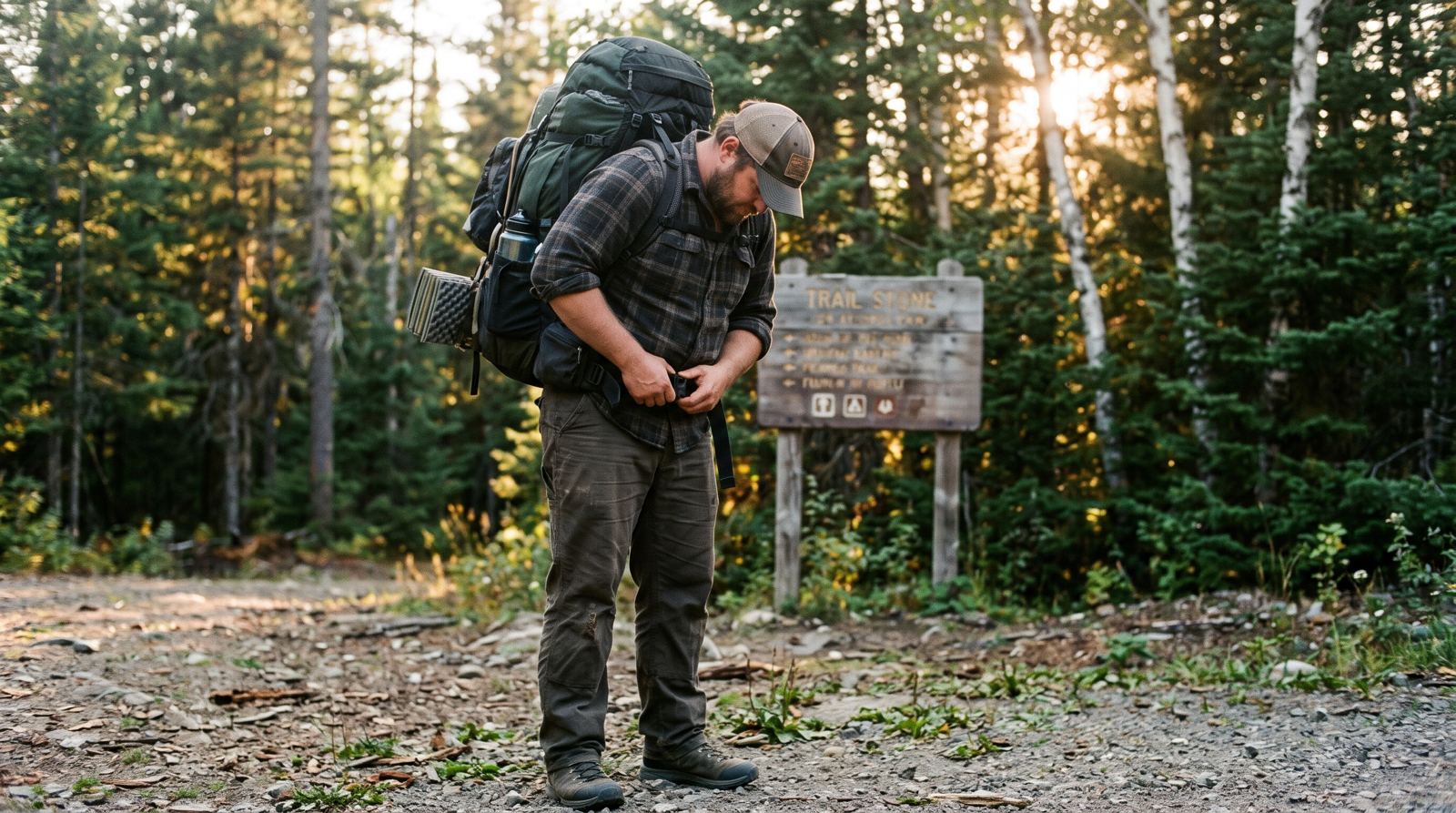
- Belt on the hip bones. Centre the padding over the top of the hip bones, half above and half below. If the belt rides on your belly, try the next torso size down. Gregory suggests this when you want the belt higher.
- Straps that don't top out. The padded part of each shoulder strap should end about 2 inches below your armpit with buckle travel to spare.
- Sternum strap high. About an inch or two below the collarbones, clear of the chest. Extended-fit lines lengthen this strap.
- Between sizes? Brands disagree. Mystery Ranch says size down; ULA says order the larger size. Follow the brand you're buying.
- Extenders as a stopgap. Hyperlite sells a belt extender that adds up to 18 inches to 1.5 inch webbing belts. It lengthens the strap, not the padding, so it won't carry load the way a belt that fits does.
If you're just starting out at a higher body weight, you don't need any of this yet. At 5 to 10 lb, a regular backpack works. See starting rucking at 300 lb for when to add weight, and our rucking backpack guide when you're ready to buy.