
What's happening
Rucksack palsy is a load-carriage-related nerve injury involving compression or traction of the brachial plexus, with shoulder straps as the usual mechanism. Symptoms can include tingling, numbness, pain, cramping, or weakness in the upper limb (Knapik et al., 2016). Similar symptoms can also come from the neck, a single peripheral nerve, circulation, or another condition, so numb hands under a pack are not a diagnosis by themselves.
Mild tingling that settles completely after the pack comes off may be transient pressure. Weakness, persistent sensory loss, or muscle wasting is a different category: documented military cases involved true brachial-plexus neuropathy and sometimes prolonged recovery. In a Finnish case series, 80% recovered fully within nine months while 15% had prolonged symptoms. A later Dutch military review found incomplete recovery was common in its recorded follow-up, which is a reason not to dismiss weakness or persistent numbness (Dorhout Mees et al., 2020).
That evidence supports a simple boundary: treat any new tingling as a signal to remove the pressure, not as proof that no damage has occurred. Do not continue rucking through weakness or persistent numbness while waiting for it to "loosen up."
The brachial plexus runs from the neck through the shoulder into the arm. A load-carriage review identifies heavier load, longer distance, improper distribution, and strap pressure as plausible risk factors, while also noting that much of the prevention evidence is not from randomized trials (Knapik et al., 2016).
- 01
Knapik and colleagues describe rucksack palsy as a compression or traction injury and recommend reducing load, improving distribution, adjusting and padding straps, and considering a hip belt.
- 02
Nylund and colleagues followed 38 military patients with diagnosed backpack palsy; recovery was generally favorable, but it often took months rather than minutes.
- 03
Dorhout Mees and colleagues found sensory symptoms were common and recovery was not uniformly complete in a Dutch military cohort.
- 04
Exact rules in this guide—such as one finger of strap slack or a timed fit check—are practical field cues, not clinically validated thresholds.
The 5 most common causes
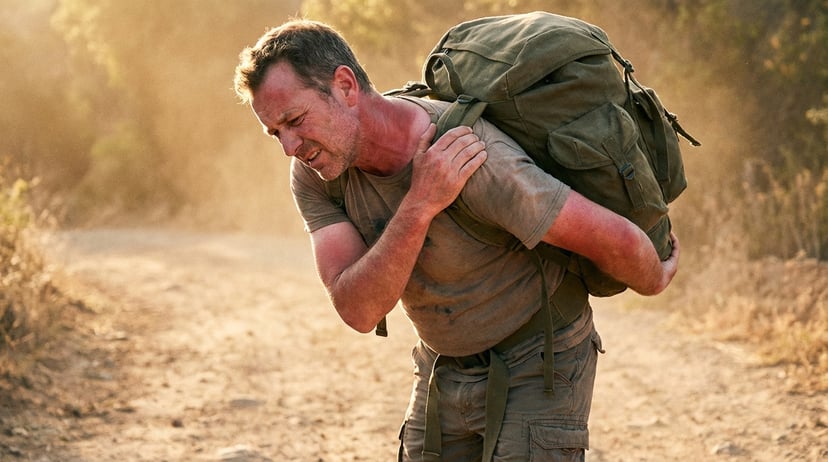
The following factors can increase shoulder pressure or nerve traction. They are useful fit checks, not a way to diagnose the source of numbness.
High shoulder-strap pressure. Over-tightened straps can concentrate pressure across the shoulder. Straps should control the pack without creating a hard pressure line, but there is no universal "correct" notch for every body and pack.
Narrow or poorly padded straps. Narrow straps can concentrate a given load over less surface area. A load-carriage review recommends wider, better-padded straps as one way to reduce traction and compression symptoms (Knapik et al., 2016).
More load than you or the pack can distribute comfortably. Heavier loads are associated with greater strength loss in rucksack-palsy cases, and load at symptom onset affected severity in the Finnish follow-up study (Nylund et al., 2011). Compression is not inevitable at one universal number, but symptoms are a reason to reduce the load immediately.
No effective load transfer. A properly fitted hip belt can shift some load away from the shoulders. Research reviews support considering one, but neither a 15-pound threshold nor a guaranteed percentage of transfer applies to every pack and torso.
Holding the straps for long periods. Gripping the straps can keep the arms and shoulders in one position and can mask a poor fit. Let the arms swing naturally when terrain allows. This is a practical comfort cue; the cited studies do not establish strap-gripping as a measured cause of rucksack palsy.

How to fix it immediately (during a ruck)

If tingling or numbness begins under the pack, stop rather than trying to diagnose it while walking. The first goal is to remove the pressure and see whether the symptoms settle completely.
Step 1: Take the pack off. Set it down safely and note whether the tingling, numbness, pain, or weakness changes. Removing the load is more informative than making several strap changes while the nerve is still under pressure.
Step 2: Let your arms rest in a neutral position. Gentle arm movement is fine if comfortable, but do not aggressively stretch or pull on a numb or weak arm.
Step 3: End the session if symptoms persist, return, or include weakness. Persistent sensory change or weakness deserves medical assessment; it is not a fit problem to troubleshoot under load.
Step 4: Before the next ruck, reduce the load and repack it symmetrically. Check for twisted straps, hard objects under the straps, and a low or unstable load. The load-carriage review supports lower weight and more symmetric distribution as sensible risk-reduction steps.
Step 5: Refit the suspension without chasing a magic percentage. Wider padded straps and a well-fitted hip belt may reduce shoulder pressure. One finger of strap slack is a useful field cue, not a medical threshold.
There is no cited five-minute cutoff that separates harmless pressure from nerve injury. If numbness does not settle promptly and completely, or if you notice weakness, end the ruck and get medical guidance rather than testing the pack again.
How to prevent it long-term
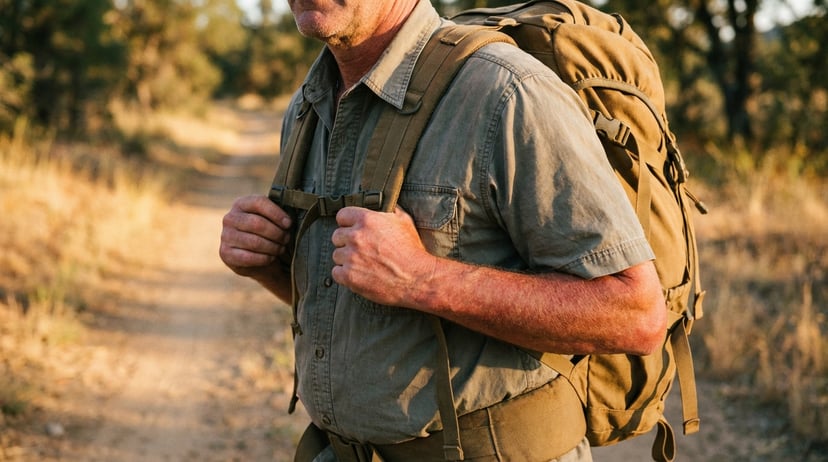
Gear can reduce specific sources of friction or poor load distribution, but no product handles a known percentage of brachial-plexus risk. Start with lower load, good fit, padded straps, and an even pack; treat the products below as equipment options, not medical devices.
| Role | Pick | Relevant boundary |
|---|---|---|
| Pack | GORUCK GR1 26L | Wide padded straps and optional load-transfer accessories may improve fit for some bodies. No pack makes nerve compression impossible. |
| Anti-chafe | Body Glide Original | Reduces skin friction where straps rub. It does not reduce load or treat nerve symptoms. |
| Load-transfer pack | GORUCK Rucker 5.0 | Holds the plate in an elevated pocket and accepts an optional hip belt. It can shift some load off the shoulders; it cannot remove nerve risk. |
Fit and load choices can reduce risk, but they cannot guarantee prevention.
Use straps that spread pressure comfortably on your body. The 2016 load-carriage review recommends wider, better-padded, properly adjusted straps. The GORUCK GR1 is one option with substantial padding, but its fit still depends on torso, load, adjustment, and whether you add a compatible hip belt. Our best rucking backpacks guide compares those fit variables.

Use a hip belt when it fits the pack and your torso well. Reviews suggest a hip belt can reduce shoulder loading, but there is no universal 20-pound cutoff and no zero-risk setup. If a pack cannot transfer load comfortably, reduce the load before buying around the problem. Body Glide Original can help with skin friction; it does not address nerve compression.
If your current bag has no way to take a hip belt, or the weight sits low and drags on the straps, that is the part worth changing once a lighter load has settled the symptoms. The GORUCK Rucker 5.0 holds a plate high in an elevated pocket and accepts an optional hip belt. Its full review reports sore traps after a loaded hike without the belt, which is the shoulder-only carry this section is trying to avoid. Budget for the belt if you choose this pack for heavier loads.
Let your arms move when terrain allows. If you need to hold the straps to keep the pack stable, revisit the packing and suspension. This is a practical fit cue rather than a clinically tested prevention rule.
Check fit during long rucks. A 15-to-20-minute check can help you notice pressure before it becomes distracting, but the interval is an editorial field cue, not a studied threshold. Stop immediately for tingling, numbness, or weakness.
Build upper-back and shoulder capacity. The review includes resistance training among possible risk-reduction measures, although direct prevention trials are limited. Rows, face pulls, and other tolerable upper-back work can support general load carriage.
Check the whole fit. Pack height, strap path, load symmetry, torso length, and hip-belt contact work together. Ask someone to check the back view under the actual training load; avoid any setup that creates a hard pressure point or requires constant strap gripping.
When to be concerned
Some under-pack tingling settles when the pressure is removed, but documented rucksack palsy is a real nerve injury. The following signs are reasons to stop and seek assessment rather than continue adjusting the pack.
Numbness that persists after the pack comes off. There is no universal minute cutoff for "normal." Sensory change that does not settle promptly and completely—or that returns without the pack—needs assessment.
Weakness in the hand, arm, or shoulder. Reported cases can involve more than grip strength, including shoulder movement and individual nerves. New weakness is not a cue to finish the ruck; remove the load and seek medical care.
Numbness that occurs without rucking. If you're experiencing hand numbness even when you're not rucking, this could indicate a cervical spine problem (nerve compression in your neck), thoracic outlet syndrome, or another condition not related to your pack. This deserves medical evaluation.
Symptoms in one arm only. Backpack-related nerve injury can be one-sided; bilateral symptoms are not required. Unilateral numbness also has other possible causes, so it deserves assessment rather than a diagnosis from pack symmetry.
Any of the above symptoms. If you are uncertain, see a clinician. The correct nerve and cause are not always obvious from symptoms alone, and published case series used neurological examination and sometimes electrodiagnostic testing.
Management and next steps
If brief tingling settles completely after removing the pack, reduce the next session's load and correct the fit before trying again. If a clinician has diagnosed rucksack palsy, follow that plan rather than treating a gear change as the whole intervention.
Recovery is variable. In the Finnish follow-up, 80% of patients with diagnosed backpack palsy recovered fully within nine months, while 15% had prolonged symptoms (Nylund et al., 2011). That is a military case series rather than a forecast for recreational ruckers, but it directly contradicts promises that true palsy always resolves within minutes or days.
The best-supported practical changes are reducing load, improving load symmetry, using wider padded and properly adjusted straps, and considering a hip belt that fits correctly (Knapik et al., 2016). The available sources do not establish a 70-to-80% prevention effect for a commercial pack or fit technique.
Most incidence and recovery data come from military populations carrying demanding loads. We should not convert those numbers into an unsupported recreational incidence estimate; the relevant lesson is to act early on symptoms and avoid assuming a lighter civilian load makes nerve injury impossible.
Evidence boundary: the strongest sources here are military observational studies, case series, and a load-carriage review. They support the mechanism and the fit/load recommendations, but they do not validate a recreational incidence rate, a safe percentage of bodyweight, or a guaranteed prevention effect from any product.
If your hands start tingling, stop and remove the pack. After symptoms settle completely, one finger of strap slack and a 15-to-20-minute fit check can be useful field cues on a later, lighter session. Those cues are not medical thresholds, and weakness or persistent numbness should not be tested under load.
Frequently Asked Questions
True rucksack palsy is a nerve injury, not merely harmless pressure. Recovery was favorable for most patients in one long-term military case series, but it often took months and some symptoms were prolonged. Remove the load for new symptoms and seek assessment for weakness or numbness that does not settle completely.
Total weight is only one factor. Strap path, padding, a hard pressure point, load position, torso fit, the neck, and a peripheral nerve can all matter. Do not assume a product upgrade will eliminate symptoms regardless of load; persistent or repeat numbness deserves assessment.
Take one-sided numbness seriously. Backpack-related nerve injuries can be unilateral, and one-sided symptoms can also come from the neck or an individual nerve. Remove the load and seek assessment if the symptom persists, recurs, or includes weakness.
The straps should control the load without creating a hard pressure line or numbness. One finger of space is a useful fit cue, not a universal medical rule. Load, padding, torso shape, pack height, and hip-belt fit all affect pressure.
No. New weakness in the hand, arm, or shoulder is a reason to remove the pack and seek medical assessment. Do not treat it as normal fatigue or keep rucking to see whether it improves.
End that session and review the fit and load before trying again. A symptom that settles after pressure is removed is reassuring, but it does not prove that continuing the same ruck is safe. Recurrent numbness or any weakness needs assessment.
Resistance training is one proposed risk-reduction measure in the load-carriage review, but no exercise guarantees prevention. Load reduction, even packing, appropriate padding, strap adjustment, and a well-fitted hip belt address the external pressure more directly.


