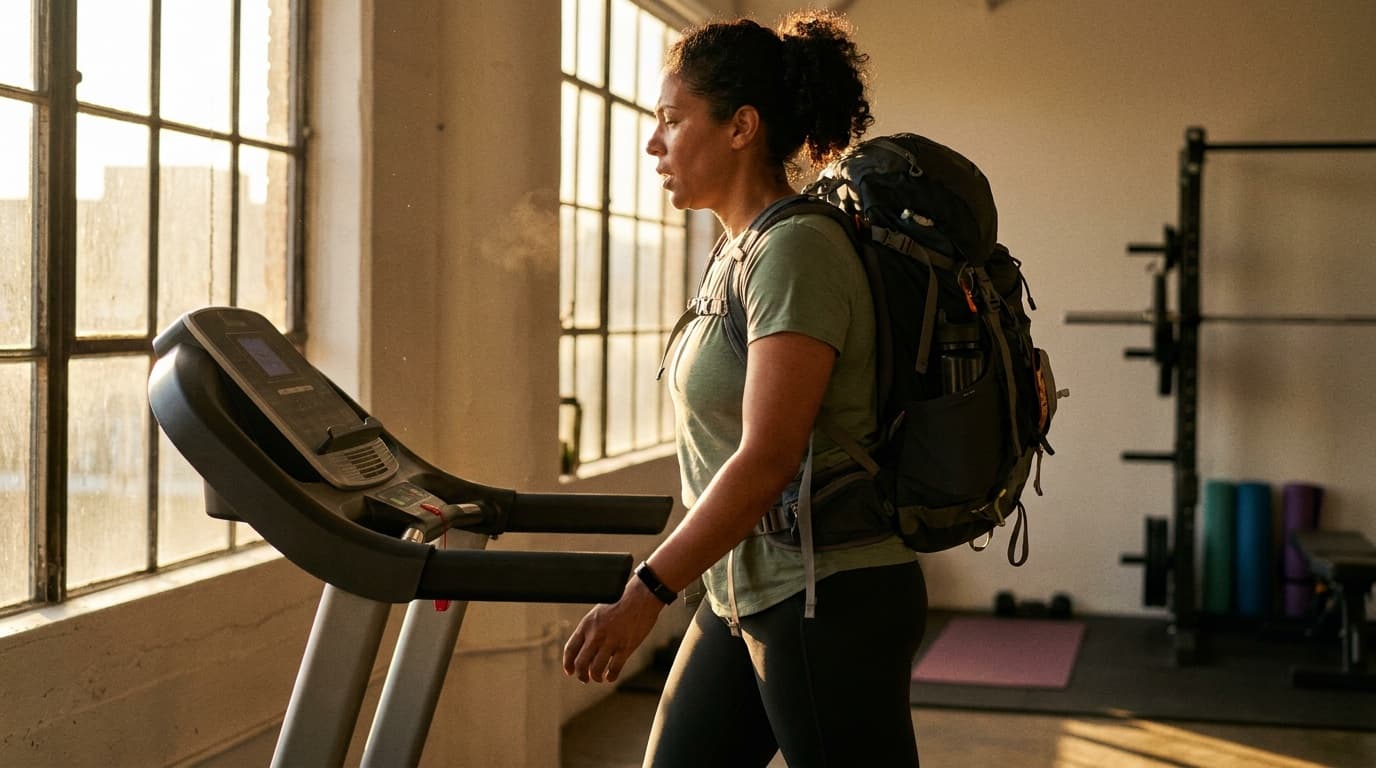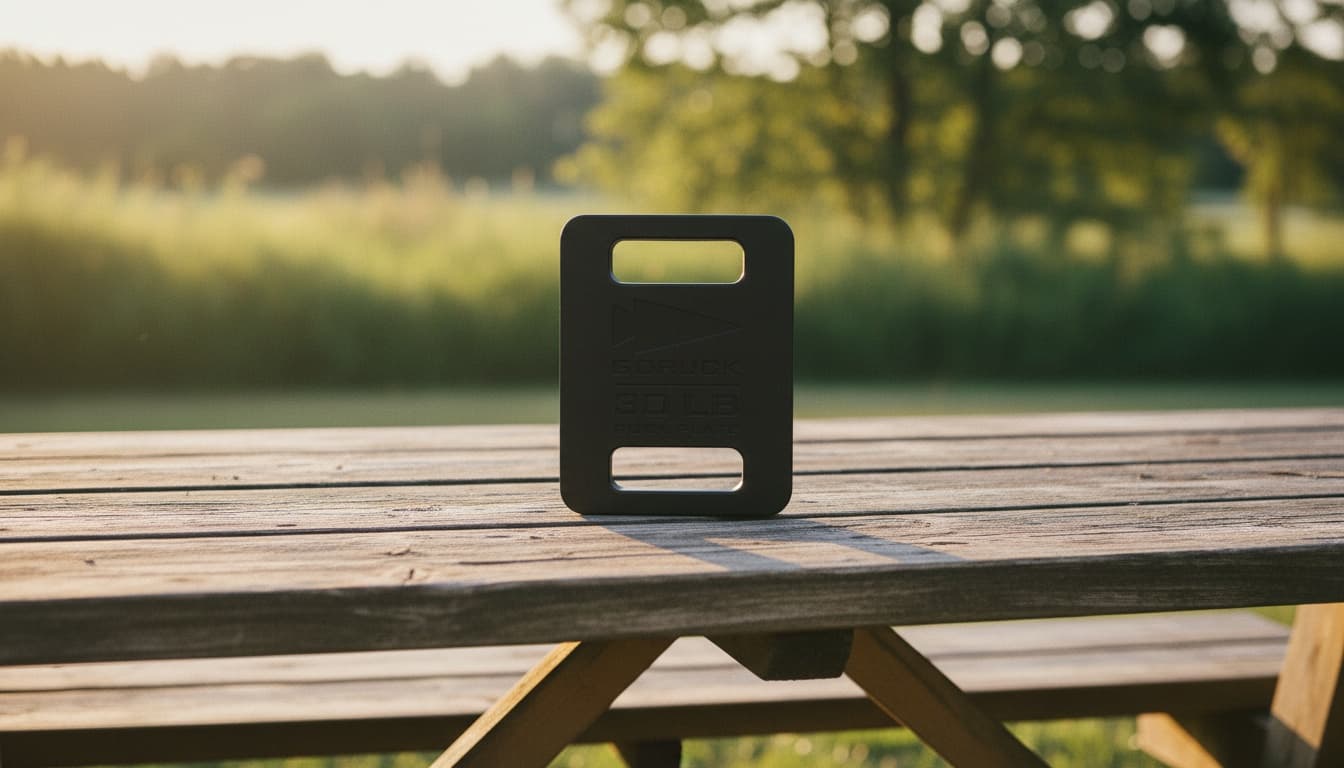
Moving from a 30-pound pack to a 45-pound pack adds 50% more pack load. In the 180-pound, 4 mph calculator example below, it adds about 7% to estimated energy use. That tradeoff matters because tissue load and calorie estimates do not rise at the same rate.
The better choice depends on the goal, training history, form, and recovery.
This is general training guidance, not medical advice. If you have recent knee, hip, back, foot, bone-density, or cardiovascular issues, get a clinician or physical therapist to sanity-check your load progression before moving from 30 to 45 pounds.
The short answer
Stay at 30 pounds if it supports general fitness, weight loss, or repeatable weekly volume. The sample calorie estimate changes only slightly at 45 pounds, while the added load increases the demand on the whole body.
Consider 45 pounds when a specific event or selection goal requires heavier load tolerance and you already handle 30 pounds with stable form and recovery. The heavier pack adds more strength-endurance and tissue-loading demand; it does not stop being cardio.
The middle case, an intermediate rucker ramping up for an event in 3 to 6 months, usually does better with a phased progression than a clean swap. More on that below.
What 30 lb Trains
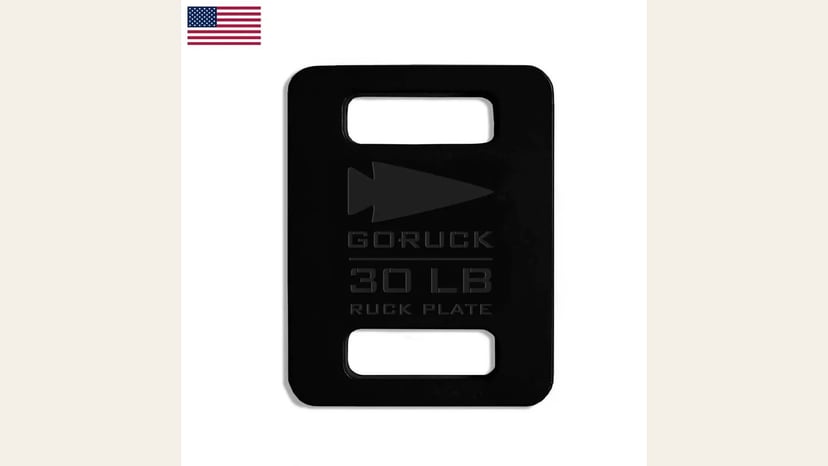
At 30 pounds, a 180-pound rucker is carrying roughly 17% of body weight. At 3.5 to 4 mph on flat pavement, the rucking calorie calculator estimates about 410 to 505 calories for 60 minutes. Those figures are model outputs, not measured expenditure or a universal safe-load threshold.
What gets trained:
- Aerobic capacity. Depending on body size, pace, grade, and fitness, 30 lb may place a rucker in Zone 2 or Zone 3.
- Postural endurance. The upper back and trunk hold the pack position throughout the session. On longer rucks, postural fatigue may become the limiter before breathing does.
- Repeatable weekly volume. A trained rucker may tolerate 30 lb more often than 45 lb, but frequency still depends on duration, terrain, health, and recovery.
Neither 30 nor 45 lb is a universal boundary between cardio and strength training. Both are walking loads; the demand depends on the person, route and session. More pack weight isn't a substitute for progressive resistance exercise.
What 45 lb Trains
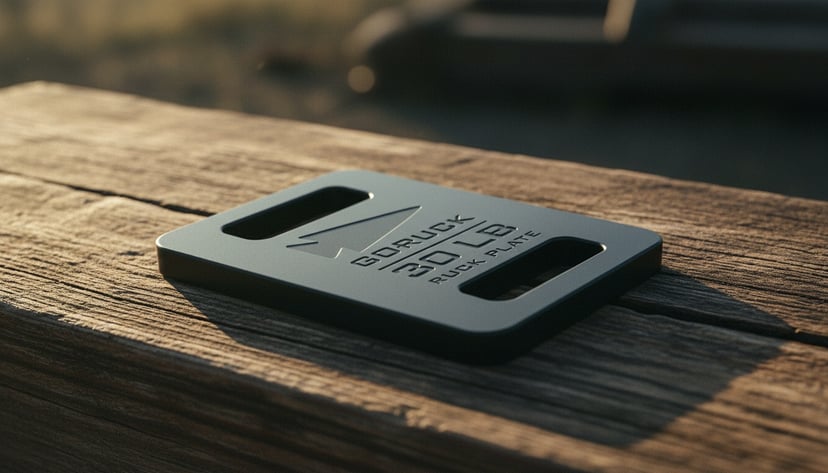
At 45 pounds, the same 180-pound rucker carries 25% of body weight. The calorie calculator estimates about 440 to 535 calories for the same 60-minute session, about 7% more than the 30-pound example at the same pace. There is no exact 25% threshold where one type of adaptation replaces another. The higher load simply adds more structural demand for a relatively small change in this calorie estimate.
Compared with 30 lb, the 45-pound load places greater demand on:
- Posterior-chain strength endurance. Hip extension, trunk stabilization, and calf endurance work harder under the larger load.
- Connective tissue. Tendons and ligaments often adapt more slowly than muscle. A heavier session can add stimulus, but it can also exceed current tolerance.
- Form. A larger load makes gait or pack-fit problems more costly, so stop the progression when posture or stride changes.
The 45-pound load is not automatically better for cardio, weekly frequency, fat loss, or long-session quality. If it reduces frequency or changes gait, the lighter load may produce more useful weekly work.
The calculator uses the published 1977 Pandolf equation with no added correction. Drain and colleagues (2017) found it under-predicted the metabolic rate of soldiers carrying modern military loads by 12 to 33 percent, with the largest errors at the slowest and fastest speeds tested, and Looney and colleagues (2018) found standard equations underestimate the cost of carrying load over rough, complex terrain. Real expenditure at either load may therefore be higher than shown. The 180-pound example still shows about a 7% difference between 30 and 45 lb. This is an estimate, not a metabolic measurement.
How the Calorie Estimate Changes
For a 180-pound person walking at 4 mph on flat pavement for 60 minutes:
| Load | Calories burned | % of body weight | vs unloaded |
|---|---|---|---|
| 0 lb (unweighted) | ~440 | 0% | baseline |
| 30 lb | ~505 | 16.7% | +14% |
| 45 lb | ~535 | 25% | +21% |
| 60 lb (event ceiling) | ~575 | 33% | +30% |
On flat pavement the first 30 lb adds about 14 percent over walking unweighted. Each additional 15 lb adds a similar small amount: 30 to 45 adds about 35 calories, 45 to 60 about 40. Doubling the load from 30 to 60 only adds 14 percent more calories per hour.
For weight loss, the table supports consistency at a manageable load rather than a jump to 45 or 60 pounds solely to raise calorie burn.
When to make the jump to 45 lb
Three signals that the jump is the right call:
- You're intentionally training heavier than your expected event load. GORUCK's own ruck-plate guidance pitches the 45 lb plate at people already comfortable at 30 lb who want to "train harder than you perform," and says you can train with the 45 and carry a 30 lb plate at a Challenge. Check the current event sheet before you build your training plan, because event load requirements can shift by format and bodyweight.
- The current load is comfortable and the heavier load serves a specific goal. Time spent at 30 lb alone doesn't prove readiness.
- You can hold a 60-minute 30 lb ruck at goal pace without form breakdown in the last 15 minutes. That is one useful readiness check, not a guarantee that 45 lb will be safe.
When NOT to make the jump
Stay at 30 if any of these match:
- You're rucking fewer than 2 times per week consistently. For weight-loss and general-fitness goals, a heavier pack that cuts how often you ruck is usually a poor trade.
- You've had any overuse flag in the last 6 weeks (shin splints, plantar fasciitis, lower back stiffness, shoulder discomfort that lingers past the session). The jump amplifies whatever was building.
- Your only reason is the 7% calorie estimate. The added load may not be worth the recovery cost for general fitness or weight loss.
- You're under 12 months into rucking and don't have a barbell-strength training background. Tendons and ligaments tend to adapt more slowly than muscle, so give them time.
A phased option is to keep 30 lb for 3 of 4 sessions and add one 45-pound session every other week for the first month. If recovery remains normal and posture holds, consider one 45-pound session per week. Reduce the load if pain or gait changes appear.
How to handle the transition safely
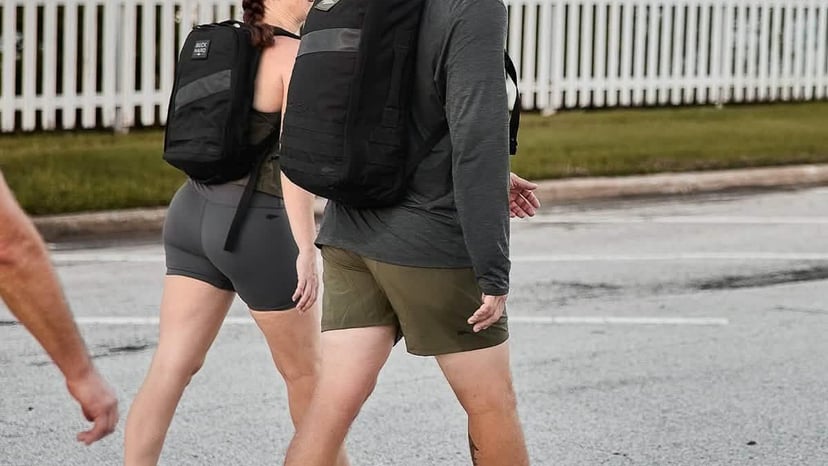
A more conservative progression goes 30 → 35 → 40 → 45, with 2 to 3 weeks at each step and a deload week between any two progressions. Adjustable weights make this easy. If you're on fixed plates, the practical path is a 5 lb sandbag or a pair of 2.5 lb weights added to your existing 30 lb load and secured so it can't shift.
What to watch during the transition:
- First 5 to 10 minutes of each session. If your gait feels off in the first half-mile under the new load, it rarely improves later in the session. Treat that as a sign the jump was too aggressive.
- Recovery quality at 24 and 48 hours. Sleep disruption, lingering soreness, or a drop in motivation are early signals that you're outpacing adaptation.
- Pace at the same effort. Expect it to change with load, terrain and conditions. We don't have a validated minutes-per-mile cutoff that tells you whether the new weight is appropriate.
The ruck weight calculator sets a planning ceiling for your body weight and builds a four-week block at a fixed load. Use it alongside the step-by-step progression above.
Plate and load-building options
Three different ways to build a 30-to-45 lb load, depending on your budget and how fine you want the progression steps. GORUCK Ruck Plates are sized for GORUCK's plate pockets, including the Long pocket that takes the 45 lb plate. Hyperwear FlexLoad sleeves use removable half-pound steel-shot packets, so you can make small adjustments without buying more plates. A cast-iron budget weight such as the Yes4All 20 lb covers the low end of the price range.
Frequently asked questions
Does rucking 45 lb burn twice as many calories as 30 lb?
No. In the 180-pound, 4 mph example it adds about 7 percent more calories per hour at the same pace. The Pandolf load-carriage equation captures the fact that calorie cost and load don't scale 1:1. Doubling the load from 30 to 60 lb only adds about 14 percent more calories per hour. This modeled comparison doesn't establish which schedule produces more weight loss.
Will 45 lb make me stronger than 30 lb?
It increases the load you carry, but it doesn't automatically produce greater long-term strength or connective-tissue resilience. The cited evidence doesn't establish a 30 lb cardio/45 lb strength divide.
What's a safe progression from 30 to 45 lb?
Smaller steps can be easier to assess than a 15 lb jump. The suggested intervals are planning examples, not validated safety thresholds. Repeat or reduce a step when recovery, gait or symptoms change.
What if my ruck can't take a 45 lb plate?
GORUCK's 45 lb plate comes only in the Long format (9.5 x 15 in), and GORUCK says it straps in securely only in packs and carriers with a Long pocket, such as the 20L and 25L Rucker and the Long Ruck Plate Carrier; the Basic Rucker is limited to 30 lb Standard-format loading. If your pack has only a Standard pocket, the GORUCK Standard 30 lb Ruck Plate plus a small sandbag or two 7.5 lb soft weights gets you to 45 lb. Extra loose weights need secure retention and must stay within the pack's guidance.
How do I know if 45 lb is too much for me?
Pain, numbness, altered gait or poor recovery are reasons to stop or reduce the demand. Don't wait for a precise pace drop or 48-hour pain threshold. Recurring symptoms need assessment.
Is 45 lb the right load for GORUCK events?
Not automatically. GORUCK's plate guidance recommends a 30 lb plate for Challenge participants over 150 lb, a 20 lb plate under 150 lb, and the 45 lb plate as a training option for people already comfortable at 30. For Light, Tough, Heavy, and Star Course events, always check the event-specific packing list before you travel.
Related
- Rucking Calorie Calculator: estimate the burn for your load and pace
- Ruck Weight Calculator: a planning ceiling and a four-week block at a fixed load
- How Heavy Should Your Ruck Be?: the full guide to choosing and changing load
- Best Ruck Plates for GORUCK Rucking (2026): the plate roundup
- GORUCK Event Readiness Estimator: compare your training with a Light, Tough or Heavy event