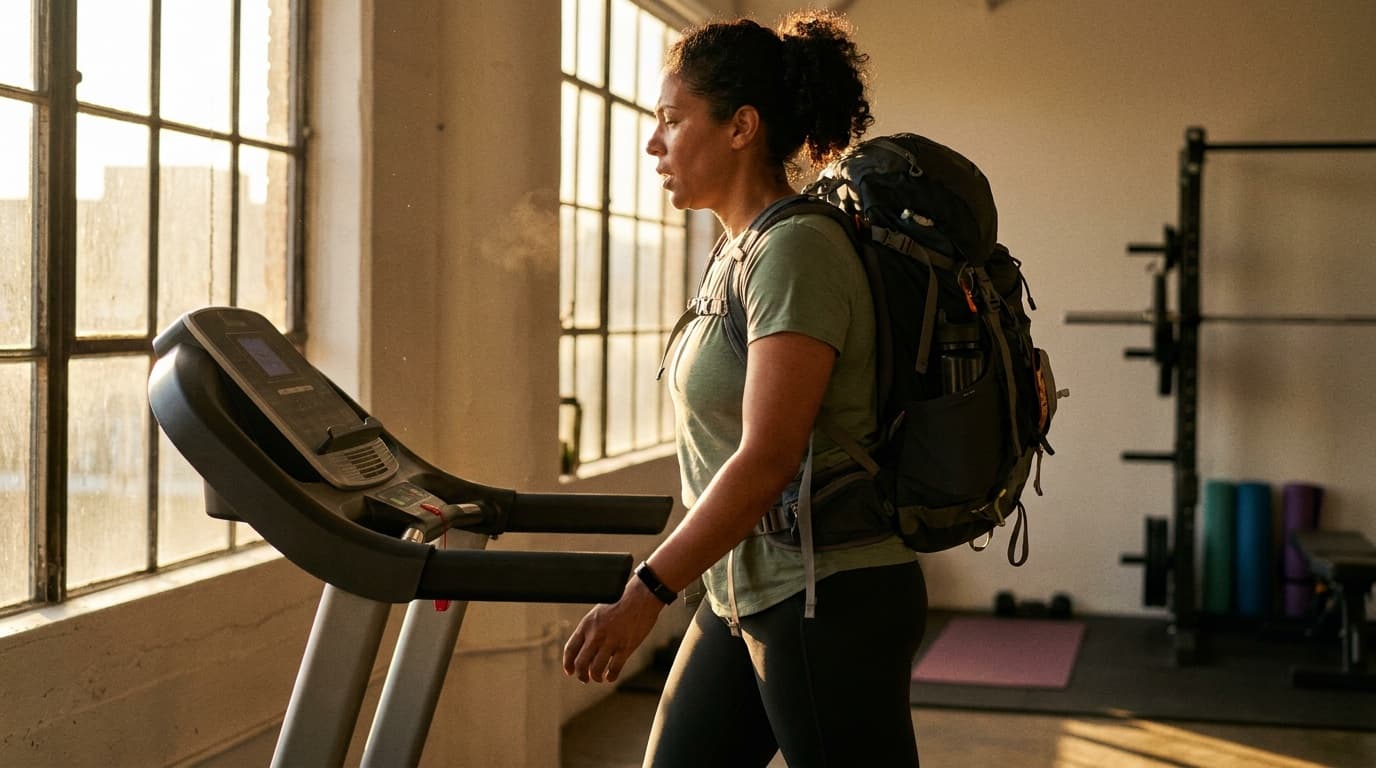
Eight weeks is enough only from a baseline
Use this countdown if you already:
- ruck at least once each week
- complete 45-60 minutes with a repeatable load
- maintain normal gait during and after the session
- know the event date and format
If you are starting regular walking now, eight weeks is not a reason to compress the Couch to Ruck plan. Choose a shorter event, extend the calendar, or change the goal.
This is a template, not the event standard. The exact organizer page controls required load, water, packing list, distance or duration, special items, and cutoff. Recheck it during Week 8.
Build the event card
Before Week 1, write down:
| Requirement | Your event |
|---|---|
| Date and start time | |
| Expected distance or duration | |
| Required dry load | |
| Does water count? | |
| Required gear | |
| Terrain and elevation | |
| Pace or cutoff | |
| PT, carry, or teamwork demands |
Use the event readiness tool to compare that card with your recent longest ruck, current load, and available weeks.
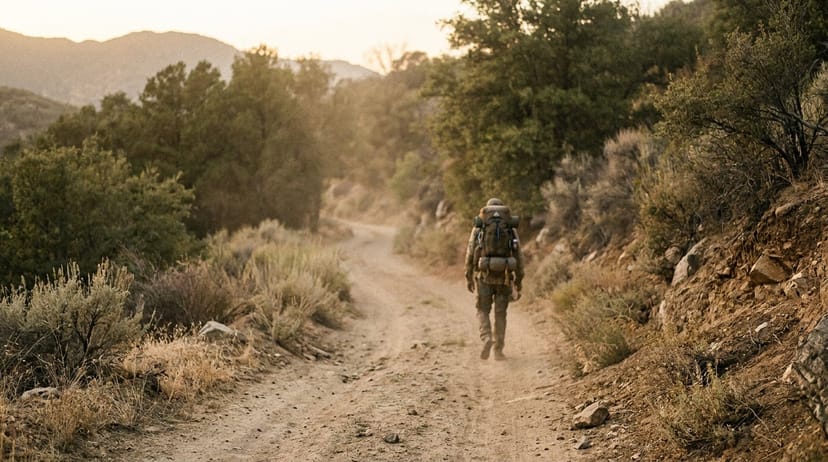
Weekly structure
| Day | Session |
|---|---|
| Monday | Full-body strength |
| Tuesday | Unloaded easy aerobic work, 30-50 minutes |
| Wednesday | Rest or easy walk |
| Thursday | Short event-skill practice or unloaded brisk intervals |
| Friday | Rest or light strength |
| Saturday | Primary event-preparation ruck |
| Sunday | Rest |
Established ruckers may add one short easy loaded session. It should remain optional and clearly easier than Saturday.
The eight-week countdown
Scale the primary ruck from your recent repeatable baseline. “+5-10%” is a conservative planning range, not a proven safety threshold.
| Week | Primary ruck | Load | Event work |
|---|---|---|---|
| 1 | Repeat recent longest comfortable session | Current comfortable load | Pack and foot baseline |
| 2 | Add up to 5-10% time or distance | Hold | Brief target-pace or terrain check |
| 3 | Add up to 5-10% again, or hold | Hold | Test one required gear item |
| 4 | Reduce primary ruck by 20-30% | Optional small required-load step | Finalize pack, socks, footwear, and water access |
| 5 | Return near Week 3 only if load held; otherwise repeat the shorter Week 4 duration | Hold | Confirm the changed load before adding terrain or tasks |
| 6 | Longest sub-event rehearsal; for shorter events this may reach 70-80% of expected time or distance | Required load | Final gear, start time, food, water, and route type |
| 7 | Reduce Week 6 duration by about 35-45% | Hold | Short controlled event-pace sections |
| 8 | One 20-40 minute easy ruck early, then event | Required load | Recheck instructions; no hard simulation |
For long events, 70-80% can be far too much for one rehearsal. Use a substantially smaller, already repeatable fraction and follow the specific GORUCK training guide or military plan instead of applying the shorter-event range.
Weeks 1-3: Establish and extend the baseline
The first session should look familiar. Keep load and route type stable.
Add one factor in Weeks 2 and 3:
- time or distance
- brief target-pace walking
- mild event-relevant grade
- one required gear item
Do not add all four. If the event load is above your current load, save that change for the shorter Week 4 session.
Week 4: Consolidate and confirm gear
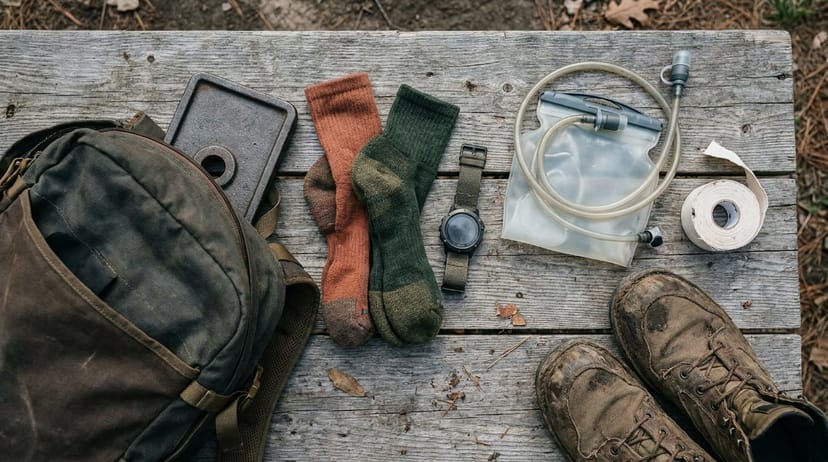
Reduce duration and solve:
- pack movement
- foot hot spots
- strap pressure
- water access
- required-item placement
- clothing that chafes or stays wet
If you need to move toward required load, test one small change on this shorter session and hold everything else.
By the end of the week, no major equipment decision should remain.
Weeks 5-6: Practice event specifics
Week 5 returns near the prior peak only when Week 4 held load. If Week 4 introduced a new required load, repeat the shorter duration first. Extend only after that exposure is repeatable.
Week 6 is the final meaningful rehearsal. Use:
- the event start time when practical
- the final pack and required load
- event footwear and socks
- relevant surface and hills
- food and water already tested
- a short controlled task block when the event uses PT or carries
The rehearsal is sub-event distance or duration. Its job is to verify the system, not duplicate the event.
Weeks 7-8: Reduce fatigue and attend
Week 7 reduces the long session. Week 8 includes one short easy ruck early in the week.
Do not add:
- a missed long ruck
- a new shoe or sock
- a heavier load
- a hard hill test
- a full-distance rehearsal
The final week can reduce fatigue; it cannot create a new endurance base.
Heat during the countdown
Late-summer heat can make a familiar pace much harder. Do not “use” dangerous heat as extra training stress.
- move sessions to cooler hours
- shorten or move indoors when conditions are inappropriate
- use shaded routes and accessible water
- know heat-illness warning signs
- follow local alerts and event guidance
See the summer heat-safety guide.
The gear shakedown
Test the complete system by Week 6:
- secure load high and close
- confirm required items remain accessible
- wear final footwear and socks
- practice foot care at the first hot spot
- confirm the water system does not leak
- test reflective gear and headlamp when required
Use the event packing guide for a requirement-led checklist.
What to do when training is interrupted
Miss one session: Continue the schedule. Do not stack loaded days.
Miss one week: Resume the last repeatable week and shorten the next progression.
Miss two or more weeks: Reassess the event gap. A shorter event or later date may be the better decision.
Develop warning symptoms: Stop loaded training and get qualified guidance. A countdown does not make symptoms negotiable.
Frequently asked questions
Can I start from zero eight weeks before an event?
Not with this schedule. It assumes a 45-60 minute loaded baseline. Use Couch to Ruck, choose an entry-level event that matches the actual baseline, or move the date.
Should I complete the full event distance in Week 6?
Usually not. This template uses a sub-event rehearsal. Exact needs depend on event duration, training history, and official programming.
When should I reach event load?
Reach it before the Week 6 rehearsal. If your current load is lower, make the change on a shorter session and hold it before extending distance.
Should I train in the hottest part of the day?
No. Heat is a condition to manage, not free fitness. Adjust time, route, duration, or venue based on current conditions.
What if the event page changes?
Use the current organizer instructions. Recheck in Week 8 and update packing without adding untested optional gear.