Why a larger bust is the hard part
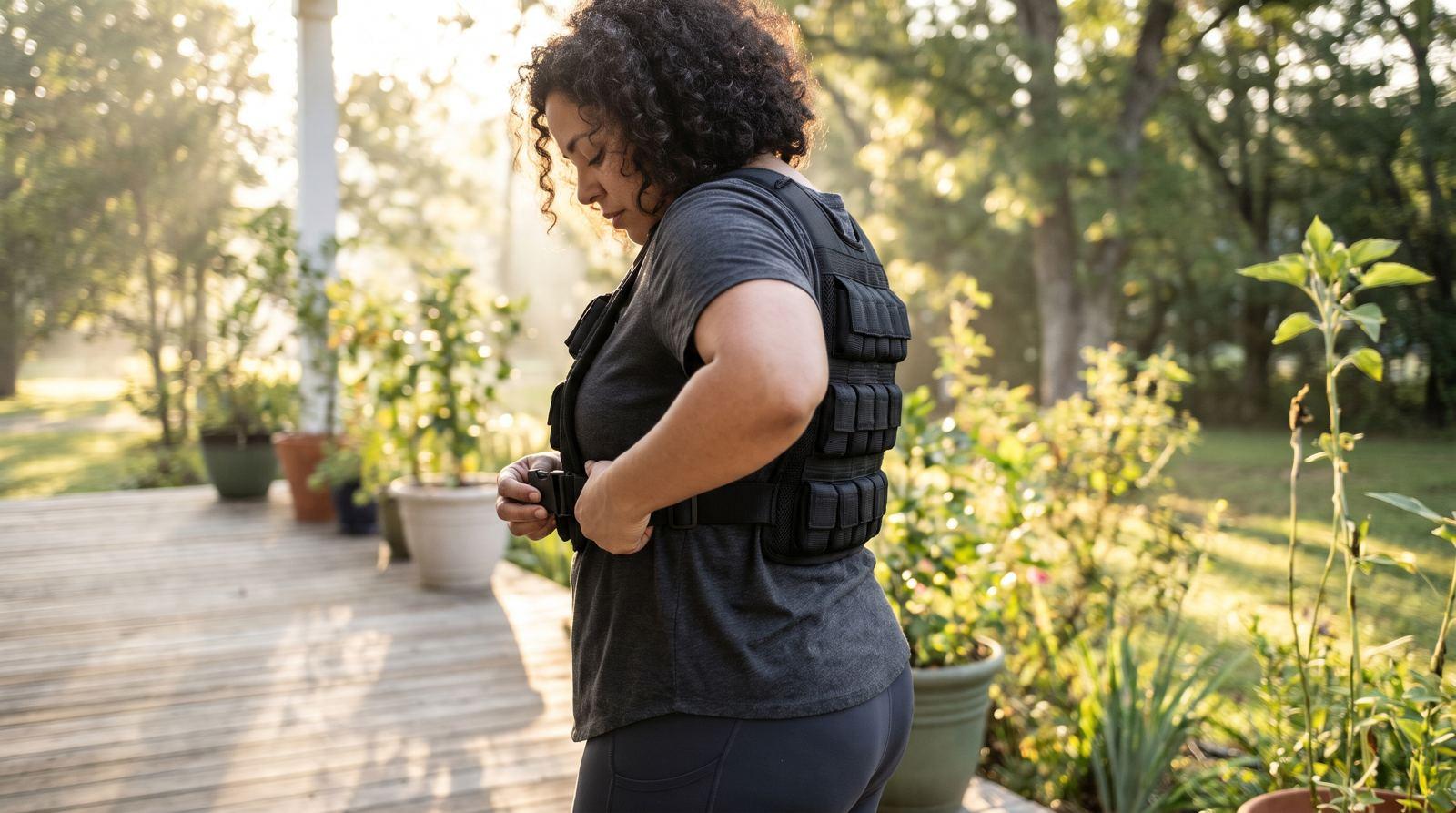
Most weighted vests hang from the shoulders and put a flat weight panel or a row of pockets across the chest. On a larger bust, that panel sits on breast tissue, the front buckle runs out of strap, or both. Reddit threads on this keep landing on the same numbers: readers with an H cup or a 52 inch bust report that one-size vests stop at around a 45 to 47 inch bust.
Hyperwear's own buying guide says bust fit is a primary concern for women and warns against vests with the weight centred on the chest. Its women's FIT vest removes the weight pockets over the bust entirely, which is also why it tops out at 10 lb. Plate-style vests are the hardest case: GORUCK's Rucking Weight Vest uses the same 11 by 13 inch front panel in every size.
Vests with published size ranges
These are the largest ranges we could find on manufacturers' own size charts. Most vests, including several popular one-size models, publish no chest or waist range at all.
| Vest | Style | Largest published fit | Weight |
|---|---|---|---|
| TRX Duraballistic | Cross straps | Circumference adjusts 36 to 60 in | 10 lb |
| Hyperwear Hyper Vest PRO, XL | Small weights spread around the torso, side laces | Chest 43 to 57 in, waist 38 to 41 in | 10 to 40 lb |
| Hyperwear Hyper Vest ELITE, XL | Same layout as the PRO | Chest 43 to 57 in, waist 38 to 41 in | 10 to 25 lb |
| 5.11 TacTec Plate Carrier | Plate carrier | Cummerbund circumference listed as 52 to 57 in | Plates sold separately |
| Hyperwear Hyper Vest FIT, L | Women's cut, no weight over the bust | Chest 39 to 43 in, waist 29 to 36 in | Up to 10 lb |
Two catches. The Hyper Vest PRO XL fits a 57 inch chest but stops at a 41 inch waist, so a reader with a larger waist is outside the chart even if the bust fits. And TRX doesn't say where its 36 to 60 inch circumference is measured. Hyperwear tells buyers with a larger bust or broad shoulders to size up.
We found no weighted vest sold as plus-size with its own size chart.
How to measure
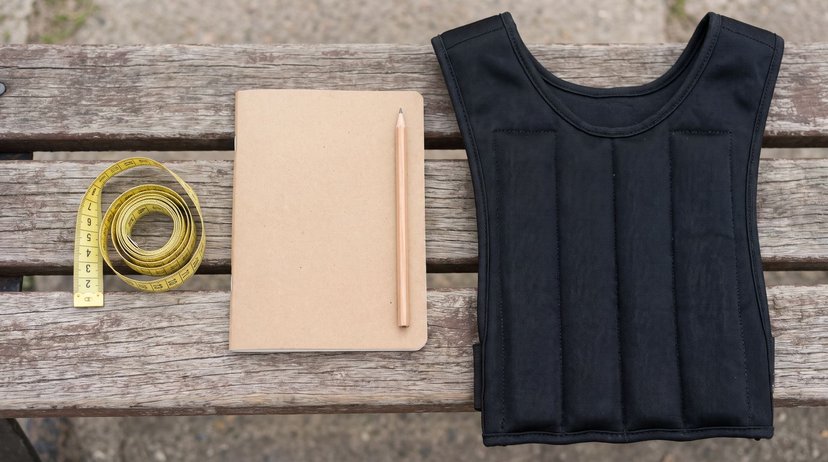
- Bust: around the fullest part, with the tape level all the way round. Hyperwear's charts use this measurement.
- Waist: at the narrowest point. This is often what decides whether a side-laced vest closes.
- Torso: if you're short-waisted, check the vest's length. Hyperwear's PRO runs from 18.5 inches in small to 24.5 inches in XL, so a long XL can sit on your hips.
Compare both numbers to the chart. If you're in one size for bust and another for waist, go by the bust and tighten the waist.
How a vest should fit
The health guidance agrees on three things.
- Snug and still. OhioHealth and Cleveland Clinic both say the vest should fit snugly and not shift. If it bounces at walking pace, it's too loose.
- Weight front and back. ACSM says vests that spread the weight evenly across the front and back are better for posture and comfort.
- Start light. ACSM suggests about 5% of body weight and 10 minutes of walking. Cleveland Clinic's range is 5 to 10%, and Harvard Health's ceiling is 10%. See how heavy a vest should be and how long to wear one.
For a larger bust, add a fourth: any strap that crosses the chest should sit high, just under the collarbones, clear of breast tissue. No clinical guidance covers strap width or height; this comes from brand fitting guides and the same rule we use for pack sternum straps. Readers who've found a vest they like report the same fixes: buying the larger size and removing weight, buckle extenders, or a vest that carries more of its weight on the back.
When no vest fits, carry it on your back
A backpack sidesteps every problem above. The weight sits on your back, the sternum strap can ride high, and you can add or remove weight in small steps. A pack with a fitted hip belt moves much of the load off your shoulders; the Appalachian Mountain Club puts it at about 80% on the hips for a well-fitted pack. Research on soldiers measures a smaller share, but hip belts consistently make loaded walking more comfortable.
- A regular backpack with a few pounds packed high works fine for a start. See rucking with a regular backpack.
- A back-only plate carrier. GORUCK's Ruck Plate Carrier 3.0 holds a single plate on your back and leaves the chest open. Reviewers on GORUCK's site say its straps run short above an XL shirt.
- A pack with an extended hip belt if you want to carry more. Our guide to packs for bigger bodies lists published belt ranges up to 70 inches.
Skip ankle weights. Harvard Health advises against walking with them because they overwork the front of the thigh and pull on the ankle, knee and hip.
For more on the trade-offs, see weighted vest vs rucksack. If you're starting from a higher body weight, starting rucking at 300 lb covers when to add any load at all.