Gear Review
5.11 Tactical TacTec Plate Carrier Review: When Ruckers Choose Plates Over Packs
5.11 TacTec Plate Carrier review for rucking: fit, comfort, plate compatibility, durability, alternatives, and when a plate carrier beats a ruck pack.
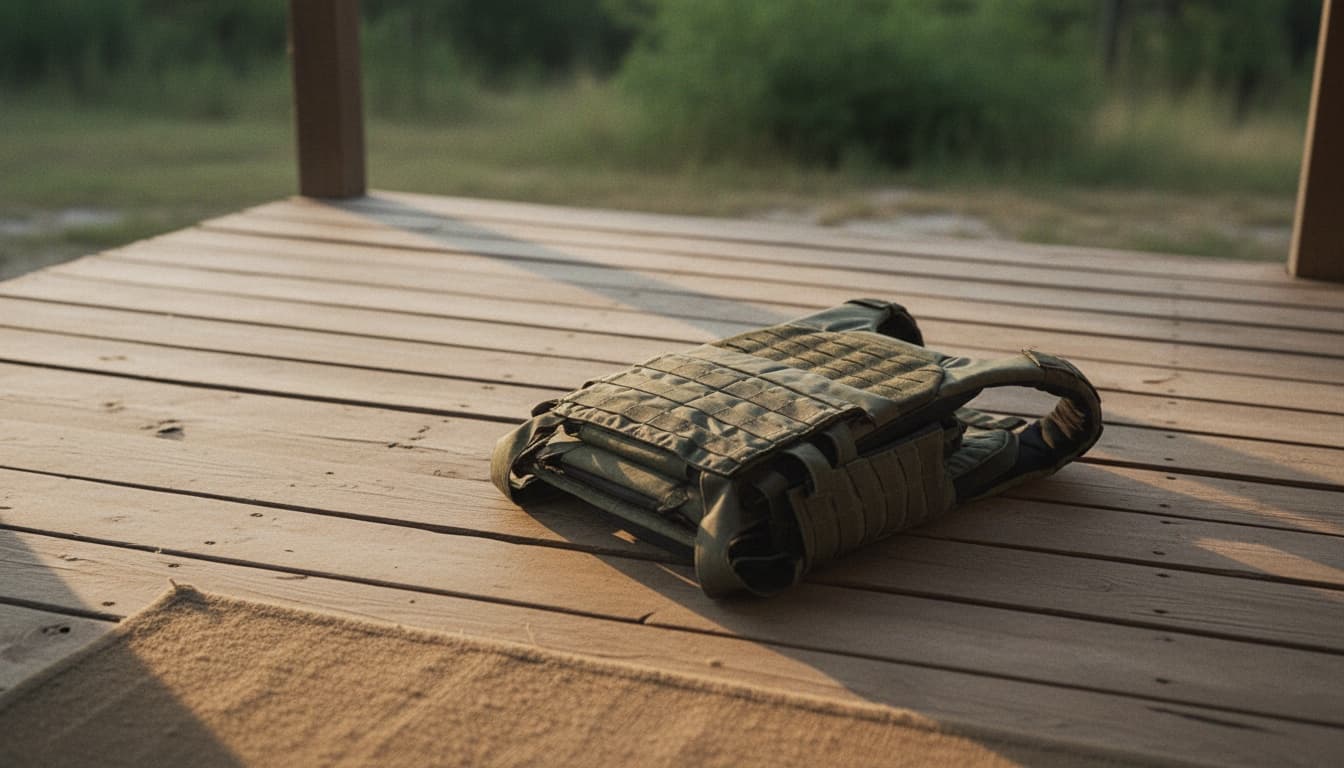
On this page10 sections
- 5.11 TacTec Plate Carrier review: fast answer
- TacTec verdict
- When a plate carrier beats a ruck pack
- Overview
- Key Specs
- What the specifications do and do not tell you
- Who It's Best For
- Comparison to Alternatives
- Versus Quality Weighted Vests
- Versus Rucking Backpacks
- Versus Premium Plate Carriers
- Bottom Line
- Frequently Asked Questions
When should you use a plate carrier instead of a backpack? The 5.11 TacTec sits between fitness-only weighted vests and lighter minimalist carriers, with padded shoulders, an adjustable cummerbund, MOLLE attachment points, and room for standard training or armor plates.
This is a specification-led editorial review. Ruck Authority has not completed an evidence-recorded field test of this carrier, so comfort, heat, and durability judgments are framed as fit considerations rather than firsthand results.
5.11 TacTec Plate Carrier review: fast answer
The 5.11 TacTec Plate Carrier is worth considering if your weighted walking looks more like plate-carrier conditioning than long-distance backpack work. It carries compatible rigid plates on the front and rear of the torso and provides padded shoulders, airflow panels, and a MOLLE platform.
It is not the best first purchase for normal rucking. For 60-plus minute sessions, a rucking backpack or GORUCK Rucker carries water, layers, and food while moving more load to the hips. If you want the full category comparison, see our plate carrier-style weighted vest guide.
TacTec verdict
The TacTec is a strong candidate when you specifically want a configurable plate carrier for balanced torso loading. It is a weaker fit when the job is distance rucking, carrying water and layers, or meeting an event list that explicitly calls for a rucksack.
| Dimension | What the current evidence supports |
|---|---|
| Rucking fit | Front-and-rear plate carry without backpack cargo or hip-belt transfer. |
| Adjustment | Padded yoke, adjustable shoulder straps, and stretch waistband listed for S-XL. |
| Construction | 500D nylon, airflow panels, MOLLE, quick release, and grab-drag handle. |
| Total cost | Carrier plus compatible plates and any hydration or storage pouches. |
Buy it if: you need plate-carrier geometry, compatible rigid plates, MOLLE, and a product that can serve fitness and professional equipment roles.
Skip it if: you ruck primarily for distance, need a pack rather than a plate carrier, or want fitness-only kit. A purpose-built weighted vest or a GORUCK Rucker 5.0 is the more direct tool for those jobs.
When a plate carrier beats a ruck pack
This is the question most ruckers searching "5.11 TacTec review" are actually trying to answer. Use this decision logic:
| Your training is mostly | Better tool | Why |
|---|---|---|
| Short conditioning with balanced torso plates | Plate carrier (TacTec works) | Front and rear pockets distribute compatible plates around the torso. |
| Distance with water, layers, and food | Ruck pack, optionally with a hip belt | Integrated cargo and optional load transfer fit the job better. |
| Training that specifically requires carrier geometry or MOLLE | Plate carrier | The TacTec is designed around front/rear plates and modular attachments. |
| GORUCK event preparation | The rucksack named on the event list | Train with the pack and load you must use at the event. |
| Pure fitness (weight loss, cardio, general strength) | Weighted vest (purpose-built) | Cooler than a carrier, cheaper than tactical, no plates to source. |
If most of your training is distance rucking, start with a rucksack. If plate-carrier movement is the actual goal, the TacTec's current feature set deserves comparison with fitness vests and other carriers in your price range.
Overview
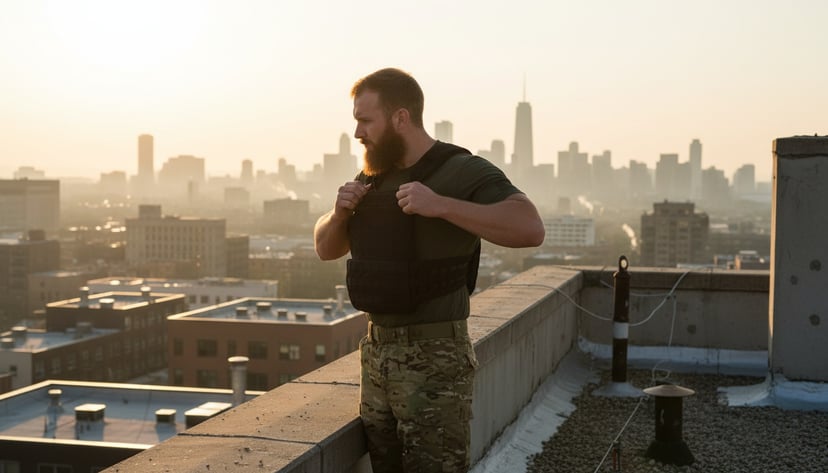
The 5.11 TacTec plate carrier occupies a unique position in the rucking gear ecosystem. Unlike traditional weighted vests or rucking backpacks, it's designed primarily as tactical equipment that some fitness enthusiasts have adopted for training.
5.11 positions it for both professional plate-carrier use and weighted fitness. The official specification is more capable than the old version of this article implied: it includes a padded yoke, airflow panels, adjustable shoulder straps and waistband, a one-handed quick-release cable, laser-cut and web MOLLE, and compatibility with medium and large ESAPI plates plus Rogue weight-vest plates.
Before considering any plate carrier for rucking, understand that they serve different purposes than traditional rucks. Plate carriers excel at front-loaded weight distribution and tactical realism but sacrifice storage, comfort, and weight capacity.
Key Specs
Based on 5.11 Tactical specifications and retailer listings:
Construction & Materials:
- 500D nylon construction
- Front and rear padded panels with airflow channels
- Laser-cut loop MOLLE and web MOLLE platform
- One-handed quick-release cable and extendable grab-drag handle
Sizing & Fit:
- Adjustable shoulder straps with a padded back yoke
- Adjustable skeletonized waistband with stretch, listed for S-XL
- 52-57 inch listed cummerbund circumference
Plate compatibility:
- Medium ESAPI: 12.5 x 9.5 x 2 inches
- Large ESAPI: 13.25 x 10.25 x 2.25 inches
- Compatible with Rogue weight-vest plates according to 5.11
- Side panels are available separately
Storage:
- Top admin pocket with hook-and-loop closure
- MOLLE attachment points for optional pouches
- No backpack-style cargo compartment for water, food, or layers
Specifications can establish materials, adjustment, compatible plates, and features. They cannot establish all-day comfort, heat management, long-term durability, or fit on a particular body. Those remain open questions until Ruck Authority completes a documented field test.
What the specifications do and do not tell you
The TacTec gives you a front-and-rear plate platform with shoulder padding, airflow channels, adjustment, MOLLE, and a quick release. That makes it a credible candidate for balanced torso loading, short conditioning sessions, and users who also need a configurable plate carrier.
It does not give you a ruck's cargo capacity or hip-belt load transfer. Any water, food, layers, or first-aid supplies require attached pouches or a separate system. The product page also does not publish a universal fitness-load ceiling, so choose only compatible plates, secure them with both the internal strap and external closure flap as 5.11 instructs, and follow 5.11's safety guidance.
Who It's Best For
The TacTec makes the most sense for someone who specifically wants balanced front-and-rear plates, a MOLLE platform, and a plate carrier that can serve fitness and non-fitness roles.
It makes less sense for a beginner who simply wants to walk farther with weight. A ruck is easier to load gradually, carries water and layers without extra pouches, and can move some load toward the hips. A fitness vest is simpler when the only job is short weighted exercise.
If you're planning serious rucking training, invest in either a quality weighted vest or a proper rucking backpack instead. The TacTec's limitations become problematic with regular, intensive use.
Comparison to Alternatives
Versus Quality Weighted Vests
Weighted vests are usually simpler for fitness: the weight system is the point of the product, adjustment is designed around movement, and there is less modular gear to configure. The TacTec is preferable when compatible rigid plates, MOLLE, and carrier geometry are part of the requirement.
Versus Rucking Backpacks
Traditional rucking backpacks offer cargo capacity and, on some models, a hip belt. They are the more direct choice for distance, hydration, layers, food, and events whose official list calls for a rucksack.
The TacTec only wins in specific scenarios where front-loaded weight distribution is specifically desired or where tactical movement patterns are being practiced.
Versus Premium Plate Carriers
Premium carriers may offer different plate cuts, cummerbund systems, weight, ventilation, modularity, and professional features. Compare the exact requirement rather than assuming price alone maps to comfort or durability.
Bottom Line
The 5.11 TacTec is a feature-rich plate carrier with a clear fitness use case, but it is not a backpack substitute. The official specs correct several errors that previously appeared on this page: it does have a quick release, adjustable shoulder and waist systems, airflow panels, and compatibility with medium/large ESAPI and Rogue weight-vest plates.
If your training mix is mostly long-distance rucking, this is the wrong purchase regardless of the carrier's strengths. Get a Rucker 5.0 or a purpose-built weighted vest instead.
Choose it when plate-carrier geometry and modularity are the point. Choose a Rucker or another compliant rucksack when you are preparing for a GORUCK event, and verify the event's official gear list rather than treating a plate carrier as interchangeable.
Frequently Asked Questions
It can carry compatible front and rear plates for weighted walking, but it lacks backpack cargo and a hip belt. Use it when plate-carrier geometry is the goal; choose a rucksack when distance, hydration, layers, or an event packing list are the priority.
It is worth considering if you specifically need compatible rigid plates, MOLLE, adjustment, and a quick-release carrier. It is not a general backpack replacement because it has no integrated cargo compartment or hip-belt load transfer.
The TacTec offers MOLLE, compatible rigid plates, a quick release, and professional-equipment features. A purpose-built fitness vest is usually simpler when weighted exercise is the only goal. For a GORUCK event, follow the official list; a plate carrier does not replace a required rucksack.
5.11 lists medium ESAPI plates at 12.5 x 9.5 x 2 inches, large ESAPI plates at 13.25 x 10.25 x 2.25 inches, and Rogue weight-vest plates. Confirm dimensions before buying and secure every training plate with both the internal strap and external closure flap as 5.11 instructs.
5.11 lists adjustable shoulder straps, a padded back yoke, a stretch waistband for S-XL, and a 52-57 inch cummerbund circumference. Compare those measurements with your torso and buy from a seller whose return policy gives you enough time to check plate position and range of motion indoors.
Ruck Authority does not yet have a completed durability field test for this carrier. Inspect stitching, closures, cable routing, and plate retention regularly, and follow 5.11's published care and safety guidance.
If you're training for tactical professional use (LE, mil, professional security), save for a Crye JPC or LBT 6094 - the TacTec is a step below those. If you're training for fitness, GORUCK events, or hybrid tactical-fitness, the TacTec is the category leader in its mid-range price band and there's no need to spend more.
Ruck Authority treats this as a specification-led review until a completed field-test record exists. Its strongest documented traits are 500D construction, adjustment, airflow panels, MOLLE, quick release, and listed Rogue/ESAPI compatibility. Its main rucking limitation is the absence of backpack cargo and hip-belt load transfer.
Yes. Its bar-tacked stress points, laser-cut MOLLE, and padded yoke suit short, heavy, high-repetition training. For a Cadre-led event that calls for a ruck pack rather than a plate carrier, use a GORUCK GR1, Rucker 5.0, or another pack that meets the event requirements.
Related Articles
GORUCK Ruck Plate Carrier 3.0 vs Rucker 5.0
Compare the GORUCK RPC 3.0 and Rucker 5.0 for plate fit, water and gear storage, sizing, and event use. Choose around what you actually carry.
GORUCK Ruck Plate Carrier 3.0: An Introduction
An introduction to my Ruck Plate Carrier 3.0, with Standard configuration specifications: compatible plates, current price and the practical difference from a backpack or front-and-back vest.
Ruck Plates vs Steel Plate Carriers for Rucking
A ruck plate can ride in a backpack, in a back-only harness like GORUCK's Ruck Plate Carrier, or in a front-and-back vest. Compare where the load sits, storage and fit.
Best Plate Carrier-Style Weighted Vests for Rucking in 2026
Plate carriers hold rigid plates on your back or front and back. Compare the four plate-carrying options worth owning in 2026 and which plates fit each one.