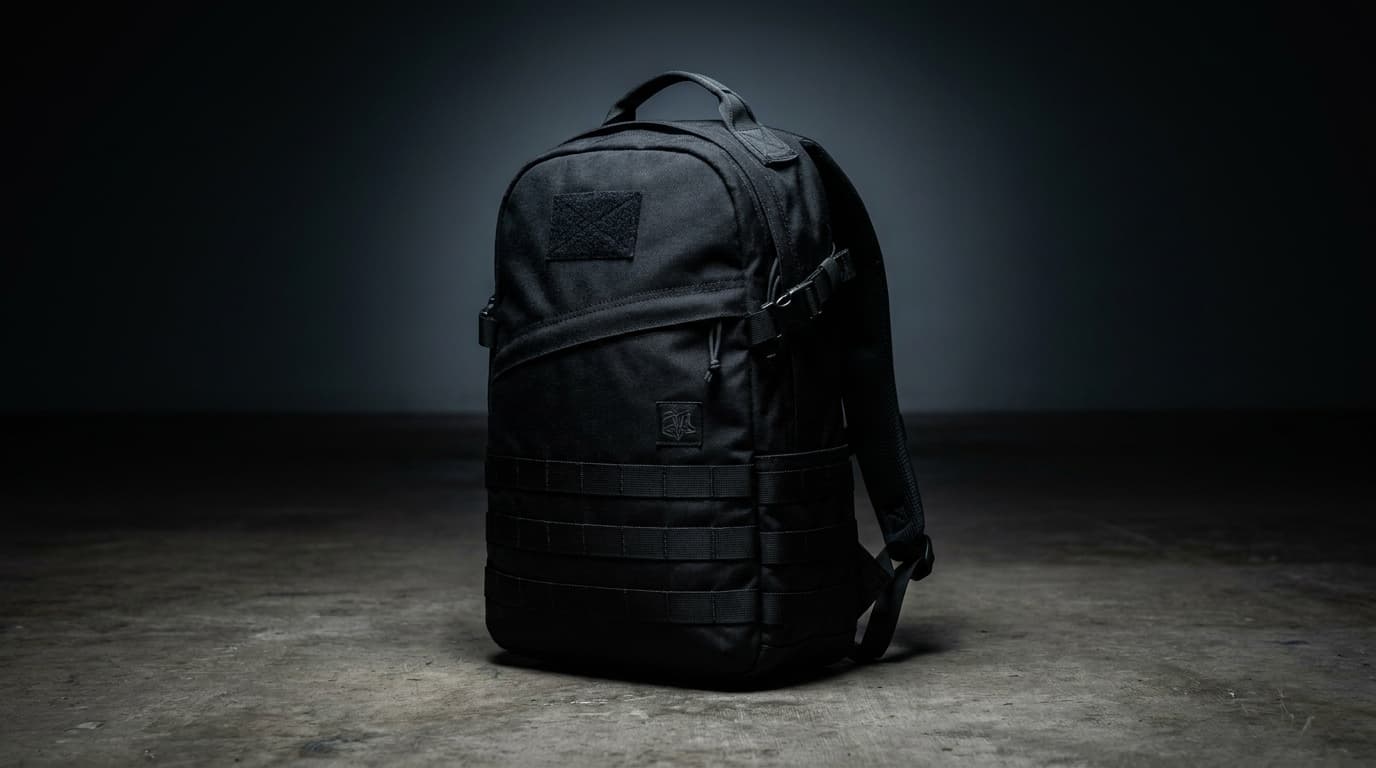
Rucking is walking with weight on your back, and most of what it does for you comes from that weight. It loads your bones, makes your legs and trunk work harder than a plain walk, and raises the energy cost of every mile, especially uphill.
The evidence comes from decades of military load-carriage research, weighted-vest trials in older adults, and a growing body of work on walking and Zone 2 training. Some benefits are well supported; others are borrowed from walking or strength research and deserve a caveat. Below are the 12 benefits, what the studies show for each, and who gains the most.
Benefits of rucking: where to start
Rucking has a lot of benefits, but the first move depends on why you are starting. The table below turns the research into the next practical step.
| Your main reason | First move | Why |
|---|---|---|
| More calorie burn without running | Run the calorie calculator, then start with 10-20 lb | The load only helps if you can repeat the session 3-4 days per week. |
| Knee, foot, or back-friendly cardio | Start with the Longevity Athlete loadout | Shoes, socks, and progressive load matter more than max pack weight. |
| Simple beginner fitness | Use the Beginner Starter Kit | A compatible pack, 20 lb plate, socks, and anti-chafe covers the first month. |
| Bone density or post-40 training | Start with 20-30 minute Zone 2 rucks and increase load slowly | Bone adapts to repeated upright loaded movement, not one heroic heavy day. |
If you are unsure, start with the calculator and the starter kit. The goal is a setup that lets you walk again tomorrow.
There's a reason multiple fitness publications are calling rucking the workout trend of 2026. The science backs it up across nearly every measure of fitness.
Why rucking is especially useful for men over 40
For men over 40, rucking is valuable because it combines three things that usually get separated into different workouts: Zone 2 cardio, load-bearing strength stimulus, and low-impact fat-loss volume. That matters because the common 40+ fitness problems are not just "need more cardio." They are loss of muscle, slower recovery, higher joint sensitivity, expanding waistline, lower daily activity, and declining aerobic base.
The practical prescription:
| 40+ goal | Rucking target | Why it helps |
|---|---|---|
| Rebuild cardio without running pain | 30-45 min, 3x/week, conversational pace | Builds aerobic base without high-impact pounding |
| Preserve muscle while losing fat | 15-30 lbs, 3-4x/week | Adds loaded-carry stimulus while creating calorie burn |
| Improve posture after desk work | High pack position, upright torso, 20-30 lbs | Trains upper back, trunk, glutes, and gait together |
| Support bone density | Progressive load over 8-12 weeks | Weight-bearing movement gives bones a reason to adapt |
| Reduce stress and improve sleep | Easy evening rucks, Zone 2 effort | Outdoor low-intensity cardio supports recovery |
The 40+ rule is simple: start lighter than your ego wants, then win on consistency. A man who rucks 30 minutes, four days per week with 20 lbs will usually get more long-term benefit than a man who carries 50 lbs twice, gets sore, and stops.
Cardiovascular Benefits
1. Builds Aerobic Capacity Without Destroying Your Joints
Walking is low-impact. Running is high-impact. Rucking splits the difference in a way that surprises most people.
The added weight forces your heart and lungs to work harder without the repetitive pounding of running. A 2022 USARIEM study published in Applied Ergonomics (Looney et al., load carriage cardiorespiratory responses) measured oxygen uptake, ventilation, and heart rate across loaded walking conditions in both male and female soldiers and found that load carriage substantially elevates cardiorespiratory demand at the same walking speed - confirming what military researchers have observed for decades: you get aerobic adaptation without the joint stress.
Research on loaded marching (military-style rucking) shows significant improvements in VO₂ max - the gold standard measure of aerobic fitness - comparable to moderate-intensity running, but with substantially lower injury rates.
The practical takeaway: You can ruck 4-5 days per week without the cumulative joint damage that running at that frequency would cause. It's the "sustainable forever" cardio option.

2. Improves Heart Rate Variability and Cardiovascular Resilience
Heart rate variability (HRV) - the variation in time between heartbeats - is a proxy for parasympathetic nervous system health and cardiovascular adaptation.
Zone-2 training (the pace where you can talk but not sing) is the scientifically optimal zone for building aerobic base and improving HRV without systemic stress. Rucking naturally falls into zone-2 for most people: it's fast enough to challenge your system, but slow enough that you can maintain a conversation.
Studies on endurance athletes show that zone-2 training improves HRV more effectively than high-intensity interval work, and does so without the cortisol spike and recovery demand of intense exercise.
The optimal pace for zone-2 rucking is typically 3.0-3.5 mph with 20-40 lbs. If you can't talk, you're too fast. If you're not slightly elevated, you're too slow.
The practical takeaway: Regular rucking builds a resilient cardiovascular system. You'll notice resting heart rate dropping and the ability to recover faster between intense efforts.
Musculoskeletal Benefits
3. Builds Bone Density (Critical After 30)
This is the benefit most people miss, but it might be the most important.
Bone density peaks in your early 30s, then declines by roughly 0.3-0.5% per year in adults. By age 70, bone loss becomes clinically significant - especially for women, who face accelerated loss after menopause. Worldwide, about 1 in 3 women and 1 in 5 men over 50 will break a bone because of osteoporosis, according to the International Osteoporosis Foundation.
Mechanical loading - putting weight on your bones - is the primary stimulus for maintaining bone density. Unlike cardio (which doesn't load bones much), rucking applies compressive and shear forces to your skeleton with every step.
The most direct evidence comes from a 5-year randomized controlled trial in postmenopausal women. Snow and colleagues (2000) - long-term weighted vest exercise prevents hip bone loss - published in the Journals of Gerontology - tracked 18 women who exercised with weighted vests over five years and found that the intervention group preserved hip bone mineral density at the femoral neck and trochanter, while the control group lost bone at both sites. The weighted-vest group ended the study with measurably stronger hips than where they started, which is unusual at that age.
A 2024 NIH-published PET/CT imaging study takes the mechanism even further: Helge et al. (2024) - loading enhances glucose uptake in muscles, bones, and bone marrow showed that mechanical loading increases glucose uptake not just in muscle but in the bones and bone marrow of the lower extremities. That metabolic activity is the cellular signal driving the bone-remodeling response - the same response Wolff's Law predicts.
The most recent and largest piece of evidence adds an important wrinkle. The Wake Forest INVEST trial - Beavers et al. (2025) in JAMA Network Open - randomized 150 older adults with obesity to one of three weight-loss arms (diet alone, diet plus weighted vest, diet plus resistance training) and tracked hip bone mineral density over 12 months. The headline result was null: across all three groups, hip BMD dropped by roughly the same amount. Simply owning a weighted vest did not protect bone during weight loss.
The follow-up tells the more useful story. Fanning et al. (2026) - secondary analysis of INVEST in Frontiers in Aging re-cut the data by how much time participants actually spent upright in the vest. Among vest wearers, more upright time was associated with preserved hip BMD - the opposite of the weight-loss-only arm, where more standing time paradoxically tracked with greater bone loss. In other words, the vest mattered only when it was carried during real movement, not while sitting at a desk. That is exactly the mechanism rucking delivers by design.
The broadest evidence arrived in 2026. Wang et al. (2026) in Osteoporosis International pooled nine randomized weighted-vest trials (368 middle-aged and older adults) and found that vest-plus-exercise improved hip and lumbar spine bone density compared with usual activity, and cut about 2.7 kg of body fat. Adding a vest to an existing exercise routine removed a little more fat but showed no confirmed extra bone benefit, and that comparison rests on one trial. We cover the vest-versus-pack question in weighted vest vs rucksack and the full year's studies in our 2026 rucking research review.
The Snow 2000 study is one of the strongest pieces of evidence we have that loaded walking specifically prevents osteoporosis. Five years, randomized, with measured BMD outcomes at the femoral neck (the bone that breaks in hip fractures). The 2025 INVEST trial plus its 2026 secondary analysis adds the modern caveat: the load only protects bone when you're actually moving under it. For women over 40, loaded walking is one of the better-supported ways to protect bone, and rucking is an easy way to do it several times a week.
Start with 20-30 lbs and build gradually through a budget-friendly setup. If you want to replicate the Snow 2000 study setup as closely as possible, an adjustable weighted vest like the Hyperwear Hyper Vest PRO lets you fine-tune load over months. Your bones adapt over weeks, not days. Jumping from 10 lbs to 45 lbs overnight increases injury risk without speeding adaptation.
The practical takeaway: If you're over 30, rucking is one of the best bone-health investments you can make. It's preventative medicine disguised as a walk. If you'd rather load up with a vest than a pack, our sister site Kit Authority's breakdown of what the research says on weighted vests covers the general-fitness side of the same evidence.
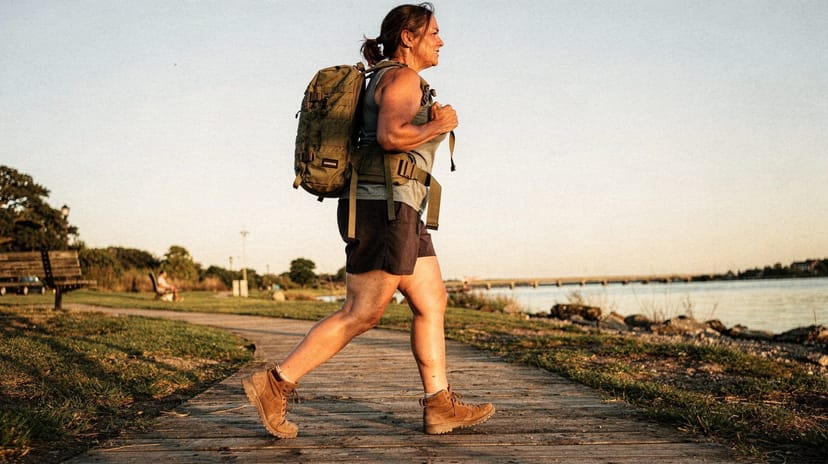
4. Strengthens the Posterior Chain (Back, Glutes, Hamstrings)
The modern human is optimized for forward movement: driving, typing, scrolling. We're collectively weak in the posterior chain - the muscles on the back side of your body.
Rucking forces your posterior chain to work. Your erector spinae (lower back muscles) contract to stabilize the spine against forward load. Your glutes and hamstrings engage to drive forward against gravity and weight. Your upper back and shoulders stabilize the rucksack.
Unlike isolated exercises (which are valuable), rucking trains these muscles in a functional, integrated way. You're not doing a lat pulldown; you're using your back the way it evolved to be used.
Load-carriage studies consistently find that trunk and hip muscles work harder under a pack than during unloaded walking, and the demand rises with load. It is still walking, so the recovery cost is far lower than a hard run or a heavy lifting session.
The practical takeaway: A stronger posterior chain makes everyday lifting and long days on your feet easier. If you already have back pain, start light and short: a pack can help or aggravate it depending on load, fit and posture, and persistent pain deserves a clinician's look.
5. Improves Posture and Spinal Stability
Here's a counterintuitive fact: most people assume rucking will make them slouch forward. The opposite is true.
Proper rucking posture requires an engaged core and upright torso. A well-fitted rucksack sits high on your back and forces you to stay tall. If you slouch, the load migrates to your knees and ankles - and the discomfort forces you to correct.
After a few weeks of regular rucking, many people notice they stand taller and tire less on long days. That is a common report rather than a measured trial outcome, and it depends on a pack that fits and a load you can carry upright.
The practical takeaway: If you sit at a desk all day, rucking is one of the best posture interventions. It teaches your body what upright posture should feel like.
Metabolic Benefits
6. Burns More Calories Than Walking, Especially on Hills
Metabolic cost rises predictably with load. A foundational Ergonomics paper, Quesada et al. (2000), measured oxygen consumption across backpack loads during simulated marching and found exactly that. The size of the increase is smaller than a lot of rucking content claims on flat ground, and much larger once the route climbs.
The Pandolf equation, the load-carriage model behind our calculator, puts numbers on it for a 180-lb person at 3.5 mph:
| Route | No pack | 30-lb pack | Difference |
|---|---|---|---|
| Flat pavement | about 365 cal/hr | about 410 cal/hr | about 13% more |
| 5% grade | about 555 cal/hr | about 635 cal/hr | about 14% more than the same climb unloaded, roughly 75% more than the flat walk |
On a flat road the pack adds something like 15 to 20 calories an hour for every 10 lb. Grade and terrain do the heavy lifting: a hilly route or a rough trail adds more than an extra plate does. Pandolf also tends to under-predict the cost of heavier loads (Drain et al., 2017, Journal of Science and Medicine in Sport), so read these figures as conservative.
Use the rucking calorie calculator to estimate your own burn by body weight, pack weight, pace, terrain and grade.
The real advantage is that this happens at a pace you can hold for an hour while talking. Running burns roughly twice as much per hour, but most beginners can ruck longer, more often, and with less recovery.
Per hour, running burns more. Per week, rucking often closes the gap because you can do more of it: longer sessions, more days, less soreness. Add hills if you want the burn to rise without adding weight.
The practical takeaway: For weight loss, pick a route with hills before you pick a heavier plate. Frequency and route matter more than a few extra pounds.
For a deeper dive, see Rucking vs Running for Weight Loss.
7. Improves Metabolic Health and Insulin Sensitivity
Walking after meals is scientifically one of the most powerful ways to stabilize blood sugar. Adding load amplifies this effect.
Studies of post-meal walking find that even short, light walks blunt the rise in blood sugar after eating. Nobody has yet run the same trial with a loaded pack, so the case for rucking here is an extension: it is walking with more muscle working, and working muscle takes up glucose.
The mechanism is simple: muscle is a glucose sink. When you strengthen and use your muscles, they become better at pulling glucose from your bloodstream. The 2024 Helge et al. PET/CT imaging study (PMC11570666) showed this directly - mechanical loading during walking measurably increased glucose uptake in the muscles of the lower extremities, on top of the bone and bone-marrow effects mentioned earlier. Rucking does this while improving bone health and cardiovascular fitness simultaneously - the same act of walking with weight triggers all three adaptations in parallel.
The practical takeaway: If you're managing blood sugar, prediabetic, or have a family history of type 2 diabetes, rucking after meals is one of the highest-ROI habit changes you can make.

8. Supports Sustainable Weight Loss Without Metabolic Adaptation
One of the frustrations with weight loss is metabolic adaptation: after a few weeks of reduced calories, your body adapts and weight loss plateaus.
Rucking doesn't switch that adaptation off. What it does is add a steady, repeatable energy cost and a strength stimulus that helps you keep muscle while you lose fat, which is the part of weight loss that dieting alone does worst. The 2026 weighted-vest meta-analysis above found about 2.7 kg more fat loss with vest-plus-exercise than with usual activity.
The practical takeaway: Pair rucking with modest calorie reduction, not aggressive restriction. The combination is more sustainable and more likely to stick long-term.
Want to see exactly how load and pace affect your calorie burn? Run the numbers:
Mental Health and Cognitive Benefits
9. May Support Mood and Reduce Anxiety
The direct evidence is about outdoor physical activity, not rucking specifically. A 2021 systematic review of 50 nature-based interventions found improvements in depressive mood, anxiety, positive affect, and negative affect. Sixteen studies were randomized trials; risk of bias was higher in much of the remaining evidence.
Rucking can be one way to perform that activity when walking with a load is comfortable. No trial has shown that adding weight produces a larger mental-health effect than an otherwise similar walk, so the load should serve the training goal rather than be treated as therapy.
Choose the setting you will return to. Natural environments may add benefits for some people, but consistency, safety, and access matter more than forcing every session onto a trail.
The practical takeaway: A regular outdoor ruck can be one form of physical activity alongside professional care. The evidence here comes from broader exercise, walking, and nature-exposure research rather than trials showing that rucking treats anxiety or depression.
10. May Improve Sleep Quality
Exercise can improve sleep, but the size of the effect varies. A 2026 meta-analysis of 200 randomized trials found better subjective sleep quality and a small improvement in objective sleep efficiency; the authors rated the overall certainty very low. A separate systematic review found that brighter morning light was generally associated with better self-reported sleep and earlier sleep timing.
That supports a reasonable inference: a consistent morning ruck combines exercise with outdoor light exposure. It does not prove that rucking specifically improves deep sleep or REM sleep, because direct rucking sleep trials have not been conducted.
The practical takeaway: If morning training fits your schedule, track how consistently you sleep and feel over several weeks. A watch such as the Instinct 3 Solar can show personal trends, but consumer wearables do not measure sleep architecture like a clinical sleep study. Persistent insomnia belongs in a conversation with a clinician, not a gear decision.
11. Builds Mental Toughness and Sense of Accomplishment
This benefit is plausible and commonly reported, but it is harder to measure than heart rate or energy expenditure. Completing a planned session under a manageable load can provide a concrete sense of progress and practice at persistence.
Direct trials have not shown that rucking builds resilience or transfers confidence to work and relationships. Treat that as a personal outcome to observe, not a guaranteed psychological adaptation.
The practical takeaway: Use a difficult-but-repeatable session as practice at keeping a commitment. The value is in finishing safely and returning next week, not proving how much discomfort you can tolerate.
Practical and Lifestyle Benefits
12. Injury Risk Can Be Managed With Conservative Progression
This might be the most underrated benefit of all.
Rucking replaces running's repeated flight-and-landing cycle with walking, but the added load still creates risk. Feet, knees, shins, back, and shoulders can all be irritated by too much weight, distance, pace, or frequency.
Knapik et al. (2014) - injuries and injury prevention during foot marching reviewed military foot-march evidence and identified heavier loads, longer distances, lower fitness, and prior injury among important risk factors. Military marching populations and loads are not identical to recreational rucking, but the progression lesson is relevant.
The practical advantage is control: you can shorten the route, slow down, remove weight, or reduce weekly sessions. That makes rucking scalable, not injury-proof.
No study establishes one universal safe load or proves that rucking has a lower injury rate than every other form of training. Use the load calculator as a starting ceiling, increase one variable at a time, and respond early to pain or gait changes.
The practical takeaway: Rucking can support long-term consistency when the load stays appropriate to your current capacity. Age alone does not set the load; symptoms, balance, training history, and recovery matter.
Who Benefits Most From Rucking?
Not everyone has the same starting point. Here's who sees the biggest improvements:
Desk workers: Rucking adds regular walking and load carriage to an otherwise sedentary week. It does not by itself correct every posture or strength issue.
People over 40: Loaded exercise can contribute to a broader bone- and muscle-health plan. The strongest cited trials here involve weighted vests and resistance exercise, not recreational rucking alone.
People managing weight: Added load raises the energy cost of walking. The useful plan is the one you can repeat alongside nutrition and recovery. See Can Rucking Be Your Only Exercise?
Runners modifying impact: Walking with a light load can be one option, but an existing injury may still be aggravated and deserves individual guidance.
People supporting mood or sleep: An outdoor ruck can be an accessible form of physical activity. It complements, rather than replaces, clinical care when symptoms persist.
Older adults and people rebuilding capacity: The load is scalable, but balance, bone health, symptoms, and medical history change the starting point. See Rucking for Seniors and Rucking Prehab Routine.
What the research supports
The clearest direct evidence supports higher energy cost and cardiorespiratory demand during loaded walking. Evidence on bone, mood, sleep, and long-term outcomes comes partly from adjacent research on weighted vests, resistance exercise, walking, and outdoor activity. Those findings are useful, but they are not all rucking trials.
Rucking is not universally best. It is a practical option when walking is comfortable, the load can be controlled, and the routine is easier to sustain than another form of training.
Next steps:
- Start with Your First 30 Days of Rucking
- Learn How Heavy Should Your Ruck Be
- Explore Zone-2 Rucking for Endurance
Frequently asked questions
The best-supported direct effects are greater energy expenditure and cardiorespiratory demand than unloaded walking at the same pace, plus more work for the trunk and lower body. Bone, mood, and sleep findings are promising but rely partly on related weighted-exercise and outdoor-activity research rather than direct long-term rucking trials.
For men over 40, rucking is useful because it builds Zone 2 cardio, supports muscle retention, helps fat loss, loads the skeleton for bone health, and does it with less joint impact than running. The best starting protocol is 15-20 lbs, 30 minutes, 3 times per week, then gradually build toward 45-60 minute rucks.
For many people, yes, but not because it burns more per hour. Running at 6 mph burns roughly twice what a flat 30-lb ruck does. Rucking wins when it is the one you keep doing: lower impact, easier recovery, and sessions you can repeat four or five days a week. Add hills and the per-hour gap narrows a lot.
Cardiovascular and mental-health benefits show up in 2-3 weeks of consistent rucking. Visible body composition changes typically appear at 6-8 weeks. Bone density gains take 12-16 weeks to register on a DEXA scan. Strength gains in the posterior chain are noticeable in about 4 weeks of regular loaded carries.
Yes, with caveats. Mechanical loading (putting weight on your bones during weight-bearing movement) is the primary stimulus for maintaining bone density. Research on loaded marching and weighted-vest training shows significant improvements at the hip and spine - the sites most vulnerable to fracture-causing osteoporosis. The 2025 Wake Forest INVEST trial showed that simply wearing a weighted vest during weight loss did not preserve hip BMD on its own. The 2026 secondary analysis (Fanning et al.) added the key nuance: vest wearers who spent more time upright and moving preserved more bone, while sedentary vest wearers did not. Loaded walking - which is what rucking is - is the version of weighted-vest training that the most recent data supports.
Properly programmed rucking is actually protective of knee health for most people. The strengthening effect on the quadriceps, glutes, and posterior chain stabilizes the knee. Problems happen when load or volume jumps too quickly (more than 10% per week), when shoes don't have enough cushion for pavement rucking, or when existing form issues compound under load. Start light, progress slowly, and most knee complaints resolve within a few weeks.
10 lbs for the first week, regardless of fitness level. The conservative starting weight is about adapting your tendons and connective tissue to load, not testing your strength. After two weeks pain-free, progress to 12-15 lbs. After a month, 20 lbs is typical for most beginners. See our How Heavy Should Your Ruck Be? guide for personalized recommendations.
Both, and the community is the underrated half. The Ruck Authority Club Finder lists hundreds of active rucking clubs across 35+ countries, most meeting weekly. People who join a club rather than rucking alone are dramatically more likely to still be rucking a year later. The community is the activity for a lot of long-term ruckers.