The Short Answer
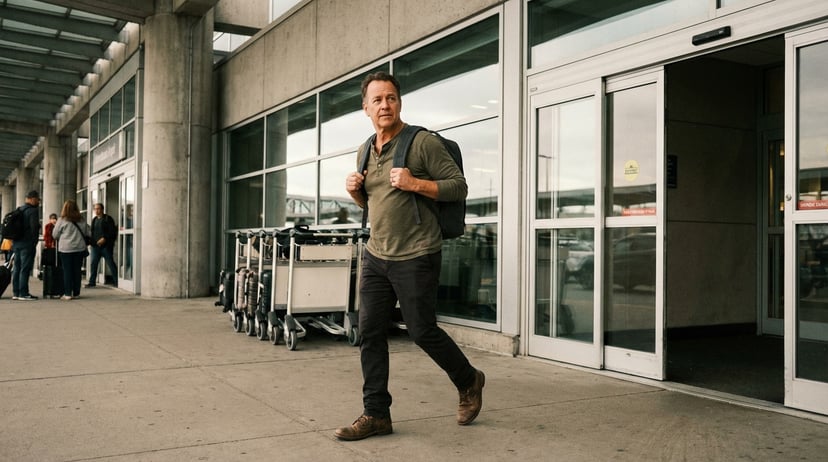
Travel rucking turns a walk around a new place into a training session. Use the backpack you already packed, then add a ruck plate, water, or another load that you can secure. A 2 to 4-mile city route lets you explore and train without adding another piece of luggage.
The reality: Most travelers either skip training or grind through hotel room workouts. Rucking gives you a third option: explore the destination while training.
Why Rucking Is Perfect for Travel
You Already Have the Backpack
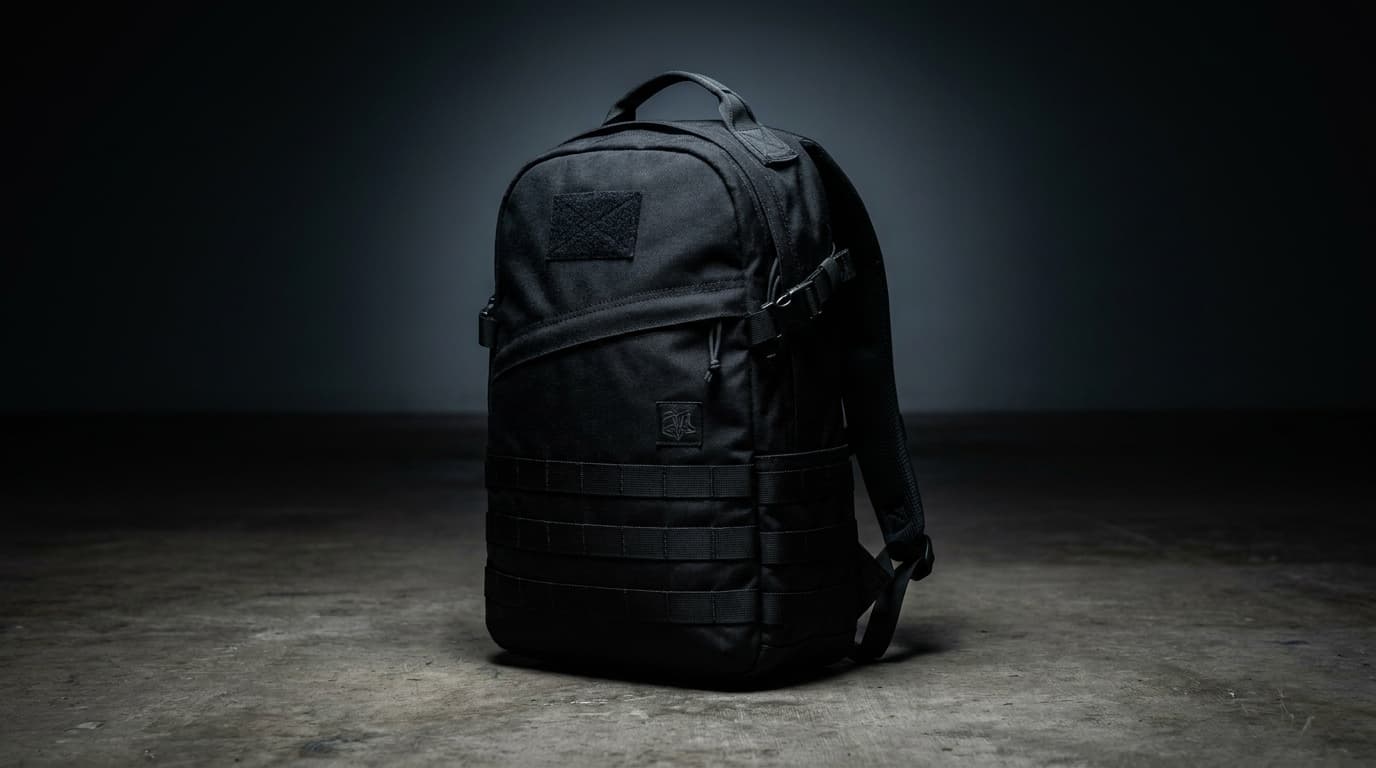
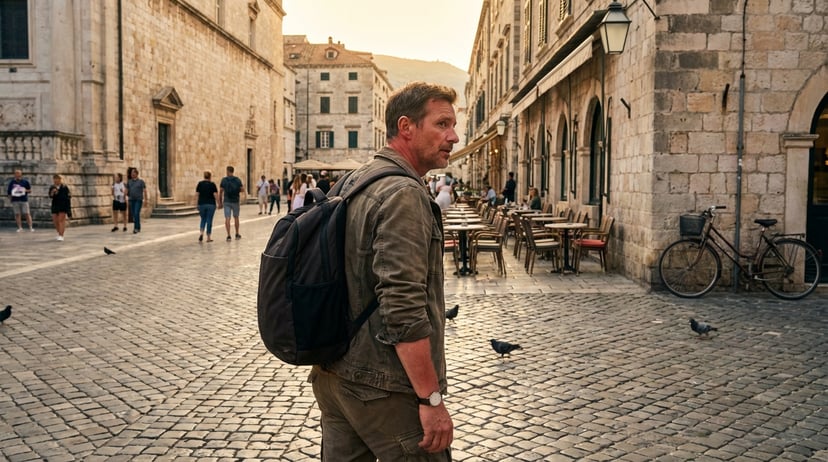
Every traveler carries a backpack or carry-on. That is your ruck. Loading it with weight you were already packing (shoes, books, water) turns your sightseeing into a training session. No specialized luggage needed. No gym membership hunt. No "I'll work out when I get back" excuses. If you want one pack that doubles as your daily carry and your training ruck, a compact, plate-friendly option like the RUSH 12 2.0 slides into an overhead bin and still carries weight properly.
You See the City Like a Local
Running means staying near the hotel. Rucking with a map and curiosity means hitting neighborhoods most tourists miss. You move slow enough to actually notice architecture, street food, local markets. You move fast enough to make it a real workout. Three hours of city rucking gives you cardio, exploration, and cultural immersion in one.
If you're carrying a camera to capture the trip, our sister site Aperture Authority's travel photography guide covers shooting a new city on foot - and its Rules-by-Location summaries tell you where you're actually allowed to shoot (and where a permit or drone ban applies) before you set up.
Lower Injury Risk Away From Your Normal Routine
Travel workouts often fail because people push hard in unfamiliar environments - new elevation, different footing, jet lag, dehydration. Rucking's built-in pacing (3 to 4 mph) keeps intensity moderate and injury risk low. Your joints stay safe even on unfamiliar terrain.

How to Pack Your Ruck Plate (TSA Rules)
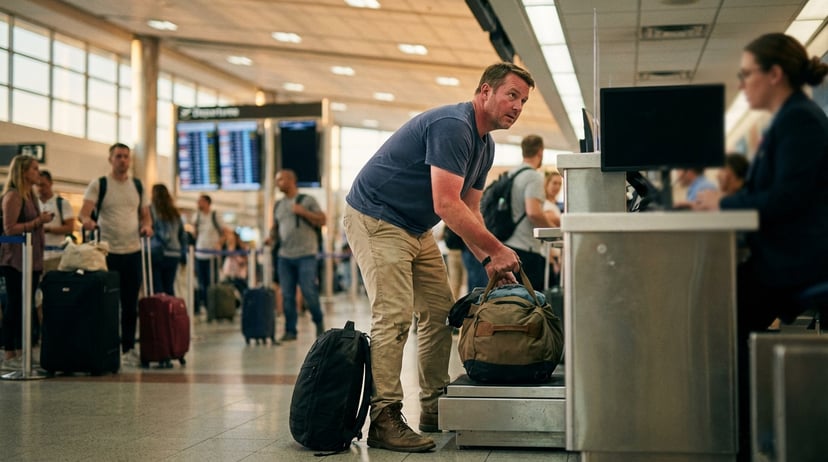
Steel ruck plates are legal in checked baggage - TSA classifies them as sporting equipment. No special declaration needed. Just throw it in your checked bag and go.
If you must travel carry-on: Steel plates do not pass security. Instead:
- Water bladder option: Pack an empty hydration bladder, fill it at your destination (free water + weight). Dump it before flying home.
- Sandbag option: Bring a tough drawstring bag filled with sand, gravel, or soil once you land. Costs nothing, weighs 20-40 lbs.
- Dumbbell weights (if your hotel gym has them): Skip the pack-weight and ruck bodyweight instead for 2 to 3 miles.
Check your airline's specific baggage policy before packing. Most allow sporting equipment, but the item size and weight limits vary. If your ruck plate is your carry-on and you get flagged, removing it and checking it at the gate takes two minutes.
City Rucking Routes and Pacing
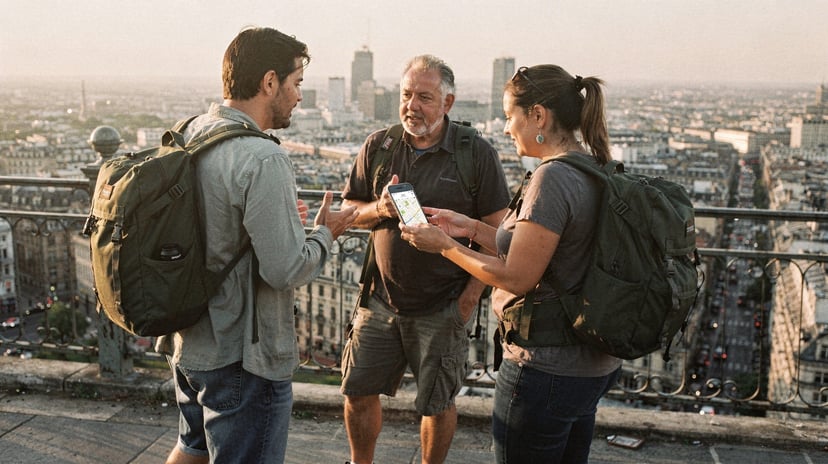
Finding Safe Routes
Use these tools to scout your destination:
- Google Maps: Search "hiking trails" or "walking routes" around your hotel. Filter by distance (2 to 4 miles is perfect for travel).
- Alltrails: Shows running and walking trails globally. User reviews and elevation profiles included.
- Local running club forums (Strava, Nike Run Club): City-specific route recommendations from people who live there.
- Ask hotel staff: They know safe neighborhoods, pedestrian streets, and quiet areas that feel good to ruck.
The Ideal Travel Ruck
- Distance: 2 to 4 miles (45-90 minutes). Long enough for a real workout, short enough to do early morning before activities.
- Pace: 3 to 3.5 mph. Brisk walk, no running. Lets you actually look around and stay present.
- Weight: 20 to 35 lbs depending on your fitness. Travel means lighter weight is fine - you are exploring, not pushing peak performance.
- Terrain: Mix of flat city streets and any hills available. Cobblestones and uneven sidewalks count as a core workout.
A 160 to 180-lb person rucking at 3.5 mph with 25 lbs on flat ground burns roughly 360-400 calories per hour (Pandolf equation). A 2-mile morning ruck before sightseeing burns about 200-230 calories, and more if the route climbs.
Hotel Alternatives When Weather Fails
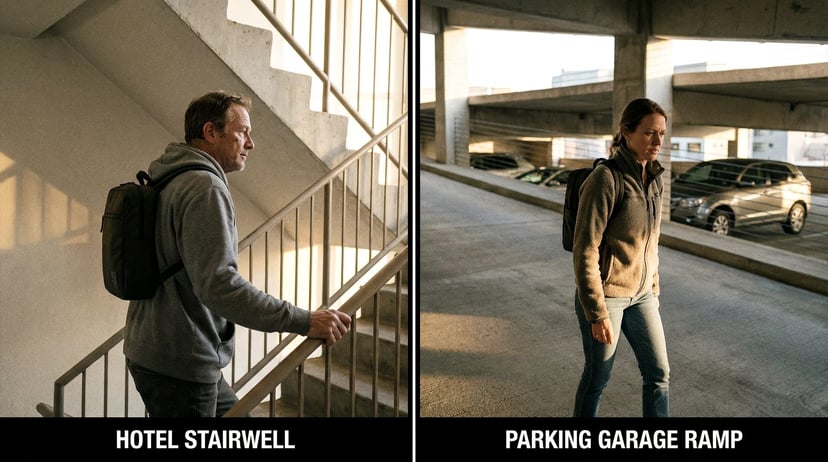
Not every travel day is ruck weather. Rain, extreme heat, ice - you need backup plans.
Stairwell Workouts with Your Pack
Hotel stairwells turn into a brutal training tool. Load your backpack with the same weight and:
- Up and down repeats: 10 to 15-minute blocks, walking up (30 seconds), down (60 seconds). Rest 90 seconds between sets.
- Single climb: Find a tall stairwell (six flights minimum). Walk up slow and controlled with full weight, walk down unloaded. Repeat 5 to 8 times.
This is not fun. It is extremely effective. A 15-minute stairwell session feels like 30 minutes of outdoor rucking.
Parking Garage Circuits
If your hotel or nearby parking structure is accessible, the sloped ramps are perfect:
- Ramp repeats: Walk up ramps, down ramps, rest between. Six to eight repeats burns 200+ calories.
- Full circuit: Walk every level of a large parking structure for 20 to 30 minutes. Mix speeds - walk one level fast, one level slow.
Parking garages are often cooler than outside, usually safe, and traffic-free for early morning sessions.
If your hotel has a gym with a treadmill, incline rucking at 3.5 mph and 8-12 percent grade delivers cardio and lower-body work in one. 30 minutes at 10 percent grade mimics outdoor hill rucking. A Garmin Instinct 3 Solar watch handles any climate and keeps you accountable while traveling.
Packing Your Ruck Gear Efficiently
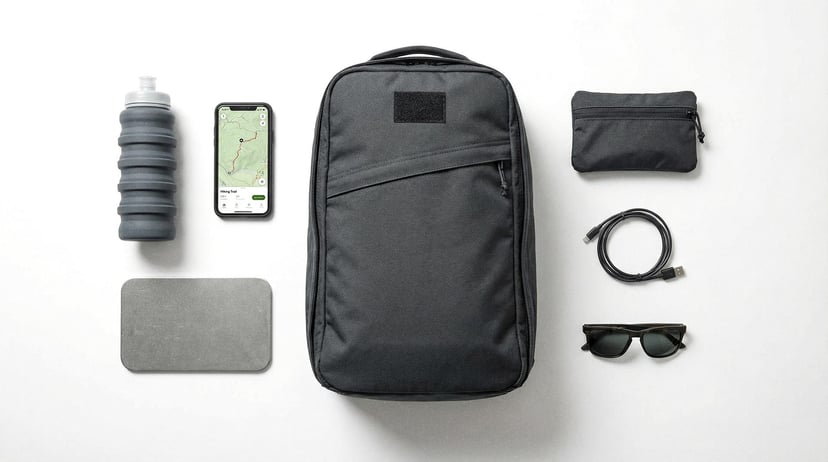
Four items make travel rucking work without ruining your suitcase weight allowance - a plate that lives in checked baggage, hydration that packs flat empty and fills wherever you land, electrolytes for new-climate sweat rates, and a watch that handles jet-lagged route navigation.
| Role | Pick | Why it earns a packing slot |
|---|---|---|
| Weight | GORUCK Ruck Plate | 20-30 lb steel, fits any plate-pocket pack. Goes in checked luggage every time. |
| Hydration | Nalgene 32oz Wide-Mouth | Packs flat-ish when empty, BPA-free, no leak even in compressed luggage. |
| Electrolytes | LMNT Variety Pack | Packets fit in any pocket. Counters new-climate sweat rates and dehydrated cabin air. |
| Watch | Garmin Instinct Solar | Route tracking, ABC sensors, weeks of battery so you don't pack another charger. |
What Goes in Your Ruck
- Ruck plate or weight: Steel plate (checked) or water bladder (carry-on)
- Minimal water: Travel with a collapsible bottle - something like the Stow Collapsible 1L Bottle flattens to nothing in your bag and fills once you land to save luggage space.
- Phone and map: Your route reference and emergency contact.
- Light snack: Granola bar or fruit for energy. Eat something small before starting.
- Sun protection: Sunscreen, hat, or sunglasses depending on destination.
Everything else stays in your main luggage.
Pack Weight by Travel Day
- Days 1-2 (jet lag, early arrival): 15-20 lbs. Short 1 to 2-mile city ruck. Focus on exploring and recovering. Bring LMNT Electrolyte Variety Pack to rehydrate faster in a new climate and time zone.
- Days 3-5 (acclimated): 25-35 lbs. Full 2 to 4-mile rucks. This is your peak training window before travel fatigue kicks in. Carry a Nalgene Wide Mouth 32oz bottle filled with local water - refillable and weighs exactly the same whether empty or full.
- Days 6-7 (travel day coming): 15-20 lbs. Recovery distance. Light and easy, no heavy training 24 hours before flying.
International Travel Considerations
Before You Leave
- Check destination terrain: Hilly cities (San Francisco, Barcelona) might call for lighter loads. Flat cities (Amsterdam, Austin) let you load heavier.
- Research safety: Know which neighborhoods to avoid. Hotel staff or local running groups can advise.
- Water access: Understand tap water safety. Some destinations need bottled water. Pack or buy accordingly.
- Elevation changes: Travel to higher elevation? Reduce weight by 30 percent and take extra rest days.
Time Zone and Training Timing
Rucking early morning (6 to 8 AM) helps combat jet lag - sunlight exposure + movement + exploring gets your circadian rhythm back on track faster than sleeping in.
Frequently asked questions
Can I ruck every day while traveling?
Yes, if you keep weight light and distances moderate. Travel already stresses your body - jet lag, new foods, walking sightseeing. Light rucking (15-20 lbs, 1 to 2 miles) every day is sustainable and actually aids recovery through low-intensity movement. Heavier loading (30+ lbs) should be 3 to 4 times per week even while traveling.
Will a ruck plate get flagged by TSA?
No. Steel ruck plates are explicitly legal in checked baggage under TSA sporting equipment rules. Place it on top or bottom of your checked bag so it is easy to spot if they open it (reduces inspection time). Never put it in carry-on - it will be caught at security and removed.
Should I ruck on the same day as flying?
No. Skip heavy rucking 24 hours before flying and the entire travel day. Your legs already carry your body, luggage, and backpack through airports. Add a 35-lb weight and you arrive depleted. Light bodyweight walking around terminals is fine. Save rucking for days 2-5 of your trip when you are settled.
What if my hotel has no good outdoor routes?
Use your hotel stairwell (much harder than you think) or find a parking garage. If neither exists, indoor hotel hallway walks with full pack work for 20 to 30 minutes. Not ideal, but 10 to 15 minutes of stairwell repeats with weight beats skipping training. On vacation, something beats nothing.
Can I ruck if I have never rucked before?
Yes - travel is actually a great time to start. Lighter loads (15-20 lbs), moderate distance (1 to 2 miles), and slower pace (3 mph) with built-in recovery days make travel rucking beginner-friendly. You are not racing. You are exploring while moving. That is rucking.
Your next step
Before your next trip, grab a starter ruck from our budget rucking starter kit guide. You will learn exactly what weight to pack and how to build a travel ruck for around $50. Everything else builds from there. Flying with your ruck? Our sister site Kit Authority's carry-on checker confirms your pack fits your airline's limits, and their travel gear hub covers the rest of the trip kit.
Related reading
- The complete beginner's guide to rucking - everything you need to start rucking, gear to form
- How heavy should your ruck be? - weight recommendations by fitness level and goal
- Budget rucking starter kit - build your first ruck for under $50
- Best rucking shoes by terrain - footwear for city streets, trails, and mixed surfaces
- Rucking benefits - the full list of physical and mental benefits of rucking