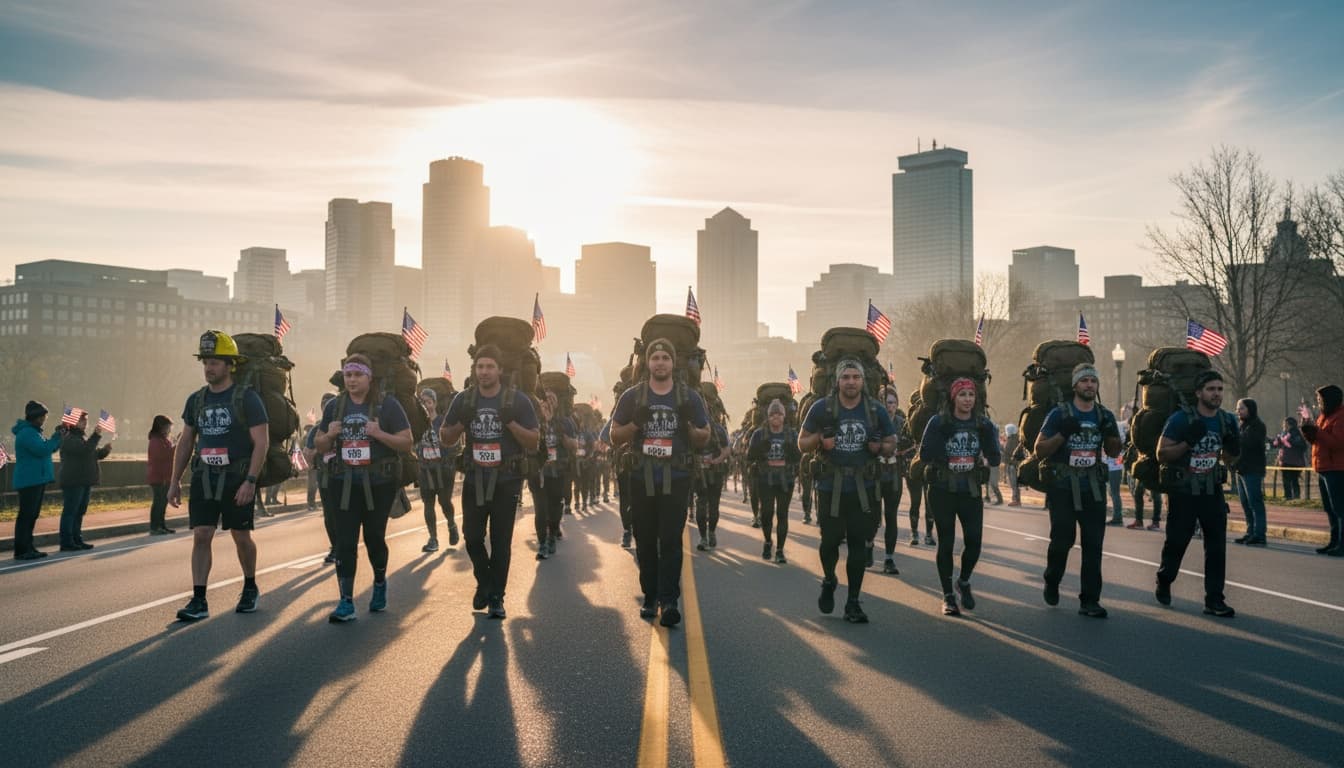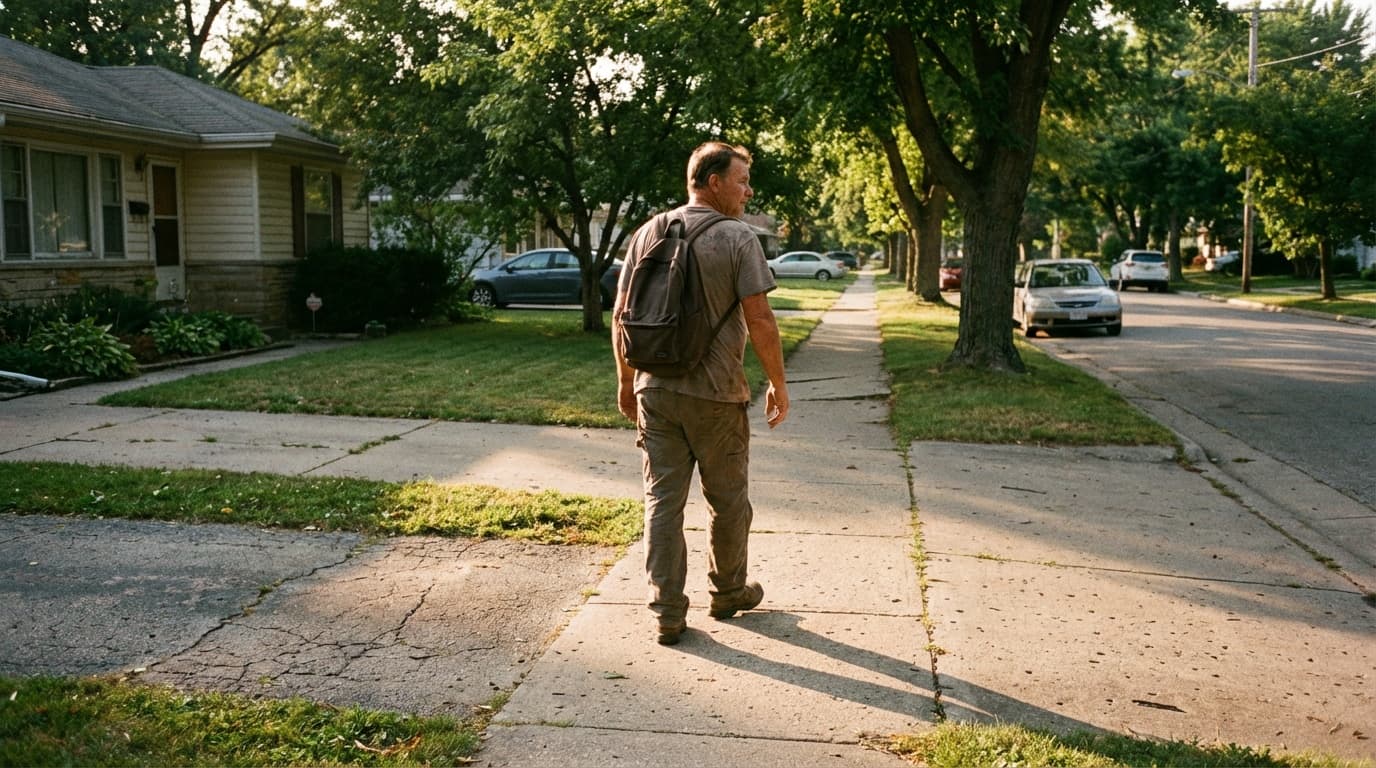
Most people find rucking through fitness. They stay because of everything else.
The person who starts rucking to lose weight ends up doing it to clear their head. The one who picks it up for training ends up bringing their dog, then their partner, then starting a ruck club. That's the pattern. Rucking has a way of expanding beyond the workout and into the rest of life.
This guide covers the lifestyle side - the ways rucking fits into real days, real schedules, and real relationships.
The simplest way to build a rucking lifestyle is to attach the loaded walk to something you already do. Walk the dog with 10-15 lbs. Take one errand on foot. Meet a friend for a conversational ruck instead of coffee. Park farther from the office and carry a light pack for the last mile. None of those choices require a new identity or a perfect training block. They just make walking a little more useful.
That matters because consistency beats heroic workouts. A hard weekend ruck can be satisfying, but a life that includes three easy loaded walks per week will usually do more for fitness, mood, and community. The goal is not to turn every walk into a military event. The goal is to make load-bearing movement normal enough that it survives busy weeks.
The rucking lifestyle framework
Use this framework when deciding where rucking fits:

A collapsible reservoir packs flat in a carry-on, fills at any hotel tap, and turns into 4-6 lbs of TSA-friendly load when you arrive. If your ruck flies as the personal item and you still need a bag for the rest of the trip, our sister site Kit Authority's best carry-on luggage guide covers the case that rides in the overhead bin.
The common thread is restraint. Lifestyle rucking should leave you better for the rest of the day, not wrecked by 9 a.m. Heavy packs, speed work, and long events still have a place, but those are training choices. The everyday version should feel repeatable.
Rucking vs. Other Movement
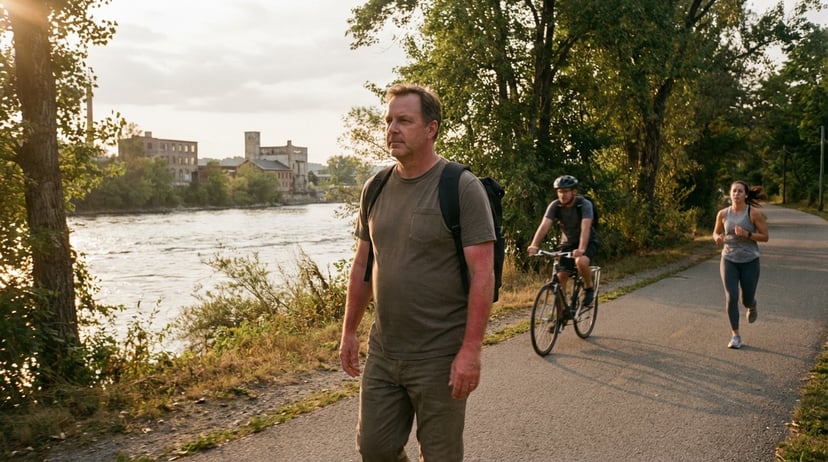
Before diving in, it helps to understand where rucking sits relative to everything else. It's not hiking. It's not just walking. It's not running with a pack. It sits at an interesting intersection that makes it uniquely useful for everyday life.
Walking is the base layer: accessible, low friction, easy to recover from. Rucking adds enough load to make the same walk more muscular and more cardiovascular. Hiking usually depends on destination and terrain. Running depends more on pace tolerance and joint readiness. Rucking sits in the middle, which is why it works for people who want more than a walk but do not want every session to become high-impact cardio.
The crossover appeal is why rucking keeps showing up in unexpected places: yoga studios are adding rucking classes, time-pressed executives are rucking during meetings, and celebrities like Guy Fieri are trading gyms for rucksacks.
Rucking and Mental Health
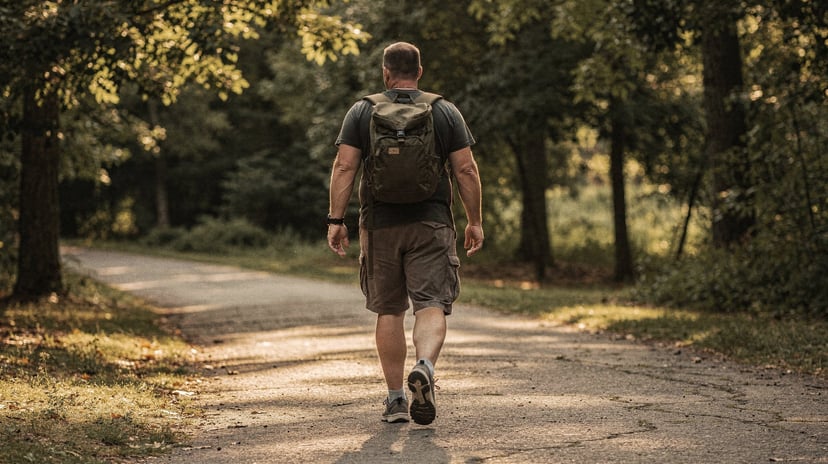
The studies cited here examine nature walking and hiking, not weighted walking or added load. They suggest that moving outdoors may support mood and reduce rumination, but they do not show that carrying weight causes those effects.
A Stanford-led PNAS study, Bratman et al. (2015), nature experience reduces rumination, used functional MRI to compare a 90-minute nature walk with a 90-minute urban walk. The nature group showed less activity in the subgenual prefrontal cortex, a region linked to depressive rumination, and better mood scores. The urban control group showed neither change. A 2021 Pacific Northwest pilot trial, Stelzer et al. (PMC8461737), studied Veterans diagnosed with PTSD and found larger symptom-score improvements in the nature-hiking group than in the urban-hiking control group. Neither study tested rucking.
The mental-health value comes from the stack: rhythmic movement, outdoor light, a manageable physical task, and the grounding sensation of carrying weight. For some people, that turns a noisy day into something simpler: pick a route, carry the pack, keep walking. It is not therapy, and it does not replace professional care, but it can be a practical support habit.
This is also where group rucking matters. A walking pace makes conversation possible. You can talk or not talk. You can show up tired and still participate. That makes rucking a useful bridge for people who want community without the pressure of a performance-first fitness class.
Rucking with Others
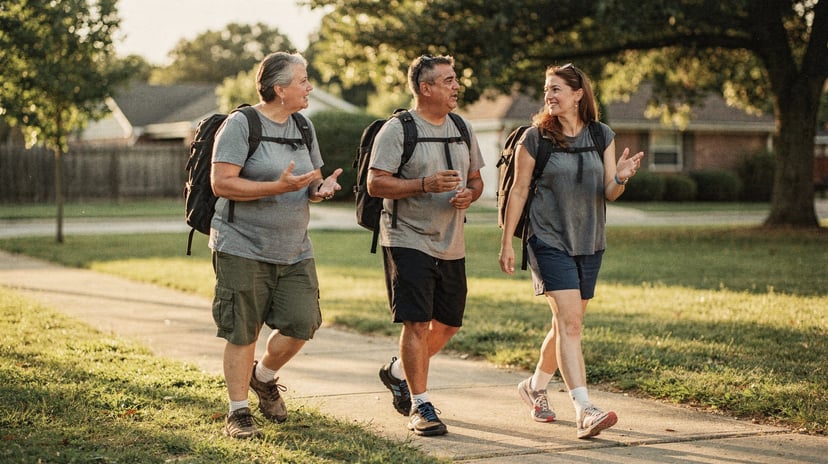
One of the underrated things about rucking: it's easy to do with other people. The pace is conversational. You don't need matching fitness levels. Kids can join. Dogs can join. It scales.
The trick is to set the session by the least-experienced person, not the most enthusiastic one. If someone is new, keep the load light, choose a flat route, and make the invitation about time together rather than a workout. A 30-minute walk with 10 lbs builds more trust than dragging a friend through a two-hour suffer session.
For dogs, the same rule applies: the human carries the load, the dog controls the pace. For families, keep the distance short enough that the outing can end well. For clubs, make the first event welcoming before you make it challenging.
Human carries the load, dog controls the pace. Keep routes flat and avoid hot pavement. Stop if the dog is overheating or lagging.
Set distance by the youngest or least-experienced person. Short, flat, and ending well beats ambitious and miserable. 30 minutes with 10 lbs builds more buy-in than a two-hour suffer session.
Make the first event welcoming before you make it challenging. Pace-matching matters more than matching loads. A club that accepts all fitness levels retains people; a club that filters by performance loses them.
Rucking Built Into Your Day
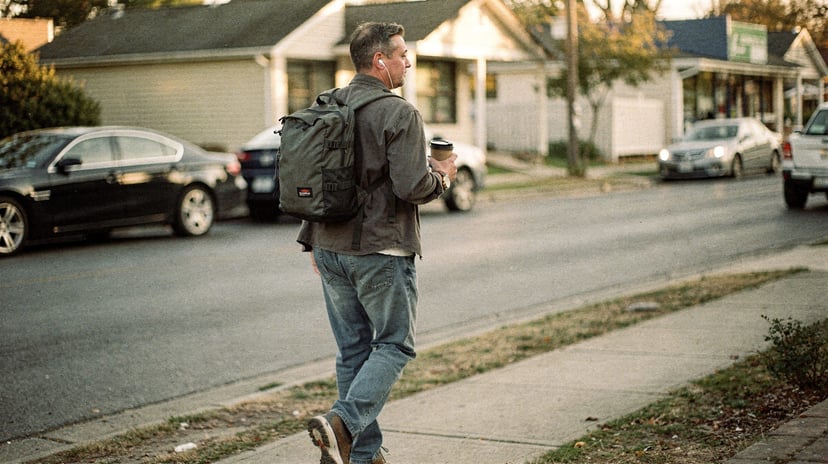
The biggest unlock is treating rucking as transportation, not a separate workout block. Commuting with weight. Rucking on trips. Making the movement happen as part of existing routines rather than carving out extra time.
Start with one fixed slot. If you commute, try one ruck commute per week before adding more. If you work from home, use the first 20 minutes after lunch. If you travel, keep a collapsible water bladder in your bag and fill it at the hotel. The point is to reduce decision-making. When the route, time, and load are already chosen, the habit has fewer ways to fall apart.
Use lighter loads for lifestyle rucks than you would for event prep. Most everyday rucks should be easy enough that you can repeat them tomorrow. If your shoulders ache, your pace collapses, or you dread the next session, the load is probably too high for the role it is supposed to play.
A pack that doesn't look tactical helps the lifestyle angle - you can wear it to the office, on a flight, around town. The GORUCK GR1 disappears in plain sight while still handling 30+ pounds.
Rucking for Long-Term Health
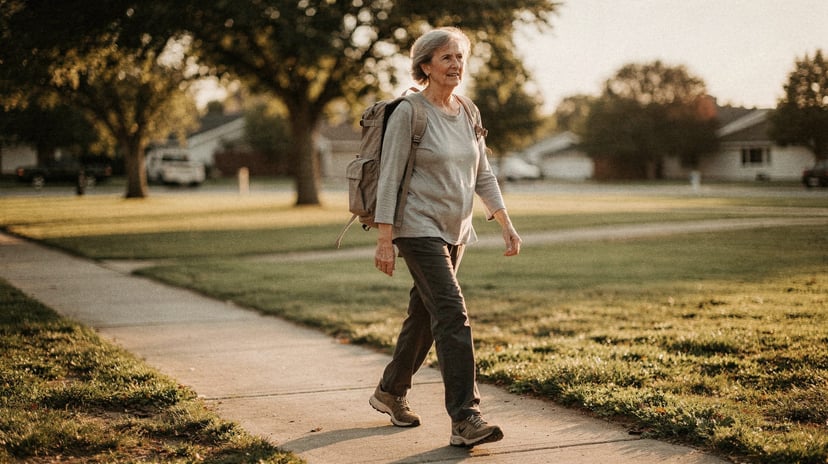
Rucking's impact on bone density gets undersold. For women especially - and anyone thinking about aging well - loaded walking is one of the most accessible and effective weight-bearing activities available.
Long-term rucking is less about chasing maximum pack weight and more about keeping the signal consistent. Bones, tendons, feet, and hips adapt gradually. A sustainable plan gives them repeated, tolerable loading over months and years. That is why the lifestyle version matters: it creates enough frequency for adaptation without requiring every session to be a formal training day. It is also why longevity doctors call rucking one of the most efficient anti-aging exercises.
Think of rucking as a durable baseline. You can still lift, run, cycle, swim, or train for events. Rucking simply gives you a practical default on days when you need movement, sunlight, and a little load without a full production.
Frequently Asked Questions
Start by inviting them on a regular walk with you carrying weight, not presenting it as "rucking." Most people are curious about the pack once they see it, which opens the conversation naturally.
Daily rucking works for many people since it's low-impact, but you'll want to vary your routes, weights, and distances to avoid overuse patterns. The article mentions it fits well into existing routines rather than replacing all other movement.
The research shows benefits from regular weighted walking outdoors, but the article doesn't specify exact frequencies. Most people report mood improvements from 2-3 rucks per week, though individual responses vary significantly.
Rucking combines load-bearing with impact from walking, which targets bone density differently than isolated weight training. The article positions it as "one of the most accessible" options, not necessarily superior to all alternatives.
The article mentions commuting with weight but doesn't cover the practical details like clothing management or shower access. You'll need to plan around your specific route and workplace facilities.
The article references travel rucking as one way to build it into your day, suggesting it's possible to maintain consistency on the road. Pack weight and route finding become the main considerations.