The Short Answer
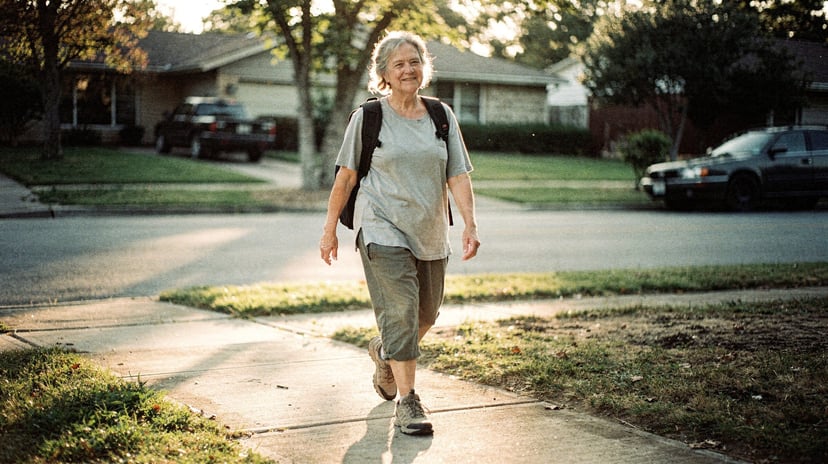
Rucking is one of the most effective, sustainable ways to build and maintain bone density - especially for women over 40 and seniors. Loaded walking triggers the bone adaptation response (Wolff's Law) without the joint stress of running or jumping. Start with 5 to 10 pounds, walk twice per week, and progress gradually. Most people see measurable improvements in bone density within 6 to 12 months. (Recent research confirms that weighted vests only build bone density when you're actually moving - passive loading doesn't cut it. If a vest fits your routine better than a pack, the CAP Barbell Adjustable Weighted Vest is an affordable starter option, and you can pick up the Adjustable Weighted Vest directly if you want to start this week.)
Important: If you have been diagnosed with osteoporosis, osteopenia, or any bone condition, talk to your doctor before starting. This guide is for healthy adults and those with general bone density concerns. A doctor or physical therapist can give you personalized recommendations.
Why Bone Density Matters (More Than You Think)
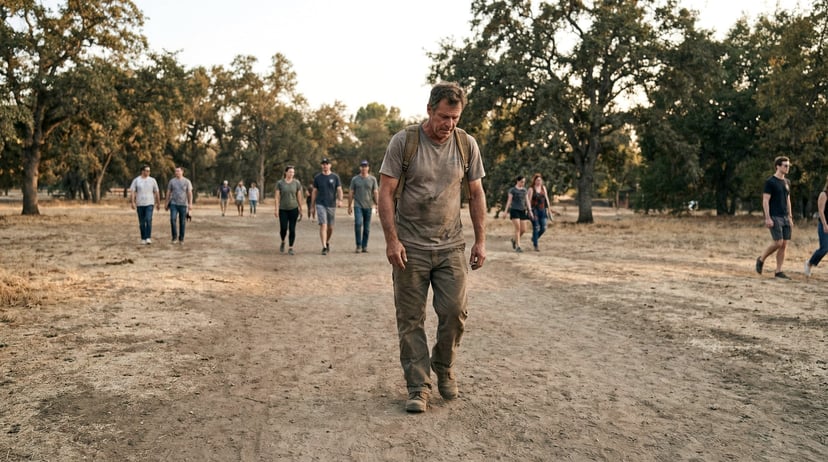
One in three women over 50 will have an osteoporosis-related fracture. One in five men will.
These are not minor breaks. A hip fracture often means months of immobility, loss of independence, and chronic pain. A vertebral fracture can cause permanent height loss and posture changes. Many people never regain full function after a serious osteoporotic fracture.
The frustrating part: bone density loss is largely preventable. Your bones respond to loading and stress - that is the foundation of everything in this guide.
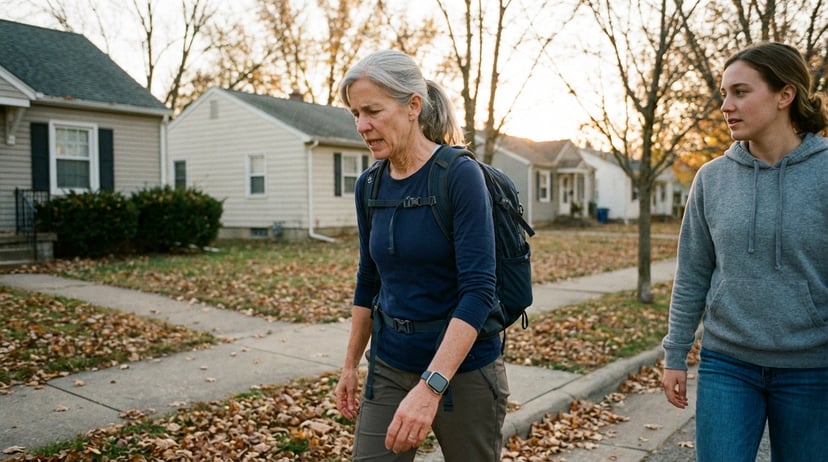
How Weight-Bearing Exercise Builds Bone
Your bones are living tissue. They constantly break down and rebuild. When you stress bone through weight-bearing activity, your body responds by building stronger, denser bone.
This process has a name: Wolff's Law. The basic idea is simple: bone adapts to the demands placed on it. If you put mechanical stress on bone, bone becomes stronger. If you are sedentary, bone becomes weaker.
Wolff's Law, described in 1892, states that bone density is proportional to the mechanical stress placed on that bone. Modern research confirms this - weight-bearing exercise consistently increases bone mineral density (BMD) across all age groups. The effect is measurable and significant, particularly when loading is progressive and consistent.
The mechanism works like this:
- You walk with a load (the ruck).
- Your skeleton bears weight and movement creates mechanical stress on bone.
- This stress signals osteoblasts (bone-building cells) to create new bone matrix.
- Over weeks and months, new mineralized bone accumulates, increasing density.
Walking without load (normal walking) helps, but does not trigger as strong an adaptation. Running triggers stronger adaptation but with higher joint impact. Rucking splits the difference - it loads bone significantly while keeping impact moderate.
Why Rucking Beats Other Weight-Bearing Options for Most People
Effective without excessive impact
Rucking is loaded walking, not jumping or sprinting. Your bones get the stimulus they need without the repetitive pounding of running or the joint stress of CrossFit-style box jumps. This matters especially if you have joint concerns or are 50 years or older.
A 2011 Cochrane systematic review (Howe et al.) analyzed exercise interventions for osteoporosis prevention and treatment. The review found that both aerobic and resistance weight-bearing exercises increase bone mineral density. Walking with external load (loaded walking) was particularly effective and notably sustainable - adherence rates were higher than for high-impact or resistance training alone.
You can start now, at any age or fitness level
Rucking does not require years of training to begin benefiting from it. You do not need to be able to run five miles or deadlift. You put on a pack with five to ten pounds and walk. That is it. Your bones start adapting immediately.
For women in perimenopause or early menopause, when estrogen drops and bone loss accelerates, starting rucking now can slow or halt that decline.
It is practical and habit-forming
You can ruck anywhere - around your neighborhood, on a hiking trail, in a park. It does not require equipment beyond a backpack. Most people find it easier to sustain than other bone-building exercise because it does not feel like exercise - it feels like a walk.
The Hormonal Context: Perimenopause, Menopause, and Bone Loss
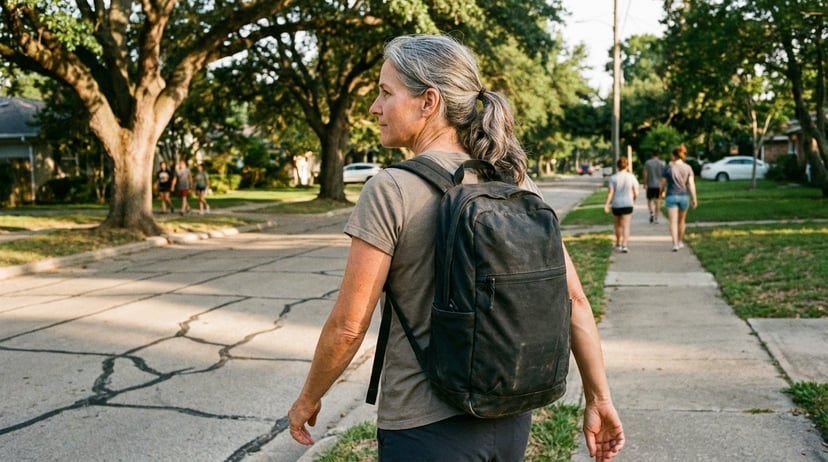
Women lose bone density at an accelerated rate during perimenopause (the 5 to 10 years before menopause) and especially in the first 5 to 8 years after menopause.
Why? Estrogen.
Estrogen plays a major role in bone formation and mineralization. As estrogen levels drop, osteoblasts (bone-building cells) become less active, while osteoclasts (bone-resorbing cells) continue their work. The result is net bone loss - sometimes 1 to 3 percent per year in the first years after menopause.
Weight-bearing exercise counteracts this process. Evidence suggests that women who engage in consistent weight-bearing activity during and after menopause maintain significantly higher bone density than sedentary women.
Rucking is not a substitute for hormone therapy if your doctor recommends it. But it is a concrete, controllable action you can take starting today.
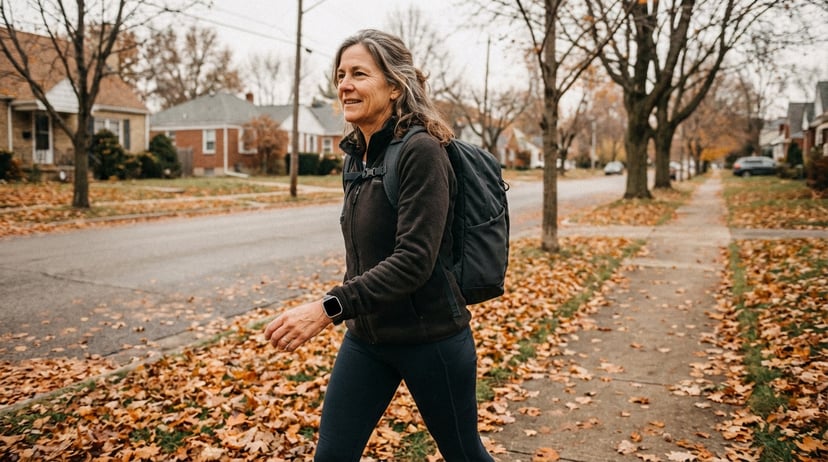
Starting Safely: The Progressive Rucking Plan for Bone Health
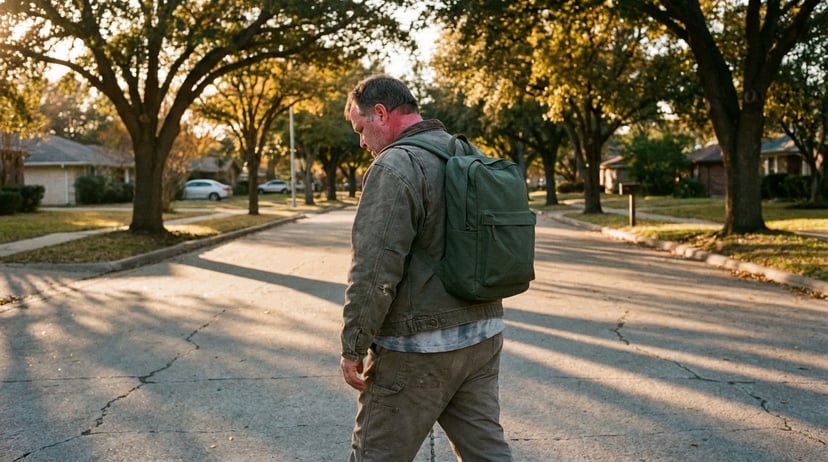
If you have never rucked before, do not start with 40 pounds. That is not being cautious - that is being smart.
Bone adapts gradually. Too much load too soon causes injury, not stronger bone.
Here is a beginner progression for bone health:
Weeks 1 - 2: Assessment
- Walk 20 to 30 minutes with 5 lbs in a pack.
- Do this twice per week, with at least one rest day between sessions.
- How do you feel? Any pain (sharp, shooting, or localized)? If yes, talk to a doctor before continuing. If no, move to phase two.
- If you don't have a pack yet, our budget rucking starter kit covers affordable entry options, and the GORUCK Basic Rucker is the no-fuss pick if you'd rather buy one purpose-built pack and be done.
Weeks 3 - 6: Building baseline
- Increase to 8 to 10 lbs.
- Maintain two sessions per week, 25 to 35 minutes per session.
- Your goal is consistency, not speed or distance.
Weeks 7 - 12: Progressive loading
- Add 2 to 3 lbs every two weeks using GORUCK ruck plates or Titan Fitness plates for precise increments (so 10 lbs becomes 12, then 15, etc.).
- Keep sessions at two per week.
- You can increase duration to 35 to 45 minutes if you want.
After 12 weeks and beyond
- Most people settle into 15 to 25 lbs for maintenance rucking.
- Some continue to progress to 30 lbs or more, depending on fitness and goals.
- Two to three sessions per week maintains and builds bone density.
Key safety rules:
- Never add more than 2 to 3 lbs per week.
- If you experience sharp pain, swelling, or discomfort, stop and rest for a few days, then reassess.
- If pain persists, talk to a physical therapist before continuing.
- Proper posture matters - stand tall, avoid slouching, and let the pack sit on your hips and shoulders, not your lower back.
If you have diagnosed osteoporosis, osteopenia, or a history of fractures, ask your doctor or physical therapist to review this progression before starting. They may recommend slower progression or modifications specific to your situation. That is not a reason to avoid rucking - it is a reason to get professional guidance on how to ruck safely for you.
What the Research Says
Decades of research confirm that weight-bearing exercise increases bone mineral density. Here is what matters for your situation:
Nelson et al. (2007) studied physical activity and bone health in older adults. The research found that older adults who engaged in weight-bearing activity (walking with load, hiking, or resistance exercise) 3 to 5 times per week maintained higher bone density and had lower fracture risk compared to sedentary peers. The effect was substantial - differences in bone density at the hip and spine were measurable after just 6 months.
The newest evidence is a 2026 systematic review and meta-analysis in Osteoporosis International (Wang et al.) that pooled nine randomized trials, 368 middle-aged and older adults. Wearing a weighted vest during exercise raised bone mineral density at the femoral neck and lumbar spine compared with usual activity, and cut body fat by about 2.7 kg. Two caveats the authors state themselves: adding a vest to people who were already exercising did not show an extra bone benefit (that comparison rests on a single trial), and the certainty for the bone outcomes is low to moderate. These trials used vests, not packs. A ruck loads the skeleton the same way, through the hips and spine at walking pace, so the finding is relevant to rucking but has not been tested with a pack.
The underlying mechanism is consistent: mechanical load drives bone formation. The effect is dose-dependent (more loading generally means more benefit, up to a point). It is durable - consistent activity maintains improvements, while inactivity causes regression.
For you: evidence suggests that starting rucking now, at whatever age, will increase your bone density relative to if you do nothing. The sooner you start, the more time bone has to adapt and strengthen.
Common Questions and Concerns
Do I need to run or jump to get bone-building benefits?
No. Rucking alone is sufficient to trigger bone adaptation. High-impact exercise (running, jumping) does create a stronger signal for bone building, but rucking is significantly more sustainable and carries lower injury risk. Consistency beats intensity for long-term bone health.
What if I have arthritis or joint pain already?
Rucking with light load (5 to 10 lbs) is often gentler on joints than running or high-impact exercise. That said, consult your doctor or physical therapist before starting. They can advise on load and intensity specific to your joints.
Can I see changes in bone density on a DEXA scan?
Yes, but on a realistic timeline. Bone density changes are measurable on DEXA scans (the standard bone density test) typically after 6 to 12 months of consistent weight-bearing activity. Some people see measurable improvement in 6 months. Others take 12 to 18 months. Consistency matters more than intensity.
What if menopause has already happened - can I rebuild bone then?
Yes. While bone loss is accelerated in the years right after menopause, weight-bearing exercise remains effective at slowing further loss and sometimes building new bone. Starting sooner is better, but starting later is far better than not starting at all.
Do I need to add resistance training too?
Rucking alone is sufficient to maintain and build bone density. Adding resistance training (weights, bodyweight exercises) amplifies the effect and provides other benefits (muscle strength, balance, functional fitness), but is not required for bone health specifically.
Your next step
Before you start, download our ruck weight guide - it has a calculator to figure out the right starting weight for your body and fitness level. Then read our complete beginner's guide to rucking to dial in pack fit, posture, and pacing. Once you have bone health covered, you might also explore rucking for women and rucking for seniors for age-specific progressions and community. Leaning toward a vest instead of a pack? Our sister site Kit Authority answers how much a weighted vest should weigh and has a sizing calculator to dial in your starting load.
Related reading
- Rucking research 2026: every 2026 study on carrying weight, including the vest meta-analysis above, with evidence grades.
- Complete beginner's guide to rucking - everything you need to start, from gear to form to pacing
- How heavy should your ruck be? - weight calculator and personalized recommendations
- Rucking for women - weight loss, body composition, and women-specific rucking guidance
- Rucking for seniors - how to stay strong and independent with loaded walking
- First 30 days of rucking - week-by-week progression with common mistakes
Frequently Asked Questions
Most people see measurable changes on DEXA scans after 6 to 12 months of consistent rucking twice per week. Some see improvements in 6 months, others need 12 to 18 months, but your bones start adapting immediately even if it's not yet measurable on scans.
Maybe, but you need medical clearance first. This progression plan is for healthy adults or those with general bone density concerns. If you have diagnosed bone conditions, your doctor or physical therapist should review any exercise plan and may recommend slower progression or specific modifications.
Yes. The article's progression starts light because bone adapts gradually, and even modest loading triggers the bone adaptation response through Wolff's Law. Starting too heavy causes injury, not stronger bones. You'll progress to 15 to 25 pounds over months, which provides substantial bone-building stimulus.
Yes. While bone loss accelerates after menopause due to estrogen decline, weight-bearing exercise remains effective at slowing further loss and sometimes building new bone. Starting sooner is better, but research shows older adults who begin consistent weight-bearing activity still see measurable improvements.
Rucking alone is sufficient to maintain and build bone density. Adding resistance training amplifies the effect and provides other benefits like muscle strength and balance, but it's not required specifically for bone health if you're rucking consistently.
Bone density improvements are durable with consistent activity but reversible with inactivity. Research shows that stopping weight-bearing exercise causes regression in bone density gains over time. The article emphasizes that consistency beats intensity for long-term bone health maintenance.
Surface doesn't matter for bone density benefits. The mechanical loading from carrying weight triggers bone adaptation regardless of whether you're on concrete, asphalt, or trails. Choose surfaces based on comfort and joint health rather than bone-building effectiveness.