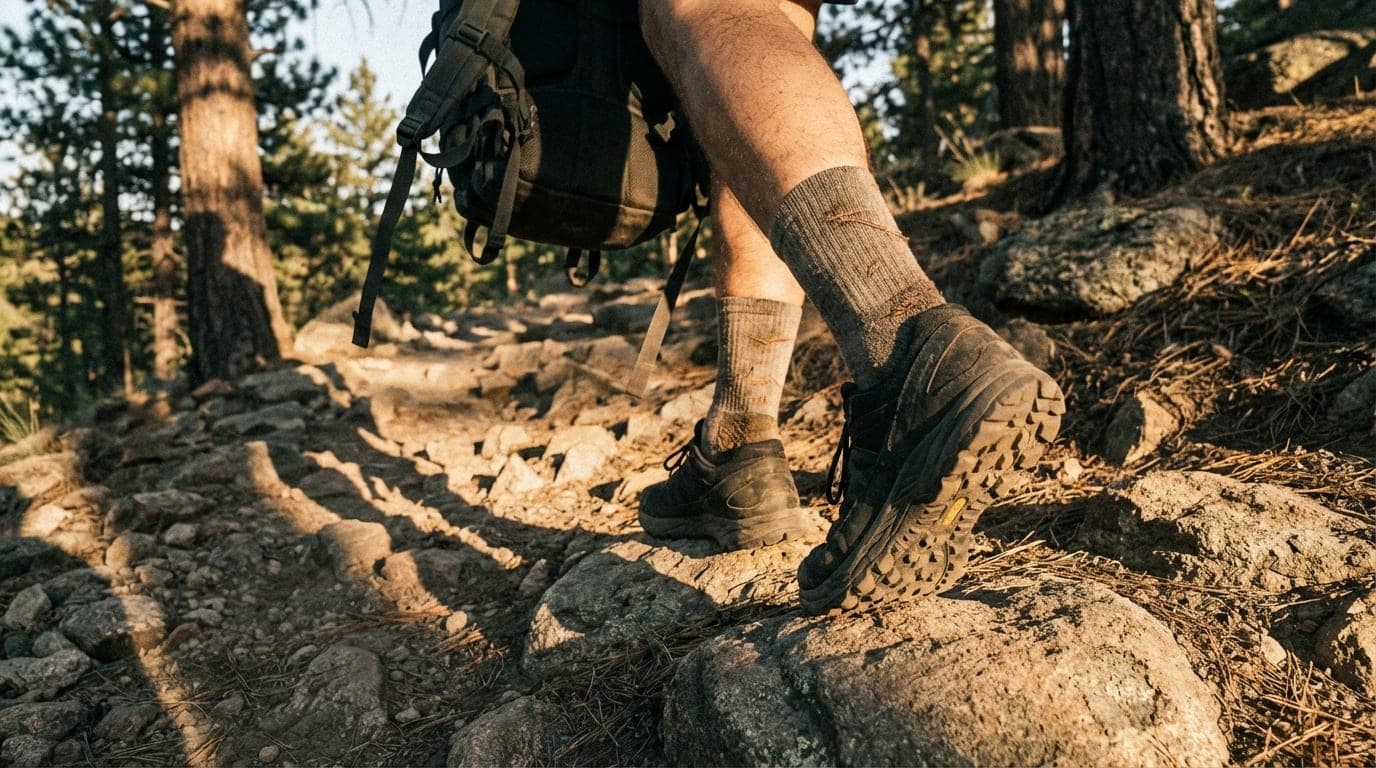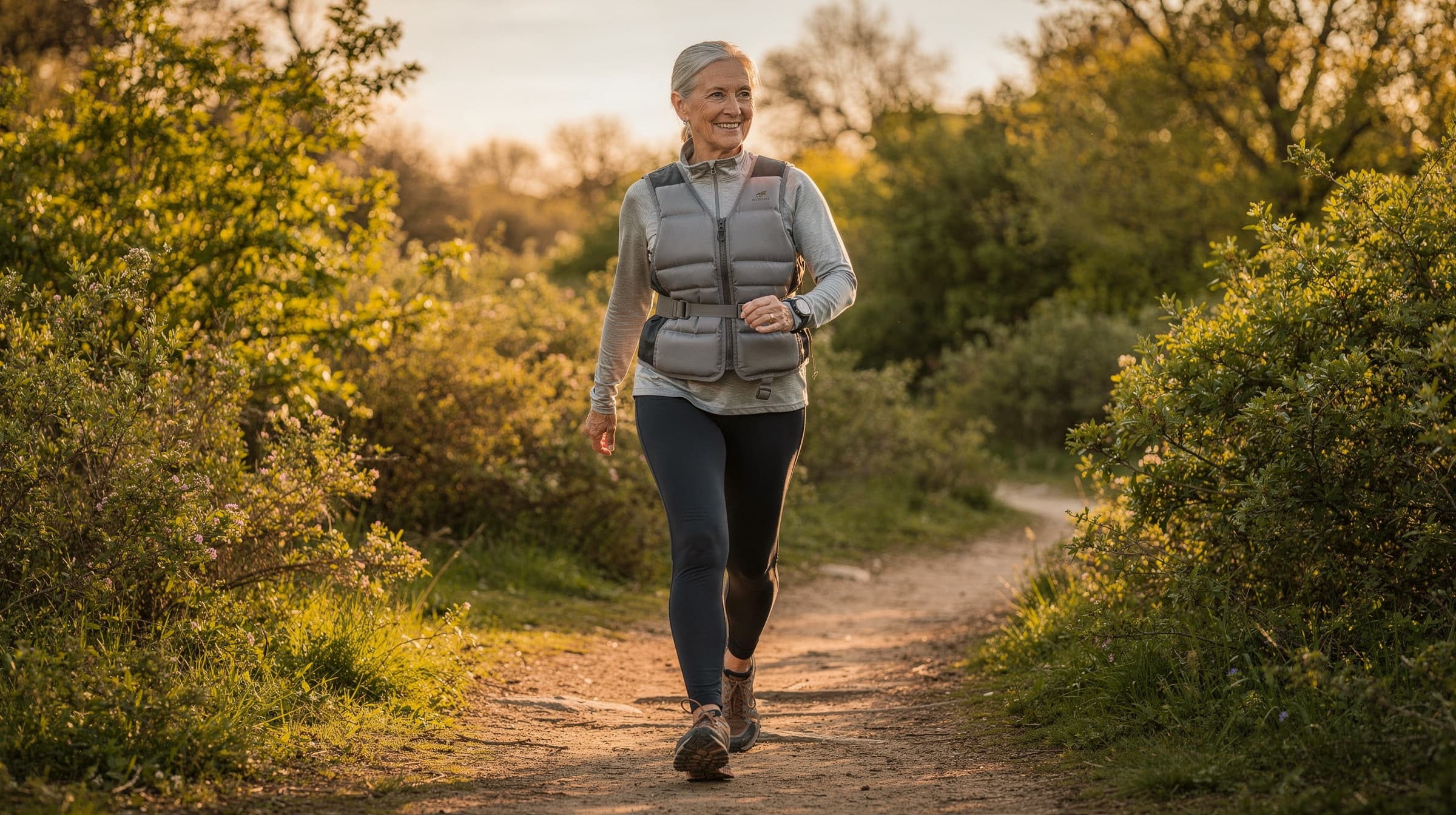
Weighted vests have become common advice for women in midlife. The usual claim is simple: add a vest to a walk to protect bone through menopause.
The studies support something narrower than that promise. Here is what they show, what they cannot establish, and what to consider before using a weighted vest.
The short answer
A weighted vest adds external load, and exercise programs that include one have improved bone density compared with doing nothing. What the evidence has not shown is that the vest itself is the active ingredient. The strongest long-term study paired vests with jumping, not casual walking. A 2026 meta-analysis found no confirmed extra bone benefit from adding a vest for people who already exercise. And a 2025 trial found that wearing a vest during weight loss did not prevent hip bone loss.
Treat a vest as optional equipment, not a bone-health treatment by itself.
Why everyone is talking about weighted vests for bone density
The appeal is easy to understand:
- Bone loss accelerates around menopause. Estrogen protects bone; as it falls in perimenopause and menopause, women can lose bone density quickly, raising the long-term risk of osteoporosis and fractures.
- Bone responds to mechanical loading. The size and direction of the response depend on the exercise, skeletal site, health, medication, and many other factors. Adding a vest does not guarantee bone gain.
- It fits into an ordinary walk. That makes the equipment convenient, though the added load can still affect gait, balance, joints, and the spine.
Weight-bearing and resistance exercise matter for bone health. The open question is what a vest adds beyond the exercise program around it.
What the research actually shows
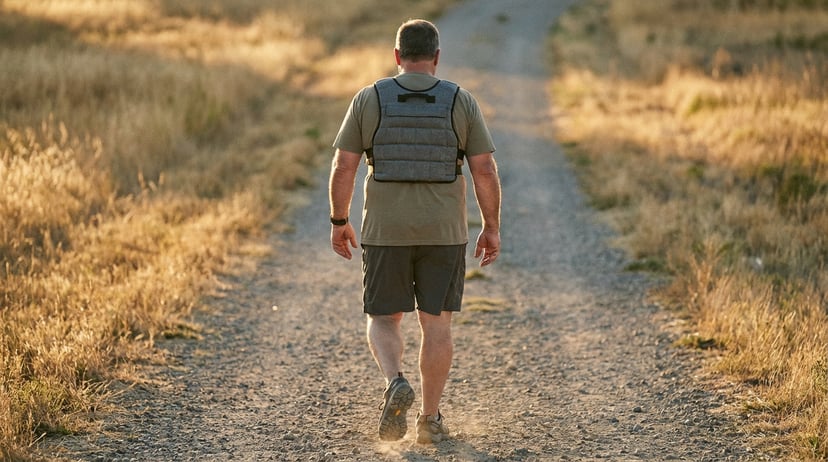
The evidence base for weighted vests specifically is small, and the results depend heavily on what else the participants were doing.
Snow 2000. Snow et al. (2000) followed 18 postmenopausal women over five years. The nine exercisers did weighted vest plus jumping exercise three times a week for 32 weeks of each year and held their hip bone density roughly steady, while the nine controls, who were active but not in the program, lost about 3 to 4 percent at the hip. Because the intervention combined a vest with jumping, the study does not show what a vest or ordinary vest walking would do on its own.
The 2026 meta-analysis. Wang et al. (2026) pooled nine randomized trials with 368 middle-aged and older adults. Vest-plus-exercise programs improved bone density at the femoral neck and lumbar spine compared with usual activity and reduced body fat. Adding a vest for people who were already exercising showed no significant extra bone benefit, although only one trial tested that comparison. The authors rated the bone evidence as low to moderate certainty.
The INVEST trial and its follow-up. More recent work from Wake Forest's NIH-funded research program complicates the easy story.
Wake Forest's INVEST program (Incorporating Nutrition, Vests, Education and Strength Training) is one of the largest NIH-funded studies of weighted vests. It was funded by the National Institute on Aging and led by Professor Kristen Beavers.
Two findings matter. First, the main trial (Beavers et al., published in JAMA Network Open in 2025) randomized 150 older adults with obesity to 12 months of diet alone, diet plus a vest worn about seven hours a day, or diet plus supervised resistance training. All three groups lost similar amounts of weight and similar amounts of hip bone. Neither the vest nor resistance training prevented the loss. Second, a Frontiers in Aging secondary analysis (Fanning et al., 2026) looked at time spent standing and stepping. In the diet-only group, more upright time went with more hip bone loss; vest wearers did not show that pattern, and the difference between groups was statistically significant. The vest group's own trend was not significant, and the authors call the analysis exploratory, so it does not prove that upright vest time protects bone.
The practical reading. There are not many high-quality weighted-vest studies, and the existing work does not support a guarantee. Bone-health plans may include weight-bearing activity, resistance training, nutrition, medication, and fall prevention, depending on the person. A clinician can help identify what applies.
Four common claims, checked
| The claim | What the evidence says |
|---|---|
| "Wearing a weighted vest builds bone density." | Not established for the vest alone. Vest-plus-exercise programs beat usual activity in a 2026 meta-analysis, but the vest has not been shown to add bone benefit on top of exercise, and it did not prevent bone loss during weight loss. |
| "Heavier is better for bones." | Not established. Added load can also change gait, balance, joint stress, and spinal loading. |
| "A vest alone replaces strength training for bone." | No. The strongest long-term result (Snow) included jumping, and the INVEST trial found a vest did not prevent hip bone loss during weight loss. |
| "It will reverse osteoporosis." | Unsupported. Exercise can be part of osteoporosis care, but it is not a cure. Diagnosed low bone density needs an individual medical plan. |
Do weighted vests work for women in perimenopause and menopause?
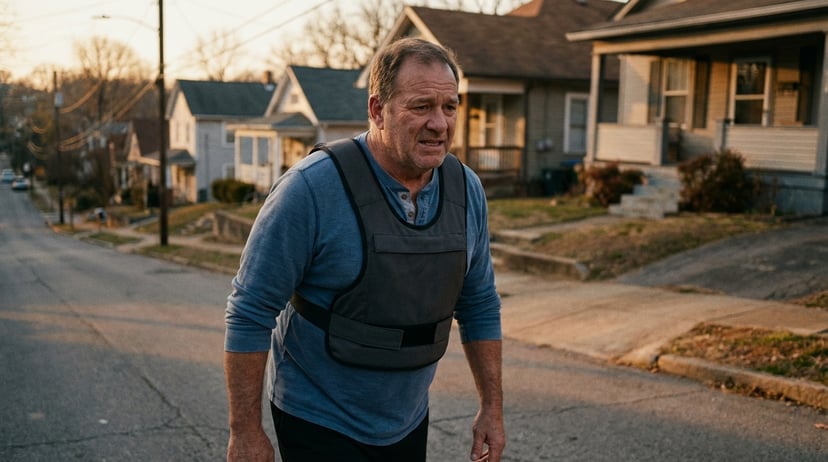
Weight-bearing activity and resistance training can be useful parts of bone-health care during and after menopause. A vest is one way to add load, but the Snow trial in postmenopausal women tested a vest-and-jumping program, not vest walking alone.
The rest of the plan matters: suitable weight-bearing activity, progressive resistance training, nutrition, medication when prescribed, and fall-risk management. Needs for protein, vitamin D, and calcium vary; use clinical advice rather than a generic checklist.
If you have been diagnosed with osteopenia or osteoporosis, or you are postmenopausal with fracture risk, talk to your doctor or a physical therapist before loading up. Added weight changes balance and spinal load, and the right starting weight and movements depend on your bone status. This article is education, not medical advice.
What a broader bone-health plan may include
Depending on medical history and bone status, a plan may include:
- Weight-bearing activity. Walking, stairs, and hiking are examples; loaded walking is optional.
- Progressive resistance training. The movements, frequency, and load should match ability and clinical needs.
- Impact or dynamic loading, when appropriate. This is not suitable for everyone, particularly without guidance when fracture risk is elevated.
- Adequate nutrition. A clinician or dietitian can assess protein, calcium, and vitamin D needs.
- A weight-loss plan that accounts for bone health. Intentional weight loss can affect bone, especially in older adults.
A vest can be one tool within the activity portion of that plan.
How to use a weighted vest for bone health, sensibly
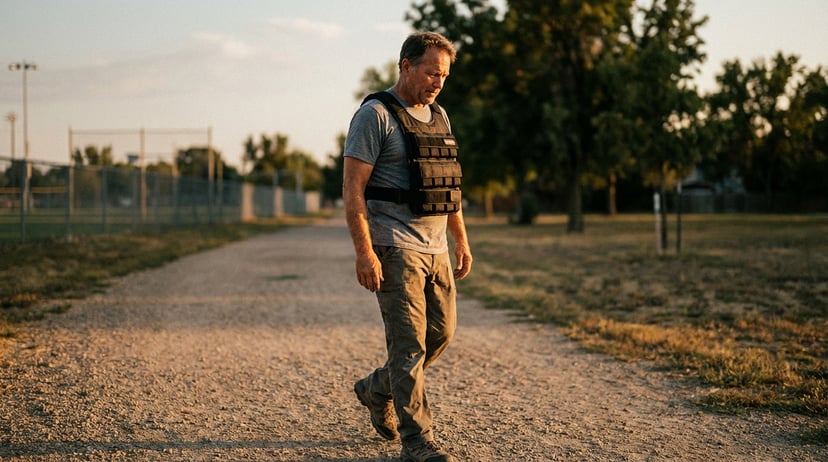
If a vest is appropriate for you:
- Establish an unloaded baseline. Begin with walking that does not cause pain, dizziness, balance changes, unusual shortness of breath, or pelvic-floor symptoms.
- Use the smallest practical increment. There is no universal percentage that guarantees an appropriate starting load.
- Change one variable at a time. Hold pace, route, and duration easier while testing load.
- Do not treat wearing time as a dose. The upright-time finding was exploratory and does not create a proven prescription.
- Choose an adjustable vest if you need small load changes and a secure fit.
Fit varies by torso shape, so check that the vest stays secure without restricting breathing or changing gait. The Hyperwear Hyper Vest PRO uses small load increments, and the Hyper Vest PRO product link is here for price and availability. For more fit options, see our weighted vest buying guide.
Weighted vest or rucking for bone density?
Both add load to walking. Research has not established that either format produces a superior bone-density outcome, and no bone trial has used a backpack. The practical differences are:
- A vest distributes weight close to the torso. It can feel secure but may restrict breathing or increase heat if the fit is poor.
- A rucking pack carries load behind the torso and can hold water and layers. Pack fit and load placement affect comfort and gait.
Choose the format that stays secure and can be removed or adjusted easily. We discuss rucking-specific evidence and limitations in our rucking for bone density guide.
Not a rucker at all, and just want a vest for daily walks? Our sister site Kit Authority covers the best weighted vests for walking and has a vest sizing calculator that starts you at the right weight for your body.
What the evidence supports
The evidence does not justify promising that a weighted vest will build or preserve bone density on its own. Vest-plus-exercise programs beat inactivity, which makes a vest a reasonable way to add load inside a broader exercise plan, but the program, health history, and clinical care matter more than the object. If bone density is already low, involve the clinician managing it before adding load.
Frequently Asked Questions
Some of each. Exercise programs that include a vest improved hip and spine bone density compared with usual activity in a 2026 meta-analysis, and Snow 2000 reported better hip outcomes over five years from a vest and jumping program. But the vest has not been shown to add bone benefit on top of exercise, and in the 2025 INVEST trial it did not prevent hip bone loss during weight loss.
A vest is one way to add load to walking, but it is not proven to improve bone density by itself. Weight-bearing activity and resistance training may be part of a menopause bone-health plan. If you have low bone density or fracture risk, ask your clinician before adding weight.
There is no universal percentage supported as the right starting load for bone health. Establish an unloaded walking baseline, then use the smallest practical increment if no clinical restriction applies. Stop if load changes gait, balance, breathing, pain, or pelvic-floor symptoms.
No. Exercise can be part of osteoporosis care, but a vest does not reverse the condition. Diagnosed osteopenia or osteoporosis needs medical management; ask your clinician or physical therapist whether and how loaded walking fits your plan.
Unknown. The INVEST follow-up analysis looked only at time spent standing and stepping, not sitting, and its finding was exploratory. It did not establish a minimum amount of standing or walking in a vest that will protect bone density.
Both add load to walking, and neither has been shown superior for bone density. Choose by fit, gait, balance, and the ability to secure and adjust the load. See our rucking for bone density guide for pack-specific considerations.
There is no reliable timeline in which a vest should change a DEXA result. Bone outcomes depend on age, hormones, medication, nutrition, exercise type, and starting bone density. Follow the reassessment interval set by your clinician.