The Short Answer
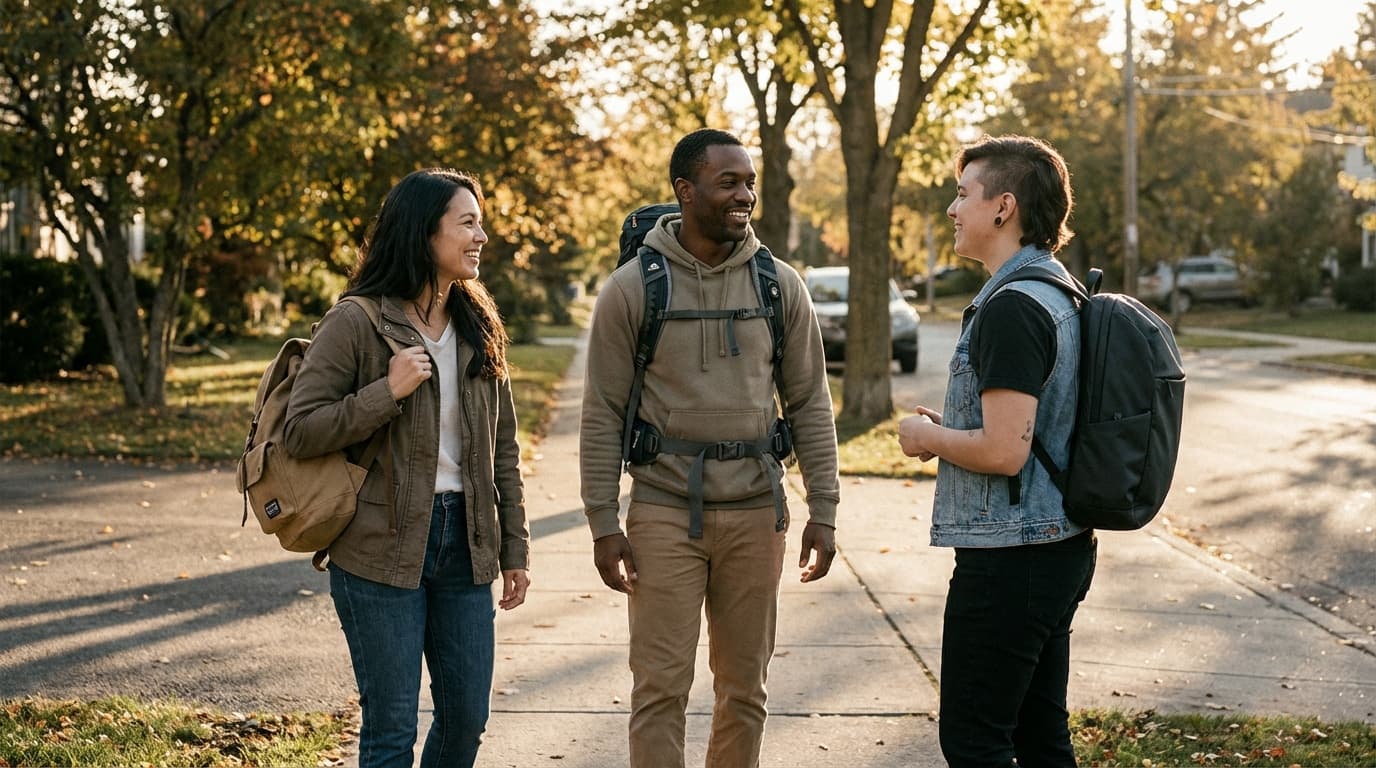
You can start a ruck club today with just you and one other person. Pick a regular time, a route, a name, and show up. That's it.
A club can start with two people who meet every week. Consistency matters more than size or presentation.
Check if one already exists first. Browse our Ruck Club Finder - a directory of community clubs across 35+ countries with a map view and country/state filters. If there is already a club in your city, join that one. If not, this guide is for you.
Why Start a Ruck Club
The Accountability Effect
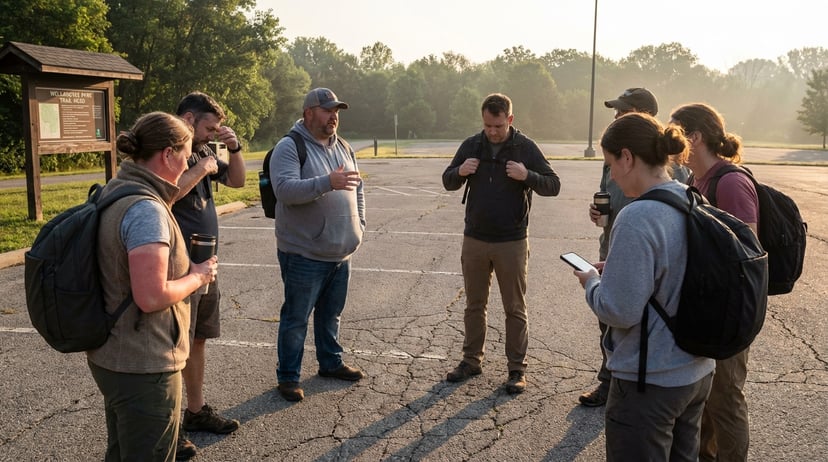
Rucking with a regular group can improve accountability and make the activity more social.
When you commit to showing up at 6 AM on Tuesday mornings with your club, you show up. When you commit to yourself, life happens. A club gives you a reason that goes beyond your own discipline - you know four other people are waiting for you.
Community Over Isolation
Rucking builds mental toughness, but it also builds loneliness if you are doing it by yourself week after week. A ruck club turns solitary walks into shared experience. You talk through challenges, celebrate milestones, and create relationships that extend beyond the ruck.
An informal club can start with little overhead
The informal club described here does not charge a membership fee or employ coaches. Members agree on a public meeting place and ruck together. Local permit, insurance, and legal requirements still depend on where you live and how the group operates.
How Many People You Need to Start
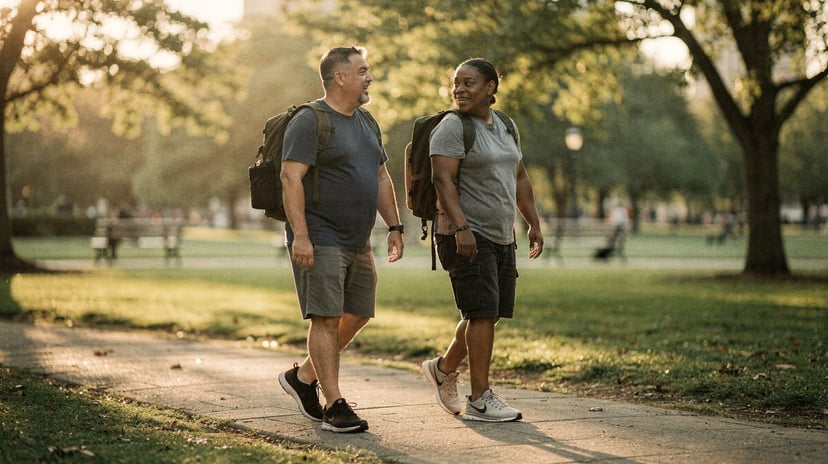
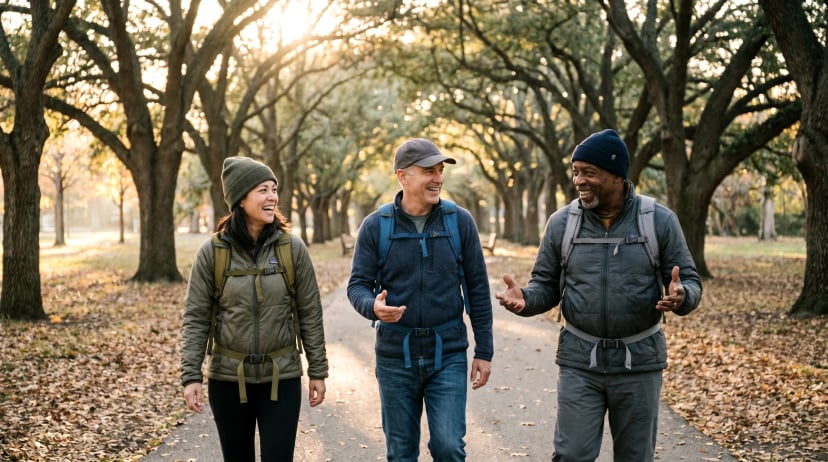
Two.
You and one other person committed to showing up every week for the next 2 months. That is your ruck club.
Do not wait for 8 people. Do not wait for a full roster. Start with your friend, your coworker, your neighbor, or someone you meet online in the rucking community. If you don't know any ruckers yet, scan the Ruck Club Finder for clubs near you and reach out - even a nearby club an hour away can connect you with one or two people in your own city looking for the same thing. Find one person and commit to a time.
Growth is not automatic, and it does not need to be fast. Start with the people who attend reliably, then make it easy for them to invite someone else.
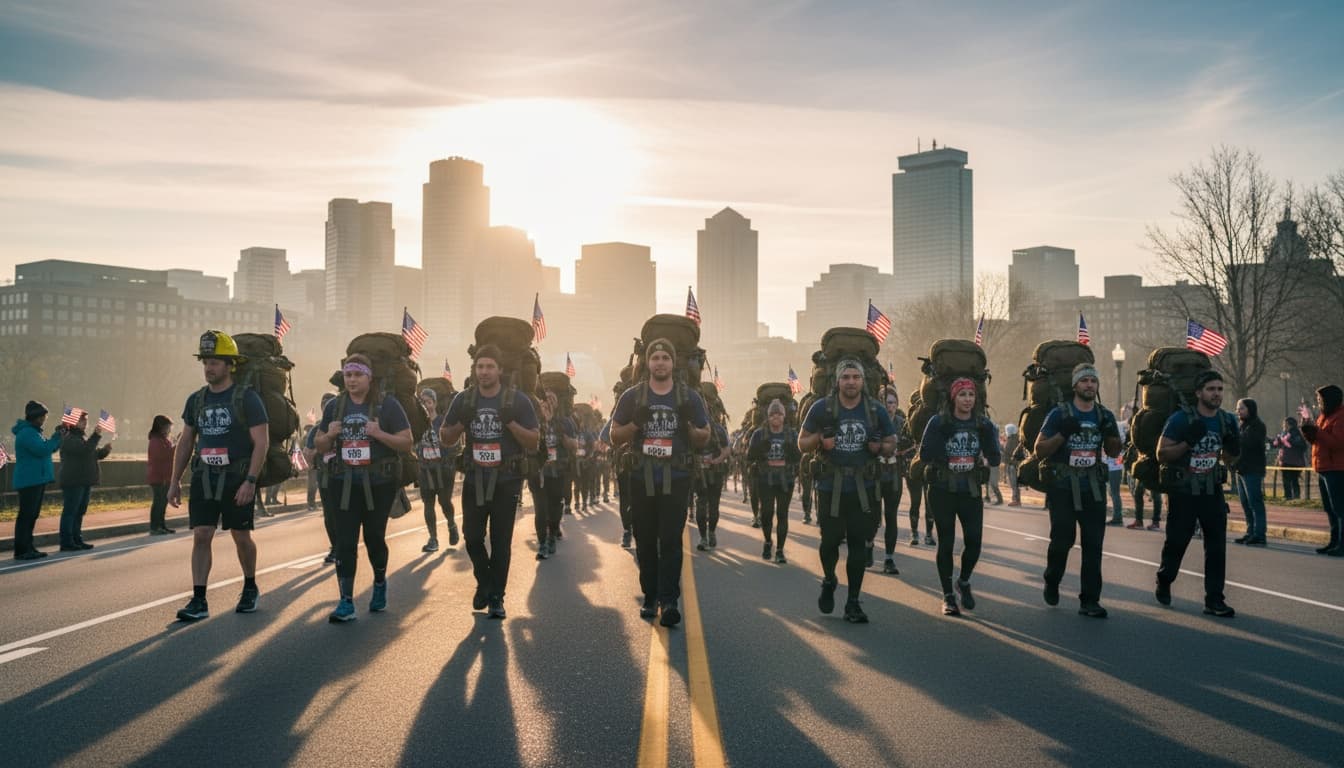
A purpose-driven first event helps that growth along. A Memorial Day ruck gives a new club a built-in story and a reason for strangers to show up - one of the most meaningful ways to kick things off.
Picking a Time and Route
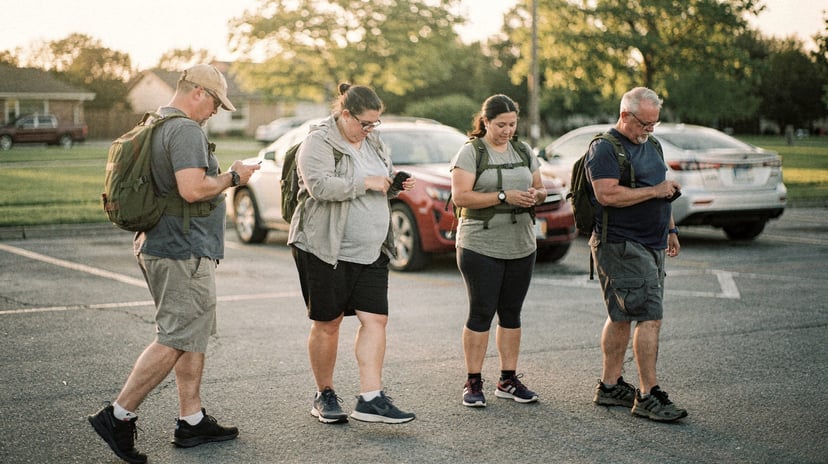
Make it the same every week.
Pick a day and time and keep it consistent. A fixed weekly schedule makes attendance easier and gives the group time to build a habit.
Examples of working time slots:
- Tuesday and Thursday 6 AM before work
- Sunday 9 AM weekend warrior style
- Wednesday 6 PM after work
- Saturday morning long rucks
Your route should be:
- Repeatable - the same loop every week so people know what they are signing up for
- Accessible - starts and ends at a place with parking
- Variable - 3 to 5 miles is a good default range; you can adjust based on how people feel
- Safe - well-lit if early morning, good sidewalks or paths, minimal car traffic
Start at a local park or parking lot. Map out your loop on Google Maps. Test it once. Then commit to it.
Naming Your Club
Pick something that reflects your personality and your place. "Portland Ruck Club" works. "Foggy City Ruckers" works. "Tuesday Morning Trail Warriors" works.
Keep it simple. Avoid inside jokes nobody else will understand. Your name should make sense to a stranger who finds you on Instagram.
Promote the club online
Create an Instagram account for your club in the first week. People can find the club through city searches, hashtags, and posts shared by current members.
What to post:
- Before and after photos from your weekly rucks
- Route maps and distance markers
- New members joining
- Callouts for upcoming sessions
- Stories from events
Use hashtags: #RuckClub, #YourCity, #RuckersCommunity, #LoadedWalking, #GoRuck, and local hashtags like #PortlandFitness.
Post once per week minimum. Consistency here matters too. When someone scrolls looking for their local ruck club, they want to see recent activity.
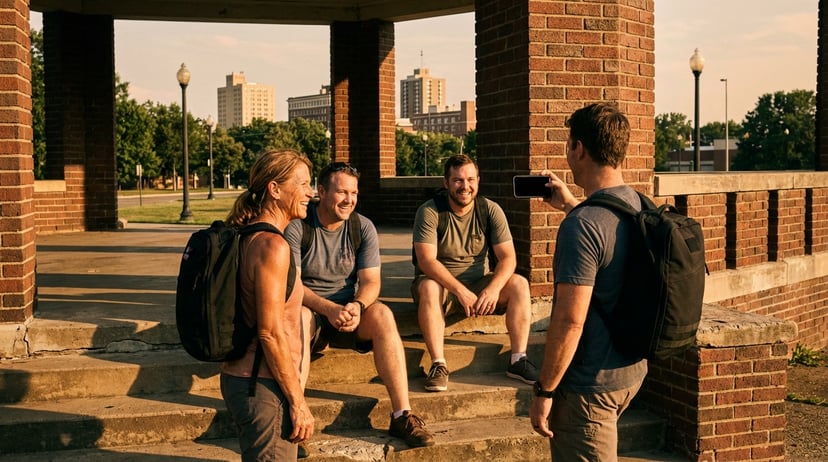
Growing Through Word of Mouth
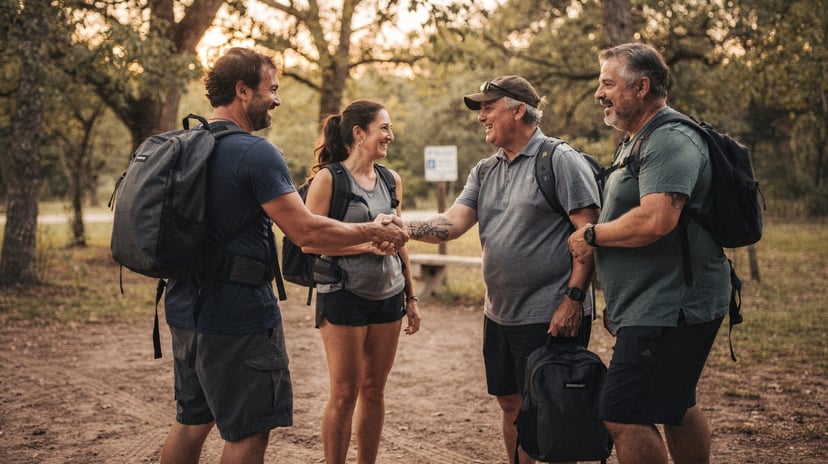
Your best marketing is people showing up and loving it. When people experience your club, they tell their friends. Their friends tell other friends.
To accelerate this:
- Ask people to bring someone new. Every 2 to 3 weeks, have one member invite a friend.
- Post in local fitness Facebook groups - just once, with your club name, time, location, and Instagram handle.
- Show up at local races and fitness events - hand out cards with your club details.
- Connect with CrossFit gyms and running clubs - people looking for new fitness outlets often cross over.
Do not hard sell. Just show up, be friendly, and let the experience speak for itself.
Gear Lending for Newcomers
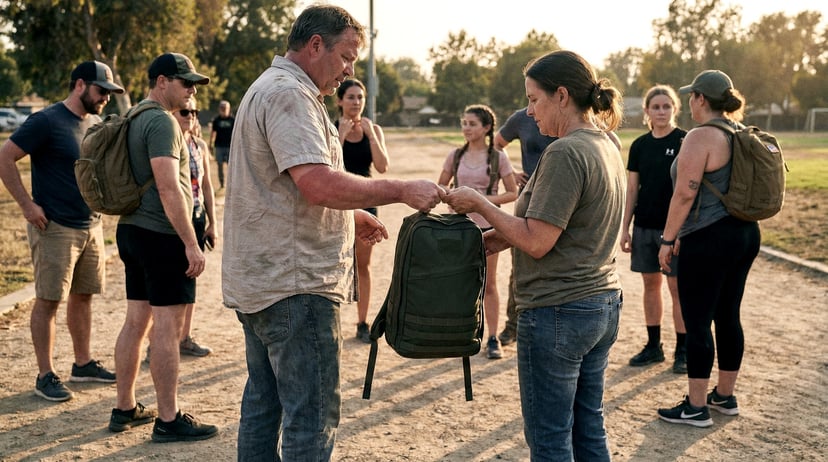
The biggest barrier to people joining is "I don't have a ruck."
Buy 2 to 3 used packs (20-30 lbs capacity) and keep them in your car. Lend them for free. Tell every new person "borrow this for 2 to 3 weeks, see if you like it, then get your own if you want."
Loaner gear removes the need for a newcomer to buy a pack before attending a first ruck.
Good starter packs for lending: GORUCK GR1 (used, $100-150), the 5.11 Tactical RUSH 24, Osprey Rook, or simple 30-liter hiking packs. Capacity matters more than brand.
Structuring Your Sessions
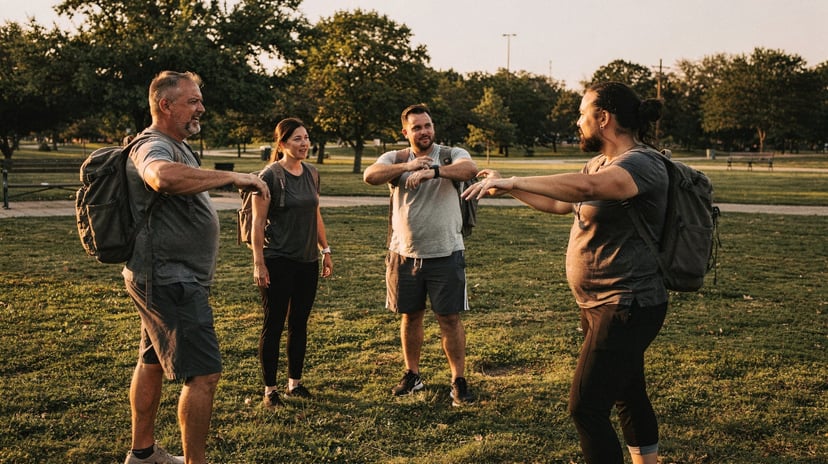
Keep it simple. Every session follows this pattern:
Warm-up (5 - 10 minutes)
- Dynamic stretching, arm circles, walking in place
- Get people talking and loose
The Ruck (20 - 45 minutes)
- Follow your route
- Pace should be conversational - people should be able to talk while walking
- No one gets left behind
Cool-down (5 - 10 minutes)
- Slow the pace in the last half mile
- Static stretching at the end
- Drink water
Optional Social (15 - 30 minutes)
- Coffee, breakfast, or just hanging out
- Time for coffee or conversation
Optional social time can help members get to know one another and return for future rucks.
Managing Mixed Fitness Levels
Your club will have beginners and veterans. Hobbyists and competitive ruckers. This is healthy.
The rule is simple: Everyone carries their own weight.
A beginner carries 15 lbs. A veteran carries 40 lbs. You all walk the same route at the same pace (conversational), but the experienced folks get more stimulus because they are carrying more load. By the end of the ruck, everyone is challenged.
This also means pacing is crucial. Conversational pace (3 - 3.5 mph) is slightly slower than normal walking. No one is racing. The ruck club is not a run club.
Liability Considerations
Treat safety and legal structure as separate questions. Before the first public meetup:
- Walk the route and identify road crossings, poor lighting, water access, and places where someone can leave early.
- Collect an emergency contact and make sure at least one organizer carries a phone and a basic first-aid kit.
- Tell participants the planned distance, pace, terrain, and whether weight is optional. Encourage them to stop if they feel pain, dizziness, or unusual shortness of breath.
- Check whether the park, trail, or private property requires a group permit or advance permission.
Do not assume that an informal group is exempt from every requirement, or that a sentence such as "ruck at your own risk" resolves liability. License, permit, insurance, and waiver rules vary by location and by whether you collect fees, hire coaches, advertise to the public, or host larger events. In the United States, the Small Business Administration directs organizers to check state and local registration, permit, and insurance requirements. Outside the United States, check the equivalent local authority.
If the club collects money, uses paid staff, runs events, or grows beyond a small informal meetup, speak with a local insurer and qualified lawyer about the right structure and participant documents. This guide is practical planning information, not legal advice.
Connecting With the Bigger Community
You are not alone. The rucking community is bigger than you think.
List your club on the Ruck Authority directory - The fastest way to be discoverable is to add your club to our Ruck Club Finder - now hundreds of clubs across all 50 US states and 35+ countries. Approval takes a quick review, and once you're in, your club shows up on the global map and in your country/state filter for anyone searching "ruck club near me." This is the single highest-leverage move for growing past your first few members. Once listed, grab the free club badge for your own site or event page - no scripts, no tracking, and it tells visitors your club is active and verified.
GORUCK Club Directory - Also worth submitting at GORUCK.com/clubs. GORUCK promotes member clubs in their email and on their site. Different audience than ours, so list in both.
Local Ruck Club Meetups - Use the Ruck Club Finder to spot other clubs within driving distance and host a joint ruck once or twice a year so nearby groups can meet.
GORUCK Events - Encourage your members to attend local GORUCK events (Challenge, Light, Selection series). These events strengthen the community and create bonding moments.
Online Communities - Join r/rucking on Reddit and the main GORUCK Facebook group. Tell people about your club. Help others start clubs. This is how networks grow.
Frequently Asked Questions
How do I know if my club is "working"?
You know your club is working when people show up without being reminded. When they bring friends. When they ask "same time next week?" at the end of a session. When they text you during the week saying they are thinking about the ruck.
Success is consistency, not size. A club with 4 people showing up every week beats a club with 12 people who are flaky.
What if people stop showing up?
This happens. People move, get injured, discover it is not for them. Do not take it personally.
If at least two people still meet, the club can continue. If not, pause for a month and ask core members whether they want to restart.
Most ruck clubs experience 2 to 3 member cycles per year. That is normal.
Can I charge a membership fee?
You can, but you probably should not. Fees add accounting, liability, and new member expectations.
Keep it free. Your investment is your time. That is enough.
If you want to cover costs (parking pass, club t-shirts, or group lunches), ask for voluntary contributions. Never mandate payment.
What if someone gets injured during a ruck?
Stay calm, assess the injury, stop the session if needed, and call 911 if it is serious.
This is extremely rare. Minor aches and pains happen in any physical activity. Most injuries are overuse and happen between sessions, not during.
If someone does get hurt during a club session, be supportive, encourage them to see a doctor, and let them know the club is here when they recover. Do not panic about liability - you are just people exercising together.
How do I find ruck clubs near me?
Start with our Ruck Club Finder - it's a global directory with a map view, country and state filters, and clubs across 35+ countries. Search by your city or browse the map. Cross-check GORUCK.com/clubs for any clubs we haven't picked up yet.
If neither directory has one nearby, search Instagram for #YourCity + #RuckClub. Post in local running groups asking if anyone rucks. Ask in CrossFit gyms.
If you still cannot find one after 2 weeks of searching, that is your signal to start one yourself - and then list it on our directory so the next person searching finds you.
Your next step
Starting a ruck club is about showing up consistently and building trust. Once your club is running, the next step is helping your members progress. Our rucking for mental health guide explores the deeper benefits your members will experience as they continue - the mental resilience, stress relief, and community connection that keeps people coming back.
Related reading
- Ruck Club Finder - global directory of rucking clubs across 35+ countries. Search before you start.
- List your club - already running a club? Submit it so local ruckers can find you.
- Beginner's guide to rucking - everything you need to start before joining or founding a club
- Your first 30 days of rucking - what to expect and how to progress safely
- Rucking for mental health - why ruck clubs build resilience and community bonds
- Rucking for families - bring your family into the club or start a family-focused version
- Budget rucking starter kit - what to recommend to new members joining your club