The short answer
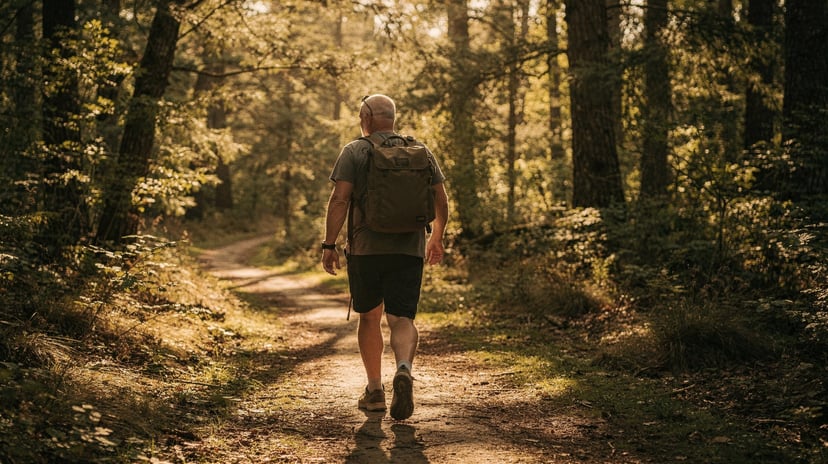
Rucking is not meditation, but it functions like meditation. You move, carry weight, breathe rhythmically, and spend time outside. Multiple studies demonstrate that each of these individually improves mental health. Together, they create a low-barrier entry point into physical activity that actually sticks.
This article is written for people dealing with anxiety, stress, or low mood. It is not a replacement for professional treatment - therapists, psychiatrists, and counselors exist for reasons. But evidence suggests that adding rucking to whatever else you are doing (therapy, medication, lifestyle changes) can meaningfully improve outcomes.
Why rucking, specifically, for mental health?
Most fitness marketing promises immediate mood boosts. That is toxic positivity. Real life is messier. But evidence does support rucking as a legitimate tool because it combines three separate, research-backed mechanisms.
Mechanism one: Aerobic exercise is medicine
Exercise is one of the few interventions shown to reduce depression severity on par with medication.
Blumenthal et al. (2007) studied adults with major depressive disorder and found that a structured aerobic exercise program (jogging or brisk walking three times per week for 16 weeks) was as effective as sertraline (a common antidepressant) at reducing depression symptoms. After four months, remission rates were similar.
The mechanism is not mysterious. Exercise increases BDNF (brain-derived neurotrophic factor), improves sleep, reduces inflammation, and regulates neurotransmitters like serotonin and dopamine. Rucking, performed at a steady pace, delivers this benefit reliably.
Blumenthal et al. (2007) randomized 202 adults with major depressive disorder into three groups: exercise, medication, or combined. After 16 weeks, all three groups showed significant improvement. The exercise-only group had remission rates matching the medication group, suggesting physical activity is a legitimate first-line treatment for mild to moderate depression.
Mechanism two: Outdoor time reduces rumination
Rumination - repetitive, negative thought patterns - is a core feature of anxiety and depression. Walking in nature changes how your brain processes information.
Bratman et al. (2015) compared a 90-minute nature walk to a 90-minute urban walk. Both groups walked the same duration. The nature group showed reduced activity in the prefrontal cortex regions associated with rumination, along with improved mood. The urban group saw no similar benefit.
Rucking outside, on trails or through parks, delivers this effect. The pack weight and the attention required to maintain pace and balance further occupy your attention in a grounding way.
Bratman et al. (2015) used functional MRI to measure brain activity before and after nature vs. urban walking. They found that nature walks specifically reduced rumination-related brain activity - an effect not seen in the urban walking control. The result was significant mood improvement in the nature group.
Mechanism three: Rhythmic, load-bearing movement is grounding
The load on your back and the repetitive, rhythmic footfall create what therapists call "proprioceptive input" - feedback from your body about where it is in space. This is why heavy blankets and compression vests help some people with anxiety. The weight itself is soothing.
Additionally, rhythmic movement - walking at a steady pace - synchronizes your breathing and can lower your heart rate variability in ways that signal safety to your nervous system. You move, your body feels the load, you breathe in rhythm, and your nervous system downshifts from high alert.

Rucking for anxiety and stress
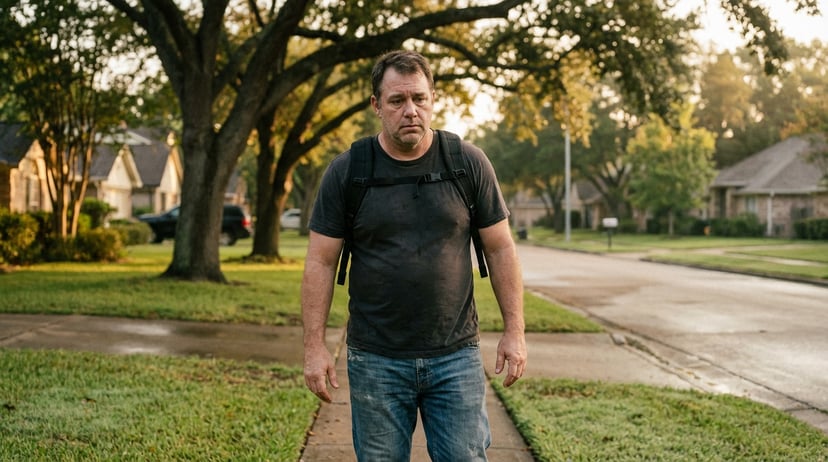
Anxiety lives in the future. You worry about things that have not happened. Rucking pulls you into the present.
When you ruck, you feel:
- The pack weight on your shoulders
- Your feet hitting the ground
- Your breathing pace matching your steps
- The air temperature on your skin
- The terrain changing beneath you
This is sensory presence. Therapists call this "grounding" - deliberately engaging your senses to interrupt anxious thinking. Rucking is grounding baked into a walk.
Evidence from exercise science shows that even a single 20-minute walk reduces immediate anxiety symptoms. Rucking at moderate intensity (zone two - conversation-pace walking) is sustainable, repeatable, and builds a habit that compounds over weeks and months.
Unlike high-intensity exercise, which can spike cortisol in anxious individuals, zone two rucking actually reduces cortisol over time while building resilience.
Rucking for depression
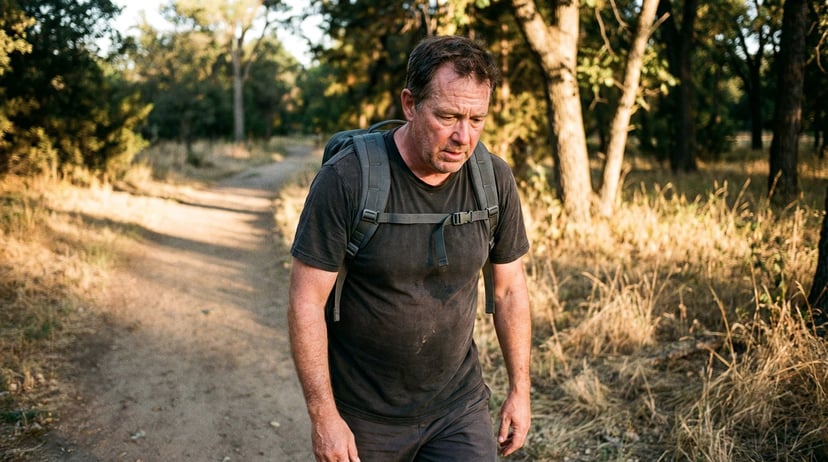
Depression is often characterized as low mood, but it is better understood as low energy and low motivation. The activation barrier is high. Getting off the couch feels impossible.
Rucking works for depression because the barrier to entry is lower than running or CrossFit. You do not need speed or intensity to ruck. You do not need to compete. You do not need to feel good first.
You just walk while carrying weight.
Research on structured exercise programs shows that consistent movement - even at low intensity - reverses depressive symptoms. Rethorst et al. (2009) found that a standardized 30-minute walking program, performed five days per week for 12 weeks, significantly improved depression severity in adults with major depressive disorder.
Rucking extends this benefit by adding the load-bearing element, which provides better proprioceptive grounding and preserves muscle mass during a low-mood period when muscle loss is common.
The moving meditation angle
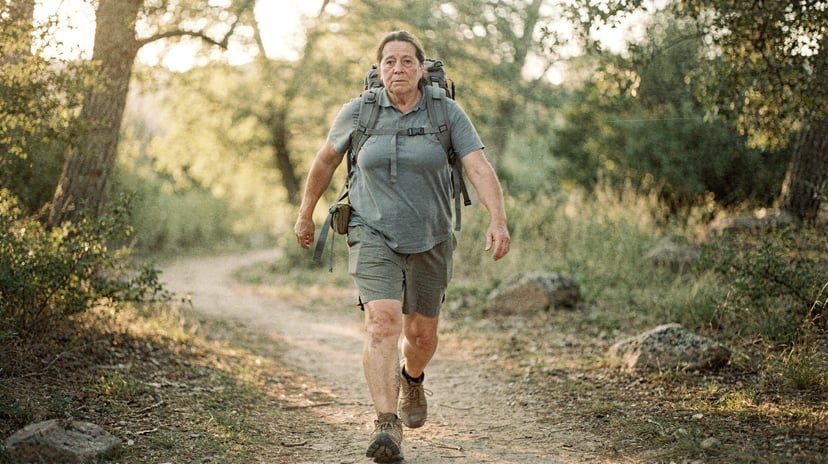
Rucking is not meditation. You are not sitting still. You are not emptying your mind.
But rucking creates a meditative state through what researchers call "flow" - a state where your attention is fully absorbed by the present activity. You are not thinking about your to-do list because your brain is occupied with:
- Balancing the load
- Matching your pace
- Breathing
- Navigating the terrain
This is meditation's functional benefit without the spiritual framework. Oppezzo & Schwartz (2014) found that walking - even indoor walking - improved creative thinking and idea generation. Your brain, freed from the distraction of sitting and the anxiety of doing nothing, naturally processes more effectively.
Rucking outside amplifies this effect because of the added environmental stimulation and complexity.
The community and accountability factor
One of the most underrated mental health tools is social connection. Group rucking builds community without the competitive pressure that keeps people away from fitness spaces.
Unlike running clubs (where pace hierarchies create friction) or CrossFit gyms (where competitive intensity can be unwelcoming), rucking groups operate at a conversational pace. You can ruck in a group and actually talk. You see the same people weekly. You build friendships around a shared activity.
For people with depression or social anxiety, group rucking is often the first reliable social commitment they make. The activity is low-pressure enough that showing up is possible, even on hard days. And showing up consistently is how connection happens.
The research on social connection and mental health is unambiguous: loneliness is a major risk factor for depression and anxiety. Rucking groups, intentionally or not, address this directly.

Rucking for veterans mental health
Rucking can support veterans' mental health by combining familiar load-bearing movement, outdoor time, peer connection, and predictable structure. It is not a PTSD treatment, crisis intervention, or substitute for therapy, but it can be a practical bridge back into movement and community.
The clinical evidence for exercise as PTSD support is solid. A 2022 NIH-published review - Whitworth et al., Exercise to Reduce Posttraumatic Stress Disorder Symptoms in Veterans (PMC9217079) - synthesized randomized trials and found that supervised exercise interventions produced measurable, clinically meaningful reductions in PTSD symptom severity in Veterans, with the strongest effects when exercise was combined with standard care. Aerobic movement at moderate intensity, three to five sessions per week, was the most consistent pattern across the trials reviewed. Rucking is a textbook fit for that prescription.
The setting matters too. A pilot randomized trial in the Pacific Northwest - Stelzer et al. (2021), nature versus urban hiking for Veterans with PTSD (PMC8461737) - directly compared nature hiking to urban hiking in Veterans diagnosed with PTSD. Both groups walked the same duration; the nature group showed larger improvements in PTSD symptom scores and self-reported mood. This is the same pattern Bratman saw in non-Veteran adults, replicated specifically in the population that needs it most.
Post-traumatic stress, military sexual trauma, moral injury, grief, and the transition out of military service create specific mental health challenges. Rucking helps most when it is framed as structured movement with people, not as a toughness test.
| Mental health need | How rucking may help | What rucking cannot do |
|---|---|---|
| Isolation after service | Creates a recurring reason to meet people side by side | Replace therapy, medication, or crisis care |
| Loss of structure | Gives the week a predictable training rhythm | Resolve trauma by itself |
| Anxiety or hypervigilance | Uses rhythmic walking, outdoor attention, and body feedback | Guarantee emotional safety in every group |
| Depression or low motivation | Low barrier: walk, carry light weight, stop when needed | Work if the activation barrier is too high |
| Transition identity | Reclaims load carriage in a non-combat, civilian context | Make military experience easy to talk about |
Groups like Team Red White & Blue and local veteran rucking clubs have built communities around this explicitly. If you are a veteran looking for mental health support, rucking can be useful as a gateway habit: show up, walk at a conversational pace, build trust, then use that stability to support deeper work with a trauma-informed therapist or VA care team.
If you are a Veteran in crisis or concerned about one, the Veterans Crisis Line offers free, confidential support 24/7. Dial 988 then press 1, chat online, or text 838255. You do not have to be enrolled in VA benefits or health care to connect.
What rucking is not
Before continuing, let us be clear about what this article does not claim:
Rucking is not a replacement for therapy or medication. If you are struggling with depression or anxiety, see a licensed therapist or psychiatrist. Physical activity is a complement, not a substitute.
Rucking will not instantly fix your mood. Mental health improvements show up over weeks and months, not days. You may not feel better after your first ruck. That is normal.
Rucking will not "fix" you. Mental health is complex. Rucking improves one variable: physical activity. Other variables - sleep, nutrition, social connection, meaningful work, sense of purpose - matter equally. Treat rucking as one tool in a larger toolkit.
Not everyone will like rucking. Some people prefer running, cycling, swimming, or climbing. The best exercise for mental health is the one you will actually do. Rucking is not mystically superior. It is just accessible and effective.
Getting started: The minimal viable ruck
You do not need expensive gear to ruck for mental health. You do not need a heavy pack.
Start with:
- A backpack you already own - ideally structured and comfortable (or check out our budget rucking starter kit for affordable options)
- 10 to 15 lbs of weight - water bottles, books, sandbags, or a simple plate pair like the Signature Fitness 20 lb standard plates
- Shoes you can walk in - no special running shoes required
- 30 minutes - zone two pace (you can hold a conversation)
- A local trail or park - outdoor time matters
That is it. Walk at a sustainable pace. Bring your phone to listen to a podcast or audiobook if that helps with engagement. Or walk in silence. Both work.
Aim for three rucks per week if you can. Two is fine. One is better than zero. Consistency matters more than intensity.
Frequently Asked Questions
Rucking itself is low-impact and safe. But if you are in a depressive state where getting out of bed is difficult, exercise may not be the first step - medication or therapy might need to come first. Talk to a healthcare provider about where to start. Rucking works best when you have enough energy to show up, even minimally.
Evidence suggests that consistent aerobic exercise shows mood improvements within 4 to 8 weeks. Some people notice stress reduction within days or weeks. Others take longer. Your baseline mental health, medication use, sleep, and stress levels all affect the timeline. Do not expect instant results. Judge progress over months, not days.
No. If you are on medication, keep taking it unless a psychiatrist tells you otherwise. Exercise and medication work through different mechanisms. Some people eventually reduce medication under professional supervision after building a robust exercise habit and other lifestyle changes. That is a conversation for you and your doctor, not something to decide alone.
Rucking can help veterans by adding structure, outdoor movement, and peer connection to the week. It is especially useful when the group walks at a conversational pace and does not turn every session into a toughness test. For PTSD, depression, substance use, or crisis risk, rucking should support professional care rather than replace it.
Group rucking might actually be ideal for social anxiety because the activity itself is the focus - you are not sitting across from someone trying to make small talk. You are walking side by side, moving forward, able to talk or be quiet. Many people with social anxiety find that group rucking is more manageable than coffee meetups or sitting in a room.
Not really. Rucking is loaded walking. If you hate walking, rucking will not feel better. But many people who think they dislike walking have never tried it at a sustainable pace, on a nice route, with a friend, outside. Give the walking part a genuine shot before deciding. If you genuinely hate it, other exercise modalities (cycling, climbing, swimming) work too.
No. Rucking is an adjunct tool. If you are struggling significantly, the first step is often professional support - therapy, psychiatric evaluation, or both. Rucking supports that work. It does not replace it.
Your next step
If you are ready to try rucking but not sure how to structure a first session or build a sustainable routine, our couch to ruck program walks you through the first 30 days - progressively building consistency and confidence without pressure or judgment.
Related reading
- The complete beginner's guide to rucking - everything you need to start, from gear selection to form
- Couch to ruck program - build consistency and confidence over 30 days
- Rucking form and technique - how to ruck injury-free
- Zone 2 rucking guide - the science of sustainable, steady-state movement
- How heavy should your ruck be? - weight recommendations by fitness level and goal
- Find a ruck club near you - search the ruck club directory for local community