The Short Answer
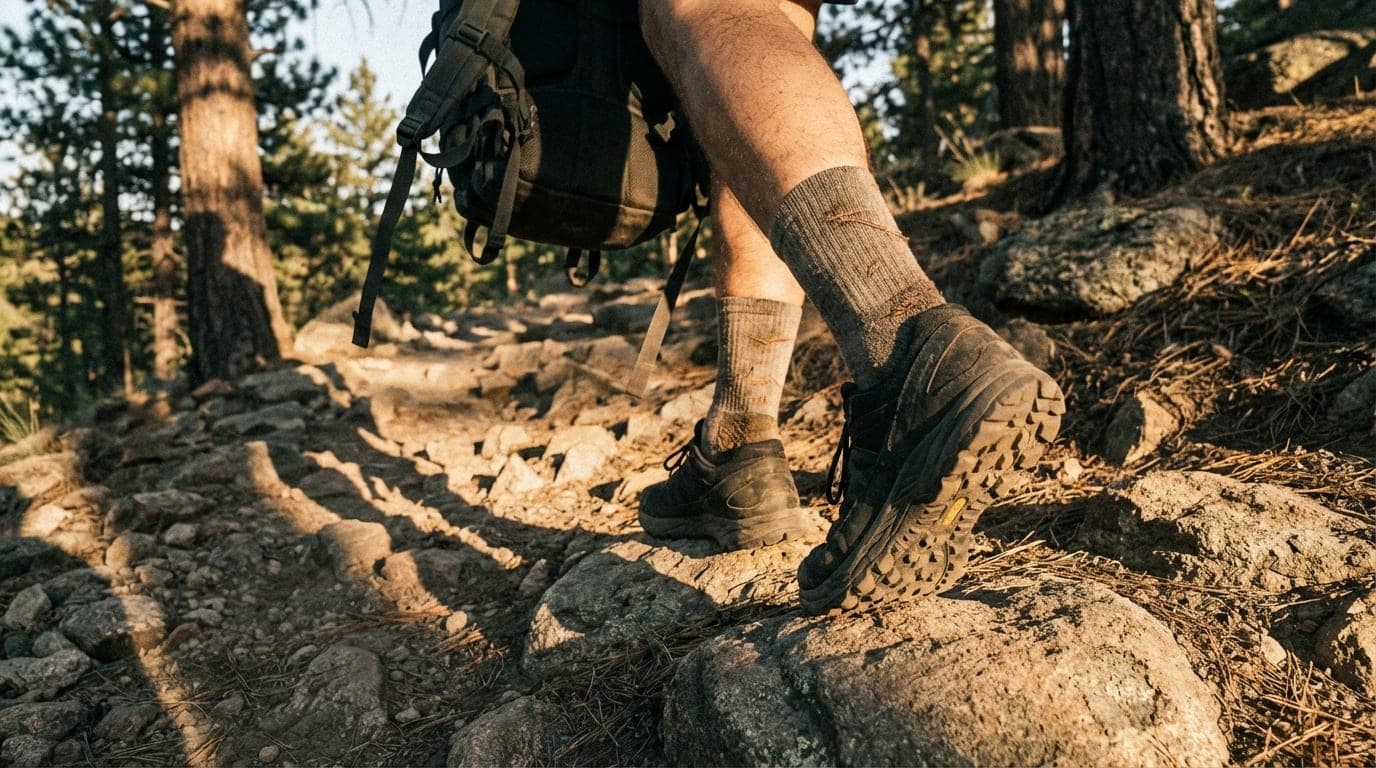
Rucking can work as a shared adult workout because each adult chooses a load and pace that fits their current ability. Children can join as walkers without carrying training weight.
The goal is not to make everyone do the same workout. It is to choose a short route the group can finish comfortably and let anyone turn back, remove a pack, or stop when needed.
Why Rucking Works for Families
Everyone Can Participate (At Their Level)
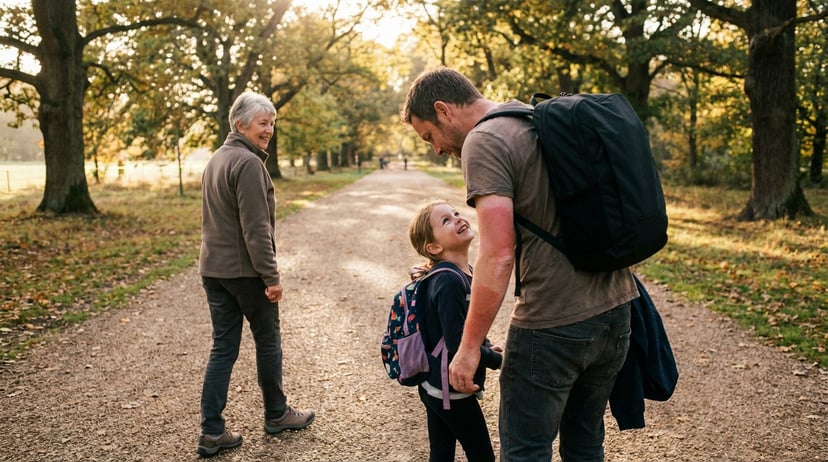
This is the biggest reason families stick with rucking. Running? One person is a natural 6-minute-miler, the other person struggles to hold a 9-minute pace - you split up or one person slows to a painful crawl. Cycling requires everyone to have a bike and compatible fitness. Gym classes have schedules that don't work for families.
Rucking works for couples because pack weight is adjustable. One adult may walk without added weight while the other carries a light pack. Choose the pace of the slower person and treat staying together as more important than hitting a training number.

It leaves room for conversation
Unlike solo running or gym sessions, rucking gives people time to walk next to one another. Couples can use a conversation pace: fast enough to feel challenging, but slow enough to talk in full sentences.
For kids, a short ruck can feel more like an outing than a workout.
Low Skill Barrier
Rucking is simple, but pack fit, load placement, pace, and terrain still matter. Adults new to it can start with an unloaded walk and add a small, secure load only after the route feels comfortable.
Rucking by Age and Stage
Toddlers (Under 5)
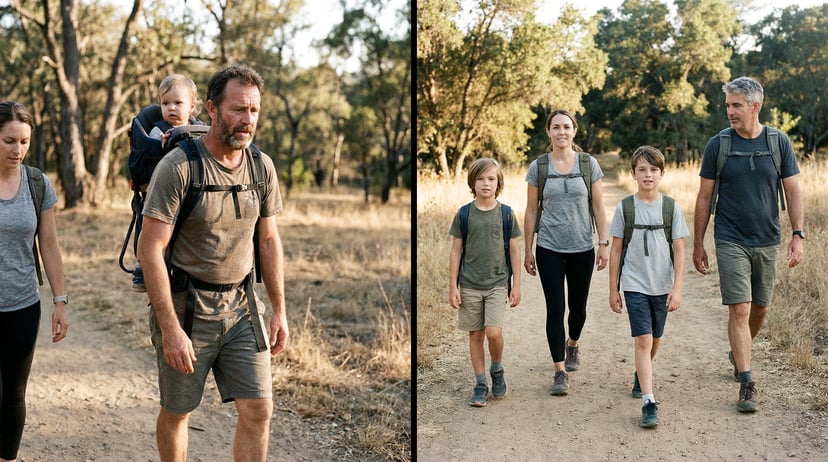
Use a framed child carrier only when the child meets every age, development, and weight requirement in the manufacturer's instructions. The child and carrier are already a substantial load, so do not stack a separate training pack on top. Start on a short, familiar, even route and check the child's position, temperature, and comfort often.
If a toddler walks part of the route, plan for a much shorter distance than an adult workout and be ready to stop. A second adult can make carrier transitions and unexpected fatigue easier to manage.
Young Kids (6 to 10 Years Old)
Young children do not need added training weight. If they want a pack, keep it to light essentials such as a small water bottle, snack, or layer, and be ready to carry it for them. Ask the child's pediatric clinician before turning pack weight into a structured exercise program.
This is where rucking becomes a family habit. A 30-minute walk to the ice cream shop where everyone carries their pack, then you all sit together, is radically different from "we have to go to the gym."
Tweens and Teens (11-17)
Teens can join the walk, with or without a pack. There is no universal training load for adolescents; growth, sports schedule, pack fit, and health history all matter. If a teen wants to train under load, a parent or guardian should involve their pediatric clinician or a qualified coach and begin conservatively.
A family ruck is not about competition. It is about time together and the casual fitness that happens in the background.
Partners and Couples
Use a pace where both partners can speak in full sentences. Each adult can choose a different load, including no added weight, while sharing the same route.
Couples rucking is one of the simplest ways to inject fitness into a relationship without it feeling like a negotiation. You are not trying to sync schedules for spin class. You are just walking, which you were going to do anyway. A simple shared kit - a couple of packs like the 5.11 Tactical RUSH 12 for the lighter carrier and the roomier RUSH 24 2.0 for the heavier load - keeps the barrier to entry low.
How to Make Family Rucking Stick
Start With Destination Rucks
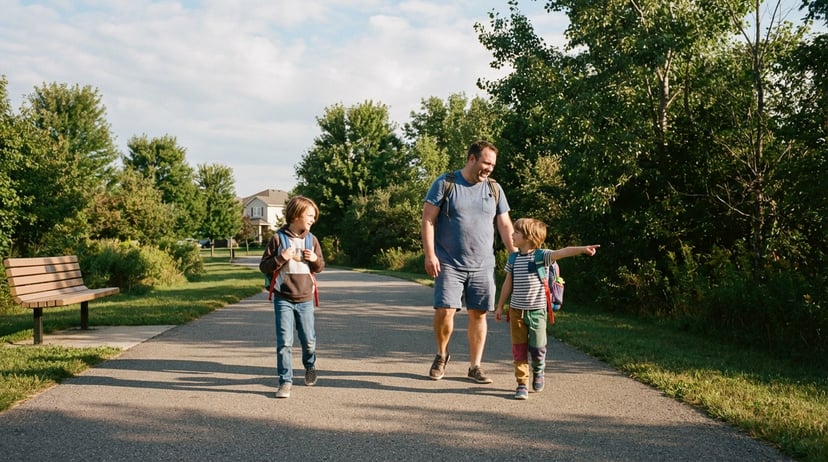
Start with a destination: a coffee shop, park, friend's house, or ice cream shop. Spend 15 minutes there, then walk back.
A destination gives the walk a clear reason beyond exercise. A park, library, or snack stop can be more appealing to a child than a distance target.
Build in a Reward or Activity
- Ruck to the park, stay 20 minutes, walk back.
- Ruck to a friend's house for a playdate.
- Ruck to a farmer's market, buy snacks together, walk home.
- Ruck to a creek for lunch.
The activity gives the walk a clear purpose.
Add Gamification
Kids respond to game mechanics:
- Scavenger hunts: "Find three things that are green. Find something round. Find something that makes a sound."
- Geocaching: Download the app, search for hidden caches along your route, sign the logbook.
- Pace challenges: "Can we get to the mailbox in 10 minutes?" (Easier for kids to understand than abstract fitness goals.)
- Photo hunts: Take pictures of specific things along the route. If a kid catches the photography bug, our sister site Aperture Authority's exposure triangle primer is a gentle first lesson in how a camera actually works.
These games keep kids engaged during the walk.

Keep It Short at First
Choose a short first outing and turn back before anyone is tired. Extend only when the previous route stayed comfortable for everyone.
Safety Considerations for Kids
Children Do Not Need Training Weight
There is no well-established rucking dose for children. An unloaded walk provides activity without adding a load prescription. If a child carries a pack, keep it to light essentials, make sure it fits, and remove it at the first sign of discomfort or fatigue.
School-backpack guidance is intended to limit an everyday carrying burden; it is not a recommendation to train children at that percentage. Ask a pediatric clinician for individual advice before adding weight for exercise.
Proper Pack Fit Matters
Use a child-size pack and follow its fit instructions. The straps should hold light essentials without pinching, slipping, or changing how the child walks.
Keep the Route Child-Sized
Do not use an adult distance target for a child. Start with a brief local walk, keep the return route easy, and extend only if the child remains comfortable and interested.
Watch for Fatigue
Children may not describe fatigue clearly. End the outing if a child becomes unusually quiet, changes gait, reports pain, or no longer wants to continue.
Building Rucking into Family Routine
A brief outing that fits the family schedule is easier to repeat than an occasional long session.
Start small. Pick a day that fits the schedule, set a simple route, and tell everyone the destination. Keep participation optional, especially for children.
When the current route has stayed comfortable for several outings, adults can change either distance or load in a small step. Children can continue walking without added training weight.
Rucking and Family Bonding
Family rucking is less about sport training than shared time. A short walk gives the family time to move and talk without phones or other tasks.
Your 10-year-old talks about something at school. Your partner tells you about an idea. You all move together toward a destination. You get a workout in the background.
Those practical and social benefits can make a weekly ruck easier to repeat.
Frequently asked questions
At what age can kids start rucking?
Children can join an age-appropriate family walk when they are ready, but there is no universal age or weight prescription for youth rucking. Young children do not need added load. Ask a pediatric clinician before starting structured loaded training for a child or teen.
What if my kid does not want to ruck?
Do not force it. Invite them on a short destination walk and let them opt out or turn back. Scavenger hunts and geocaching can help, but the outing should remain optional.
Can I ruck with a newborn?
Do not assume a hiking carrier is suitable for a newborn. Follow the carrier manufacturer's minimum age, developmental, size, and weight rules exactly; many framed carriers require independent head and neck control and are not newborn products. The carrier and child are the load. Do not add a separate training pack, and ask the child's clinician if you are unsure whether the carrier is appropriate.
How do I get my partner interested in rucking?
Start with a destination walk, not a prescribed workout. Pick a coffee shop or park they want to visit, let them choose whether to carry weight, and keep the first route short.
What if my family has different fitness levels?
Adults can adjust their own pack weight or walk unloaded. Choose a route and pace that work for the least experienced person; children do not need added weight.
Your next step
Our first 30 days of rucking guide covers adult pack fit, starting load, and route planning. Use its load guidance for adults only; children can join without added training weight.
Related reading
- The complete beginner's guide to rucking - everything about getting started, from gear selection to form
- How heavy should your ruck be? - personalized weight recommendations by fitness level and goal
- Ruck Club Finder - find a family-friendly local rucking club from our directory across 35+ countries
- Rucking with your dog - another way to make family rucking fun
- Rucking for mental health - why family time + movement is so good for stress
- Budget rucking starter kit - affordable gear for getting a whole family started