The Short Answer
Yes, you can ruck with your dog - but not every dog, not in every condition, and not without training. The best rucking partners are medium to large breeds with athletic builds, moderate to cool climates, and owners willing to start small and progress deliberately.
Your dog needs to learn heel position, match your pace, and handle the mental demands of a longer walk with distractions. You need to understand canine heat tolerance (spoiler: dogs don't sweat), watch for overheating signs, and know when to leave your dog home. You also want sure footing of your own on the mixed trail and grass where your dog will pull and dart - a grippy trail shoe like the Salomon XA Pro 3D V9 GTX keeps you stable when they change direction.
Done right, rucking with your dog builds bond, improves the dog's fitness, and gives you a training partner who's always up for the next adventure.
Which Dogs Are Great Rucking Partners (and Which Aren't)
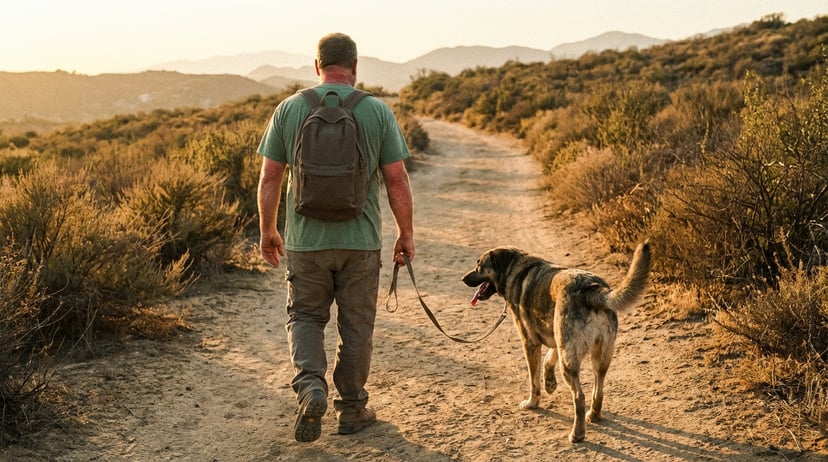
Not every breed is suited for loaded walking. Genetics matter more than training here.
Breed Suitability Guide
| Size Class | Best Breeds | Distance Rec. | Notes |
|---|---|---|---|
| Small (under 20 lbs) | Not recommended | N/A | Prone to heat stress, difficulty matching pace, can't regulate temperature as effectively |
| Medium (20 - 50 lbs) | Beagles, Brittany Spaniels, Border Collies, Australian Shepherds | 2 - 5 miles | Good endurance, athletic builds, tolerate varied terrain |
| Large (50 - 90 lbs) | Labrador Retrievers, Golden Retrievers, German Shepherds, Weimaraners, Rhodesian Ridgebacks | 3 - 8 miles | Built for distance, excellent pace matching, high drive |
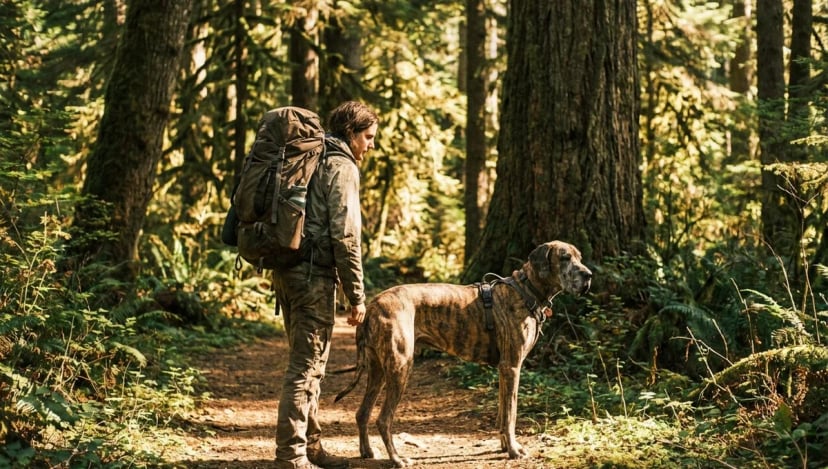
| Giant (90+ lbs) | Great Danes, Bernese Mountain Dogs, Anatolian Shepherds | 2 - 6 miles | Impressive endurance, but watch for joint stress and heat sensitivity in hot weather |
Why breeds matter:
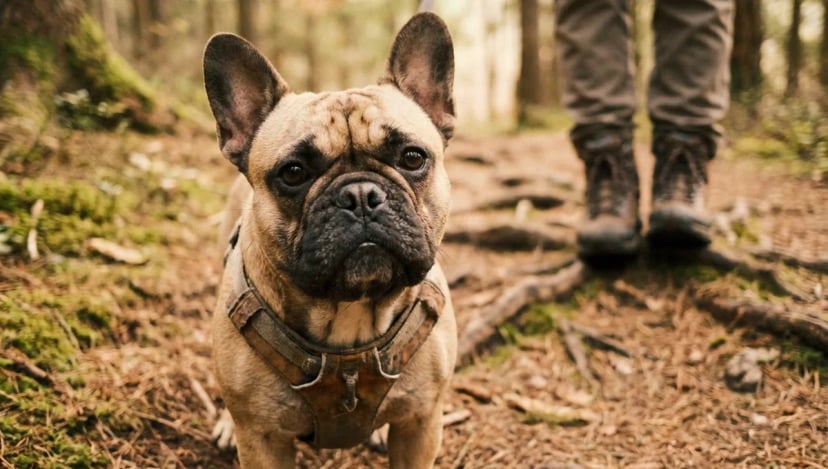
Brachycephalic dogs (flat-faced: Bulldogs, Pugs, French Bulldogs) should not ruck. They cannot regulate temperature through panting effectively and overheat quickly.
Toy breeds and small dogs (Chihuahuas, Yorkies, Maltese) lack the frame and metabolic capacity for weighted walks over 2 miles.
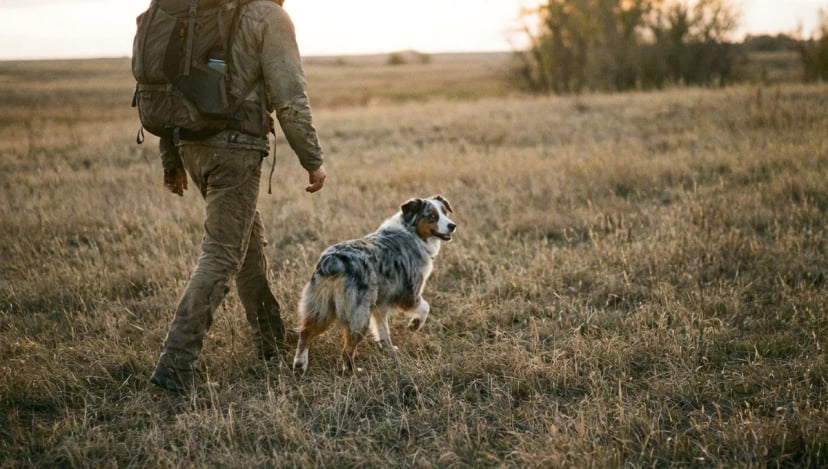
Herding dogs (Border Collies, Australian Shepherds) and retrievers are natural rucking partners. They were bred for all-day work and actually get bored without it.
Before your first loaded walk, ask your vet: "Is my dog healthy enough to ruck?" This is especially important if your dog is overweight, has joint issues, is very young (under 12 months), or is a breed known for hip dysplasia.
Distance and Pace Guidelines by Dog Size
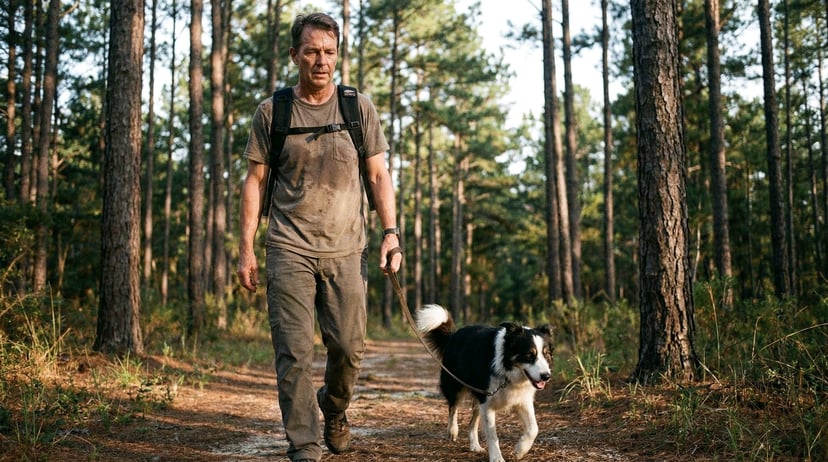
Start with half your target distance. If you want to ruck 5 miles with your dog, begin at 2.5 miles and add 0.5 miles every one to two weeks.
Medium Dogs (20 - 50 lbs)
- Starting point: 1 to 2 miles at 3.5 mph (easy pace)
- Build to: 3 to 5 miles at 3.5 to 4 mph
- Rest days: Two to three days between loaded walks
- Summer cap: 2 miles maximum on days above 75°F
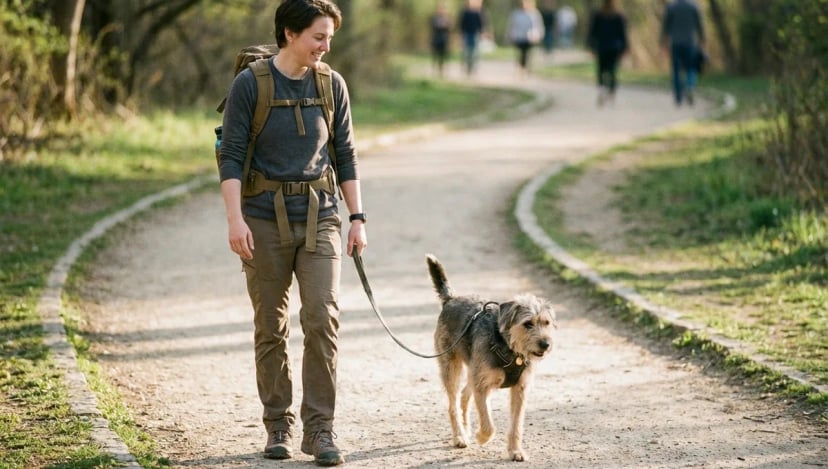
Large Dogs (50 - 90 lbs)
- Starting point: 2 to 3 miles at 3.5 mph (easy pace)
- Build to: 5 to 8 miles at 3.5 to 4 mph
- Rest days: One to two days between loaded walks
- Summer cap: 4 miles maximum on days above 75°F
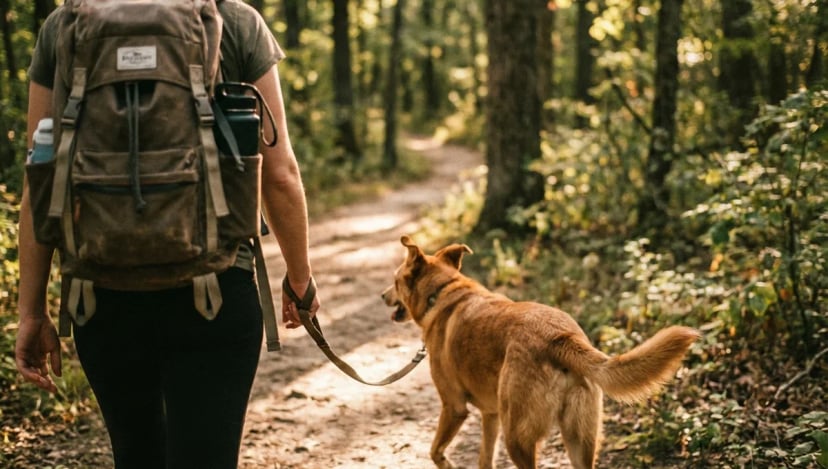
Giant Dogs (90+ lbs)
- Starting point: 1.5 to 2 miles at 3 mph (very easy pace)
- Build to: 4 to 6 miles at 3 to 3.5 mph
- Rest days: Two to three days between loaded walks
- Note: Larger dogs are heavier on their joints. Avoid back-to-back loaded walks.
Canine exercise guidelines from the American Kennel Club recommend starting with 5 minutes of loaded walking per 10 lbs of body weight, then gradually increasing duration. A 50-lb dog should start at about 25 minutes and increase by 5 to 10 minutes every two weeks until reaching 45 to 60 minutes for a single session.
Hydration - You AND Your Dog
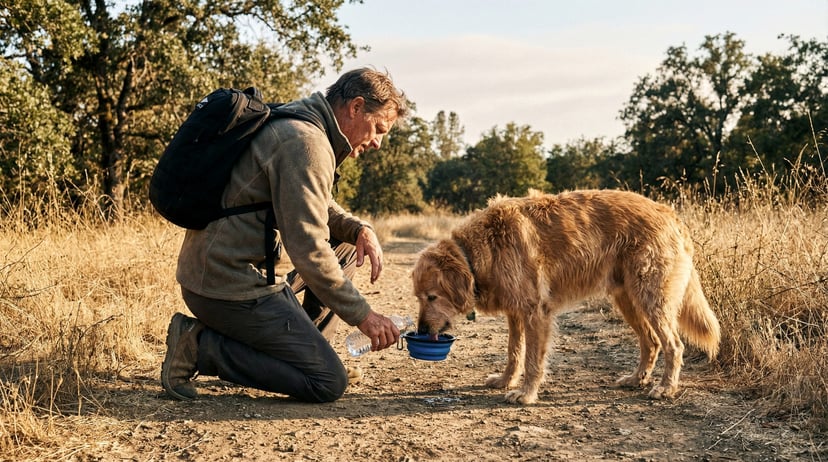
Your dog cannot carry water or access hydration mid-walk the way you can. You carry that responsibility.
Hydration Protocol
Before the walk:
- Give your dog a light drink (not a full bowl) 15 minutes before departure. Too much water immediately before exercise causes gastrointestinal upset.
- Drink your normal pre-ruck amount.
During the walk (3+ miles):
- Bring at least 16 to 24 oz of water for your dog in a collapsible bowl or hydration pack with a dog-specific attachment. A 3L bladder like the Source WXP gives you enough capacity for both of you on summer rucks.
- Stop every mile to two miles and let your dog drink. Watch for excessive panting as a sign of dehydration.
- Drink more than usual - your dog's presence increases mental load and you'll sweat more.
After the walk:
- Give your dog fresh water within 15 minutes of finishing.
- Wait 30 minutes before offering a meal (rapid eating after exercise can cause bloat).
- Continue drinking for the next two hours.
Collapsible bowls are lighter than rigid bowls and take minimal pack space. Brands like Ruffwear and Kong offer bowls specifically designed for hiking and rucking. Attach one to your ruck's exterior.
Heat and Humidity - Dogs Cannot Sweat
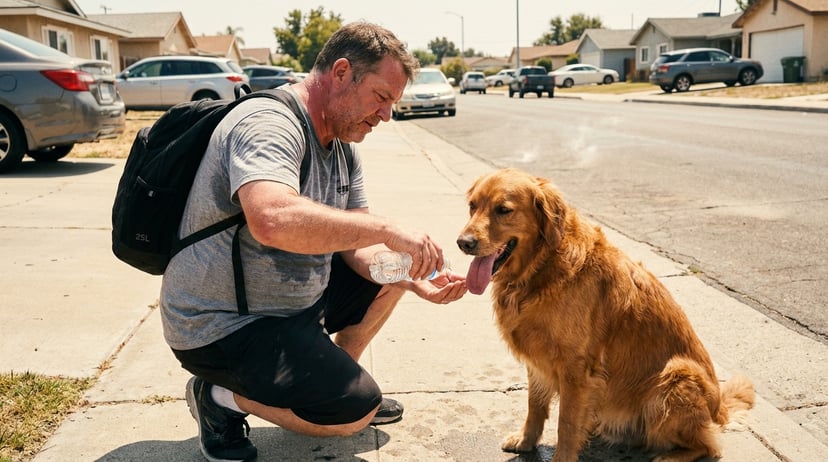
This is critical. Dogs lack sweat glands and regulate temperature almost entirely through panting. Humidity prevents evaporative cooling, which is why a 78°F humid day is more dangerous than an 85°F dry day.
Heat Stress Warning Signs
Watch for these during and immediately after rucks:
- Excessive panting - Faster and heavier than the normal panting from exertion
- Lagging behind - Your dog slows or falls 3 to 5 steps behind when usually they match pace
- Reluctance to continue - Your dog sits, stops, or ignores forward cues
- Drooling more than usual - Thick, ropy saliva (different from normal panting drool)
- Stumbling or coordination loss - Your dog's hind legs feel unsteady
- Bright red gums or tongue - Sign of heat damage to mucous membranes
- Glazed expression - Unfocused eyes, lack of engagement
If you see any of these:
- Stop immediately and find shade.
- Offer water (small amounts, don't let them gulp).
- Pour cool (not cold) water on their head, neck, and chest.
- Do not attempt to cool them rapidly - sudden temperature drops cause shock.
- Head home or to a vet if the signs don't improve within 5 to 10 minutes.
Temperature-Based Rucking Calendar
| Temperature | Humidity | Recommendation |
|---|---|---|
| Below 65°F | Any | Ideal rucking conditions |
| 65 - 75°F | Low to moderate | Good - watch for panting |
| 75 - 80°F | Low | Reduced distance - medium dogs max 2 miles, large dogs max 3 miles |
| 75 - 80°F | High | Skip the ruck. Go for an easy, unloaded walk instead |
| Above 80°F | Any | Do not ruck with your dog. Period |
Brachycephalic breeds (flat-faced) should not ruck above 70°F.
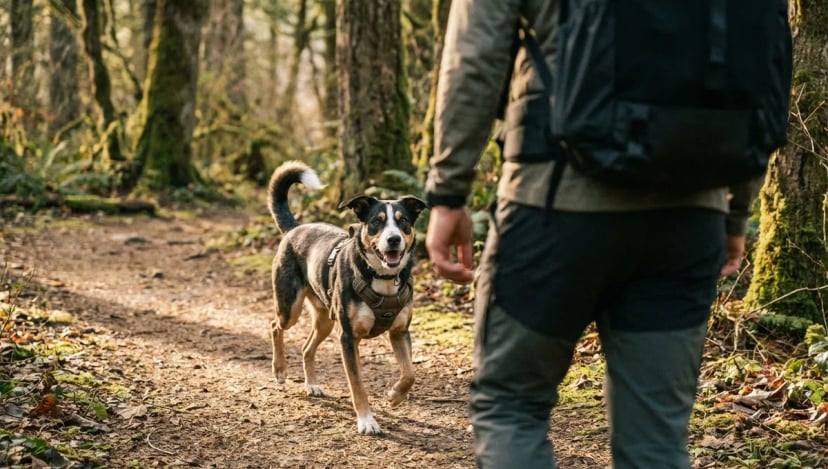
Leash Setup and Hands-Free Options
Rucking with a dog on a traditional hand-held leash is awkward and unsafe. You need both hands for balance, stability, and pack adjustment. Hands-free systems let you keep your dog close without using your hands.
Hands-Free Leash Systems
Waist-attached leashes (best for rucking):
- Ruffwear Front Range Harness with the Ruffwear Direct Attach Harness System
- GORUCK Gear Harness (designed specifically for loaded walks)
- EzyDog Zero Shock harness with bungee
These attach to your belt or ruck hip belt, keeping your hands completely free. The leash stays taut but not restrictive. A pack with a real hip belt to clip into makes this far easier - the GORUCK Basic Rucker is a solid starting point if you don't already have one. For the dog's end of the system, our sister site House Pet Authority runs a source-cited guide to the best dog harnesses, including the front-clip and Y-front designs that hold up to a taut waist leash.
Chest-harness hybrids:
- Not ideal for rucking because they pull your dog at an angle and affect their gait
Traditional leash (worst option):
- Requires one hand
- Shifts balance
- Reduces stability on technical terrain
Test your hands-free system on a flat, unloaded walk first. Make sure the attachment point doesn't rotate or twist under load, and that the leash length keeps your dog at your left side without wrapping around your legs.
Leash Length
Aim for 4 to 6 feet of slack. This gives your dog room to sniff and adjust pace without pulling ahead or falling behind. Too short (under 3 feet) and your dog feels constrained. Too long (over 8 feet) and they can wander into traffic, terrain hazards, or other dogs.
Training Your Dog to Ruck
A dog that hasn't been trained to heel or match pace will turn a smooth ruck into a constant struggle. Invest two to three weeks in foundation training before attempting loaded walks over 2 miles.
The Heel Protocol (3 - 4 weeks)
Week 1 - 2: Stationary heel
- On flat ground, stand with treats in your left hand.
- Say "heel" and hold treats at your left hip.
- Let your dog walk into position at your left side.
- Take two to three steps, reward, and stop.
- Repeat 10 times, twice per day.
- Goal: Your dog holds position for 30 seconds while standing still.
Week 3: Moving heel
- Repeat the above but walk forward in a straight line.
- Your dog should stay at your left hip even as you move.
- Reward every 15 to 20 steps.
- Gradually extend to 50 to 100 steps without stopping.
- Goal: Your dog heels for three to five minutes straight.
Week 4: Pace consistency
- During heel walks, vary your speed (slow to moderate).
- Reward your dog for matching each change.
- Your dog learns that they mirror your pace, not vice versa.
Pace Matching Drills
Once your dog heels reliably, train them to match your specific rucking pace (usually 3.5 mph).
- Walk unloaded at your target pace for 10 to 15 minutes.
- Reward frequently when your dog stays even with you.
- If they pull ahead, slow to a stop and wait (don't drag them back).
- Restart and reward correct positioning.
- Repeat every three to four days for two weeks.
By week six, your dog should understand: "when we ruck, we walk at your pace, not mine."
Paw and Joint Protection
Before your first loaded ruck, inspect your dog's paws and joints.
Paw Care
- Trim nails short - Long nails cause irregular gait and put stress on joints.
- Check paw pads - Soft, tender pads blister easily on rough terrain. Condition them gradually (short walks on varied surfaces).
- Avoid hot pavement - On warm days, pavement heats to 120°F +. Stick to trails, grass, or dirt.
- Watch for limping - If your dog favors a paw or limps for more than two minutes after a walk, scale back distance for the next week.
Joint Health
Large and giant breeds are prone to hip dysplasia and elbow dysplasia. Load-bearing exercise can exacerbate pre-existing conditions.
- Ask your vet about baseline joint health before starting loaded walks.
- Supplement with glucosamine and chondroitin if your vet recommends.
- Avoid repetitive jumping or sharp directional changes on rocky terrain.
Safety Checklist Before Your First Loaded Ruck
- Vet clearance - Your dog is healthy enough to ruck
- Breed assessment - Your dog's breed is suited for distance and climate
- Baseline fitness - Your dog walks unloaded 2 to 3 miles without fatigue
- Heel training - Your dog heels reliably for 5+ minutes
- Hands-free leash tested - On an unloaded walk on flat ground
- Hydration kit packed - Collapsible bowl and at least 16 oz of water
- No heat risk - Temperature is below 75°F
- Route checked - Terrain is dog-safe (no sharp rocks, broken glass, or steep drop-offs)
Frequently Asked Questions
What if my dog isn't interested in rucking or gets tired quickly?
Not every dog enjoys rucking. Some dogs are homebodies and prefer short, familiar walks. If your dog lags behind, sits frequently, or avoids heel position, they're telling you they're not interested or not ready.
Respect that. Rucking should be enjoyable for both of you. Continue with unloaded walks and low-pressure exercise instead. A reluctant dog under load is unsafe and will resent the activity.
If your dog is young (under one year), is overweight, or has low baseline fitness, build their aerobic capacity with unloaded walks first. A six-month training cycle is not unusual.
Can I carry my dog in my ruck if they get tired?
Not recommended. A 40 to 50 lb dog adds significant load and throws off your balance, especially on technical terrain. If your dog is getting tired, shorten future rucks instead.
If you need to carry a small dog (under 15 lbs) as a backup plan, use a dog carrier backpack like the Kurgo Backpack Carrier, not your main ruck. Your ruck is optimized for human load distribution.
How often should I ruck with my dog?
Two to three times per week is ideal. This gives your dog adequate recovery time (especially if they're large and at risk for joint stress) and prevents rucking from becoming monotonous.
On non-rucking days, offer easy unloaded walks (30 to 45 minutes at a casual pace) for active recovery.
Can I ruck with a puppy or senior dog?
Puppies (under 12 months): Wait. Their growth plates aren't closed, and load-bearing exercise on developing joints causes permanent damage. Start rucking after their one-year growth milestone, and only after vet clearance.
Senior dogs (over 8 years): Possible, but require shorter distances, slower paces, and more frequent breaks. Start with one-mile unloaded walks and add load gradually only if the vet approves. Many seniors do better with consistent, easy walking than loaded exercise.
My dog pulls constantly on the leash. Can we still ruck?
Not yet. A dog that pulls is not ready for loaded walks. Leash pulling on loaded walks can injure both of you - your shoulder, their neck, your balance.
Spend two to four weeks on loose-leash training and heel work before attempting loaded distance. Reward pulling prevention aggressively. If pulling doesn't improve with training, consider a front-clip harness (like the Ruffwear Front Range) that redirects pulling force sideways rather than forward. Our sister site House Pet Authority has a full training walkthrough on how to stop a dog pulling on the leash, built on the same reward-based protocol.
Your Next Step
Once you and your dog are rucking together, the next level is understanding how to scale distance and load safely. Check out the complete beginner's guide to rucking for a structured three-week progression plan that you can do alongside your dog.
Related Reading
- The complete beginner's guide to rucking - A three-week progression for humans (apply the same principles to your dog's training)
- How heavy should your ruck be? - Once you and your dog are trained, determine the right load for your body
- Best rucking gear for beginners - Hands-free leash systems and hydration packs built for rucking
- Rucking for weight loss - Your dog's presence adds mental and emotional load - recovery matters