The Short Answer
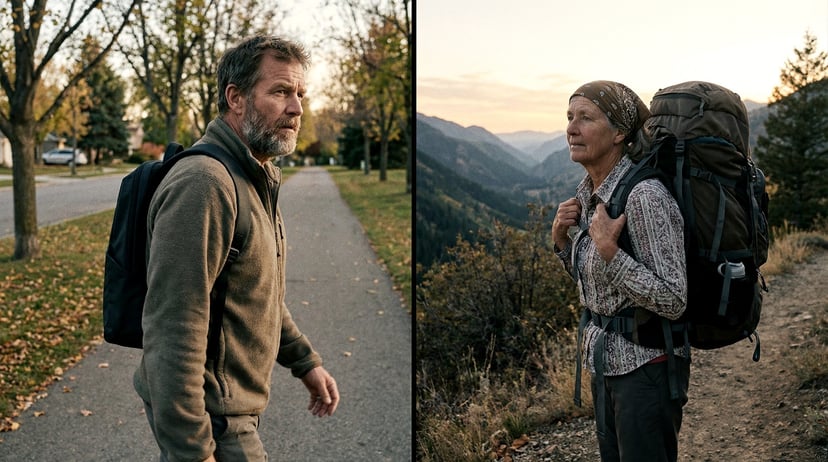
Rucking and hiking are not the same activity, even though they look similar and often happen in the same places. The key difference is intent: hiking is about the destination - reaching a viewpoint, summit, or scenic location. Rucking is about the training stimulus - the load, distance, and effort are the workout itself.
The practical reality: Many hikers already carry weighted packs without calling it "rucking." Many ruckers would benefit from abandoning the numbers for a day and hiking a trail for the pure joy of it. They're not competitors - they're tools that solve different problems.
Rucking vs Hiking: Side-by-Side
| Element | Rucking | Hiking |
|---|---|---|
| Primary goal | Training stimulus, controlled workload | Destination, scenery, exploration |
| Pack weight | Intentional (20-50 lbs typically) | Variable (10-30 lbs, depends on terrain) |
| Typical terrain | Roads, paved trails, gentle hills | Varied (trails, elevation gain, technical) |
| Distance | 6-15 miles, planned by time/effort | Variable (2-20+ miles, by destination) |
| Calorie burn (180-lb person) | About 330-410 cal/hr with 30 lb on flat pavement, much more on hills | About 390 cal/hr unloaded on a rough trail at 3 mph, more with climbing |
| Pace | Steady, rhythmic (3-4 mph) | Flexible, often slower on technical sections |
| Effort tracking | Heart rate, pace, load intensity | Scenery, summit achievement, exploration |
| Injury risk | Low if load-managed properly | Low to moderate (terrain-dependent) |
The calorie figures above are general-population averages. For your specific body weight, load, pace, and terrain, the rucking calorie calculator runs the full Pandolf equation (with the Drain 2017 / Looney 2018 correction at modern speeds and loads) and produces a number tuned to your inputs - which is usually 15 to 30 percent higher than what a fitness watch's Walk or Hike mode estimates.

Why They Overlap (And Why That's Confusing)
If you hike with a 30-lb backpack up a mountain, you've technically rucked. If you ruck on a trail instead of pavement, you've hiked. The activities exist on a spectrum.
The confusion happens because:
- Same physical movement - Both involve walking with load over distance.
- Same environments - Many ruckers choose trails, many hikers carry significant load.
- Similar gear - A hiking backpack and a ruck look nearly identical.
But the training principle is different. A rucker chooses a route based on load tolerance and training time. A hiker chooses a route based on what's worth seeing.
When a Hiker is Actually Rucking
- Carrying a weighted backpack on purpose (not just because they have camping gear)
- Tracking pace, distance, or effort data
- Following a planned route specifically for the training stimulus
- Adding weight because they want to build strength
When a Rucker is Actually Hiking
- Stopping frequently to enjoy views
- Taking a scenic detour even if it's longer
- Not tracking metrics or pace data
- Choosing the route for the experience, not the training stimulus
Most people do a mix. A weekend trail ruck might become a hike at the summit when you stop to enjoy the view. A leisurely nature hike becomes a ruck when you're tracking splits and pushing pace on a descent.
Calorie Burn and Effort
On a road, the pack is what raises the burn. On a trail, the terrain does much of the same work, which is why an unloaded hike can match a flat ruck. Hiking also wins on sustainability because it's less relentless.
The Pandolf equation models the metabolic cost of load carriage across weight, terrain and grade. For a 180-lb person at 3.5 mph on flat pavement it estimates about 365 calories an hour unloaded and about 410 with a 30-lb pack, roughly 13 percent more. Terrain and grade move the number far more: the same person hiking unloaded on a rough trail at 3 mph is about 390, and a 30-lb ruck up a 5 percent grade at 3.5 mph is about 635. Pandolf tends to under-predict heavier loads, so treat these as conservative.
Hiking on technical terrain (with elevation gain, loose rock, switchbacks) raises the calorie burn without extra load - sometimes matching rucking numbers even unloaded. But this comes at the cost of joint stress from the terrain, not from load.
The Training Case for Each
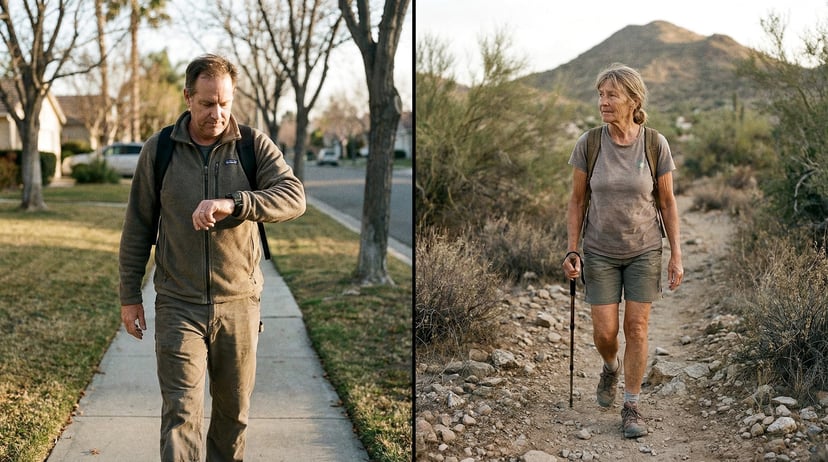
When to Ruck
Rucking is better when you want:
- Predictable, repeatable load stimulus - Same pack weight, same pace, same metrics week to week. This builds durability and lets you track progress.
- Consistency - You can ruck the same route regardless of weather, season, or terrain conditions. No surprises.
- Efficiency - Higher calorie burn in less time because of the load. Useful for fat loss or strength gains on a schedule.
- Injury prevention through control - You choose the grade, distance, and load. Variables are yours to manipulate.
When to Hike
Hiking is better when you want:
- Variety and engagement - New terrain, elevation change, technical movement. Your brain is engaged the whole time, not just monitoring pace.
- Durability building - Uneven ground, loose rock, elevation gain teach your body to move in non-linear ways. This transfers to real-world movement.
- Enjoyment first - Sometimes the goal is not the numbers. It's the view, the air, the sense of accomplishment at a summit.
- Social activity - Hiking is easier to do with groups. You can stop, talk, enjoy moments. Rucking is more demanding on sustained effort. Hiking also welcomes a four-legged partner - our sister site House Pet Authority's guide to hiking with your dog covers conditioning your dog for distance, trail etiquette, and what to pack for the pup.
The Hybrid Approach
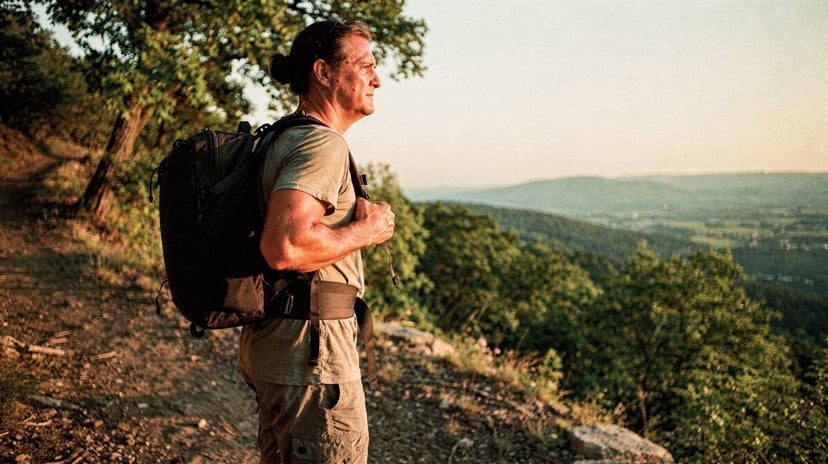
We recommend both.
If you're a rucker, add one trail hike per month into your programming. It breaks up the monotony, builds terrain durability, and reminds you why you got into movement in the first place.
If you're a hiker, try one intentional ruck per week. Start light (15-20 lbs) on a route you know well. You'll gain strength and see how the load changes your effort perception.
Many people who do both report that rucking makes hiking easier (the strength carries over), and hiking keeps rucking interesting (the variety keeps you engaged).
The Case for "Why Not Both?"
The ideal scenario is a weekly routine that includes:
- Two to three rucks (structured load training, predictable stimulus)
- One trail hike (durability building, terrain skills, scenery reward)
- Active recovery (unloaded walking or very easy trail, 2-3 miles)
This gives you load conditioning, terrain adaptability, mental engagement, and low injury risk. You're not over-specializing, and you're training the full spectrum of movement.
Frequently asked questions
Is rucking just hiking with a weighted pack?
Not exactly. Rucking has a training focus - the load, pace, and distance are chosen intentionally for a specific outcome. Hiking focuses on the destination or experience. You can hike with a weighted pack (many do), but that's only "rucking" if the load is intentional for training. The line is blurry, and most people land somewhere in the middle.
Can I substitute hiking for rucking in my training plan?
Partially. Hiking builds similar aerobic capacity and lower body strength, especially on technical terrain. But unloaded hiking doesn't provide the same load stimulus as rucking, so you won't gain the same bone density, muscle, or postural strength benefits. If you're doing a rucking program, occasionally swapping a ruck for a trail hike is fine. But don't replace your rucking volume with hiking and expect the same training outcomes.
Is hiking or rucking better for fat loss?
On the same route, the ruck burns more because of the load; a hilly hike can burn as much as a flat ruck. Hiking is also sustainable longer (most people can hike 4-5 hours; fewer can ruck that long). For fat loss over months, consistency matters more than peak calorie burn. A sustainable routine of rucking twice a week plus hiking once weekly outperforms sporadic long rucks. Choose what you'll actually do.
Can I learn to ruck on hiking trails?
Yes, absolutely. Many ruckers start on trails. Start with light load (15-20 lbs), slow pace (3-3.5 mph), and short distance (3-5 miles). This teaches you how load changes your movement on varied terrain. As you adapt, you can add weight, distance, or pace. Just progress slowly - trail rucking is harder on joints than pavement rucking because of the terrain variation. Investing in proper trail footwear is critical - shoes like the Salomon XA Pro 3D V9 GTX handle mixed terrain with load well, and our best rucking shoes by terrain guide covers the rest of the lineup.
What's the difference in calorie burn between rucking and hiking the same trail?
A 180-lb person hiking an unloaded trail for 3-4 hours burns roughly 1,000-1,500 calories, more with a lot of climbing. The same person rucking a 30-lb pack on flat pavement for the same time burns roughly 1,000-1,600. Over the same hours the two land close together; terrain and climbing decide which one comes out ahead.
Your next step
If you're ready to add trail rucking to your routine, the biggest mistake is going too heavy or too far. Our ruck weight guide shows you how to scale load based on your fitness level. And then check out pavement vs trail vs treadmill to understand how terrain changes your training stimulus. Leaning toward hiking instead? Our sister site Kit Authority's hiking gear hub owns that side - day-hike checklists, footwear, and trail gear without the weighted-pack angle.
Related reading
- The complete beginner's guide to rucking - start here if you're new to the activity
- How heavy should your ruck be? - personalized load recommendations by fitness level
- Pavement vs trail vs treadmill - how terrain choice changes your training stimulus
- Rucking for weight loss - calorie data and programming if fat loss is your goal
- Can rucking be your only exercise? - what rucking covers and what to add for a complete program