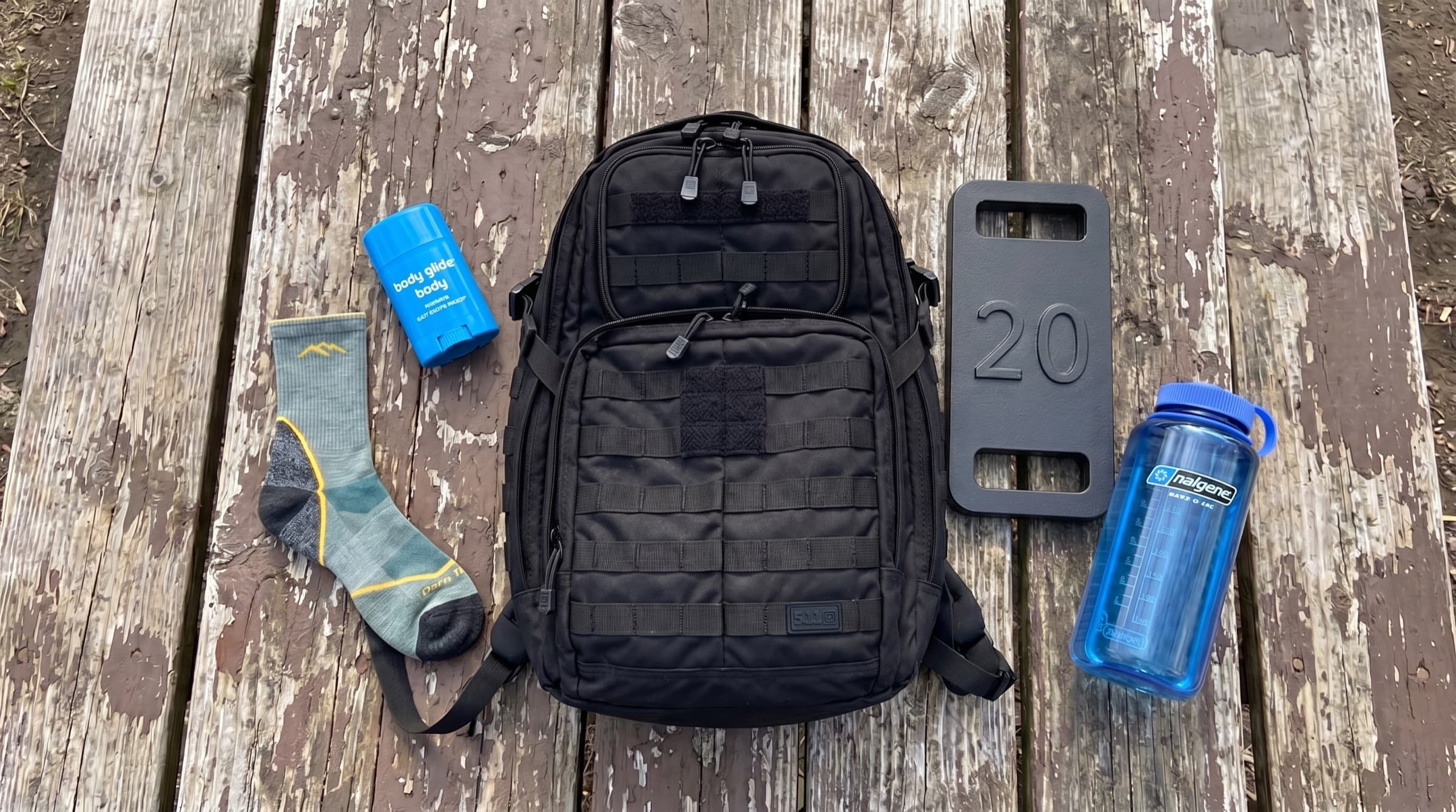
How the four-week plan works
The builder starts from two training inputs: loaded distance from a typical recent week and the pack load you used comfortably. It does not turn body weight into an individual prescription.
One primary loaded day
Every week has one primary ruck. Intermediate and advanced ruckers who choose four or five total training days and report at least two recent loaded miles may receive one optional easy ruck. Strength, unloaded walking, intervals, or recovery fill the other days.
Pack load stays fixed
Week 1 matches the recent baseline. Week 2 adds about 8% loaded distance while keeping pack load, pace, and terrain steady. Week 3 repeats that distance and load while introducing, at most, one controlled skill factor. Week 4 reduces loaded distance by about 15% and reviews the block.
When there is no loaded baseline
Enter zero for recent distance and load. The builder uses its lightest starting block: one mile with five pounds on the primary ruck. The goal is to establish a repeatable session, not to test a percentage of body weight.
The 25% scope boundary
This general-purpose tool will not accept a current load above 25% of entered body weight. That is a product boundary, not a target or proof that a lower load is appropriate. Occupational and event requirements above it belong in the current official or coached plan for that requirement.
Goals change the support work
Fat loss, general fitness, event preparation, and strength change the unloaded sessions around the primary ruck. They do not create a heavier starting load. For an event, compare the result with the organizer's current load, distance, gear, and task requirements.
After week four
Use the reduced week to review gait, pain, recovery, and the conditions you actually completed. Repeat the block, reduce it, or build a new one from that updated baseline. Do not stack missed sessions or automatically add weight.
Frequently asked questions
How many loaded rucks does the builder schedule?
Every plan has one primary loaded ruck. Intermediate and advanced ruckers who choose four or five total training days and report at least two recent loaded miles may also receive one optional easy ruck. The other sessions are unloaded walking, strength, intervals, or recovery.
Should beginners ruck every day?
No. Beginner plans use one loaded day per week. The remaining available training days build walking, strength, or aerobic fitness without adding more pack work.
What is a good rest schedule for ruckers?
Recovery needs vary with load, distance, terrain, sleep, and training history. Leave easier or unloaded days around harder sessions, and do not make up a missed ruck by stacking sessions. Lingering pain, changed gait, or declining performance are reasons to reduce the plan and seek professional guidance when needed.
Can I lift weights and ruck in the same week?
You can combine them, but the total training load still matters. Avoid placing every hard lower-body session next to a longer or heavier ruck. If strength work changes your gait or recovery, reduce the ruck rather than forcing both sessions to fit.
How long should my longest weekly ruck be?
The longest session should start from loaded distance you have completed recently, not a universal target. Week 1 does not exceed that reported weekly baseline. If you enter no recent loaded training, the builder begins with one mile and five pounds. Event preparation may need a longer build, so compare this block with the organizer's current requirements.