The Short Answer
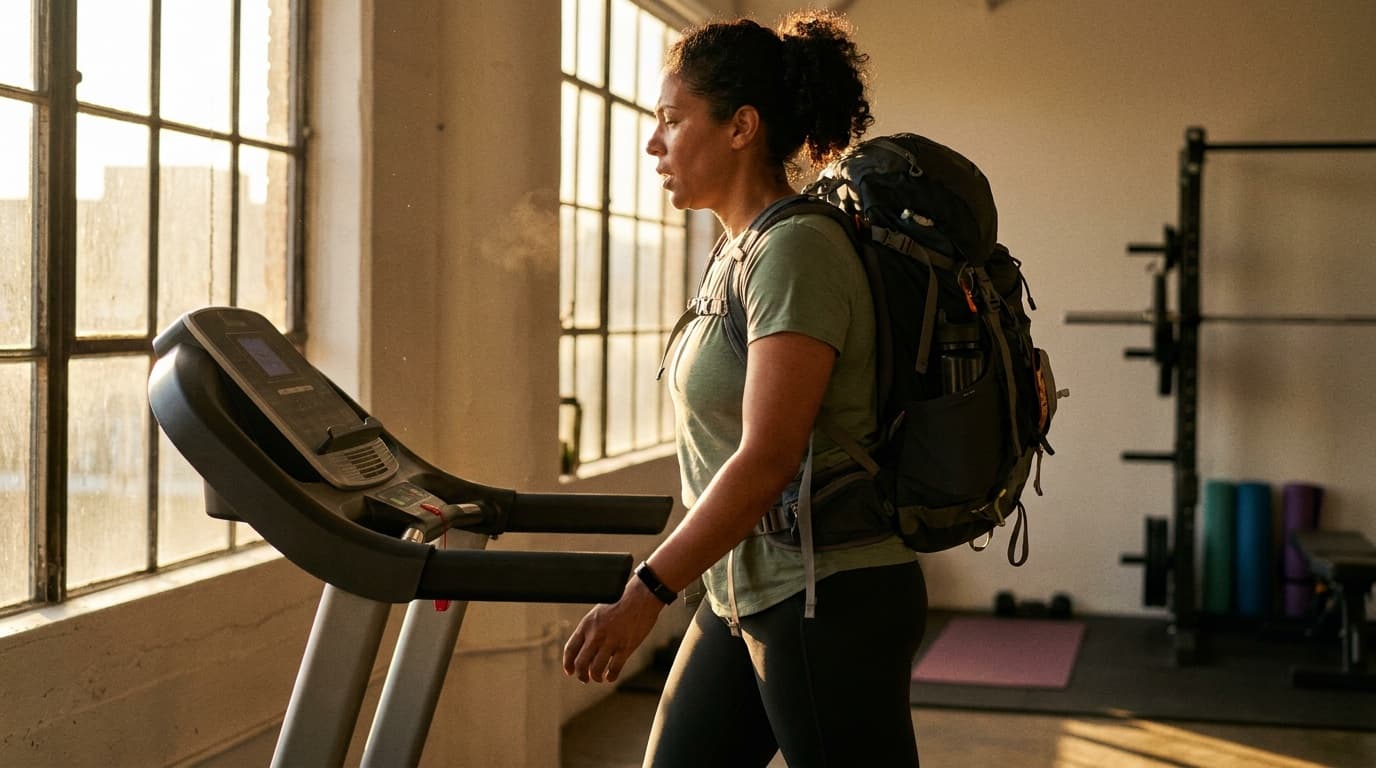
Both are excellent low-impact cardio options, but they excel in different areas. Cycling burns more calories per hour (about 580 - 1,000 depending on speed) and is mechanically easier on your joints. Rucking burns fewer calories per hour on flat ground (about 395 - 430, more on hills) but builds total-body strength, requires virtually no equipment cost, and works anywhere.
The real difference: Cycling is pure aerobic efficiency. Rucking is strength-building cardio. Choose cycling if you want maximum cardio output. Choose rucking if you want to build strength while training cardio.
Calorie Burn Comparison
| Activity | Body Weight | Intensity | Calories per Hour | Equipment Cost | Notes |
|---|---|---|---|---|---|
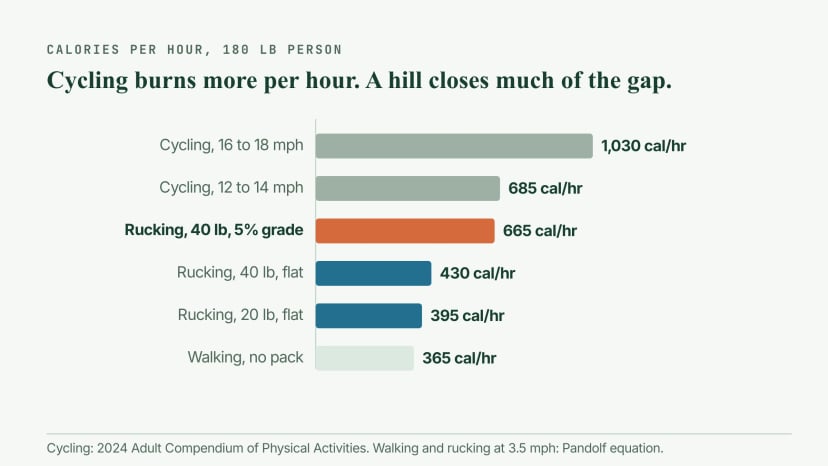
| Cycling | 180 lbs | Moderate (12-14 mph) | about 685 | $800-2000+ | Road or gravel bike required |
| Cycling | 180 lbs | High (16-18 mph) | about 1,030 | $800-2000+ | Requires fitness and access |
| Rucking (40 lb pack) | 180 lbs | Moderate (3.5 mph, flat) | about 430 | $80-150 | Any pack, any terrain |
| Rucking (20 lb pack) | 180 lbs | Moderate (3.5 mph, flat) | about 395 | $50-100 | Great for beginners |
| Walking (unloaded) | 180 lbs | Moderate (3.5 mph, flat) | about 365 | $0 | Baseline for comparison |
Cycling figures come from the 2024 Adult Compendium of Physical Activities (8 and 12 METs); walking and rucking from the Pandolf equation, all for a 180-lb individual. A 40-lb ruck up a 5% grade is about 665 cal/hr, which is where rucking closes on moderate cycling. For your own body weight, load, pace and grade, the rucking calorie calculator runs the same Pandolf math.
Cycling wins on raw cardio output per hour. But output is not the only factor that determines whether an activity sticks long-term.
The Core Differences
Impact Level and Joint Health
Cycling is zero-impact. Your feet never leave the pedals. This is a genuine advantage for people with knee, ankle, or hip issues. Rucking is weight-bearing - you absorb impact with every step, though it is far lower than running (roughly half the ground reaction force).
For people with joint damage or arthritis, cycling is objectively gentler. For people with healthy joints, the weight-bearing nature of rucking actually strengthens bones through mechanical loading.
Kohrt et al. (2004) showed that weight-bearing exercise increases bone mineral density, while non-weight-bearing activities like cycling do not. This becomes more important with age - rucking provides a bone density stimulus that cycling cannot match.
Strength and Muscle Building
This is where the difference matters most.
Cycling works your legs hard, but it does almost nothing for your upper body, core, or posterior chain. Your arms, shoulders, and back are essentially passengers. A cyclist's physique reflects this - strong legs, everything else relatively underdeveloped.
Rucking engages your entire body. The pack compresses your spine and core (forcing stabilization), loads your legs and lower back (building posterior chain strength), and forces your upper back and shoulders to work against the pack weight. You walk away from a ruck stronger in ways cycling cannot deliver.
For body recomposition (gaining muscle while losing fat), rucking is significantly better than cycling alone.
Equipment and Cost
Cycling requires a bike. A decent road or gravel bike costs $800 - 2000+. Add helmet, lights, repair kit, and you are easily at $1000+. An e-bike is $2000 - 4000+.
Rucking requires a backpack. A quality ruck costs $80 - 150 - something like the 5.11 Tactical RUSH 24 is a common starting point. A budget pack is $50. You already own shoes.
This matters for sustainability. A low barrier to entry (rucking) leads to more consistent participation than a high barrier (cycling).
Weather and Accessibility
Cycling requires roads, gravel, or dirt trails. Bad weather means staying home. Winter becomes difficult in cold climates.
Rucking works in a parking lot, on a treadmill, in your neighborhood, on a trail, or down a city street. Rain is annoying but not stopping. You start from your doorstep.
Cardiovascular Ceiling
If your goal is pure cardiovascular peak - VO2 max, lactate threshold, heart rate ceiling - cycling gets you there faster and harder. You can sustain higher intensities for longer on a bike than on foot.
Rucking is a steady-state, moderate-intensity activity. You will not spike your VO2 max as effectively through rucking alone.

When Cycling Wins
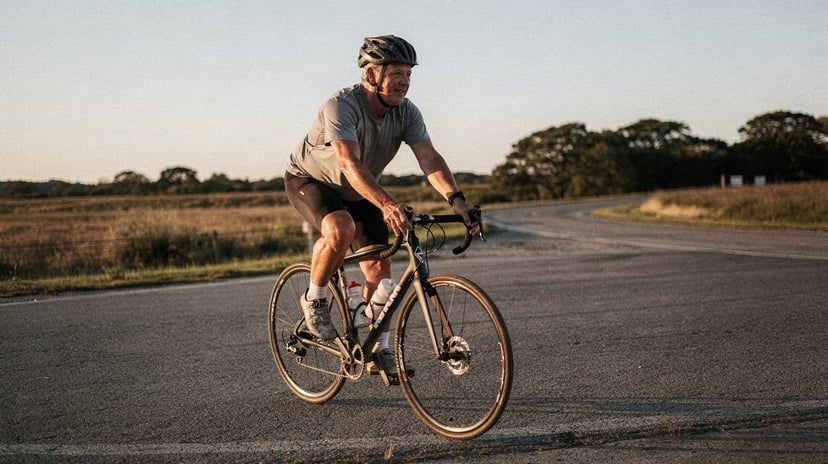
Cycling is the better choice if:
- You want pure cardio efficiency: Cycling burns about 580 - 1,000 cal/hr. Rucking does not compete on that metric.
- You have joint problems: Zero-impact movement is safer with diagnosed arthritis, old injuries, or chronic joint pain.
- You have 30 minutes and want maximum output: Cycling gets more work done in less time.
- You want to train for a cycling event: Sport-specific training requires the sport.
- You live in an area with great cycling infrastructure: Roads, trails, and a cycling community lower friction.
When Rucking Wins
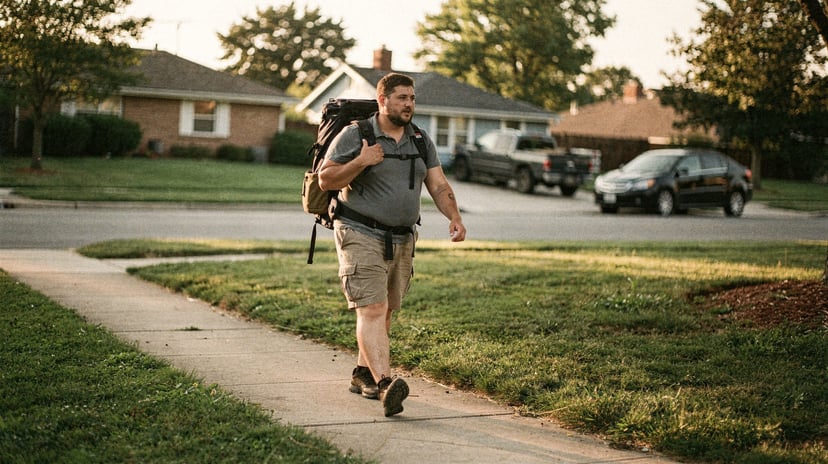
Rucking may be the better choice if:
- You want loaded carrying work: Rucking trains postural and lower-body endurance in a way cycling does not.
- You have a tight budget: $100 ruck vs. $1000+ bike is a real difference.
- Weather and travel logistics are constraints: Rucking can be done in many places without a bike or cycling route.
- You want loaded, weight-bearing exercise: Rucking provides that stimulus; cycling is non-weight-bearing.
- Consistency is your limiting factor: Lower entry cost and simpler logistics may make rucking easier to repeat.
- You want bone-loading exercise: Weight-bearing activity can support bone health, although outcomes depend on the person, dose, and overall program.
The Hybrid Approach
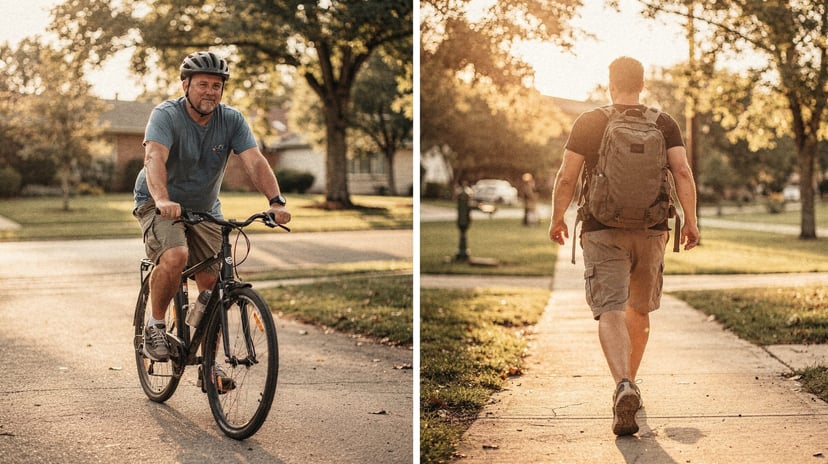
The activities can be combined. One sample week is:
- Ruck two to three times per week for strength-building, steady cardio, and bone loading.
- Cycle once per week for higher-intensity cardiovascular work and leg endurance.
- Walk unloaded once per week for active recovery and building the habit.
This combines the loaded, weight-bearing benefits of rucking with cycling-specific aerobic work. The example totals roughly 150 - 180 minutes, but it is not a proven optimal dose and does not guarantee a body-composition result.
The Decision Framework
Ask yourself these questions:
- Is joint health a constraint? Cycling removes impact and external pack load, but the right option depends on the condition; ask a qualified clinician when pain or a diagnosis affects exercise.
- Do you want upper body and core strength? If yes, rucking should be your foundation.
- Do you have a bike and cycling infrastructure nearby? If yes, cycling costs less in time and friction.
- Is your budget tight? Rucking wins decisively ($80 - 150 vs. $1000+).
- Do you want maximum calorie burn in minimum time? Cycling is more efficient per hour.
Final Verdict
For higher aerobic output per hour: Cycling often allows more sustained intensity, depending on pace and terrain.
For loaded carrying and weight-bearing work: Rucking provides a stimulus cycling does not. Neither activity alone guarantees muscle gain or a particular body-composition change.
For simple logistics: Rucking needs a pack and a safe walking route; cycling needs a bike and suitable route or indoor setup. Injury risk depends on load, volume, skill, terrain, and the individual.
For a mixed plan: Use one as the primary activity and add the other at a dose you can recover from. A four-to-six-week trial is enough to judge whether the schedule is practical, but it does not predict long-term adherence.
Frequently asked questions
Is cycling or rucking better for weight loss?
Either can contribute to weight loss when total energy balance supports it. Calorie estimates vary widely with body size, intensity, terrain, and equipment, so the ranges above should not be treated as personal predictions. Rucking adds external load, but evidence does not establish that it preserves more lean mass than cycling. Choose the activity you can repeat, and use resistance training and adequate protein when lean-mass preservation is a priority.
Can I switch from cycling to rucking?
Some aerobic fitness will carry over, but loaded walking adds a different demand on the feet, trunk, and legs. Start with a light pack and judge adaptation by comfort, gait, and recovery rather than assuming a fixed two-to-three-week timeline. A switch does not by itself guarantee a body-composition change.
Do I need special shoes for rucking?
No. Any durable shoe works - running shoes, hiking boots, or casual sneakers. The main factor is comfort and ankle support. For heavier packs (40 lbs+), a hiking boot or trail shoe with a stiffer sole reduces foot fatigue. For light packs (under 20 lbs), your everyday shoes are fine.
Can I ruck and cycle on the same day?
You can, but there is no universal order. Put the session that matters most first, keep the second easy, or use separate days if fatigue changes your technique. Alternating days is a conservative starting point; the evidence here does not support a fixed six-hour separation or claim that one order prevents injury.
Which activity is better for bone density?
Rucking is weight-bearing, while cycling provides little skeletal loading. Weight-bearing and resistance exercise are commonly included in bone-health guidance, but the effect depends on intensity, progression, age, nutrition, and medical history. Rucking-specific bone-density evidence is limited, so anyone with osteoporosis or fracture risk should get individual guidance before adding load.
Your next step
If rucking is your primary activity, pair it with a progression you can recover from. Our zone 2 rucking guide explains how to adjust pace and load for lower-intensity aerobic work.
Related reading
- Zone 2 rucking guide - the science of low-intensity loaded cardio and how to train it
- How heavy should your ruck be? - personalized weight recommendations by fitness level and goal
- Rucking for weight loss - the complete pillar guide with training programs and calorie data
- Rucking vs running for weight loss - how rucking compares to the other popular cardio option
- The complete beginner's guide to rucking - everything you need to start, from form to gear selection