The Short Answer
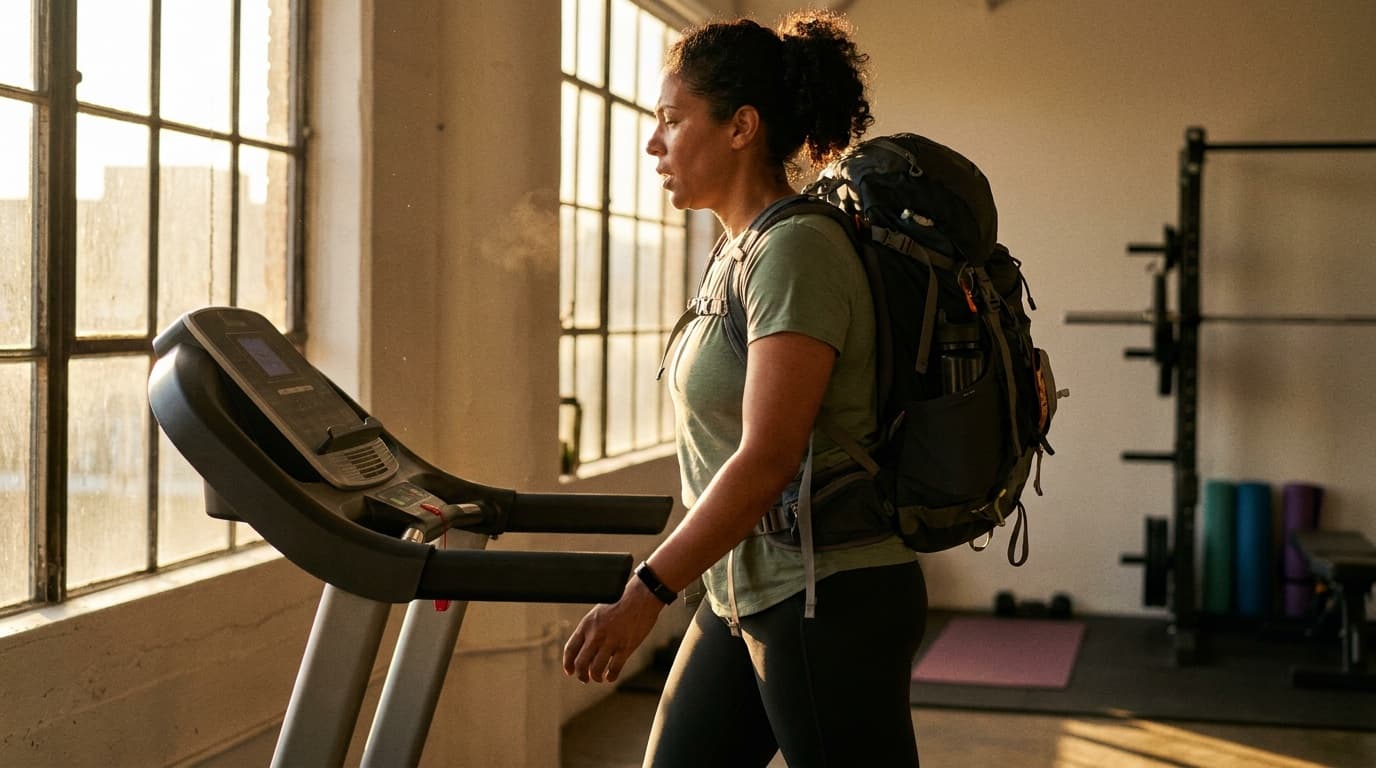
Both are excellent. CrossFit is a gym-based, high-intensity strength and power program with strong community. Rucking is a low-skill, low-cost outdoor endurance and conditioning method.
Choose CrossFit if you want coached mixed-modal training, technical lifts, and a built-in group setting. Choose rucking if you want accessible outdoor aerobic work and practice carrying a load. Many people do both, but a ruck is still training stress rather than automatic recovery.
Head-to-Head Comparison
| Factor | CrossFit | Rucking |
|---|---|---|
| Monthly Cost | Varies by box, coaching, and region | Can start with existing walking gear; specialized gear is optional |
| Injury Evidence | Depends on coaching, exposure, athlete history, and reporting method | Load-carriage injuries rise with load, volume, fatigue, terrain, and poor progression |
| Skill Barrier | Technical movements benefit from coaching | Walking is familiar, but pack fit and load progression still matter |
| Equipment Needed | Barbell, plates, boxes, pull-up rig | Backpack, Titan Fitness plates or sand |
| Calorie Burn | Varies by workout structure, body size, and effort | Varies by body size, load, pace, grade, and terrain |
| Primary Adaptation | Mixed-modal strength and conditioning | Aerobic endurance and load-carriage capacity |
| Community Factor | Very strong (box culture) | Growing (GORUCK events) |
| Scalability | Movements, loads, and volume can be coached and scaled | Load, time, distance, pace, and terrain can be adjusted one at a time |
| Mechanical Demand | Varies widely by movement and load | Walking pattern with added external load; not zero impact |
| Time Requirement per Session | 60 - 90 minutes | 45 - 120 minutes (flexible) |
For a rucking estimate based on body mass, load, pace, grade, and terrain, use the rucking calorie calculator. Treat the result as a planning estimate, not a measurement or a reason to force a larger calorie deficit.

What CrossFit Does Well
Maximum Strength and Power
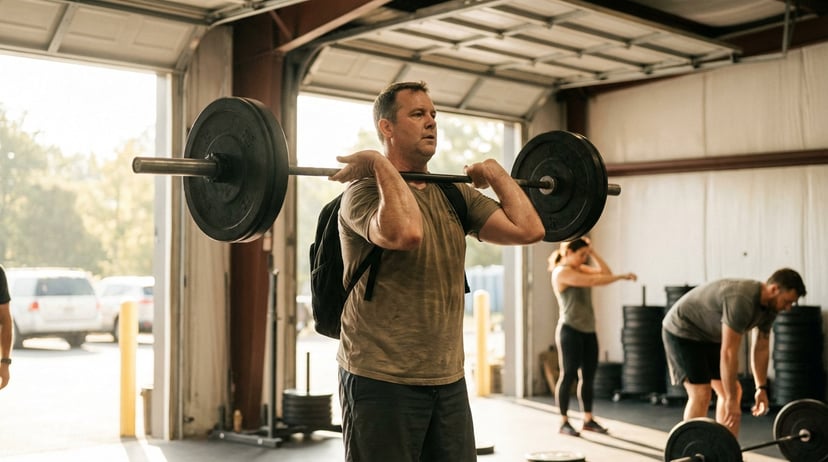
CrossFit's focus on Olympic lifts (snatch, clean and jerk), powerlifting movements (squat, bench, deadlift), and gymnastics (pull-ups, muscle-ups, handstands) builds strength faster than rucking. If your goal is to deadlift 500 lbs or nail a double bodyweight squat, CrossFit programming is built for that.
Competition and Community
The CrossFit box model creates strong community bonds. The shared WOD (workout of the day), leaderboards, and local/regional competitions build accountability and social connection. For many people, this is the primary value of membership.
Specificity
If you want to train for competition (Crossfit Games, local competitions, obstacle course races), CrossFit's periodized programming and technical coaching are essential. Rucking alone will not prepare you for barbell lifts under fatigue.
What Rucking Does Well

Accessible aerobic and load-carriage work
Rucking can turn a familiar walking pattern into progressively harder aerobic work. That accessibility does not make it risk-free: military load-carriage research documents foot, lower-limb, back, and nerve problems as load, distance, fatigue, and exposure accumulate.
Claudino et al. (2018) reviewed CrossFit research and found that injury findings varied across studies. Those estimates should not be compared directly with military ruck-march data: the populations, exposures, definitions, and reporting methods differ. Programming quality and individual scaling matter in both.
Near-Zero Barrier to Entry
You do not need coaching, a $200/month membership, or months of movement prep. Buy a backpack, add weight, and go walk. This accessibility is why rucking scales so well - from complete beginners to elite athletes can progress meaningfully at their own pace.
Endurance and Body Composition
Rucking can build aerobic capacity and loaded-walking tolerance. Fat loss still depends on sustained energy balance, and neither method guarantees muscle preservation or a particular body-composition result.
Cost
A decent backpack costs $50 - 150. Plates and sand are one-time expenses under $100. A CrossFit membership costs $150 - 250 per month - $1,800 to $3,000 per year. If you are cost-conscious or traveling frequently, rucking's economics are unbeatable.

The hybrid approach: combine them only when recovery allows

The two methods can complement each other, but simply adding their full weekly volumes can create more stress than benefit. Start with the discipline tied most directly to your goal, then add the minimum dose of the other that you can recover from.
- Keep added rucks conversational and light enough that they do not degrade the next coached session.
- Avoid placing a heavy or fast ruck next to a high-volume lower-body workout.
- Count rucking as training load, not free active recovery.
- Add frequency only after sleep, soreness, movement quality, and performance remain stable.
The potential benefit is broader exposure to strength, power, aerobic work, and load carriage. There is no evidence cited here that the combination universally outperforms either method alone, and it does not automatically reduce injury risk.
GORUCK Events: Rucking Meets CrossFit
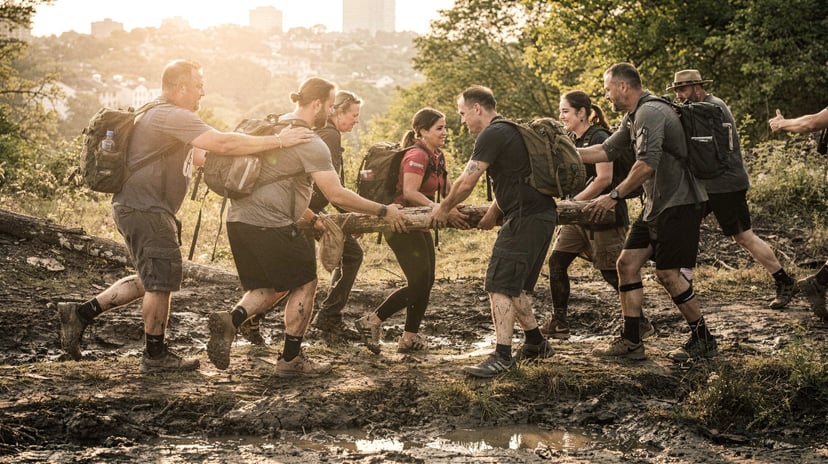
If you want to understand the hybrid potential, look at GORUCK Challenge events. A current Tough page describes a 10-12 hour cadre-led team event with a bodyweight-based ruck load. The exact movements, route, and class equipment can vary.
The Challenge combines the aerobic demands of rucking with strength and power work familiar to CrossFit athletes. The training overlap helps, but neither discipline fully prepares you for the other. If you are seriously eyeing one of these events, a purpose-built pack like the GORUCK Rucker 5.0 is made for plate carry, ground work, and repeated handling that can expose a lightly built daypack.
Decision Framework
Ask yourself these questions to decide where to focus:
- Do you have consistent access to a quality gym or box? If no, start with rucking.
- Do you want to compete in CrossFit or learn its technical movements? If yes, coached CrossFit practice is specific to that goal.
- Are you returning from injury? If yes, choose the option and starting dose your clinician and coach can scale around your current capacity.
- Is cost a constraint? Rucking can start with gear you own, while coached CrossFit pricing varies by location.
- Do you value community and accountability? If yes, CrossFit's box culture delivers that better than solo rucking.
- Are you training for a specific goal (race, strength standard, event)? If yes, match your training method to that goal.
Final Verdict
For coached mixed-modal strength and a built-in group: CrossFit is the more direct fit.
For accessible outdoor aerobic work and load carriage: Rucking is the more direct fit.
For a broader program: Combine them conservatively and keep at least one true recovery day while you learn how the total volume affects you.
Frequently asked questions
Can I do CrossFit and rucking in the same week?
Yes, but there is no universally optimal schedule. Keep the added ruck easy at first, separate it from demanding lower-body sessions, and reduce volume if soreness, sleep, technique, or performance deteriorates. A coach can help reconcile the two programs.
Is rucking a good complement to CrossFit training?
It can add sustained aerobic and load-carriage work when a particular CrossFit program does not already provide enough of it. Start with one easy session and watch total training load; extra rucking can interfere with recovery when volume or load is too aggressive.
Do I need CrossFit coaching to start rucking?
No, but a familiar walking pattern does not remove the need for pack fit and progression. Start with a manageable load or the lower result from our calculator, secure it close to the back, keep the pace conversational, and change only one of load, time, distance, pace, or terrain at a time.
How does GORUCK training fit into a CrossFit program?
Train specifically for the event's published load, duration, and required pack while preserving enough recovery for coached work. Use the GORUCK Challenge training guide as a planning framework, then adjust it to your current CrossFit volume rather than stacking both plans unchanged.
Is CrossFit safer than rucking?
The available percentages cannot support a clean winner. Studies use different populations, exposure periods, injury definitions, and reporting methods. Appropriate coaching and scaling matter in CrossFit; appropriate load, distance, terrain, pack fit, and progression matter in rucking.
Your next step
If you are drawn to rucking but have never tried it, our first 30 days of rucking guide walks you through exactly what to expect, how much weight to start with, and how to progress safely. It covers common mistakes and gives you a ready-to-use training progression.
Related reading
- How heavy should your ruck be? - personalized weight recommendations by fitness level and goal
- The complete beginner's guide to rucking - everything you need to know before your first ruck
- First 30 days of rucking - weekly progression plan with form and safety checkpoints
- Zone 2 rucking guide - aerobic training for endurance and fat loss
- Rucking vs running for weight loss - calorie burn, injury risk, and sustainability comparison