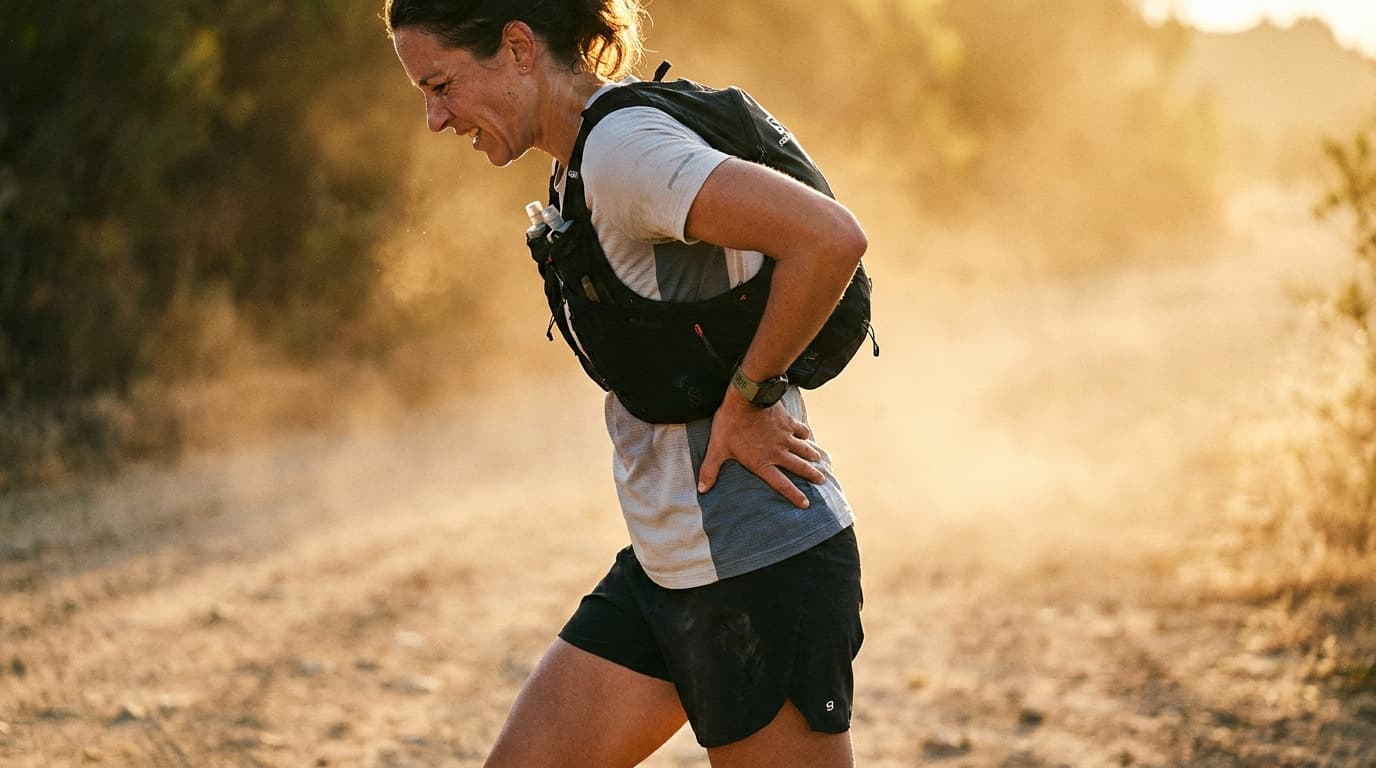
Some ruckers feel stiffness or discomfort at the front of the hip after loaded walking. That feeling is not a diagnosis. It can reflect fatigue, a change in stride or posture, limited hip motion, training load, or a problem unrelated to the hip-flexor muscles.
This guide explains the anatomy and offers conservative movement options. It cannot identify the cause of persistent hip or groin pain.
- A stiff feeling does not prove that a hip-flexor muscle is physically shortened.
- Load, distance, hills, pace, gait, strength, and time spent sitting may all affect symptoms.
- Cut back the part of the ruck that aggravates it first: lighter load, shorter distance, or fewer hills.
- Gentle mobility or strength work may help when it is comfortable, but neither is a universal fix.
- Seek an assessment when pain persists, limits daily activity, follows a fall, or comes with weakness, numbness, swelling, fever, locking, or trouble bearing weight.
What are the hip flexors and why do they matter?
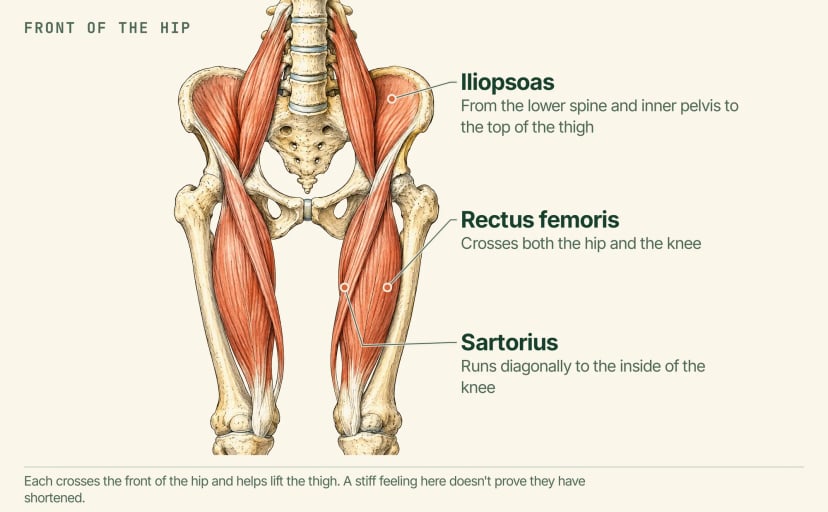
Your hip flexors are a group of muscles that help bring the thigh toward the trunk. The iliopsoas, rectus femoris, and sartorius are among the muscles involved. They have different attachment points, but each crosses the front of the hip and contributes to hip flexion.
During rucking, these muscles help advance the leg with each step. A pack can also change trunk angle, pelvic motion, stride, and muscle demand. The response varies with load placement, body shape, pace, grade, pack fit, and training history.
How rucking may contribute to hip stiffness
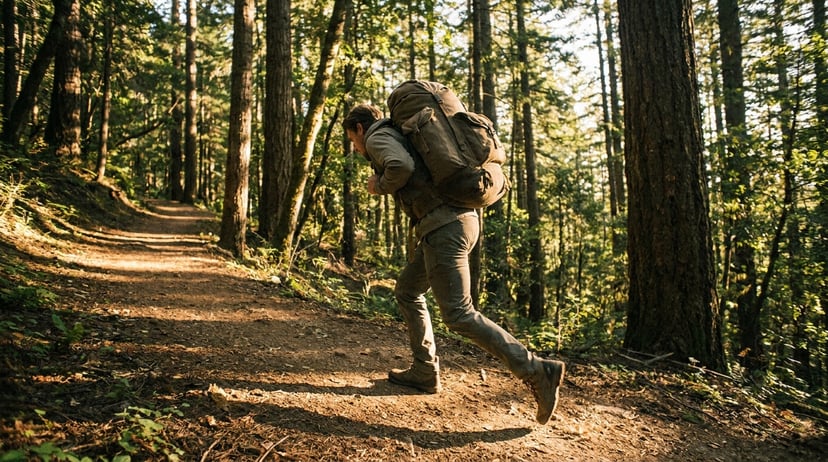
Several parts of loaded walking may contribute to a stiff or tired feeling at the front of the hip. None of them can be confirmed from symptoms alone.
Forward pack loading effects
A rear-loaded pack changes the position of the combined body-and-pack mass. People may respond with changes in trunk lean, pelvic position, stride, or all three. Those changes can alter hip demand, but they do not show that the hip flexors have shortened or that one posture caused the symptoms.
Repetitive hip flexion
Every step requires hip flexion. Added load, longer distance, hills, or a faster pace can increase the work of walking. Fatigue may change how the hip feels or moves, but a short-term stiff feeling is not proof of tissue shortening.
Compensatory patterns
Fatigue in the hip, glutes, trunk, or lower back can change movement during a ruck. It is not possible to infer that the glutes are "shut off," the core is failing, or the hip flexors are dominant from stiffness alone.
Knapik and colleagues' 2004 review in Military Medicine describes how load placement changes posture: the closer the load sits to the body's center of mass, the closer the walker stays to an upright, unloaded posture. It does not establish a single mechanism for hip-flexor stiffness or prove that posture changes cause chronic shortening.
Knapik JJ, Reynolds KL, Harman E. Soldier load carriage: historical, physiological, biomechanical, and medical aspects. Military Medicine. 2004;169(1):45-56. The review covers load placement, posture, energy cost and common load-carriage injuries. It does not show that rucking causes chronic hip-flexor shortening.
Symptoms that may involve the front of the hip
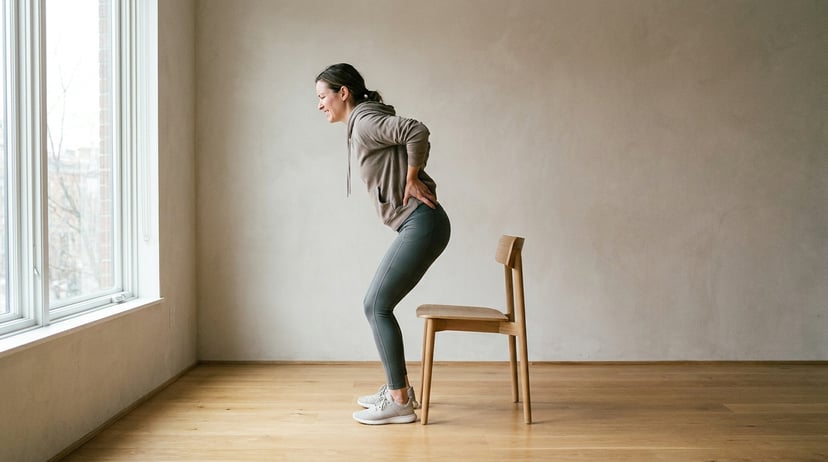
The following observations can help describe the problem, but they do not identify its cause:
During or after rucking: A pulling or tired feeling at the front of the hip, a shorter stride, or discomfort when the leg moves behind the body
Daily activities: Stiffness after sitting, discomfort on stairs, or reduced comfort while walking
Movement: Less comfortable hip extension or extra lower-back arching during a lunge or step
Pain deep in the groin, clicking or locking, symptoms after a fall, or pain that changes the way you walk deserves more caution than ordinary post-exercise stiffness.
Why "tight" does not identify the cause
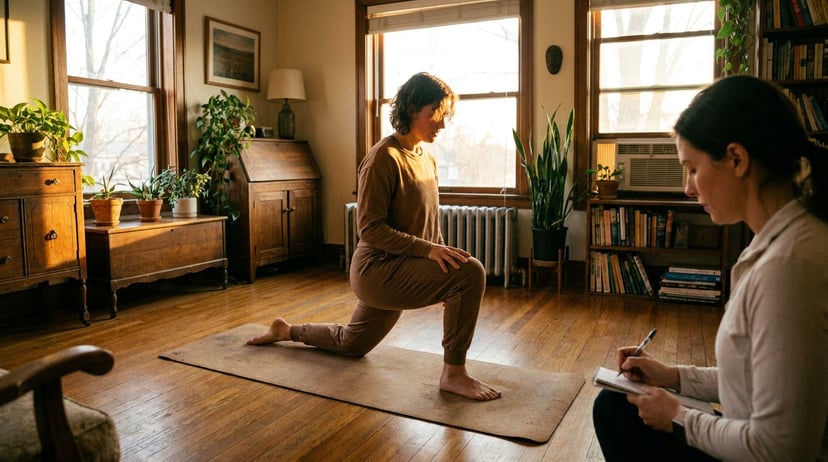
People use "tight" to describe several sensations: stiffness, fatigue, guarding, pain, or limited motion. Stretching may feel useful for one person and irritate another. Strength work may help when reduced capacity is part of the problem, but a stiff feeling does not prove weakness either.
A clinician can compare range of motion, strength, gait, symptoms, and the rest of the hip and lower back. A single home test cannot make that distinction.
Simple movement check
The modified Thomas test is used in clinical settings to examine hip motion, but positioning and interpretation matter: in a 2016 validation study, it measured hip extension poorly unless pelvic tilt was controlled (Vigotsky and colleagues, 2016). At home, use the setup only as a gentle movement check. Do not use it to diagnose a short or weak muscle.
Use a stable, firm surface no higher than your knees. Avoid a soft mattress, tall bed, or unstable bench. Skip the check if balance, back pain, or getting on and off the surface is a concern.
- Sit close enough to the edge for one thigh to move toward the floor without feeling unstable.
- Lower onto your back and bring one knee toward your chest without forcing it.
- Let the other leg relax toward the floor. Stop if the hip, groin, or back pinches or hurts.
- Compare sides for comfort and range. A difference is useful information to share with a clinician, not a diagnosis.
Do not ask a partner to force the leg or pelvis into position. Stop if you feel unstable or have sharp, pinching, radiating, or increasing pain. A physical therapist or other qualified clinician can assess persistent limits and consider other sources of hip or groin pain.
Mobility protocols for tight hip flexors
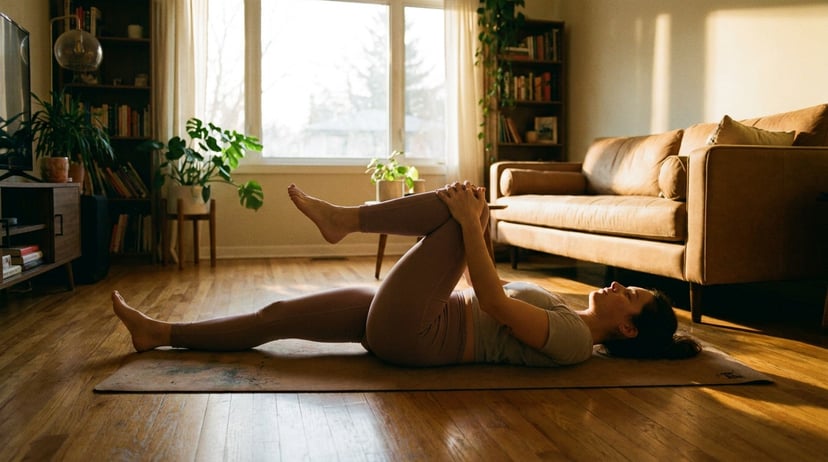
If a gentle stretch feels comfortable and does not worsen symptoms later, it can be one option. Do not force range or assume that more stretching will solve the cause.
Couch stretch progression
The couch stretch places the hip and knee in a demanding position. Start with a half-kneeling version if the full setup strains the knee, hip, or back.
Use symptoms to set the range: - A tolerable stretch is mild, broad, and does not build while you hold it. - A stop signal is sharp, pinching, radiating, or increasing pain in the hip, groin, back, or leg. If the stretch causes a stop signal, leave it out. Do not assume strength work will make a painful stretch appropriate later.
Setup:
- Place your back foot on a couch, chair, or wall; your shin should rest flat against the vertical surface, with the foot relaxed
- Step your front foot forward into a half-kneeling lunge position with the front knee stacked over the front ankle
- Use a small pelvic tuck and light glute tension if that makes the position more comfortable; do not force either cue
- Keep your torso upright. If you can't stay upright without your lower back arching, place your hands on the front thigh for support and start there
Progression:
- Start with 30-60 seconds per side, only as deep as you can hold without losing the tucked-tailbone position
- Push your hips forward gently. If your lower back arches, back off until you're tucked again
- Hold only as long as the position remains comfortable; longer is not necessarily better
- Stop immediately if you feel anything sharp in the front of the hip or anywhere in the spine
Dynamic hip flexor stretches
Dynamic movements are one warm-up option. There is no need to use them when they increase symptoms.
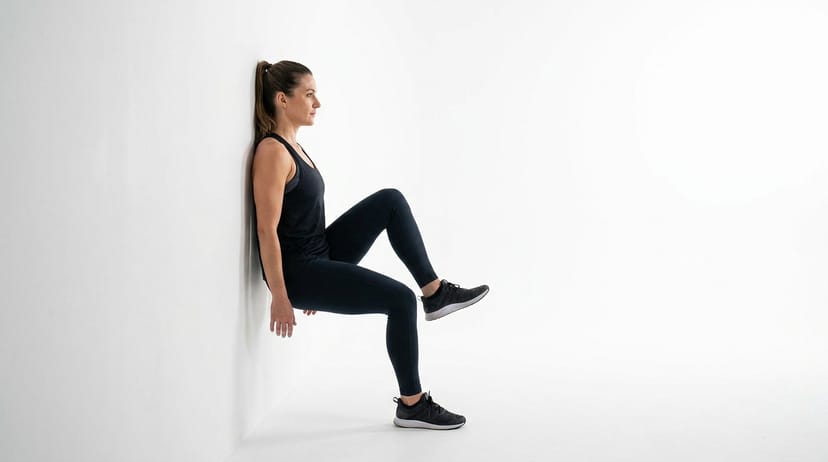
Walking high knees:
- Lift each knee toward your chest while walking forward
- Focus on the lengthening sensation in the opposite hip flexor
- 10-15 steps per leg
Reverse lunges with reach:
- Step backward into a lunge position
- Reach your arms overhead on the same side as your back leg
- Feel the stretch along the front of your hip and torso
- 8-10 repetitions per side
Post-ruck restoration
After rucking, a gentle lunge can be used if it feels comfortable. It may change the short-term feeling of stiffness, but it does not prove or permanently restore muscle length.
Low lunge hold:
- From a kneeling position, step one foot forward
- Sink your hips forward and down
- Hold for a comfortable period rather than forcing a set time
- Focus on breathing and allowing the stretch to develop gradually
Strengthening protocols for hip flexor balance
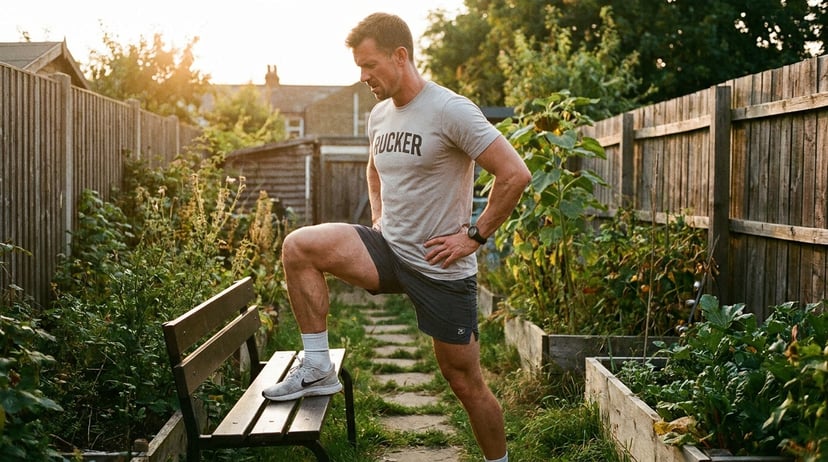
Strength work is another option when it is pain-free. It can build capacity around the hip, but it does not confirm why the hip felt stiff or guarantee that symptoms will resolve.
Eccentric hip flexor strengthening
Eccentric exercise loads a muscle while it lengthens. Start with a small range and stop before the lower back arches or symptoms rise.
Reverse Nordic curls (advanced; see the regression first):
This is an advanced exercise that heavily loads the quadriceps and knees. It is not required for hip stiffness. Skip it if kneeling, leaning back, or returning upright causes pain or feels uncontrolled.
- Kneel on a padded surface (folded mat or pillow under the knees) with hips fully extended and torso upright
- Keeping a straight line from knees to shoulders (no bending at the hip), slowly lean backward, controlling the descent over 3-5 seconds with your quads and hip flexors
- Only go as far as you can return from under control
- Drive back up to vertical
- Start with a few controlled repetitions rather than forcing a target
Regression: assisted reverse Nordic (start here):
- Set up the same way, with a sturdy chair or wall within easy reach
- Lean back only as far as you can reach the chair/wall with your hands, then push off to return to upright
- Use the support for the return rather than pushing through a range you cannot control
- Stay with the supported version if it remains the more comfortable choice
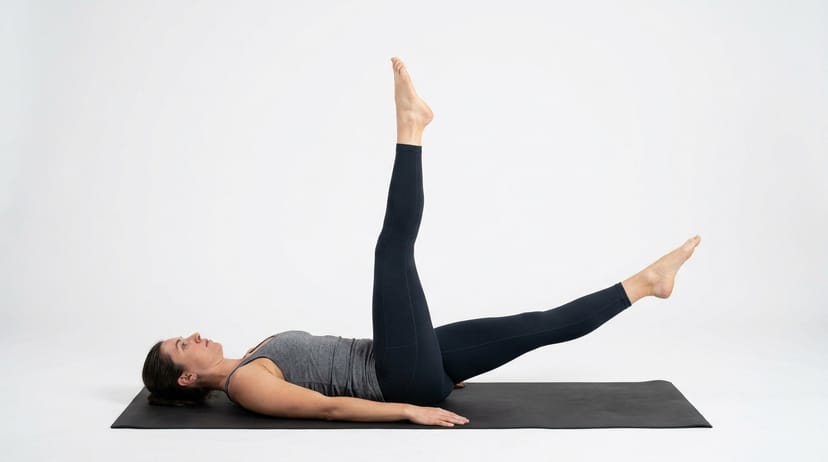
Hip flexor isometric holds
Isometric exercises create muscle force without much joint movement. They can be tried separately from the eccentric work; there is no required pairing or schedule.

Adjusting pack fit and rucking posture
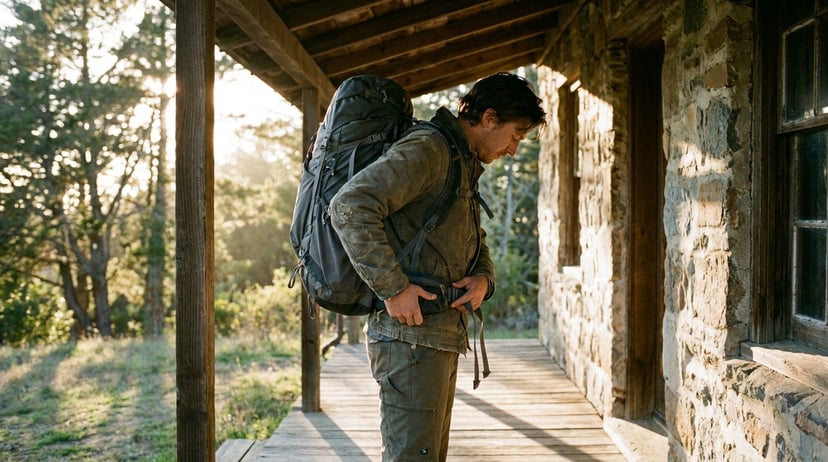
Pack fit and posture may affect comfort, but neither should be assumed to be the root cause of hip or groin symptoms.
Pack positioning
Pack position can change how the load feels:
- Load placement: Keep dense items close to the back panel so the load does not swing
- Belt usage: A hip belt may transfer some load to the pelvis when the pack is designed for it and the belt fits well. Knapik and colleagues' 2004 review recommends rucksack hip belts where possible because they reduce pressure on the shoulders and improve comfort
- Sternum strap: Use it to keep the shoulder straps in a comfortable position, not to force the chest or shoulders into one posture
Postural awareness
Use a rucking posture that feels stable and lets you take a normal stride:
- Trunk: Avoid bracing as hard as possible; use enough tension to control the pack
- Hip position: Do not force a pelvic tuck if it causes hip or back discomfort
- Chest position: Stay tall enough to breathe and look ahead without exaggerating the lower-back arch
A hip belt is optional. Try it if the pack supports load transfer and it improves comfort. It does not prevent hip symptoms or replace a reduction in load when the current ruck is aggravating pain.
Movement breaks during long rucks
On a longer ruck, a short break can show whether fatigue or duration is contributing. There is no proven interval that prevents hip stiffness.
Optional movement break:
- Remove or loosen the pack for a moment
- Walk a few unloaded steps and change position gently
- Use small hip circles or a comfortable lunge only if they reduce stiffness
- Skip standing back bends if they cause hip or back pain
Complementary strengthening for hip flexor health
Glute and trunk exercises can build general capacity for loaded walking. They are options, not proof that a specific muscle imbalance caused the symptoms.
Glute activation and strengthening
Glute bridges and clamshells train the hip without adding pack load. Use a comfortable range and stop if the front of the hip pinches.


Core stability work
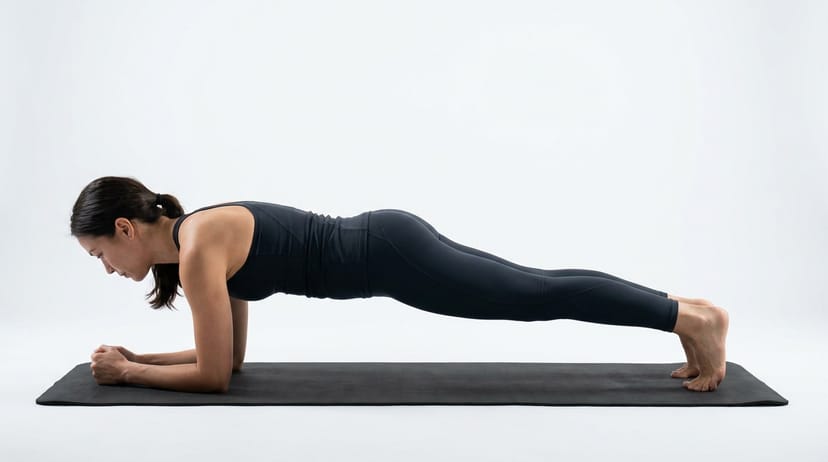
Planks and bird dogs train trunk control. Their effect on hip symptoms varies.

When to seek professional help
Seek medical assessment for symptoms that do not behave like ordinary post-exercise stiffness, including:
- Pain that persists, worsens, changes your gait, or limits sleep or daily activity
- Pain after a fall or sudden injury, or trouble bearing weight
- Deep groin pain, catching, or locking
- Numbness or tingling in your legs or feet
- New weakness, marked swelling, redness, warmth, or fever
A physical therapist, sports-medicine clinician, or other qualified professional can assess the hip, lower back, gait, and training load rather than treating the word "tightness" as a diagnosis.
Persistent or severe pain should be evaluated by a healthcare professional. This guide is educational and does not replace medical advice.
Prevention strategies for long-term hip health
No warm-up, stretch, or pack setup is proven to prevent every episode of hip stiffness. These are optional ways to prepare, cool down, and build capacity.
Reduce or change any exercise that makes the hip worse during the session or afterward.
Frequently asked questions
There is no reliable timetable because "tightness" can describe fatigue, limited motion, pain, or guarding from several causes. Mild post-exercise stiffness may settle as the training load changes. Persistent, worsening, or function-limiting symptoms need assessment rather than another fixed-duration routine.
Try a few leg swings or easy lunges if they feel comfortable. Static stretching is not required before or after a ruck, and it should not be used to push through pain.
Hip and lower-back symptoms can occur together, but a stiff feeling at the front of the hip does not establish the cause of back pain. Reduce the aggravating load and seek assessment if pain persists, radiates, causes weakness or numbness, or changes gait.
Use the option that is comfortable and improves movement without a later flare. A home test cannot reliably separate a short muscle from weakness or another source of pain. A clinician can assess both when the answer affects treatment.
There is no medically safe percentage for every person with hip symptoms. Reduce the load, distance, hills, or pace until walking is comfortable, and do not progress while symptoms are worsening. Ask a clinician for an individual plan when pain persists or you have a hip diagnosis.
Pack design can change comfort and load distribution, but no feature is proven to prevent hip-flexor symptoms. A 2011 systematic review (Golriz and Walker) found the evidence on pack weight, design and placement conflicting: carrying loads may provoke back, neck and shoulder pain, and weight is only one of the factors involved. Features to compare include: - A load-bearing hip belt: a padded belt that may transfer part of the load to the pelvis when the pack and torso fit match. - A sternum strap: the thin chest strap linking the two shoulder straps across your sternum, keeping them from sliding outward. - Load lifters: short angled straps that can bring a framed pack closer to the upper back. Those features do not guarantee symptom relief. Packs with only a frame sheet carry most of the load through the shoulder straps, while framed packs with a padded hip belt can shift some of it to the pelvis. The GORUCK GR1 family, for example, uses a frame sheet and has no built-in hip belt. Check the current specifications and fit the pack before buying; product design is not a treatment for persistent hip pain.


