Gear Review
Best Plate Carrier-Style Weighted Vests for Rucking in 2026
Plate carrier-style vests and ruck plate carriers distribute load front-and-back the way a real ruck does. Compare the 4 carriers worth owning in 2026 and what plates fit each.
On this page12 sections
- Quick Picks
- Tiers by Price
- Compatibility Matrix
- Benchmark: GORUCK Ruck Plate Carrier 3.0
- The Other 3 Carriers
- 5.11 Tactical TacTec
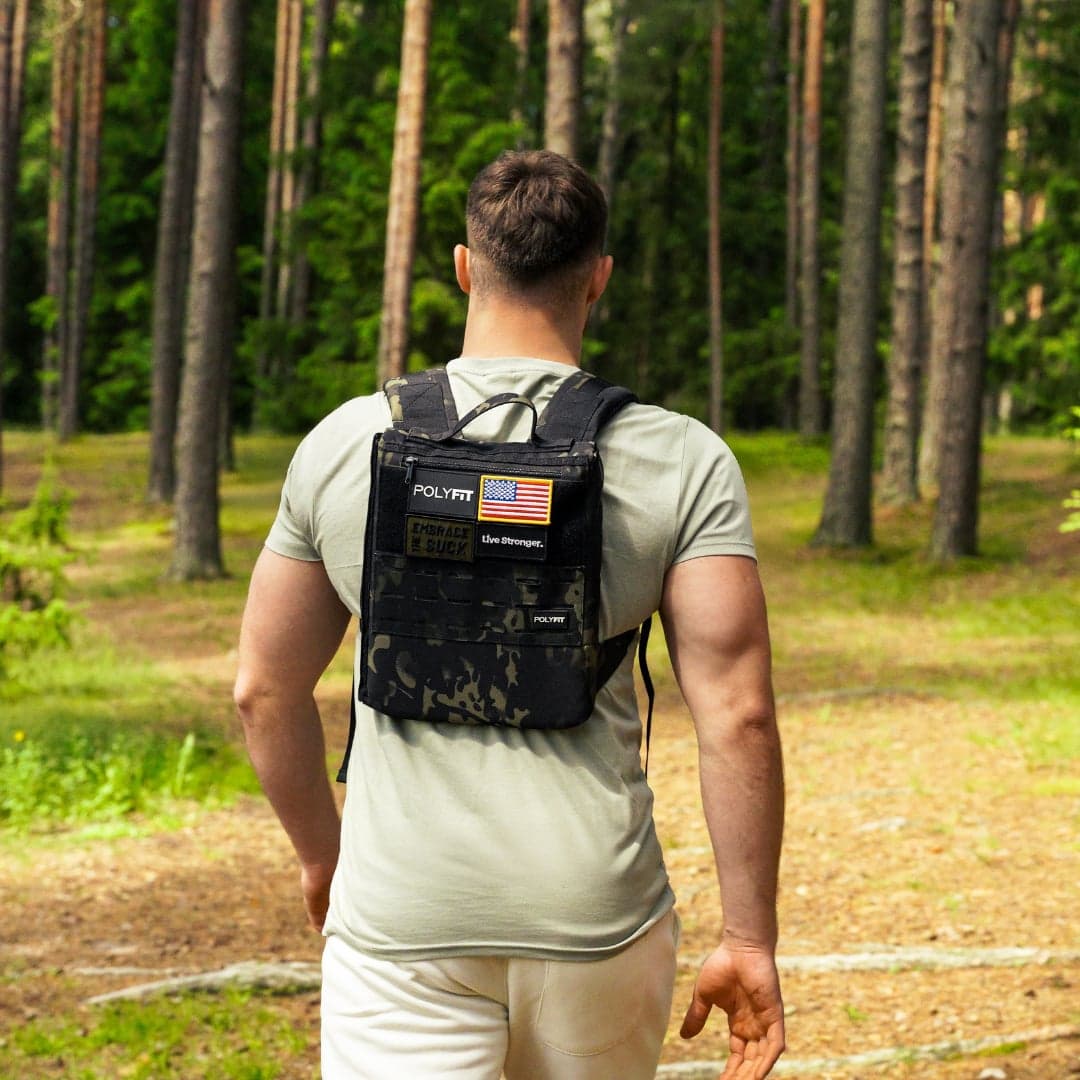
- Polyfit Rucking Backpack 2.0
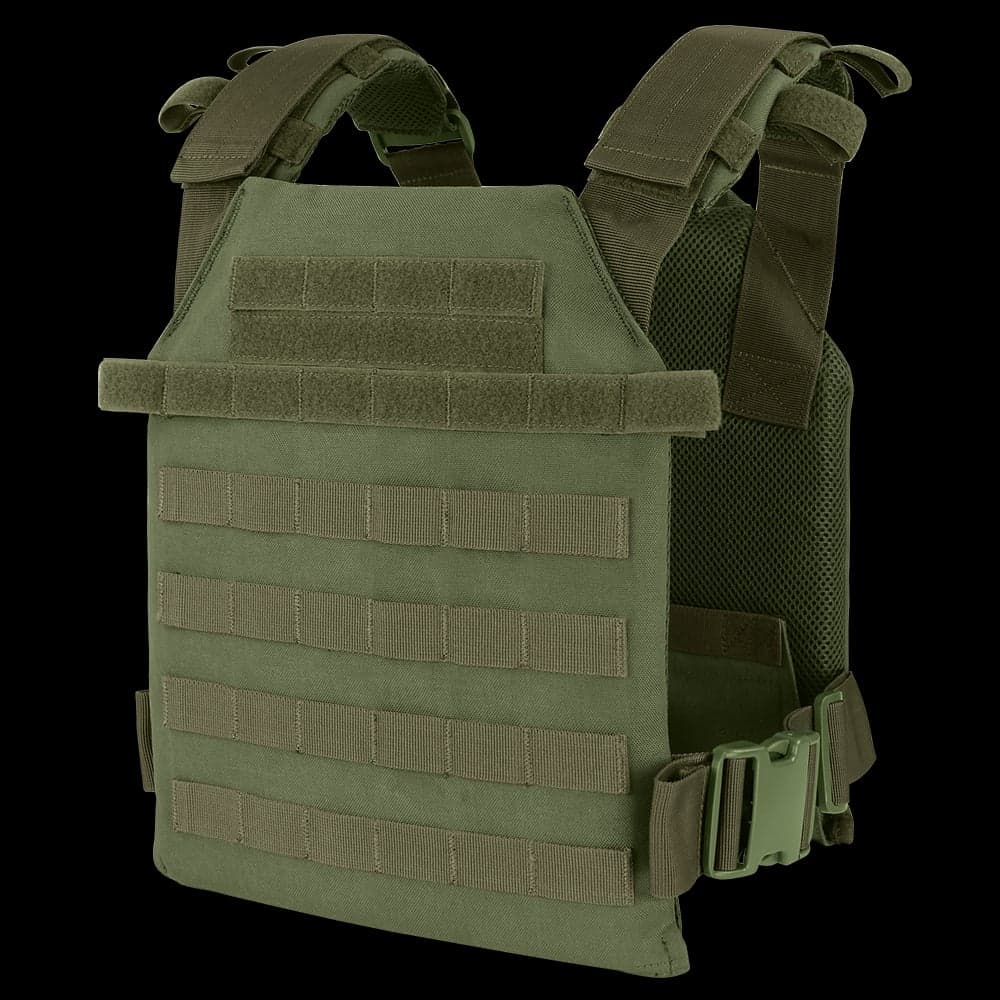
- Condor Sentry
- Why a plate carrier-style vest...
- Plates - the other half of the...
- Sizing and fit
- Building a progression - the sa...
- Care and maintenance
- Choose a Plate Carrier
- FAQ
- Plate carriers split load front-to-back, which trains the upper traps and posture better than a torso-hugging vest - closer to what a loaded pack actually does to you.
- GORUCK's Ruck Plate Carrier 3.0 is the midrange value benchmark - 1000D Cordura, 210D skin-side, fits GORUCK's own plates only.
- 5.11 TacTec is the premium long-haul pick - real adjustability and a yoke that lasts past month six.
- Polyfit Rucking Backpack 2.0 is the budget pick - takes 10x12 plates or Polyfit's own pair.
- Plate compatibility matters. GORUCK pockets, generic 10x12 carriers, and Olympic-plate carriers are not interchangeable. The matrix below tells you what fits what.
- Don't forget plate cost. A carrier alone is half the equation; budget for plates separately.
- Start light. The same progressive-overload rules that apply to ruck weight apply double when the load sits on your chest.
Four Plate Carriers and the Plates They Use
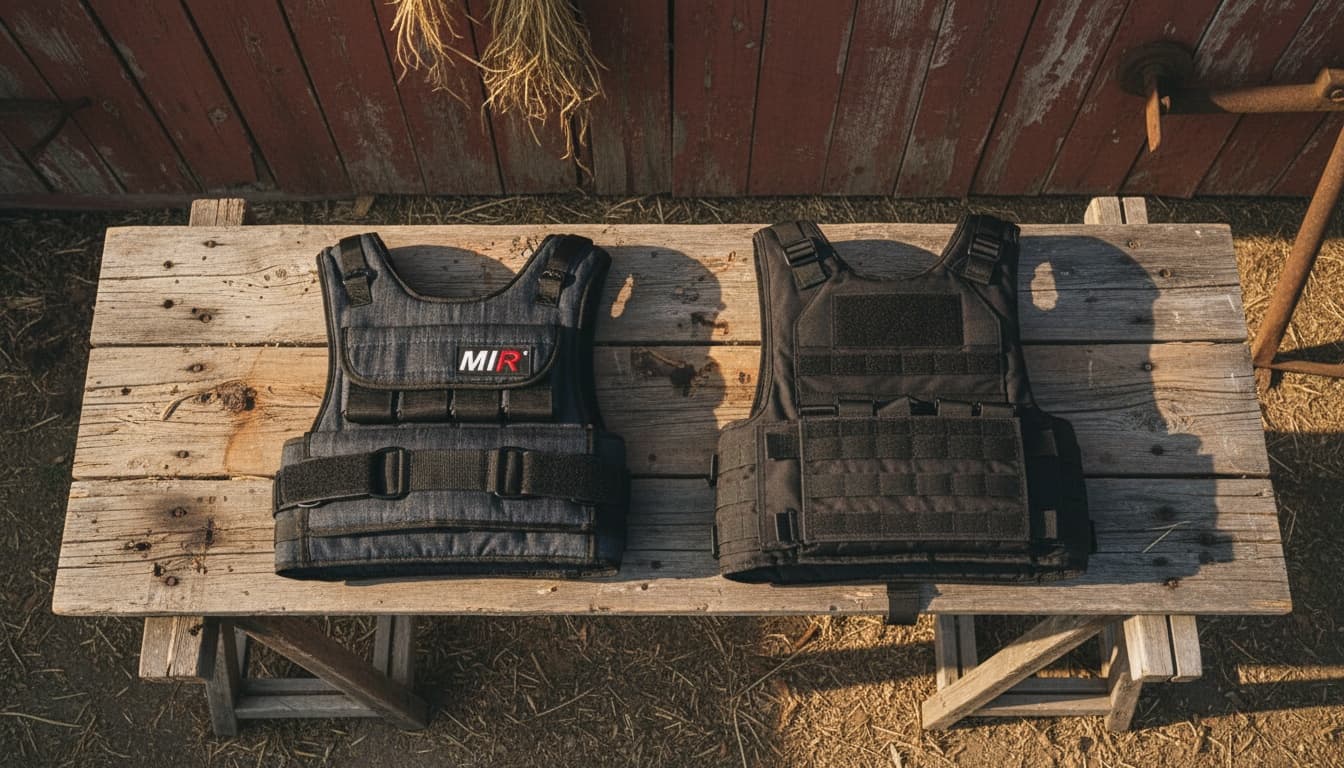
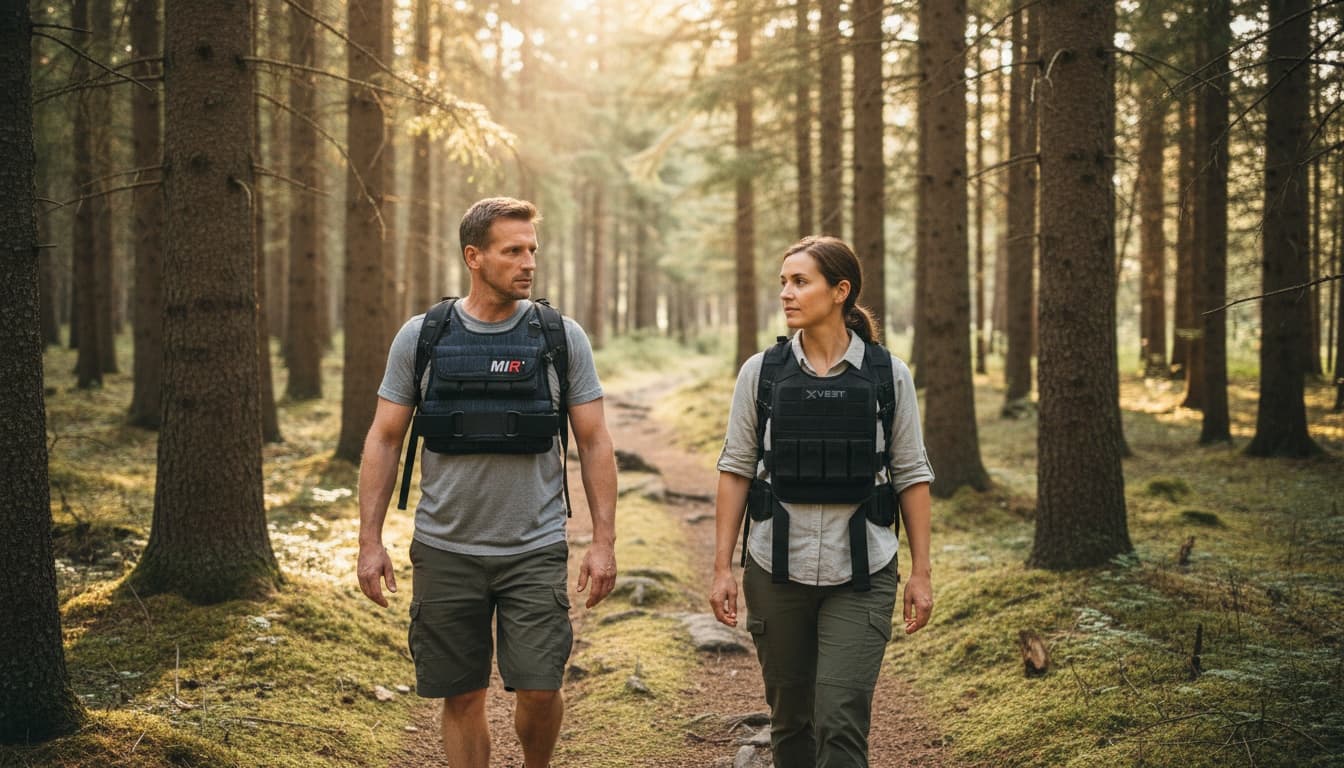
Most weighted vests are built for boot camp HIIT classes - stretch-fit panels that hug the torso and concentrate mass around the sternum. That works for kettlebell circuits but is a poor analog for rucking, where the load sits high on the shoulders and splits front-to-back. Plate carrier-style vests close that gap with flat plate pockets that mirror real pack carry geometry.
The category just opened up. GORUCK released the Ruck Plate Carrier 3.0 - a skin-direct carrier with 1000D Cordura construction that undercuts 5.11 by $135. Polyfit's Rucking Backpack 2.0 brought an Amazon-fulfilled budget option down to roughly a third of GORUCK Basic Rucker pricing. Four picks are worth owning in 2026 instead of the two from a year ago, with Wolf Tactical, Rogue Echo Vest, and 5.11 TacTec Trainer still under evaluation.
Methodology: every score is the Ruck Authority composite (30% Rucking Fit, 25% Community Reception, 25% Build Quality, 20% Value). Pricing is reported in price bands per our Amazon Associates compliance. Compatibility matrix below lists exactly which plate format fits each carrier - this is the trap nobody warns you about.
The Benchmark: GORUCK Ruck Plate Carrier 3.0 (Standard)
Best Skin-DirectResearch-based
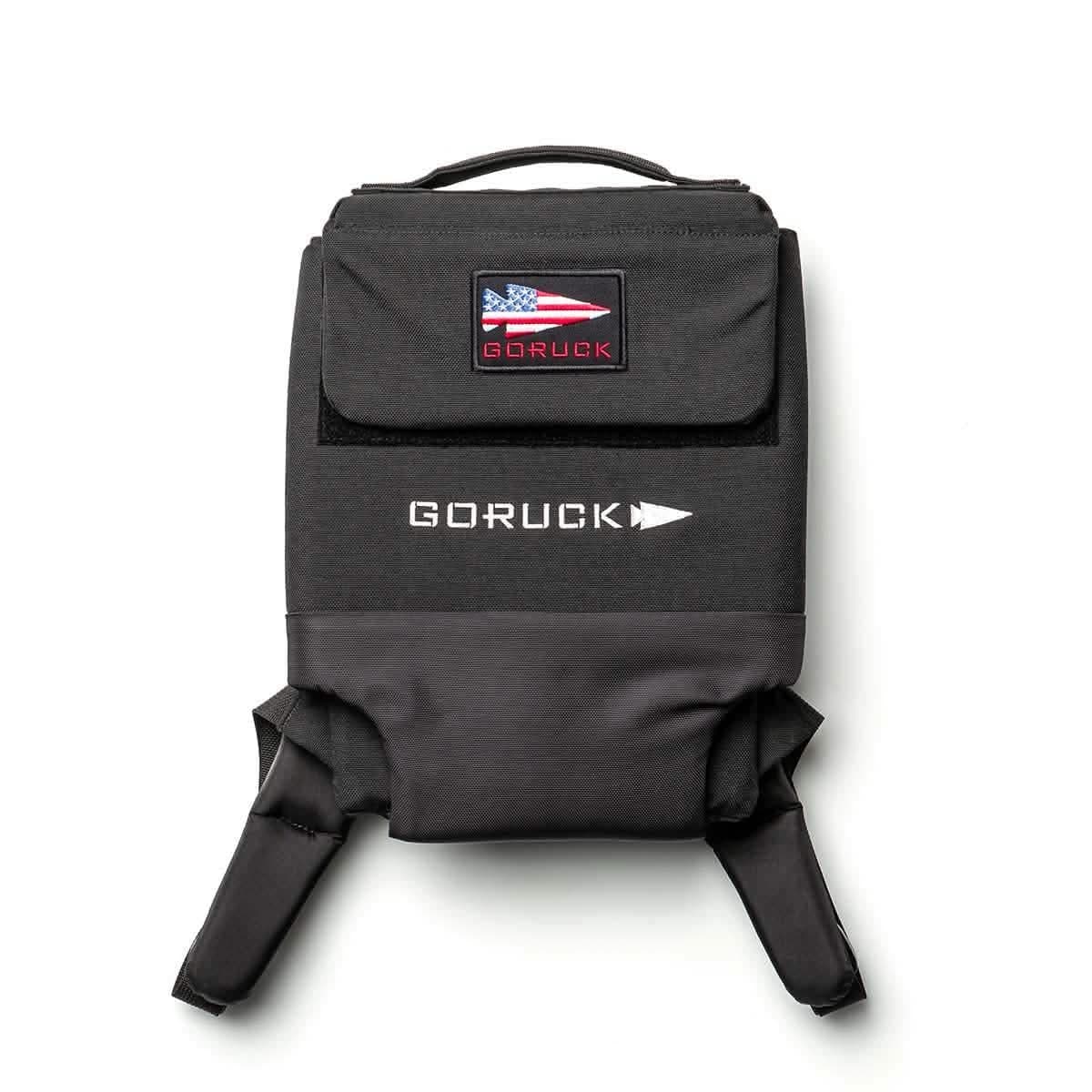
GORUCK Ruck Plate Carrier 3.0 (Standard)
A plate-only harness with a 1000D Cordura shell, 210D HT Cordura lining, and 20mm lumbar pad. The Standard size fits GORUCK 10, 20, and 30 lb plates; Long and Heavy versions cover larger torsos and heavier loads.
The Four Budget Tiers
Real shoulder yoke padding, MOLLE field, quick-release. The carrier you don't have to think about again past month six.
1000D Cordura primary, 210D HT skin-side, 20mm EVA lumbar. The new value benchmark - premium construction at a $135 discount to 5.11.
Not a true chest-and-back carrier - a backpack with a side-loading plate slot. Cheapest credible plate-carrying setup that accepts standard 10x12 plates.
Basic hook-and-loop cummerbund, thin shoulder padding. Fine to test the format for 30-90 days, outgrown by anyone training consistently.
Price vs Performance Matrix
| Carrier | Price | Plate Format | Max Load | Notes |
|---|---|---|---|---|
| GORUCK Ruck Plate Carrier 3.0 (Standard) | $50-150 | GORUCK Ruck Plate (9.75 x 11.75) | 30 lb | Long and Heavy variants exist for larger torsos. Plates sold separately. |
| 5.11 Tactical TacTec | $150-300 | ESAPI / 10x12 fitness | 40 lb | Generous pocket; standard 10x12 plates fit with room to spare. |
| Polyfit Rucking Backpack 2.0 | $50-150 | 10x12 generic OR Polyfit pair | 40 lb | Backpack form factor with side-loading plate slot. Budget-tier nylon. |
| Condor Sentry | $50-150 | 10x12 generic | ~30 lb | Hook-and-loop cummerbund only. Plates may shift during running. |
Head-to-Head: Top Alternatives
5.11 TacTecResearch-based
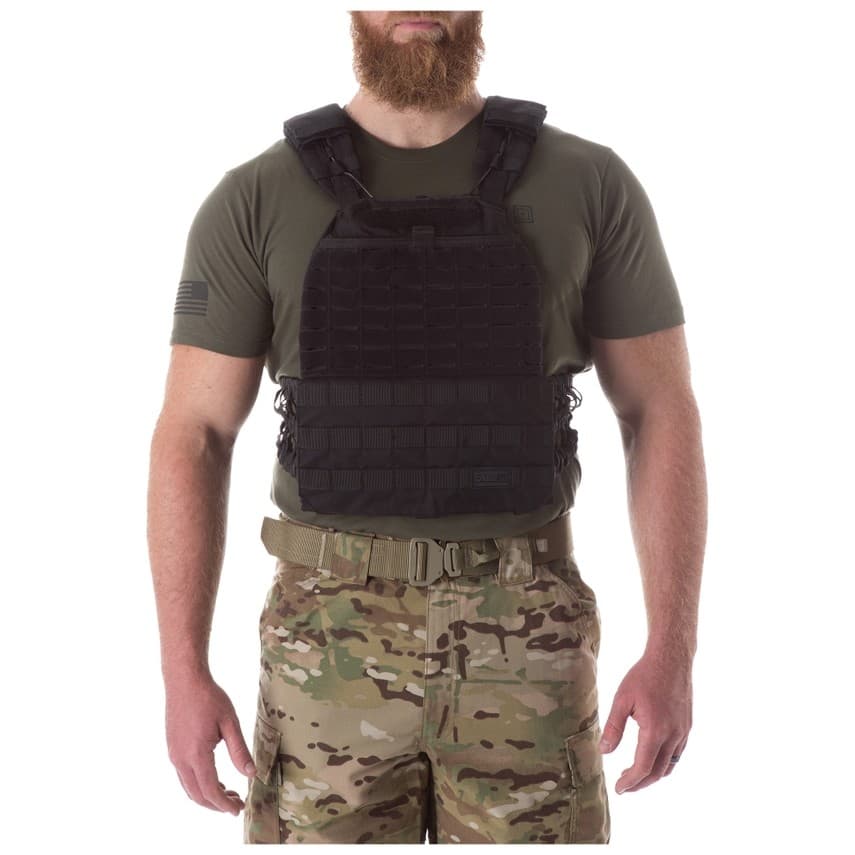
TacTec Plate Carrier
Community feedback shows the TacTec Plate Carrier combines professional-grade construction with thoughtful comfort features for extended wear. Reddit users report the 500D nylon build quality and comprehensive MOLLE system make it suitable for both tactical applications and fitness training.
Polyfit Rucking Backpack 2.0Research-based
Polyfit Rucking Backpack 2.0
Polyfit's budget plate-carrying ruck takes standard 10x12 plates or their own Polyfit pair. Built around the plate slot rather than around storage, so it does one job - carry weight - cheaper than anything else in the category.
Condor SentryResearch-based
Sentry Plate Carrier
The Condor Sentry Plate Carrier offers basic plate carrying functionality at an entry-level price point. Community feedback shows it serves adequately for light training applications, though reviewers consistently note it lacks the refinement of premium carriers.
Why a plate carrier-style vest beats a torso-hugging vest for rucking carryover
A traditional weighted vest centers mass around the trunk. The load presses inward and down, distributed across the ribs and lumbar. That's biomechanically fine, but it's not what a ruck does to you. A loaded pack pulls your shoulders back and down while your front stays unloaded, and your spine has to stack against an asymmetric pull all session.
A plate carrier-style vest splits the load front-to-back across two flat panels, with the bulk of the weight transferred through padded shoulder straps. The asymmetry is reduced - you have load on the front to balance the back panel - but the pull on your shoulders and the high-on-the-trunk weight position closely matches what you feel under a real pack. Community threads on r/rucking and r/CrossFit consistently report better step-up and uphill carryover from plate carrier-style training compared to traditional vests of equivalent weight.
There's a second benefit ruckers care about: progressive loading. A 30-pound stretch-fit vest is a 30-pound stretch-fit vest. With plates, you can run a 10-pound front and 10-pound rear today, swap to 15-and-15 next month, then 20-and-20 the month after - mirroring exactly the kind of monthly weight bumps you'd run on your actual ruck. That granularity matters a lot when you're trying to push aerobic load without inviting a hot spot or a stress injury.
It's not a perfect substitute. A pack still moves differently than rigid plates, and there's no hip belt to transfer load to your skeleton the way a real ruck does. But for cross-training - especially when you want to keep getting time under load on days you can't get a full ruck in - the format is the right tool for the job. If your goal is general fitness loading rather than ruck carryover, the torso-hugging format still has its place - our sister site Kit Authority's roundup of adjustable weighted vests covers that side of the market.
Plates - the other half of the equation
Buying a carrier without budgeting for plates is one of the most common mistakes in this category. The carrier itself is roughly half the total cost of a working setup. There are three plate types that work for fitness loading:
- GORUCK-format Ruck Plates
- Required for the GORUCK RPC 3.0 Standard. 10, 20, and 30 lb sizes. These will not fit every 10x12 generic carrier - they're a different shape. Match plate dimensions to the current GORUCK carrier or Rucker 5.0 pocket before buying.
- Steel 10x12 fitness plates
- The closest analog to "real" plate weight for generic carriers. Durable, last forever, give the carrier the right rigidity and feel. They're heavy and not cheap - a pair will run a meaningful fraction of the carrier price. Pair best with the TacTec and the Polyfit. Typical pair weights run from 8 pounds up to 20+ pounds per plate.
- Foam or rubber-coated 10x12 plates
- Lighter and easier on the carrier and on your body if you tip over. They run smaller weights - typical pair weights from about 2 pounds to 8 pounds per plate - which makes them ideal for beginners and for the smaller weight increments that make sense for early progression. The trade-off is they're bulkier per pound.
- Sand or shot-filled inserts
- The cheapest option for 10x12 carriers. Some carriers accept generic weight-shaped inserts that you fill yourself. The trade-off is they shift inside the pocket more than rigid plates, which changes the feel and the carryover to ruck-specific work. Acceptable as a budget bridge, not as a long-term answer.
Whatever you pick, get a pair, not a single plate. Loading only the front or only the rear creates exactly the kind of asymmetric pull this format is supposed to avoid. (The Polyfit is the exception - it's a backpack, so a single rear plate is the format.)
Sizing and fit
The fit principle is the same as a backpack: shoulder straps carry the load, cummerbund stabilizes it. Set the carrier so the front panel sits roughly mid-sternum at the top edge, with the bottom edge near the bottom of your ribs. The rear panel should mirror it. If the panel is riding up to your throat or sagging onto your belly, your shoulder straps need adjustment.
GORUCK RPC 3.0: Three variants - Standard, Long, Heavy. Pick by torso length and intended max load, not by chest size. Long is for larger guys with long torsos; Heavy carries two plates for advanced training. 5.11 TacTec: S/M/L by chest circumference. The cummerbund and strap adjustability covers most fit variation - a standard size works for most people in the 5'6" to 6'2" range. Polyfit Rucking Backpack 2.0: One Size Fits Most (XS-L). The shoulder strap range is wide enough to handle most adult torsos, though larger frames may feel the strap span at the edges. One size with hook-and-loop adjustability. Works for most adult builds but offers less precision than the TacTec's elastic tensioning.
A fit-check before you buy plates: load the empty carrier, snug the straps, and walk around the house for 20 minutes. If hot spots show up under load with no weight, they will get worse under weight. The most common offender is the shoulder strap edge cutting into the trapezius. The RPC's and the TacTec's yoke design largely solve this; on the Polyfit and the Sentry, you may want to add a thin neoprene pad strip if it bothers you.
Building a progression - the safety part
A few rules that apply double when the load is on your chest instead of in a pack:
- Get individual guidance when health history matters
- A chest-worn load can change breathing, balance, and movement. Ask a clinician before adding it if you are returning from injury or have cardiovascular, respiratory, balance, or other relevant health concerns.
- Begin with the smallest practical load
- There is no universal starting weight or progression interval. Keep the first route short, change one variable at a time, and remove the load if gait, breathing, balance, pain, or other symptoms change.
- Watch the cumulative load
- Plate carrier-style work counts toward the same overall training stress that your rucks do. If you're already doing four heavy rucks a week, replacing one of them with plate work is fine; adding plate work on top of an unchanged ruck schedule is how nagging injuries show up.
- Pay attention to upper-body restriction
- The vest changes how you breathe and how you reach overhead. If you're combining plate work with overhead pressing or pull-ups, the cummerbund tension may need to come down. Tight cummerbund + overhead movement is a recipe for a pinched lat.
- Budget for recovery
- Loaded carries are heavier on the central nervous system than they feel during the session. The day after a long plate session, prioritize sleep, hydration, and a real meal.
Care and maintenance
Plate carrier fabric is robust by design but doesn't love sustained sweat exposure. After a session, pull plates out, hang the carrier somewhere ventilated, and let it dry fully before stowing. Don't leave a wet carrier in a gym bag overnight - it's how mildew starts on the inside of the cummerbund where you can't see it.
Cleaning is straightforward: wipe down with a damp cloth and mild soap, spot-treat the inside of the shoulder pads, and air dry. Don't run a plate carrier through a washing machine, regardless of what the tag says. The agitator beats up the MOLLE webbing and the hook-and-loop loses bite over a few cycles.
Inspect the stitching at the shoulder strap attachment points and the cummerbund anchor points every couple of months. These are the two failure points that show up first in heavy-use feedback. The TacTec and the RPC both use bar-tacked stitching at these joints and back it with their respective warranties. The Polyfit and the Sentry use simpler construction - bar tacks can pull over time, especially on the cheaper carrier. If you see fraying, retire the carrier - this is not the place to push your luck.
Side-by-Side Comparison
All picks at a glance - specs, ratings, and where to buy. How we rate →
| Product | Best For | Price | Our Rating | Buy |
|---|---|---|---|---|
| Plate-only training with a matching Standard 10, 20, or 30 lb plate, when essentials are carried separately. | $50-150 | Shop at GORUCK · $50-150 | |
| Law enforcement, military personnel, and serious fitness enthusiasts who need a professional-grade plate carrier with superior comfort and customization options. | $150-300 | Shop at Amazon · $150-300 | |
| Beginners and budget-minded ruckers who already own 10x12 plates or have a sub-$200 pack budget. Best at the 20-40 lb training tier. | $50-150 | Shop at Amazon · $50-150 | |
| Budget-conscious users seeking an entry-level plate carrier for occasional training or airsoft applications. | $50-150 | Shop at Rogue · $50-150 |
Choose a Plate Carrier
The four picks cover the spread. GORUCK Ruck Plate Carrier 3.0 is the new value benchmark - premium 1000D Cordura construction, skin-direct comfort, and the Training Sternum Strap in the box. 5.11 TacTec is the carrier you don't have to think about again - real yoke padding, real adjustability, real quick-release. Polyfit Rucking Backpack 2.0 is the cheapest credible plate-carrying setup - backpack form factor with side-loading geometry that accepts standard 10x12 plates. Condor Sentry is the bare-floor entry point - fine for short sessions, outgrown within a couple months. Budget for plates separately and check the matrix above so you buy a plate that actually fits your carrier.
Frequently Asked Questions
For ruck-specific training, yes - the load split front-to-back with the bulk of weight transferred through padded shoulder straps closely matches the biomechanics of a loaded pack. Traditional weighted vests concentrate mass around the trunk, which is fine for general conditioning but doesn't build the same shoulder and postural endurance you need under a real ruck. The exception: if you're doing pure HIIT or kettlebell work, a stretch-fit vest is more comfortable and gets out of the way better.
Around 10-15 pounds total - meaning 5 to 7.5 pounds per plate, front and rear. This is well below what you probably ruck with, and that's intentional. Chest-loaded carry feels different on the cardiovascular system and the postural muscles, and the asymmetric pull of a pack you're used to isn't there. Add 5 pounds total every two to three weeks if everything feels good. Loading 30+ pounds on day one is the most common way people quit this format inside the first month.
The RPC 3.0 is a plate-only harness designed around the GORUCK Ruck Plate shape (9.75" x 11.75") and worn skin-direct. The TacTec is a generic 10x12 plate carrier with a more substantial yoke, real cummerbund tensioning, and a quick-release pull. Practically: the RPC carries one plate type (GORUCK's) and is the more comfortable carrier per dollar. The TacTec carries any 10x12 fitness plate and is the more adjustable carrier with extras (MOLLE field, quick-release) that matter at the premium tier. Most ruckers will be best served by the RPC unless they already own 10x12 plates or want the TacTec's full feature set.
No - the Standard RPC 3.0 pocket is sized for the GORUCK Ruck Plate (9.75" x 11.75" x 1.5"), which is a different shape from generic 10x12 fitness plates. A 10x12 plate won't fit the pocket geometry. If you already own 10x12 plates, look at the 5.11 TacTec, the Polyfit Rucking Backpack 2.0, or the Condor Sentry instead. The matrix above covers what fits what.
Standard 10x12 fitness plates fit the 5.11 TacTec, the Polyfit Rucking Backpack 2.0, and the Condor Sentry without modification. The GORUCK RPC 3.0 needs GORUCK's own Ruck Plates - a different format. For 10x12 carriers you can choose between steel plates (durable, heavier, more expensive), foam or rubber-coated plates (lighter, easier on the body and the carrier, ideal for beginners), or sand/shot inserts (cheapest, but they shift more during movement). Always buy plates in pairs for true chest-and-back carriers - loading only the front or only the rear defeats the whole point of the format. The Polyfit is the exception, since it's a backpack with a single rear plate slot.
You can, but there's nuance. Walking and steady-state hiking - no problem. Short jogs and step-ups - fine with proper cummerbund tension. True running, especially over rough terrain, increases the impact load on your spine and joints meaningfully, and the bouncing of plates can chew up the inside of cheaper carriers over time. The TacTec and the RPC 3.0 handle running better than the Sentry and the Polyfit thanks to more secure tensioning (TacTec) or a fitted sternum strap (RPC). If running with load is a regular goal, you're probably better served by an actual running vest with a smaller load than a plate carrier with full weight.
They train different things. Adding weight to your ruck loads your spine asymmetrically - back-only - and recruits the posterior chain heavily through the hip belt and shoulder pull-down. A plate carrier loads front-and-back and runs the load through the shoulders without a hip belt, which makes the upper traps and core do more stabilizing work. Most people running both formats use plate carrier sessions on shorter, more intense workouts (step-ups, hill repeats, weighted complexes) and save the longer aerobic work for actual ruck distance under their pack.
In every U.S. state, yes - civilian ownership of empty plate carriers and fitness plates is unrestricted. International rules vary by country, so check local regulations before ordering across borders. For training in public spaces - parks, trails, gym parking lots - the practical concern isn't legality but optics. A plate carrier in a tactical color worn alone reads differently than one worn over a t-shirt with a fitness plate visible. Most outdoor ruckers wearing plate carrier-style vests in public just wear them as obvious fitness equipment, the same way a weighted backpack reads.
Related Articles

The $50 Rucking Starter Kit: Everything You Need on a Budget
A complete kit for under $50 - no GORUCK required.
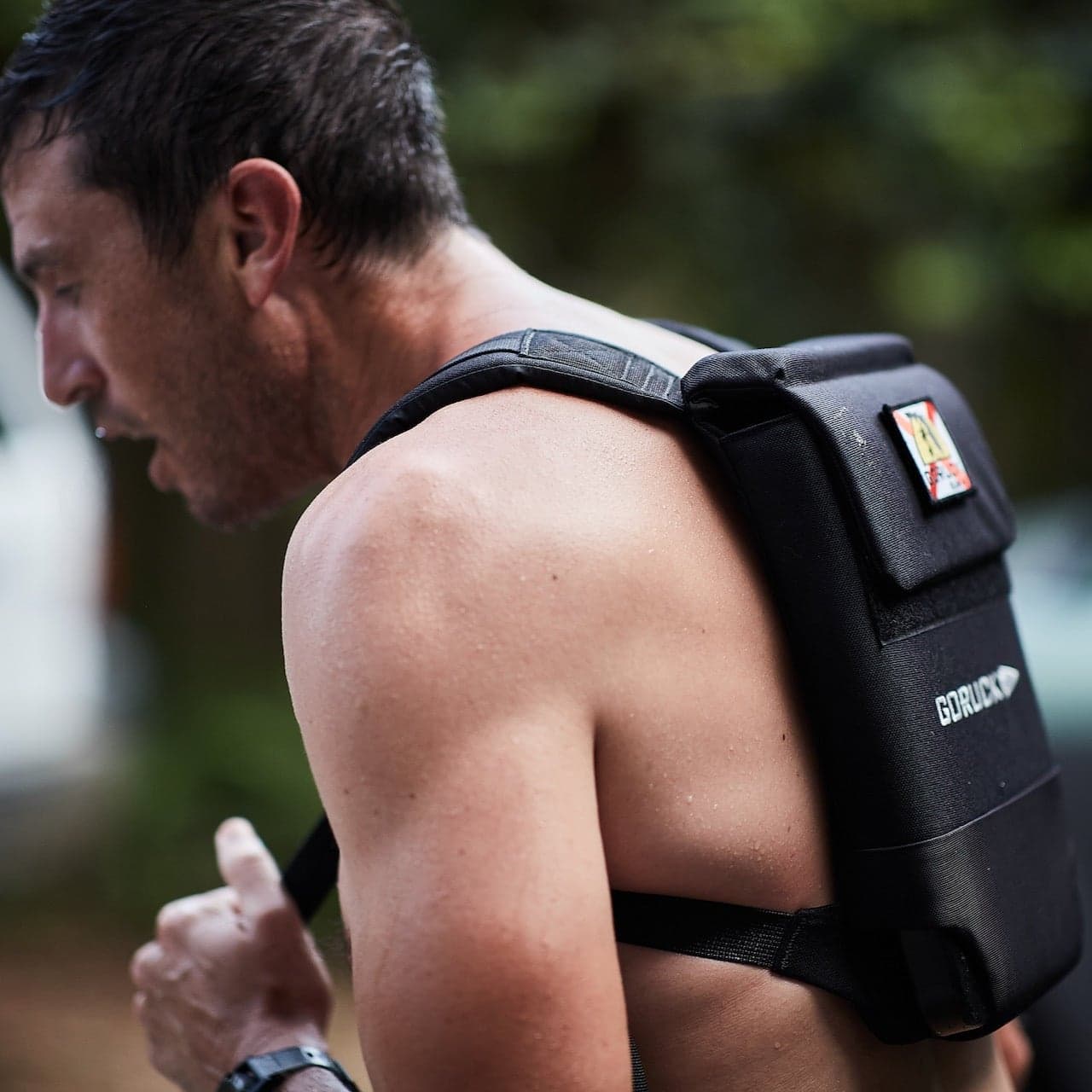
GORUCK Ruck Plate Carrier 3.0 vs Rucker 5.0
Compare the GORUCK RPC 3.0 and Rucker 5.0 for plate fit, water and gear storage, sizing, and event use. Choose around what you actually carry.
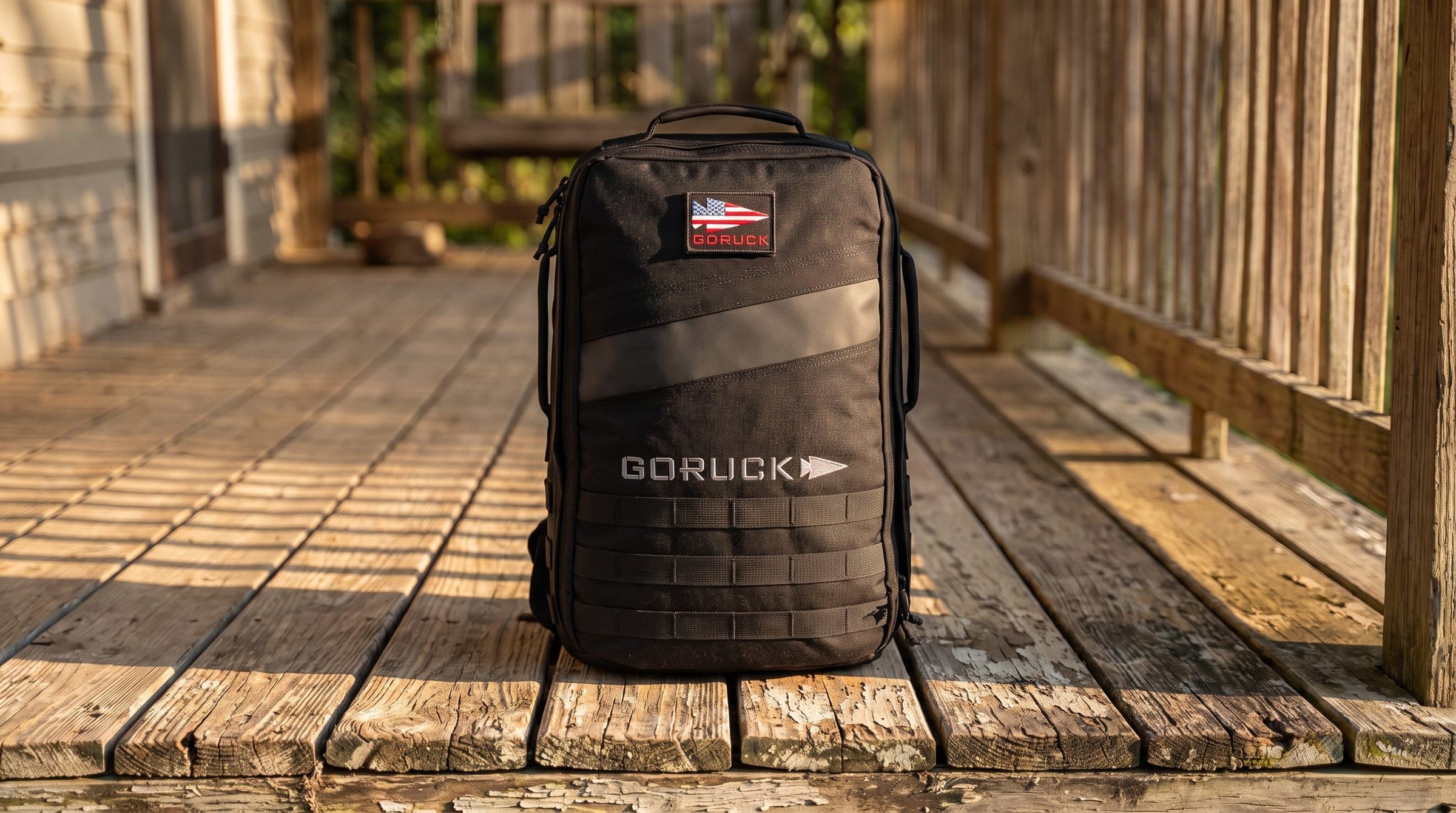
GORUCK Rucker 5.0 Review: Is It Worth It Over the 4.0 in 2026?
GORUCK replaced the Rucker 4.0 with the 5.0, and the discount on remaining 4.0 stock is smaller than most people expect. Here is what actually changed and which one to buy.

Best Ruck Plates 2026: Match the Plate to the Pocket
Compare GORUCK Standard and Long plates, Rogue vest pairs, Yes4All and flexible weights by dimensions, retention and the pack you own.