
Rucking meetings are a real practice, but the evidence supports a useful niche rather than a sweeping C-suite trend. Author and rucking researcher Michael Easter has described taking work calls under load since the pandemic and published the practical lessons he learned. Momentous CEO Jeff Byers has also discussed rucking as part of his routine in business-media coverage.
The straightforward appeal is time: a routine phone call can become a walk instead of another seated hour. That does not make every meeting better, and adding weight has not been shown to improve business performance. The best case is narrower - a light, familiar ruck during a low-stakes call that does not require a screen, notes, confidentiality, or perfectly quiet audio. See Easter's firsthand account of rucking meetings.
Why executives are choosing rucking over traditional fitness

Rucking does not replace a complete strength or cardio program, but it can convert a block of sitting into loaded walking. The best candidates are routine one-to-one calls, status updates, and conversations where listening matters more than looking at a document.
Keep the effort low enough that your breathing never becomes part of the call. If the other person can hear the workout, the load, pace, route, or meeting choice is wrong.
Start with 5-10 pounds on a route you already know. Test the setup on a personal call before using it for work.
The multitasking advantage of walking meetings

Walking meetings are not new. A 2014 Stanford study by Oppezzo and Schwartz found that walking improved divergent idea generation compared with sitting, but it did not improve focused, convergent thinking. The study tested walking, not rucking, so it cannot tell us that adding weight creates a larger cognitive effect. Read the Stanford study.
The walking condition helped with open-ended idea generation and the effect briefly persisted after participants sat down. It did not help tasks with one correct answer. Brainstorming may fit a walk; reviewing a contract probably does not.
Time zone, weather, privacy, and route safety all matter more than job title. Use the window that lets you stay attentive and audible.
Equipment recommendations for executive rucking

The key is familiar, quiet gear that does not demand attention during the call. Four items cover a clean-looking pack, an adjustable alternative, a secured plate, and shoes that work on pavement.
| Role | Pick | Why it fits the executive context |
|---|---|---|
| Pack | GORUCK GR1 26L | Black-on-black silhouette. Reads as business luggage, not tactical kit. |
| Pack alt | Osprey Tempest 20 Women's | Adjustable hiking-style harness for people who prefer more fit range and a hip belt. |
| Plates | GORUCK Ruck Plates | Steel, flat, silent. Won't rattle on a Teams call mid-walk. |
| Shoes | Hoka Transport | Low-profile cushion built for urban walking. Reads as dress-casual, performs under load. |
Backpacks: The GORUCK GR1 has a restrained exterior and keeps dense weight close to the back. The Osprey Tempest 20 Women's offers an adjustable hiking-style harness for people who prefer more fit tuning.
Weight plates: Avoid loose weights that shift during calls. The GORUCK Ruck Plates are designed specifically for this purpose and won't rattle during important conversations.
Footwear: Business-appropriate walking shoes matter when you're going from a ruck straight into the office. The Hoka Transport is built specifically for everyday urban walking with a low-profile silhouette that reads more dress-casual than running shoe, while still offering Hoka's signature cushion under load. The Transport is the same shoe we point urban ruckers to when they want one pair for both the ruck and the office.
Programming rucking into executive schedules

Build the activity into calls that already suit walking. These are practical options, not proven productivity formulas:
Routine audio calls: Use a one-to-one check-in or informal planning call after confirming the route and reception on your own time.
Commute replacement: For executives who drive to work, parking farther away and rucking the final distance provides built-in training time.
Walking desk integration: A slow treadmill can remove traffic noise and weather, but test camera movement and microphone noise first. External load is optional indoors.
Solo thinking time: A walk can suit brainstorming before a meeting. Record notes only after stopping somewhere safe.
What the practice can and cannot promise

The defensible benefit is increased movement during time that might otherwise be sedentary. Walking may help divergent thinking; a familiar ruck can add training load. Claims about leadership, resilience, decision quality, or executive performance have not been established by rucking research.
The meeting still comes first. If route finding, traffic, breath, weather, or pack discomfort divides your attention, take off the load or sit down.
Common mistakes to avoid
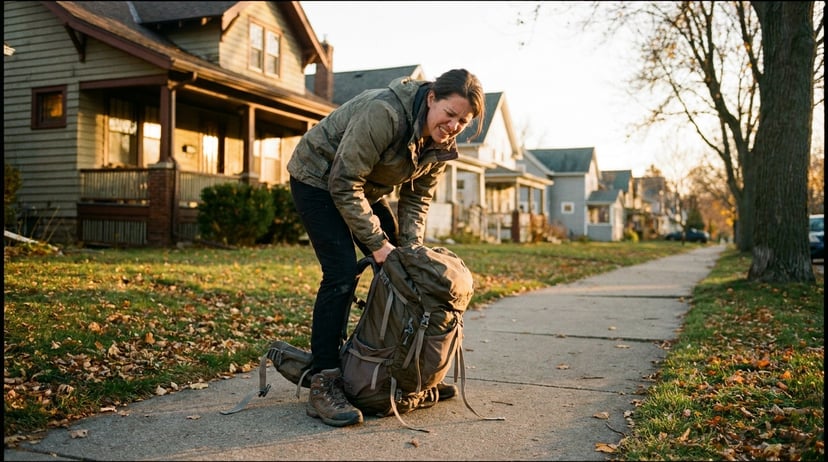
Starting too heavy: Executives often push too hard initially, leading to fatigue that impacts work performance. Begin with lighter loads and build gradually.
Ignoring form: Poor posture during calls can cause back pain. Maintain upright posture and engage core muscles throughout the session.
Inappropriate timing: Save challenging topics for seated meetings. Rucking works best for routine updates, planning sessions, and one-on-one conversations.
Weather dependence: Have indoor alternatives ready. A treadmill desk or mall walking option ensures consistency regardless of conditions.
Rucking meetings are one practical way to replace sitting when the call, route, and load are all uncomplicated. They are not a status symbol or a productivity requirement. Start with walking; add a light pack only when it leaves the conversation untouched. For the rest of the active-lifestyle kit - walking shoes, trackers, travel gear - our sister site Kit Authority covers what we don't.
Frequently asked questions
Start with 5-10 pounds on a familiar route and make the first test a personal call. There is no reason to chase a meeting-specific maximum; use less load whenever breathing or attention changes.
Routine check-ins, one-on-one conversations, planning sessions, and international calls work well. Avoid rucking during presentations, difficult conversations, or meetings requiring detailed note-taking. The steady movement helps with creative thinking but can be distracting for precision tasks.
Use a clean, business-appropriate backpack like the GORUCK GR1, wear professional walking attire, and choose quiet routes away from busy streets. For video calls, position the camera to show only your upper body and maintain good posture throughout the conversation.
Anything confidential or regulated should stay in a controlled environment - this isn't a security workaround. Public outdoor walks aren't the place for material non-public information, customer PII, or anything that would be a problem if a passerby overheard it. Save those for the office. Rucking pairs best with low-stakes calls where occasional ambient noise and a slightly elevated breathing cadence don't matter.
Most business calls naturally provide 30-60 minute windows, which is ideal for effective rucking sessions. Start with 20-30 minutes and build up as your fitness improves. The key is matching session length to your actual meeting schedule rather than forcing arbitrary durations.
Yes, treadmill desks work well for indoor rucking during video calls. Set a comfortable walking pace (typically 1.5-2.5 mph with weight), ensure good lighting for the camera, and test your setup beforehand to avoid technical issues during important meetings.


