Gear Review
Follow Drones for Solo Ruckers: DJI Neo 2, HoverAir X1 Pro, and the DJI Mini 5 Pro
The DJI Neo 2 is a compact follow drone for solo ruckers - palm-launch, AI subject tracking, and sub-250g. Here's how it compares to the HoverAir X1 Pro and DJI Mini 5 Pro, with real trail footage.
On this page9 sections
- Why a drone is rucking-adjacent gear now
- The three picks
- DJI Neo 2 - the rucking pick
- Specs that matter
- What we'd buy with it
- HoverAir X1 Pro - the pioneer
- DJI Mini 5 Pro - the upgrade path
- What about safety and visibility use cases?
- How we built this guide
- Frequently asked questions
- Do I need to register a sub-250g drone with the FAA?
- Can I fly a drone in a state or national park?
- Will a follow drone keep up with a moving rucker?
- How loud is a follow drone on a trail?
- What about high winds or rain?
- Is the Neo 2 worth it if I already have a phone with a stabilizer?
- Which follow drone should you choose?
- Best overall: DJI Neo 2. 151g, palm-launch, AI subject tracking, 4K/60. Typically $150-300. Skips FAA registration.
- Pioneer pick: HoverAir X1 Pro. 191g, foldable cage, mature AI tracking. Typically $300-500.
- Upgrade path: DJI Mini 5 Pro. 1-inch sensor, 35 min flight time, ActiveTrack 360. Typically $500-1,000. Needs a controller.
- Solo ruckers train alone but want their footage. A 150g drone in your pack changes the math.
If you ruck alone, you've had this moment: you're on a ridgeline at golden hour, the load feels right, and there's no one to film it. Your phone on a tripod catches a slice. A handheld pan catches less. The thing you actually want - the wide, moving shot of you on the trail with weight on your back - is the one shot you can't get without a camera op.
That gap is what a follow drone fills. And until late 2025, the cheapest drone that could track a moving subject on a trail was around $700. The DJI Neo 2 changed that pricing overnight.
This isn't a "best drones overall" article. We're picking three, all built around one job: filming a solo rucker.
Why a drone is rucking-adjacent gear now
For most of drone history, "follow me" mode was a marketing claim that lost the subject the moment they turned around a tree. The math wasn't there. Then three things shifted:
- Sub-250g drones became real cameras. The FAA's recreational rule exempts anything under 250 grams from registration - so a 150g drone is a tool, not a regulatory project.
- Onboard AI subject tracking actually works. The newest tracking models hold a moving subject through occlusion, brief loss of line-of-sight, and changes of direction. Not perfect, but useful.
- Palm-launch killed the controller bottleneck. If you have to stop your ruck, deploy a controller, set up a flight plan, and recover, you won't film anything. If you toss the drone off your palm and it follows you, you might.
Combined, you can now film yourself rucking with one hand for less than most full camera-drone kits. That's the article.
The three picks
| Drone | Price | Weight | Camera | Flight time | Why pick it |
|---|---|---|---|---|---|
| DJI Neo 2 | $150-300 | 151g | 4K/60, 1/2-inch sensor | 11-12 min real-world | Compact follow drone that tracks a moving rucker. Palm launch. |
| HoverAir X1 Pro | $300-500 | 191g | 4K/60, 104 FOV | ~16 min | The pioneer. Foldable cage, mature AI tracking. |
| DJI Mini 5 Pro | $500-1,000 | 249g | 4K/100, 1-inch sensor | ~35 min | Upgrade path. Bigger sensor, longer flights, controller required. |
DJI Neo 2 - the rucking pick
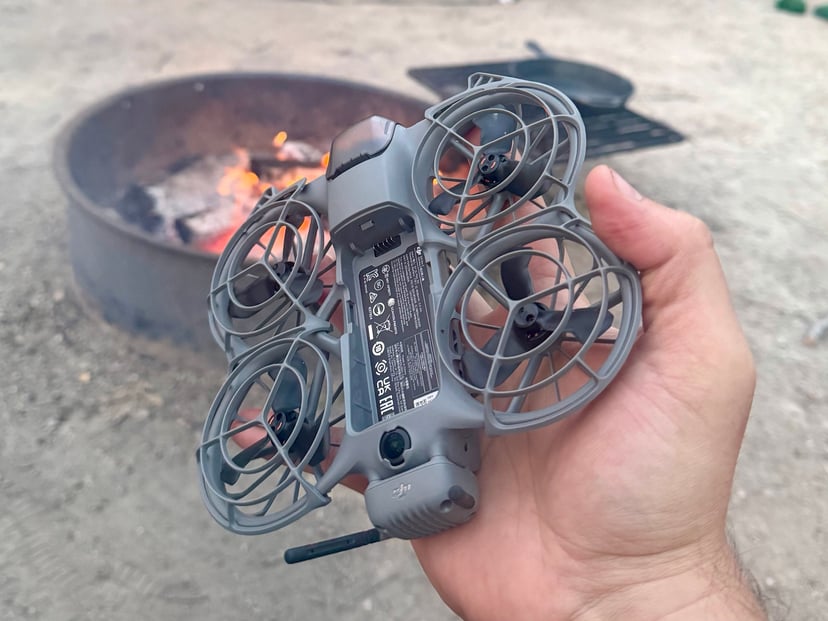
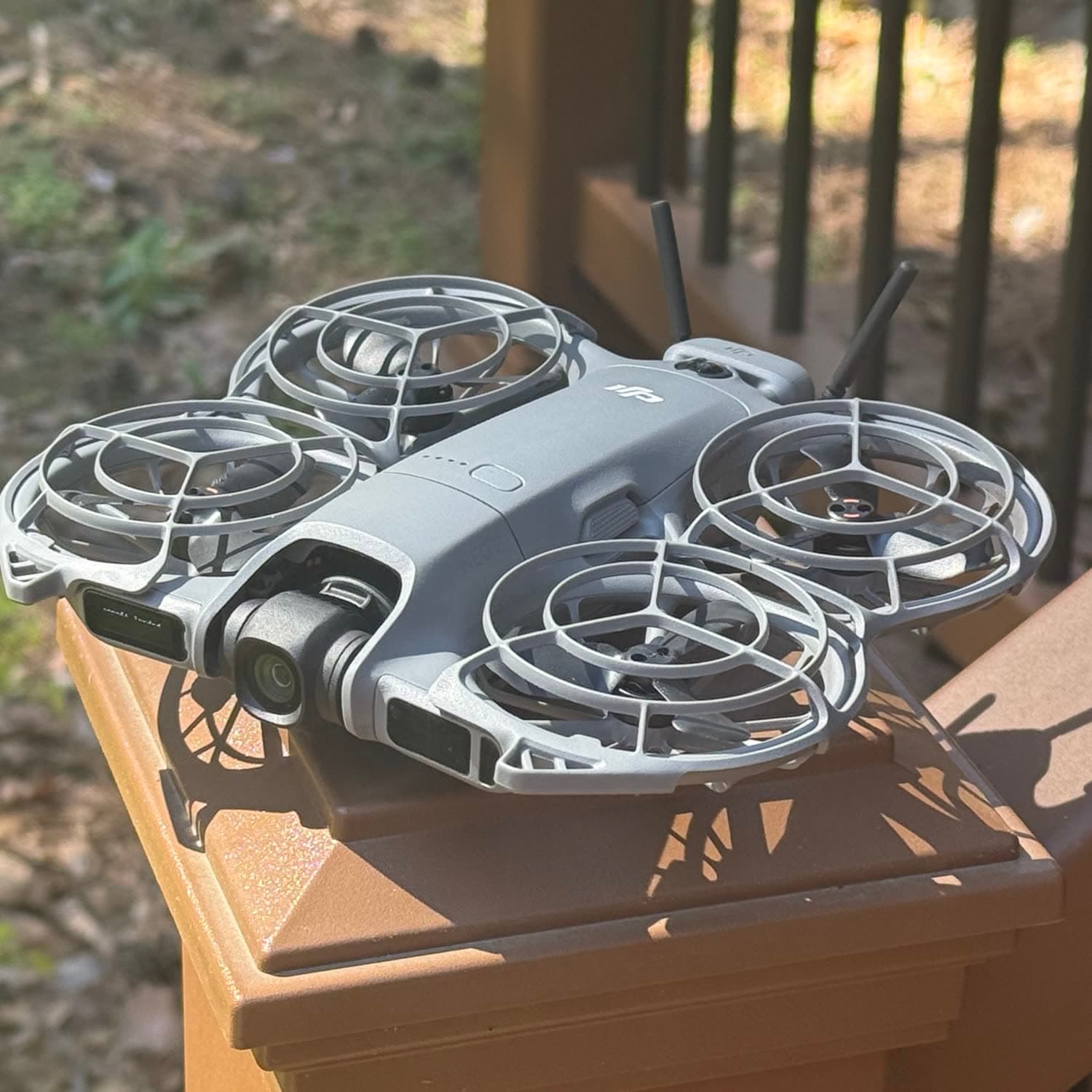
The Neo 2 is the answer to a question most solo ruckers had stopped asking: can I film myself on the trail without a friend, a tripod, or a $700 drone? At 151 grams it's lighter than a Snickers bar, palm-launches off your hand, and tracks you down the trail without a controller. The 4K/60fps camera is real - not a "4K with caveats" spec - and the 2-axis gimbal keeps shots cleaner than the original Neo.
What it gets right for rucking specifically: the integrated propeller guards are the difference between ruining a $1,000 camera and shaking off a bump from a low branch. Palm-landing recovery is the same story - if you don't have a clean LZ in the woods, you catch it. That's the whole point.
What it gets wrong: rated flight time is 17 minutes, but founder Joel Kelly has recorded closer to 11-12 minutes per battery in his use. That is enough for a few short clips, not continuous coverage of a long ruck. Wind resistance is rated Level 4 (19 mph), so exposed terrain needs more caution than a sheltered route. Audio is recorded by your phone through the DJI Fly app, not by the drone itself, so wind noise still matters.
The use case it's built for: solo overnight rucks where you set up at camp, palm-launch the Neo 2, and have it film while you do everything else. Subject-lock for the length of a battery is the shot that used to require a film crew.
Specs that matter
- Weight: 151g (no FAA registration for recreational use under §44809)
- Camera: 4K/60fps, 1/2-inch CMOS sensor, 2-axis gimbal
- Tracking: AI subject tracking, multiple follow modes (lead, follow, orbit)
- Launch: Palm launch / app launch / DJI RC-N3 controller
- Flight time: ~11-12 min real-world per battery (17 min rated)
- Wind resistance: Level 4 (up to 19 mph)
- Transmission: ~10 km with the RC-N3 controller (most ruckers won't need this)
What we'd buy with it
- Spare battery (you will run out at the worst time)
- DJI RC-N3 controller if you want manual control for B-roll between follow shots
- A 64GB microSD V30 card minimum - 4K/60 eats storage fast
HoverAir X1 Pro - the pioneer
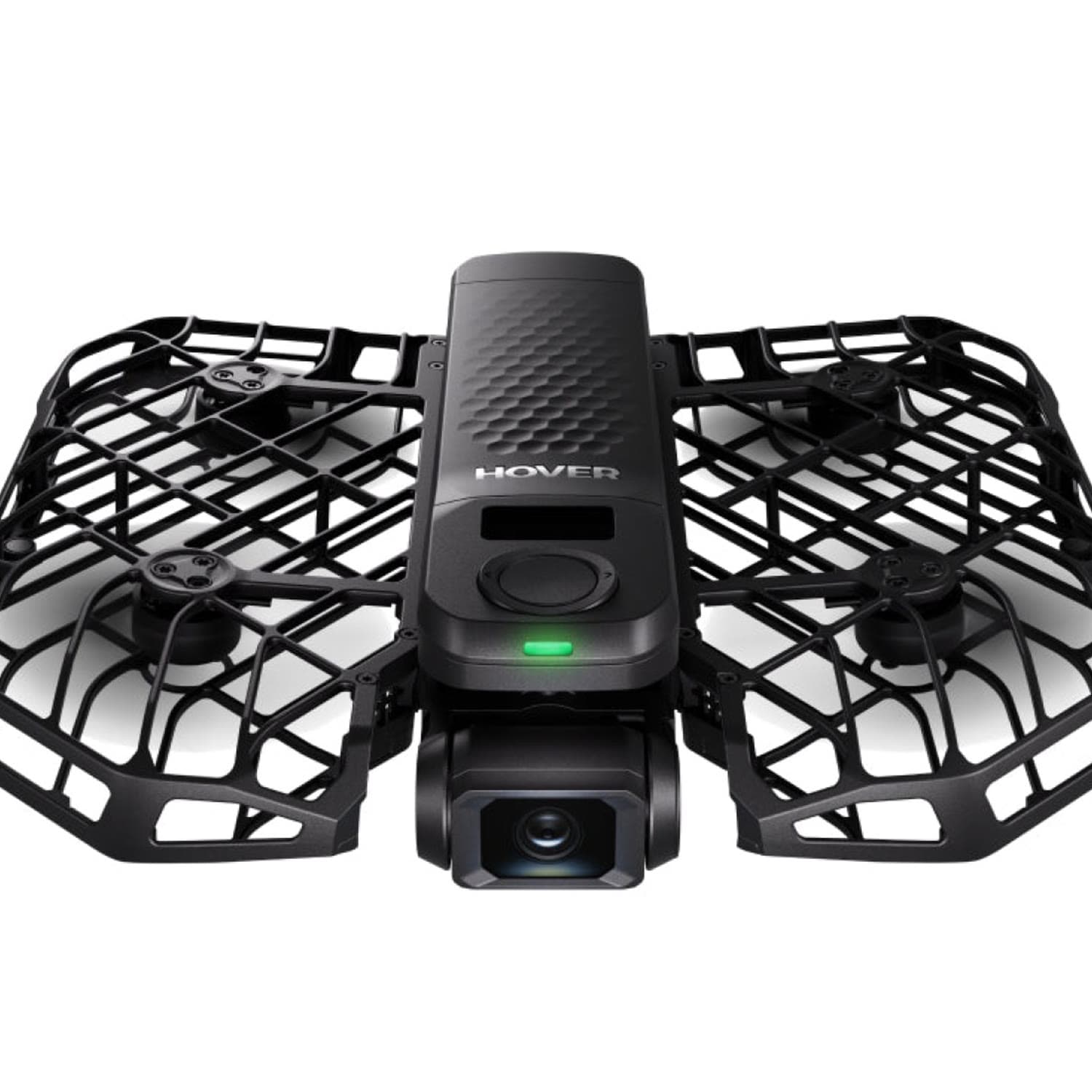
The HoverAir X1 Pro shipped before DJI joined this category, and it's still the build-quality benchmark. The foldable cage is a real practical advantage - it collapses flat enough to slip into a ruck pocket. The camera holds up against the Neo 2 spec-for-spec, and the AI tracking is mature enough that it predates DJI's.
The reason it's not our top pick: roughly double the Neo 2. The marginal improvements (build quality, fold-flat form factor) don't justify the gap for a rucker who's just getting started with drone B-roll. If you'd already decided you want this category before DJI made it cheap, the X1 Pro is the more refined product. If the Neo 2 is your first drone, save the difference for a backup battery and a spare microSD.
Where it likely wins: cold-weather rucking. Owner reviews report the X1 Pro's battery handles 30 F starts better than the Neo 2's, which matters if you ruck through Wisconsin winters. Same goes for altitude - if you're in the Rockies, the more powerful motors hold up better in thinner air.
DJI Mini 5 Pro - the upgrade path
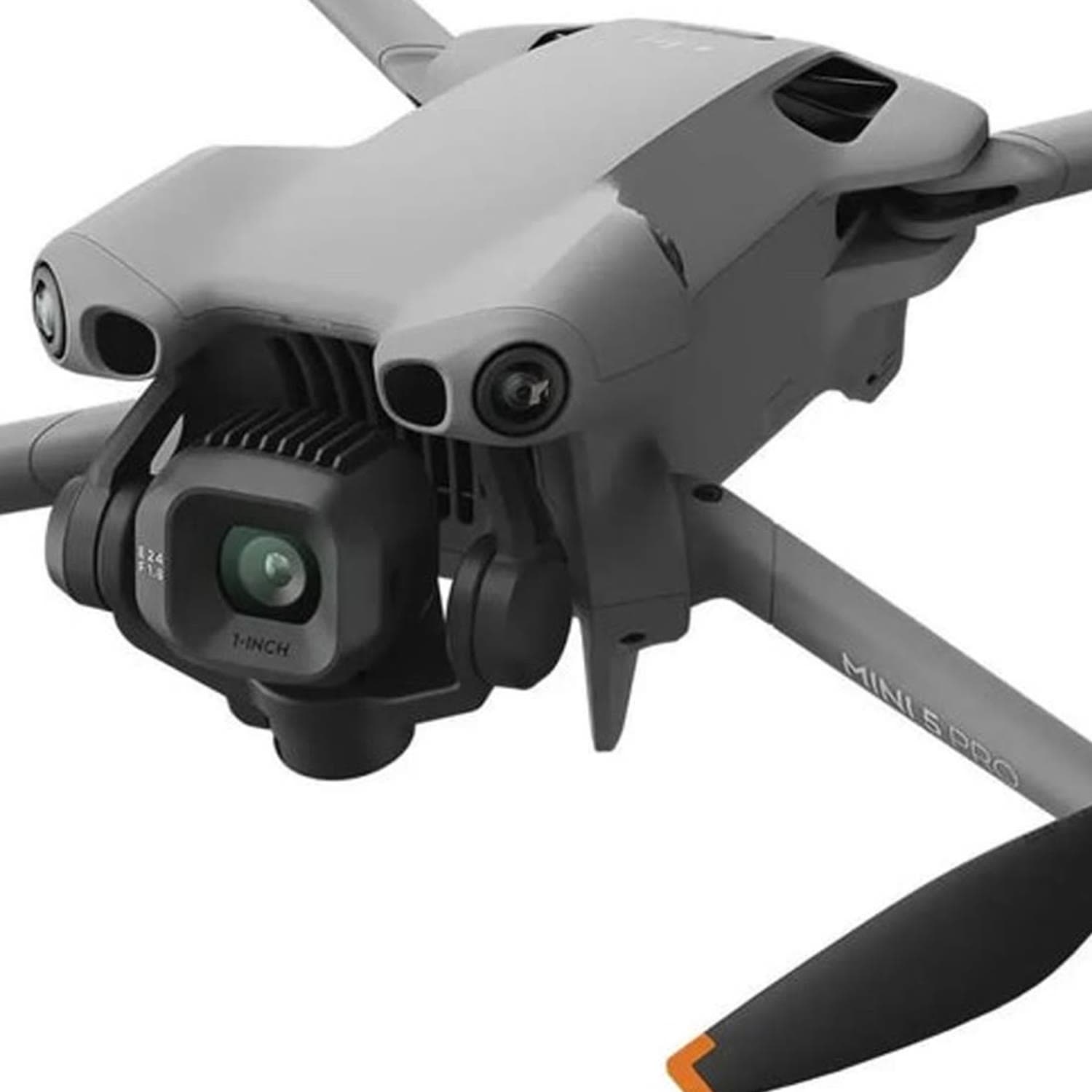
The Mini 5 Pro is what you buy when you've outgrown follow-mode. At 249g it just barely stays under FAA registration, but everything else is professional-grade: a 1-inch sensor (the same size as most pro mirrorless cameras), 4K at 100fps, 35+ minutes of flight time, ActiveTrack 360 (track from any angle, not just behind), omnidirectional obstacle sensing, and O4+ transmission to 20 km.
What you lose: palm-launch. The Mini 5 Pro needs the RC 2 controller. You can't take off mid-ruck the way you can with a Neo 2. The workflow is plan, set up, fly, film, recover - which is closer to a photo expedition than to "drone in pocket, drone in air, drone in pocket again." If your rucks have a planned cinematography window built in (sunrise over a ridge, golden-hour at a vista), the Mini 5 Pro is the move. If your rucks are training-first and you want spontaneous footage, stay with the Neo 2.
Worth knowing: the Mini 5 Pro sits in the $500-1,000 tier before higher-priced bundles, so you're in a different conversation. This isn't an impulse buy that came with your trail shoes. Most ruckers will never need this level of camera. But if you're building a rucking channel, shooting trip-report YouTube, or you already shoot photography seriously, the Mini 5 Pro's image quality is a meaningful step up.
What about safety and visibility use cases?
We considered framing this article around "drones for trail safety" - the pitch being that a small drone could scout a trail ahead, check ridgeline weather, or locate a group. We mostly killed that angle. Here's why:
For solo trail scouting, line-of-sight rules make it impractical. FAA recreational rules require visual line-of-sight at all times. You can't fly your drone around a bend to check what's coming - that's a violation.
For group locating or signal, a drone is wildly inferior to a Garmin inReach, a PLB, or even cellular. Don't buy a drone for safety. Buy a PLB and a satellite messenger for safety. Buy a drone for content.
For situational awareness on lit suburban routes, a 19-mph-wind-rated 150g drone isn't going to add anything a streetlight doesn't already give you.
This is filming gear, not safety equipment. Treat follow mode as a recreational camera feature.
A drone is not a navigation tool, not a safety device, and not a substitute for telling someone your route and ETA. If you ruck remote, carry a PLB or a satellite messenger. The drone is for the highlight reel.
How we built this guide
Founder Joel Kelly filmed the Neo 2 footage on this page during a May 2026 Wisconsin ruck. Joel owns and flies that model. The HoverAir X1 Pro and DJI Mini 5 Pro recommendations are based on published specifications, owner reviews, and coverage from creators who use them; Ruck Authority has not flown those two models.
Frequently asked questions
Do I need to register a sub-250g drone with the FAA?
For recreational use under §44809 (the recreational exception), no. Anything under 250g flown for recreational purposes does not require FAA Part 107 registration. The moment you fly it commercially - paid content, sponsorship deliverables, or anything monetized directly - you need a Part 107 certificate regardless of weight. Not sure which bucket you're in? Drone Authority's license wizard walks you through it in about a minute - and if you do need the cert, their Part 107 study hub (practice exams, sectional charts, ACS cheat sheet) is how you pass it.
Can I fly a drone in a state or national park?
National parks: almost always no, drones are prohibited. State parks: depends on the state and often the specific park - check before you go. Most BLM land, national forests, and county/local parks allow drones with restrictions. When in doubt, call the ranger station before you ruck in - or check Drone Authority's drone laws by state for the current rules where you ruck.
Will a follow drone keep up with a moving rucker?
On flat or rolling terrain, yes. The Neo 2's tracking is tuned for pedestrian speeds (3-5 mph), which is exactly rucking pace. Steep technical trail with switchbacks is harder - based on the published tracking spec and creator demos, expect occasional re-acquisition pauses when you pass behind a tree or boulder.
How loud is a follow drone on a trail?
Quieter than you'd expect from a thing with four propellers, louder than zero. Comparable to a household appliance at conversational distance. Audible but not jarring at normal flight altitude. Don't fly it at face level near other people.
What about high winds or rain?
None of these drones should be treated as rain-safe. If rain starts, land according to the manufacturer's instructions. Wind limits differ by model, and terrain can create gusts that exceed a published rating; check the current manual and conditions before launch.
Is the Neo 2 worth it if I already have a phone with a stabilizer?
A follow drone can capture moving aerial angles that a handheld phone cannot. A phone remains simpler for narration, close shots, and places where drone flight is not permitted. The useful choice may be one or both, depending on the footage you need.
Which follow drone should you choose?
If you ruck alone and want moving footage, the DJI Neo 2 is the least expensive option here. It offers palm launch, subject tracking, a sub-250g body, and 4K recording in the $150-300 tier.
The HoverAir X1 Pro costs more and has a fold-flat design. Owner reports suggest better cold-weather battery performance than the Neo 2, but Ruck Authority has not tested that comparison. The DJI Mini 5 Pro adds a larger camera system, longer flight time, and a controller at a much higher price. Most casual trail filming does not require it.
For most people, start with the Neo 2, add a spare battery, and learn its follow mode on a familiar trail before taking it somewhere remote.
Once you've got the drone, you'll want to think about carrying it without crushing it - a structured pack with a dedicated top pocket protects propellers from getting bent. And if you're shooting trail content seriously, our winter rucking guide covers the cold-weather battery management that makes or breaks a sub-freezing shoot.
Going from footage to a real shot is a different craft. If you want the stills to match the aerials, our sister site Aperture Authority breaks down drone photography and video and the landscape photography techniques that turn trail B-roll into a frame worth printing.
Quick Comparison
| Product | Price | Best For | Buy |
|---|---|---|---|
 Our PickDJI Neo 2 | $150-300 | Solo ruckers who want their own footage without a film crew, content creators building a rucking channel, and anyone training alone who wants form feedback from above. Skip it if you're shooting in alpine winds or low-light forests. | |
| $300-500 | Cold-weather rucks where battery life matters, and anyone who already decided they want this category before DJI made it cheap. The most refined product in this lineup. | ||
| $500-1000 | Creators building a rucking channel, photographers who already shoot mirrorless, and anyone for whom image quality matters more than 'drone in pocket, drone in air, drone in pocket again' immediacy. |
Related Articles

The $50 Rucking Starter Kit: Everything You Need on a Budget
A complete kit for under $50 - no GORUCK required.
GORUCK Ruck Plate Carrier 3.0 vs Rucker 5.0
Compare the GORUCK RPC 3.0 and Rucker 5.0 for plate fit, water and gear storage, sizing, and event use. Choose around what you actually carry.

Best Ruck Plates 2026: Match the Plate to the Pocket
Compare GORUCK Standard and Long plates, Rogue vest pairs, Yes4All and flexible weights by dimensions, retention and the pack you own.
GORUCK Rucker 5.0 Review: First-Week Trail Test and 4.0 Comparison
Joel Kelly's first week with the 25L GORUCK Rucker 5.0: a 20 lb plate, hilly Wisconsin trails, lumbar comfort, shoulder soreness and what changed from the 4.0.