Gear Review
Injinji Toe Socks for Rucking: Do They Actually Prevent Blisters?
Injinji's toe-sleeve design targets toe-to-toe friction, but toe socks are a specific blister fix, not a universal rucking upgrade.
On this page7 sections
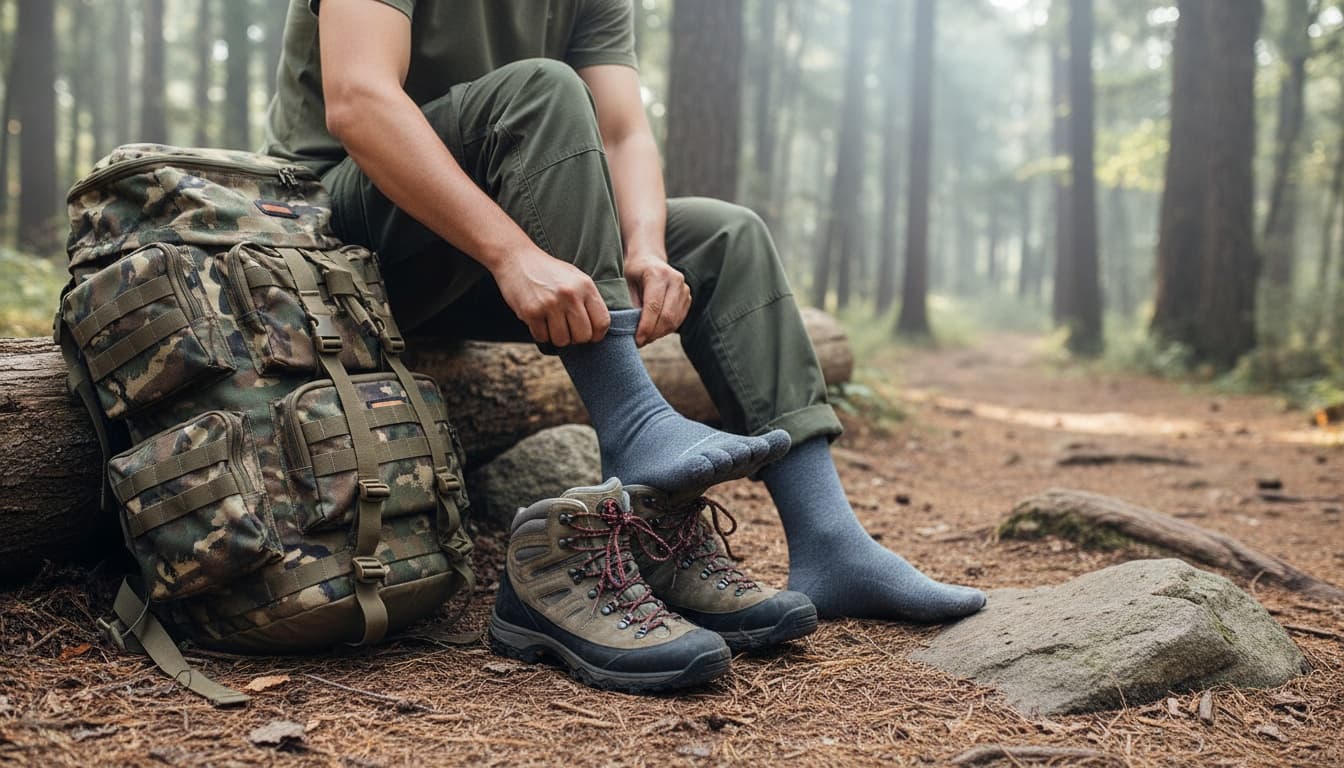
Toe socks for rucking sound like a gimmick until your third blister in a month makes you question everything. Injinji toe socks separate each toe to eliminate skin-on-skin friction - the theory being that most blisters form between toes, not just on them.
The honest answer is narrower than the marketing: Injinji can help when your problem is toe-to-toe rubbing, especially on long hot efforts, but it will not fix blisters caused by bad shoe fit, heel slip, wet feet, or a pack load that changes your gait.
Overview
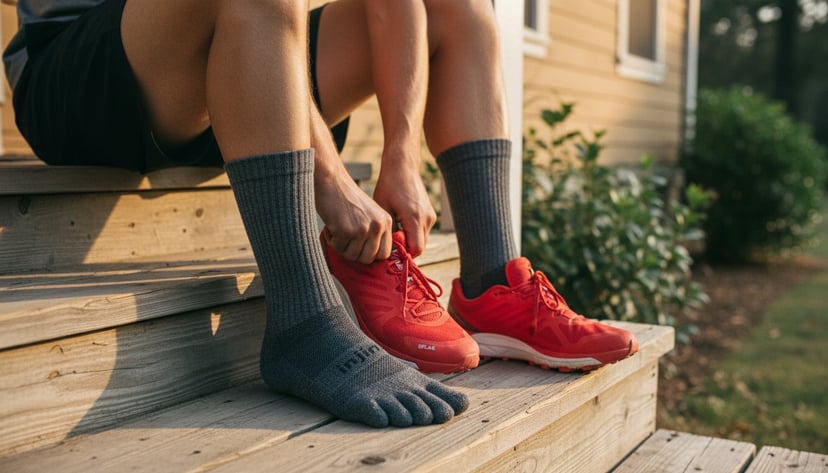
Injinji toe socks wrap each toe individually, like gloves for your feet. The brand offers multiple models designed for different activities, from lightweight running versions to cushioned hiking styles more suitable for rucking with a weighted ruck.
The core promise: by preventing toe-to-toe contact, you eliminate the friction that causes most foot blisters. Each toe gets its own moisture-wicking pocket, theoretically keeping feet drier during long rucks.
If you're curious about toe socks but skeptical, start with the Injinji Liner Crew under your current hiking sock. It gives you the toe-separation experiment without committing your whole foot-care system to a thicker trail model.
Key specs
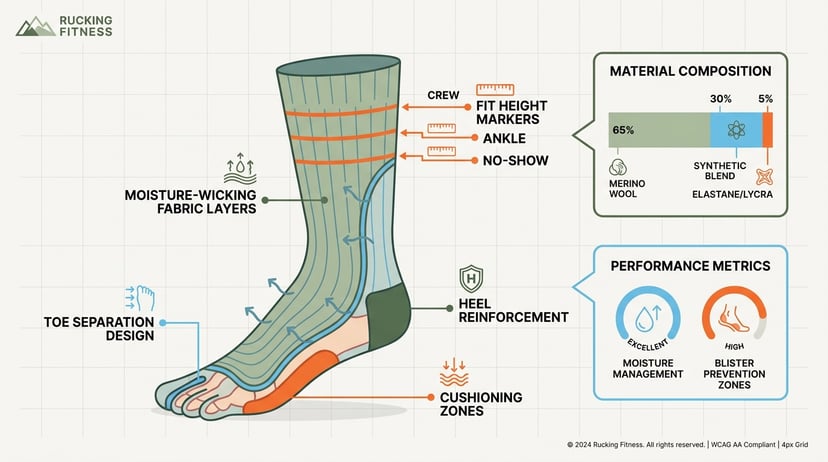
Based on Injinji's product specifications:
Materials: Merino wool blends for hiking models, synthetic blends for running versions Cushioning: Varies by model - from minimal liners to full cushion hiking socks Heights: No-show, mini-crew, crew, and boot heights available Key features:
- Individual toe pockets
- Moisture-wicking fibers
- Reinforced heel and toe areas
- Seamless toe construction
- Anti-odor treatment on wool models
Sizing: Standard shoe sizes with specific toe sock fit guidelines Care: Machine washable, air dry recommended for longevity
What ruckers are saying
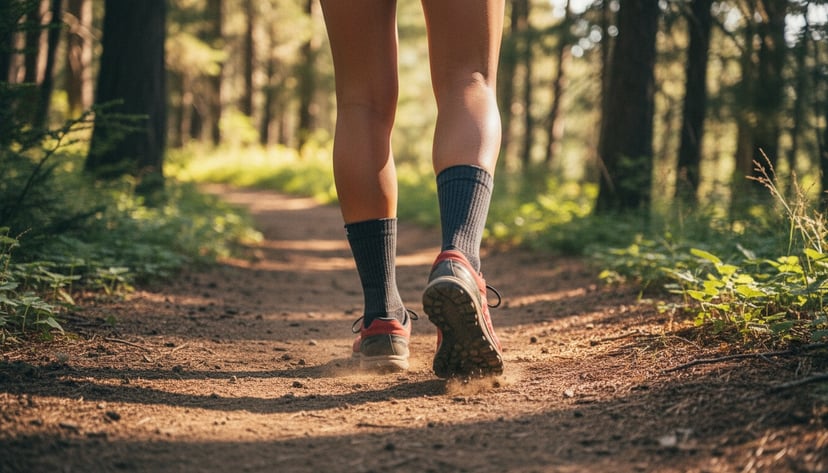
Injinji socks split people because they solve one specific problem extremely well and leave other blister causes untouched.
Where they make sense
The strongest case for Injinji is straightforward: each toe gets wrapped in its own sleeve, so skin-on-skin friction between toes drops dramatically. Injinji also emphasizes moisture-wicking yarns and seamless toe construction in its trail line, which is exactly the feature set you want when your usual hot spot is between toes.
That does not make them magic. It means the mechanism lines up with a real rucking problem: long mileage, sweaty feet, toe crowding, and repetitive rubbing under load. If your blisters show up between toes, Injinji deserves a trial.
They work best with footwear that has enough toe-box room. If your boot already squeezes your forefoot, adding fabric around every toe can make pressure worse. That is why a roomy boot like the Salomon Quest 5 GORE-TEX is a better pairing than a tight tactical boot.
Where they fall short
The tradeoff is durability and feel. Individual toe sleeves create more seams, more fabric interfaces, and more chances for wear than a traditional hiking sock. Some ruckers also hate the separated-toe sensation and never adapt to it.
Common failure points to watch:
- Durability issues, especially toe separation seams
- Difficult to put on, especially when feet are wet or sweaty
- Some find the toe separation uncomfortable initially
- Higher price point than traditional hiking socks
Mixed experiences
Injinji is not a universal upgrade. It is a targeted fix for toe blisters. If your hot spots are on the heel, ball of foot, arch, or outside edge of the forefoot, you should look first at boot fit, lacing, moisture management, and a proven hiking sock.
Toe sock comfort is highly individual. Toe length, toe spacing, forefoot width, and boot volume all change whether the design feels freeing or fussy.
Who it's best for

Injinji toe socks work best for:
Chronic toe-blister sufferers: If you consistently get blisters between toes during long rucks, toe socks are worth trying before changing boots or adding more tape.
Long-distance ruckers: The value rises as mileage rises. On short neighborhood rucks, a traditional merino hiking sock is often simpler.
Hot climate ruckers: Moisture-wicking toe separation is most useful when sweat and swelling make toes rub, especially when paired with trail-ready footwear like the Salomon XA Pro 3D.
Boot wearers: Go with the Trail Midweight Crew instead - the taller crew height keeps debris out and fits better in most boots than the mini-crew cut.
Minimal shoe users: Lower-drop, wider-toe-box shoes give toe sleeves more room to work without adding pressure.
Skip if: You rarely get blisters with current socks, prefer maximum durability over features, or dislike the feeling of separated toes.
Comparison to alternatives
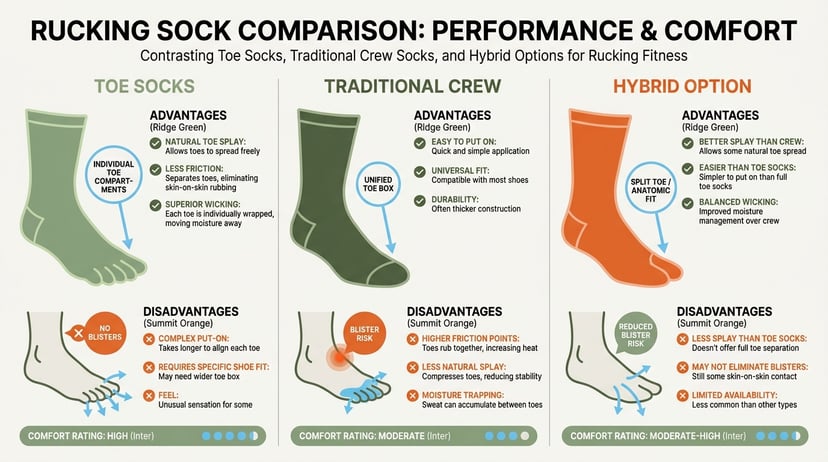
Against traditional hiking socks:
Smartwool Hike Classic Crew - Better immediate comfort and a simpler fit. Choose Smartwool if you don't have chronic toe blisters.
Darn Tough Light Hiker - Lifetime guarantee and the durability benchmark. Slightly less toe-specific friction control, but better long-term confidence if you destroy socks quickly.
Feetures Elite Max Cushion - Anatomical fit with targeted arch support. Different approach to blister prevention (friction management through tight fit rather than toe separation). Worth comparing if you want cushion without toe sleeves.
Against blister prevention alternatives:
- Toe lubricants: Cheaper per use but need reapplication on long rucks
- Liner sock systems: Double-layer approach works well but adds bulk in boots
- Better boot fit: More expensive initially but solves multiple issues beyond blisters
Bottom line

Injinji toe socks make sense when toe-to-toe friction is the problem. The design directly addresses that mechanism, and the trail models have the cushioning and moisture management ruckers usually need.
However, they're not magic socks. Durability concerns are real, the adaptation period is genuine, and they won't solve blister problems caused by poor boot fit or other friction points.
The honest assessment: if you get blisters between your toes during long rucks, Injinjis are worth trying despite the premium price. If your current sock setup works, the benefits probably don't justify switching - Darn Tough or Smartwool will serve you better long-term.
For ruckers curious about toe socks: start with the Liner Crew under your current socks before committing. If the concept works for you, upgrade to the Trail Mini-Crew for standalone use, or the Trail Crew if you primarily ruck in boots. You'll know within a few long rucks whether toe separation helps your specific feet.
Frequently asked questions
They can help prevent blisters between toes specifically, because each toe is separated by fabric. They will not solve blisters caused by poor boot fit, heel slip, wet socks, or pressure points elsewhere on the foot.
Give them a few normal walks before judging. The first wears often feel strange because each toe is wrapped individually. Some people stop noticing the separation quickly; others never like the feel.
They are durable enough to try, but not the durability-first pick. The toe sleeves add more construction complexity than a normal hiking sock, so heavy users should watch the seams between toes. If durability matters more than toe separation, Darn Tough is the safer bet.
Choose the hiking or trail models over lightweight running versions. The extra cushioning and reinforcement handle the additional pressure from carrying weight better than thin running toe socks.
No. Toe socks work best with boots or shoes that have adequate toe-box room. In tight boots, the extra fabric around each toe can create pressure instead of reducing it.
They are worth the premium only if toe blisters are a recurring problem. If your current sock setup already works, a traditional hiking sock like Smartwool is simpler and usually more durable.
Related Articles

The Best GORUCK Alternatives
Five packs honestly compared against the GORUCK GR1: Mystery Ranch, 5.11, Evergoods, Direct Action. Find the best rucking backpack for your budget.

Best Ruck Plates 2026: Match the Plate to the Pocket
Compare GORUCK Standard and Long plates, Rogue vest pairs, Yes4All and flexible weights by dimensions, retention and the pack you own.

Best Rucking Shoes by Terrain: Pavement, Trail, Mixed
The right shoe depends on where you ruck - our top picks by surface type.

Best Rucking Gear for Women: Packs, Vests, Shoes
Women-specific gear that actually fits - honest recommendations for packs, vests, and shoes.